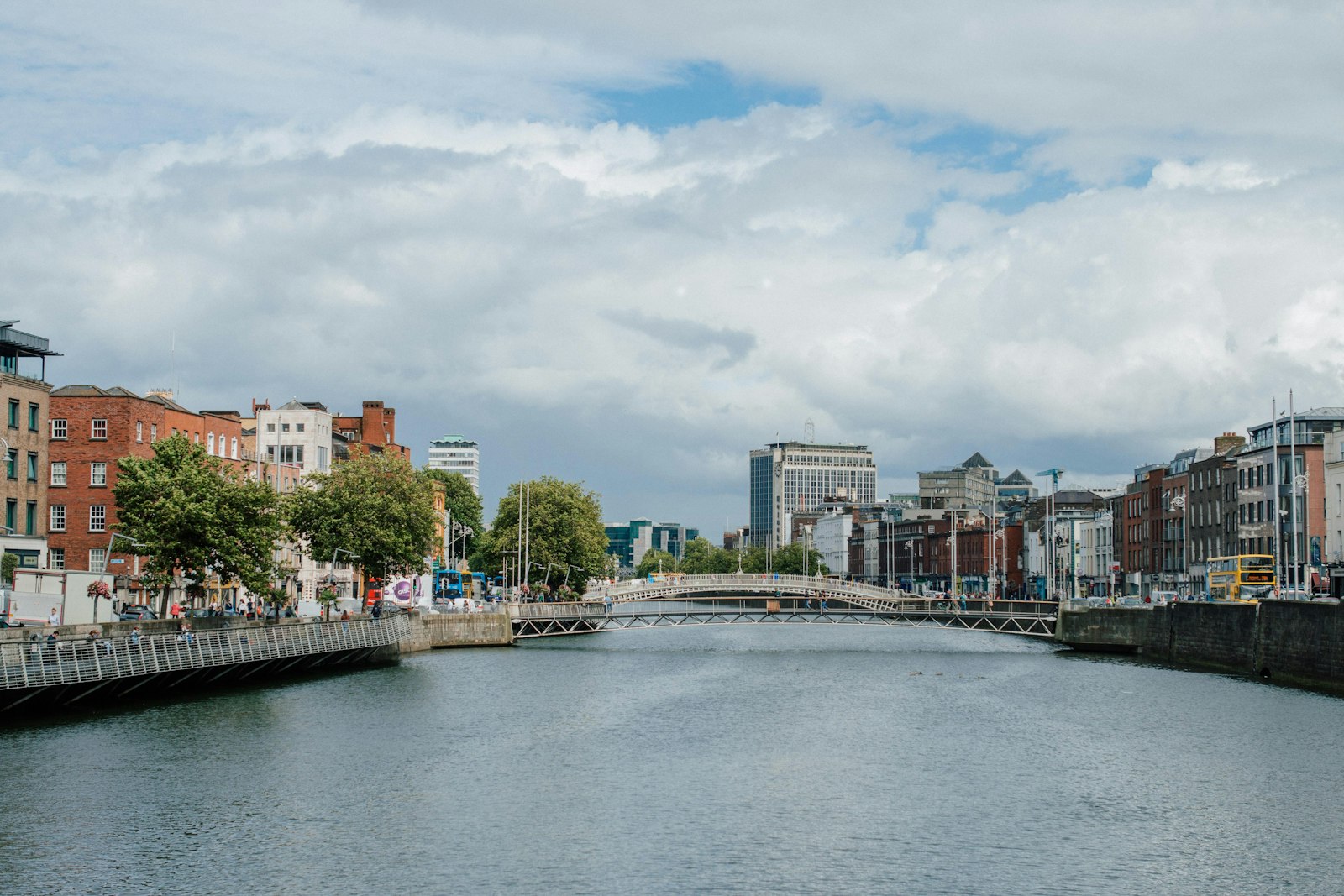
Photo by Gadiel Lazcano on Unsplash
On May 25, 2018, Irish voters approved a historic referendum legalizing abortion by a decisive margin of 66 to 34 percent. The vote marked a remarkable transformation for a nation that, just a generation earlier, had one of the world’s most restrictive abortion policies. The referendum didn’t merely change Irish law—it represented a dramatic popular declaration that Irish society had fundamentally reimagined women’s rights, bodily autonomy, and the relationship between religion and state in the modern era.
For decades, Ireland had maintained one of Europe’s strictest abortion bans, enshrined in the constitutional provision known as the Eighth Amendment. The amendment stated that “the State acknowledges the right to life of the unborn” and prohibited abortion except in extremely narrow circumstances when a woman’s life was in danger. This constitutional language effectively criminalized abortion, with doctors facing potential prosecution for providing the procedure. The referendum represented not merely a policy change but a profound cultural and legal transformation in how Irish society understands women’s autonomy, reproductive rights, and ethical decision-making about pregnancy.
The Constitutional Ban: The Eighth Amendment
Ireland’s restrictive abortion policy wasn’t merely legislative—it was constitutionally enshrined. In 1983, Irish voters approved the Eighth Amendment to the Constitution, which explicitly recognized the “right to life of the unborn” and prohibited abortion except to preserve the life of the mother. This represented the world’s strongest constitutional protection for fetal life, placing Ireland alongside only a handful of nations with comparably restrictive policies.
The amendment’s passage reflected the Church’s continued influence in Irish politics and the overwhelming Catholic majority. Abortion advocates warning about unintended consequences were dismissed as extremists. The amendment passed with 67 percent support, suggesting strong public consensus behind the policy. Few anticipated that just 35 years later, the same constitutional provision would be repealed by an even larger margin.
The amendment’s practical impact was profound. Ireland criminalized abortion entirely, making the procedure legally unavailable except when physicians determined that continuing the pregnancy would cause the woman’s death. The vagueness of the “threat to life” exception meant doctors operated under genuine fear of prosecution, leading to extreme caution in applying even this narrow exception.
Women facing problematic pregnancies—severe fetal abnormalities incompatible with life, pregnancies endangering their health, pregnancies they couldn’t afford—faced an impossible choice: carry unwanted pregnancies to term or travel abroad to access abortion. Thousands of Irish women traveled to the United Kingdom annually to access abortion services. Others faced forced continuance of pregnancies they desperately wanted to terminate, carrying to term fetuses with fatal abnormalities only to watch their newborns die shortly after birth.
The Gallagher Case and Judicial Crisis
The judiciary occasionally struggled with the Eighth Amendment’s implications. In 1992, a case named for the plaintiff Pauline X captured the nation’s attention. A 14-year-old girl, pregnant after rape, was barred by prosecutors from traveling to the United Kingdom for an abortion. The case sparked outrage—forcing a rape victim to carry a pregnancy to term became the defining moral problem with absolute abortion bans.
The Supreme Court ruled that the girl could travel, interpreting the constitutional “right to life” exception to include threats to physical or mental health, not merely physical death. This seemed to expand the exception, but in practice, the ruling was limited. The government immediately passed legislation restricting information about abortion services, preventing Irish citizens from being informed about places to access the procedure abroad. A later referendum in 1992 actually narrowed the interpretation, clarifying that the threat-to-life exception didn’t include threats to health—only threats to actual life.
These judicial and constitutional developments made clear that absolute abortion bans, even with narrow exceptions, created impossible situations. Doctors feared prosecution. Women were forced to carry pregnancies against their will. The situation became morally untenable for increasing numbers of Irish citizens.
Global Context: Abortion Rights Evolution
By the early 21st century, Ireland’s abortion policy was an international anomaly among developed Western nations. Nearly every other developed democracy had legalized abortion to some degree, recognizing women’s right to reproductive autonomy. Even deeply Catholic countries like Spain, Portugal, and Italy had legalized abortion by the 1980s and 1990s.
The United States, while divided on abortion policy, had legalized it nationally in 1973 through Roe v. Wade, establishing a framework allowing abortion in the first trimester without significant restrictions. Canada, Australia, and most of Western Europe had similarly legalized abortion, with varying gestational limits and regulations but fundamentally recognizing women’s rights to access the procedure.
Ireland stood apart—a wealthy Western democracy with one of the world’s most restrictive abortion laws. This placed Irish women in a peculiar position. If they could afford it, they could access abortion by traveling abroad. If they couldn’t afford travel, they were forced to carry pregnancies against their will. This effectively created a system where wealthy women could access abortion while poor women couldn’t—a classic form of inequality.
Additionally, some women faced situations making travel impossible. Women in dangerous relationships couldn’t leave to travel abroad safely. Undocumented immigrants feared that traveling would expose them to deportation. Women facing serious health complications couldn’t travel due to medical circumstances. These populations faced the harshest impacts of the abortion ban.
The Savita Halappanavar Case: Catalyst for Change
If any single event catalyzed the political shift leading to the 2018 referendum, it was the death of Savita Halappanavar in October 2012. Savita, a 31-year-old Indian woman living in Ireland with her Irish husband, miscarried at 17 weeks of pregnancy while suffering from severe complications. Admitted to hospital with sepsis (a life-threatening infection), she begged for an abortion to end the suffering and prevent further deterioration.
Doctors refused. Despite her deteriorating condition, the fetal heartbeat could still be detected, and doctors believed the Eighth Amendment prevented them from ending the pregnancy. By the time the fetal death was confirmed and the abortion procedure could proceed, Savita’s condition had worsened fatally. She died from complications of the infection.
The case became a global scandal. The official investigation concluded that more prompt intervention might have saved her life. Her death crystallized the abstract debate about abortion into a concrete human tragedy: a woman died because Irish law prevented doctors from acting decisively in a life-threatening medical situation. The message was devastating: Ireland’s abortion ban had killed a woman.
Savita’s story spread internationally, damaging Ireland’s reputation as a modern, progressive democracy. Thousands of Irish women participated in street protests. #Together4Yes campaigns mobilized support for overturning the Eighth Amendment. The case transformed a policy question into a moral imperative—continuing the ban meant risking more women’s deaths.
Political Evolution: From Consensus to Controversy
Prior to 2012, the Eighth Amendment had been so thoroughly normalized in Irish politics that few politicians dared challenge it. Support was considered almost automatic among conservative and Catholic voters. Challenging abortion restrictions risked accusations of disrespecting life, a powerful moral charge in a deeply Catholic nation.
Savita’s death shattered this consensus. Politicians who had previously avoided the issue faced pressure to take clear positions. The 2015 marriage equality referendum, where Irish voters overwhelmingly supported same-sex marriage, also shifted perceptions about what Irish society genuinely wanted. If voters would support marriage equality despite Church opposition, perhaps they would also support abortion rights despite Church teaching.
By 2017, when the government announced plans for a referendum to repeal the Eighth Amendment, the political landscape had shifted dramatically. Polls showed substantial majorities supporting repeal, particularly among younger voters. Politicians who had previously supported the amendment switched positions or muted public opposition. The political calculus had fundamentally changed—supporting abortion rights was no longer a fringe position but was mainstream Irish opinion.
The government announced that if voters approved repeal, legislation would be introduced to make abortion accessible on request up to 12 weeks of pregnancy and later in cases of serious fetal abnormality or threats to the woman’s health or life. This framework reflected international best practices and the evident will of Irish voters.
The 2018 Campaign: A Transformed Debate
The campaign leading to the May 2018 referendum showed a transformed Irish society. The campaign for repeal—the #Together4Yes movement—mobilized thousands of activists, particularly young women who had grown up with restricted abortion rights and saw them as incompatible with equality.
Together4Yes emphasized the fundamental issue: trusting women. The slogan “Trust Women” became central to the campaign. Rather than debating abstract fetal rights, the campaign made the issue about respect for women’s capacity to make decisions about their own bodies, pregnancies, and lives. The campaign amplified women’s personal stories—women who needed abortion but were denied access, women whose health was harmed by the ban, women who traveled abroad with secret shame.
The campaign also emphasized the reality of Irish women’s behavior under the abortion ban. Thousands traveled yearly to access abortion. Additionally, some obtained abortion medication illegally, despite criminal penalties. The ban didn’t prevent abortion—it prevented safe abortion in Ireland. Repealing it would mean women could access safe medical care in their home country rather than traveling or risking dangerous illegal procedures.
The campaign against repeal—organized primarily by religious groups and conservative organizations—relied on traditional arguments about fetal rights and the sanctity of life. These arguments had been persuasive enough to establish the Eighth Amendment in 1983, but Irish society had changed. Younger voters particularly rejected absolutist claims that fetal life should outweigh women’s autonomy and bodily rights.
The Church, sensing losing ground, made some effort to campaign against repeal, but its influence had diminished substantially since 1983. The Church’s credibility had been damaged by abuse scandals and its increasingly countercultural positions on sexuality and contraception. Many Irish Catholics disregarded Church teaching on abortion, distinguishing between respecting religious values and imposing them on the entire society through law.
The Referendum Results and Transformation
On May 25, 2018, Irish voters made a clear decision: 66.4 percent voted to repeal the Eighth Amendment. This wasn’t a narrow victory—it was a decisive popular mandate for change. The repeal won in every county except one (Roscommon-South Leitrim), with overwhelming margins in major cities and substantial majorities even in rural areas.
The result was profoundly emotional for abortion rights advocates. After decades of struggle, Irish women would finally have legal access to abortion in their own country. For reproductive justice advocates, the vote represented recognition that women deserve autonomy over their reproductive lives.
The referendum result also represented a dramatic statement about Irish identity and values. Ireland had moved from having one of the world’s most restrictive abortion laws to approving repeal by a two-thirds margin in just a single generation. This reflected either remarkably rapid social change or perhaps the revelation that Irish society’s actual values had always diverged from the official constitutional position, constrained only by political structures that hadn’t previously allowed voters to express their actual preferences.
Implementation: The Health (Regulation of Termination of Pregnancy) Act
Following the referendum, Parliament moved relatively quickly to implement the repeal. In late 2018, the Health (Regulation of Termination of Pregnancy) Act was enacted, legalizing abortion up to 12 weeks of pregnancy on request, with some restrictions regarding counseling and waiting periods.
The act established a framework allowing abortion in four categories: up to 12 weeks on request, after 12 weeks when the pregnancy poses a serious health risk or serious harm to physical or mental health, when there is a serious abnormality incompatible with life, or to prevent serious harm to the woman’s health or life where continuing the pregnancy would result in death.
The legislation also included provisions for conscientious objection, allowing doctors and nurses to refuse to provide abortion services based on personal moral beliefs. However, the act requires that objecting providers refer patients to willing colleagues, preventing refusals from denying access to the procedure. This balanced respect for medical professionals’ moral positions against women’s right to access legal healthcare.
Implementation faced practical challenges. Medical training in abortion provision had been virtually non-existent in Ireland under the ban, so training new abortion providers required developing curriculum and bringing in expertise from the United Kingdom and other jurisdictions. Gradually, Irish medical systems became capable of providing abortion services directly within the country.
Early Experience and Results
In the years following legalization, abortion access evolved. Initially, the number of abortions accessed in Ireland was modest, with many women still traveling to the United Kingdom. However, access to medication abortion (abortion pills taken at home) increased significantly following changes to regulations allowing telemedicine and mail delivery of abortion medication. This expanded access, particularly for people unable to travel to clinics or for whom early medication abortion was preferable to surgical procedures.
By 2023, approximately 10,000 abortions annually were being provided to Irish residents, with over half using medication abortion. This represented a significant portion of the Irish population with abortion access needs finally able to access the procedure domestically.
The feared consequences predicted by abortion opponents—societal collapse, dramatic increases in abortion, women seeking abortion frivolously—never materialized. The number of abortions accessed by Irish residents actually decreased slightly compared to when women were traveling abroad, likely because the legal pathway was less costly and more emotionally accessible, reducing some of the desperation driving the decision.
Ongoing Debates: Gestational Limits and Religious Teaching
While the 2018 referendum settled the fundamental question of whether abortion should be legal, disagreements persist regarding specific regulations. Some advocates argue that the 12-week limit is too restrictive and that abortion should be available on request throughout pregnancy. Others argue that the gestational limits should be shorter or that more restrictive criteria should apply after certain thresholds.
The Religious teaching on abortion hasn’t changed. The Catholic Church continues teaching that abortion is morally wrong at all stages and that the procedure should not be legal. However, the Church no longer determines Irish law, and the clear popular mandate for legalization prevents the Church from overturning the democratic decision.
Some conservative groups have attempted to propose restrictions on abortion through petition processes, but these efforts gained minimal traction. Irish public opinion on abortion legalization has solidified—polls show sustained majority support for legal abortion, and support is highest among the youngest voters. This suggests that political reversals are unlikely despite the Church’s continued opposition.
International Impact and Comparison
Ireland’s referendum and subsequent legalization received international attention as a historic example of a traditionally conservative Catholic nation choosing reproductive rights over religious teaching. In the United States, where abortion remains nationally controversial, Ireland’s decisive victory for legalization was noted as an example of where democracy could lead.
Ireland now stands with other Western democracies on abortion policy. Its framework—allowing abortion on request early in pregnancy with increasing restrictions later—mirrors approaches used in most European nations. The legalization has been followed by quiet integration into Irish healthcare, with abortion becoming a routine medical procedure rather than a contentious policy battleground.
Conclusion: A Referendum That Revealed Irish Values
The 2018 abortion referendum represented far more than a mere policy change. It revealed that Irish society’s values had fundamentally transformed, that women’s rights and autonomy were genuinely central to how Irish citizens conceptualized justice and equality, and that democratic majorities would choose reproductive rights even against religious institutional opposition.
For millions of Irish women, legalization meant that their bodily autonomy would no longer be overridden by state claims about fetal rights. Women facing difficult pregnancy circumstances could now access safe medical care in their home country, make decisions about their reproductive lives without shame or danger, and be respected by their government as capable moral agents fully entitled to bodily autonomy.
The referendum also represented a historic moment in the relationship between religion and democracy in Ireland. For the first time in contemporary Irish history, Irish voters had clearly rejected church teaching on a major moral issue through democratic process. This suggested that religious institutions no longer held veto power over Irish law, that democratic majorities could establish secular law reflecting diverse religious and philosophical perspectives, and that Ireland would continue its evolution toward a society where all citizens’ rights were protected regardless of religious affiliation.
For American observers watching from a nation where abortion remains deeply contested, Ireland’s journey is instructive. Democratic societies can transform on reproductive rights. Public opinion can shift dramatically in support of women’s autonomy. And when citizens are given the opportunity to express their actual values, majorities frequently embrace equality and justice even when institutions advocate against them. The Irish referendum demonstrated that women’s rights—including reproductive rights—reflect not marginal values but core commitments of contemporary democratic societies.

Author: jonathan
Jonathan is the publisher of Irishtopia.net, Anglotopia.net, and Londontopia.net. He's passionate about travel and learning about other cultures. He's been to Ireland several times, and uses his travel expertise for Irishtopia!