
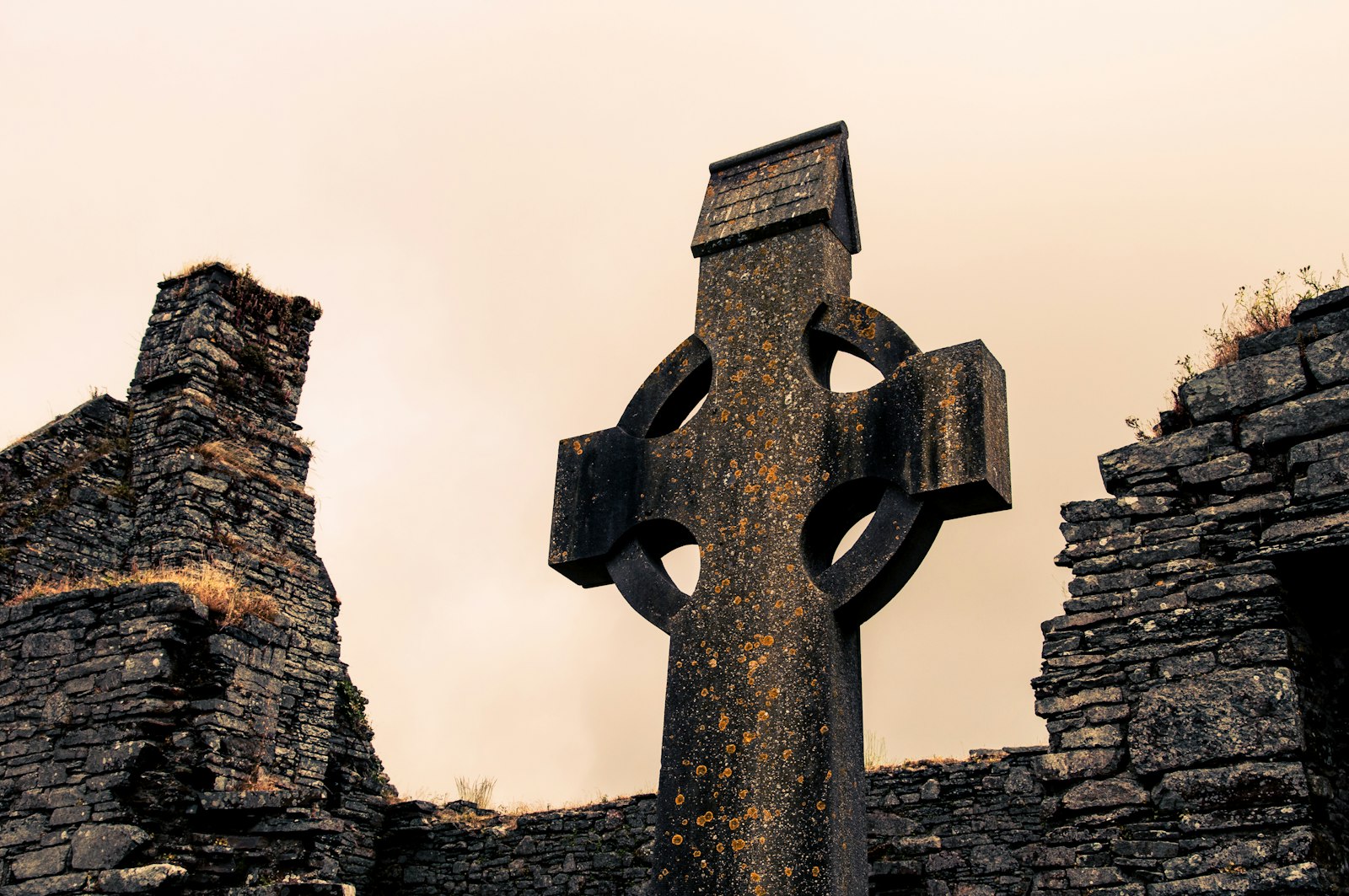
Photo by Joachim Riegel on Unsplash
When we think of Celtic art and design, certain images come to mind: intricate spiral patterns, elaborate interlace designs, animal forms abstracted into decorative elements, and the characteristic aesthetic of the illuminated manuscripts like the Book of Kells. This distinctive visual tradition represents one of the most recognizable and influential artistic legacies of ancient and medieval Europe. Yet the origins, development, and meaning of Celtic art often remain obscure, and the term “Celtic art” itself encompasses a broad range of artistic traditions across different regions and centuries. Understanding Celtic art requires exploring the techniques and materials that Celtic artisans mastered, the symbolic meanings they created, and how these artistic traditions developed and persisted from pre-Christian times through the medieval period.
Defining Celtic Art
Celtic art is not a unified, single tradition but rather a family of related artistic styles developed by Celtic peoples across Europe and lasting from roughly the 5th century BCE through the medieval period. The Celtic peoples who created these artistic traditions were widely distributed across continental Europe and the British Isles, from what is now Spain and Italy in the south to Ireland and Britain in the north. Despite this geographic dispersal, Celtic peoples shared certain cultural and linguistic characteristics, and their art shows recognizable commonalities even while varying significantly by region and period.
The term “Celtic art” is actually a modern scholarly designation. The ancient Celts themselves did not use this term to describe their artistic traditions. However, it has become conventional to group the artistic traditions of Celtic peoples under this umbrella term, recognizing the family of shared stylistic characteristics even while acknowledging variation and regional distinctiveness.
Celtic art has several distinctive characteristics that distinguish it from the artistic traditions of neighboring peoples. Celtic artists favored ornamental and abstract design over representational realism. While Celtic art includes animal and human figures, these are typically stylized and abstracted rather than naturalistic. The style emphasizes pattern, symmetry, and the relationship between elements rather than the accurate depiction of individual objects.
The artistic tradition also emphasizes curvilinear forms—spirals, curves, and flowing lines—rather than geometric angles and straight edges. The characteristic spiral pattern, which appears repeatedly in Celtic art, is so common that it has become emblematic of Celtic aesthetic tradition. These spirals are often combined and interlocked in complex arrangements that require careful observation to trace out the individual elements.
Materials and Techniques
Celtic artisans demonstrated extraordinary skill in working with various materials, but metalworking became their most renowned achievement. Celtic smiths developed sophisticated techniques for working with bronze, gold, silver, and iron, creating objects of both functional and decorative purpose.
Bronze was the primary material for Celtic metalwork during the Iron Age and early medieval periods, though gold work was particularly valued for its rarity and prestige. Celtic metalworkers created weapons—swords, spear tips, shields—that combined practical functionality with elaborate decoration. They created jewelry—brooches, torcs (neck rings), bracelets, and other ornaments—that served both decorative and status-signifying purposes. They created vessels and functional objects decorated with intricate patterns.
The techniques employed by Celtic metalworkers included casting, repoussé (a technique of raising design from the back of metal by hammering), engraving, and inlay. Many Celtic metal objects combine multiple techniques in their creation. A single brooch might involve casting the main form, engraving patterns into the surface, and inlaying different materials for decorative effect.
The level of technical skill demonstrated by Celtic metalworkers is remarkable. The precision required to create some of the finest Celtic metalwork suggests extensive training and experience. The ability to control the thickness of repoussé work, to create patterns of perfect symmetry despite the challenges of hand work, and to combine multiple materials and techniques in a single object demonstrates mastery of the craft.
Celtic artisans also worked in stone, creating elaborate carved crosses, particularly in Ireland where high stone crosses became a distinctive feature of the landscape. They worked in wood, though fewer wooden artifacts survive because wood decays more readily than stone or metal. They illuminated manuscripts, creating some of the most spectacular medieval manuscripts known, combining calligraphy with elaborate decoration.
The Spiral and Interlace Motifs
The most iconic design element in Celtic art is the spiral. This motif appears in Celtic art from the early period and continues through medieval times. Spirals appear as simple two-line spirals, as triple spirals (triskeles), and as complex patterns of interlocking spirals. The spiral seems to hold particular significance in Celtic aesthetic tradition, though the exact meaning or symbolism of spirals in Celtic culture is not entirely clear.
The interlace motif is another characteristic element of Celtic design. Interlace consists of geometric patterns created by interwoven lines or bands that appear to weave over and under each other. The patterns are typically symmetrical and regular, often creating complex designs that require careful observation to trace the individual elements. Interlace appears in metalwork, in carved stone, and most elaborately in illuminated manuscripts like the Book of Kells.
Both spirals and interlace demonstrate the Celtic concern with pattern and geometry. Celtic artists were interested in creating complex designs according to mathematical principles, even though they worked without modern measuring tools or mechanical precision. The designs were typically laid out using a system of geometric construction that allowed artists to create elaborate patterns while maintaining internal consistency and symmetry.
Animal and Zoomorphic Art
While abstract and geometric design dominates Celtic art, animals also appear frequently. Celtic artists created abstract representations of animals—stylized horses, birds, bears, boars, and other creatures—that are recognizable as animals while remaining highly abstracted and decorative.
The function of animal motifs in Celtic art is not entirely clear. Some scholars suggest that animals held symbolic significance—that particular animals represented particular characteristics or held religious significance. Other scholars emphasize that animals were used primarily for their decorative qualities, for the way that animal forms could be incorporated into overall design schemes.
The famous Gundestrup Cauldron, a silver vessel from the late Iron Age created in Celtic workshops, includes elaborate figurative scenes depicting human and animal figures, gods and goddesses, and ritual activities. The cauldron demonstrates that Celtic artisans could create elaborate representational images when they chose to do so, yet they usually did not emphasize representational accuracy. This suggests that the preference for stylization and abstraction reflected deliberate aesthetic choice rather than inability to achieve naturalism.
Religious and Symbolic Meaning
The meaning and symbolic significance of Celtic art remains partially mysterious, particularly for pre-Christian Celtic art. We lack written records explaining the significance of particular motifs or explaining the religious beliefs and mythology that informed Celtic artistic production. Nonetheless, evidence suggests that Celtic art was closely connected to religious belief and ritual.
Excavations of Celtic religious sites reveal elaborate decorated objects, suggesting that fine craftsmanship and decoration were invested in religious purposes. Some Celtic artwork is associated with burials, appearing in the graves of high-status individuals alongside objects of military and household value. This suggests that decorated objects held significance in the spiritual or ritual realm as well as in practical or display contexts.
With the Christianization of Ireland and the development of Christian Celtic art, religious symbolism became more explicit. The crosses that adorn illuminated manuscripts and carved stone crosses carried explicitly Christian meaning. The combination of Christian symbols (crosses, animals from the Gospel accounts) with traditional Celtic decorative patterns created a synthesis of Celtic artistic tradition with Christian iconography.
The decorated initial letters of illuminated manuscripts often contain hidden images—human faces, animal heads, and other figures hidden within the elaborate ornamentation. The existence of these hidden images suggests intentional communication of meaning through the artwork, even if the exact meaning remains unclear to modern viewers.
Geographic Variation and Development
While Celtic art shares common characteristics across regions, significant variation occurred in different geographic areas and historical periods. The art of continental Celtic peoples differs somewhat from that of British and Irish Celtic peoples. The art of pre-Christian Celtic cultures differs from that of Christian medieval Celtic cultures. Tracing these variations helps understand how Celtic artistic traditions developed and adapted to changing circumstances.
The Celtic art of continental Europe (what is now France, Germany, and the Alpine regions) tends to show more influence from Mediterranean and classical traditions than does insular Celtic art (art of the British Isles). Continental Celtic art sometimes incorporates classical motifs and shows influence from classical artistic canons.
The art of Ireland and Britain developed more distinctively, maintaining greater continuity with pre-Christian Celtic traditions while synthesizing them with Christian and other influences. The art of medieval Ireland, in particular, created some of the most elaborate and sophisticated developments of Celtic artistic tradition, as seen in illuminated manuscripts like the Book of Kells and the Book of Durrow.
Continuity Through Christianization
An important feature of Celtic artistic tradition is the continuity of certain aesthetic preferences through the Christianization of Celtic societies. While pre-Christian Celtic religions were replaced by Christianity, much of the aesthetic tradition—the preference for spiral and interlace patterns, the stylization of animal and human forms, the emphasis on ornament and pattern—persisted in Christian art.
This continuity meant that Celtic Christian art integrated Christian symbolism and iconography with pre-Christian aesthetic traditions. A Christian cross could be elaborated with spiral patterns, interlace designs, and animal motifs derived from pre-Christian Celtic tradition. An illuminated Gospel manuscript could use decorative traditions that had their roots in pre-Christian art to frame and embellish Christian sacred texts.
This creative synthesis of Christian and Celtic artistic traditions was particularly developed in Ireland, where monasteries became centers of artistic production and where the resulting art has been celebrated as among the finest medieval art ever created.
Legacy in Modern Culture
The artistic legacy of Celtic civilization has had remarkable staying power in modern culture. Celtic designs appear in contemporary jewelry, clothing, tattoos, and interior decoration. The distinctive aesthetic of Celtic art—the spirals, interlace, and animal motifs—has become emblematic of “Celtic” identity and is recognized across the world.
For people of Celtic heritage, including Irish Americans, Celtic art serves as a visible connection to ancestral traditions. The Book of Kells is recognized as one of the great treasures of Irish cultural heritage. Celtic crosses, decorated with traditional motifs, are found in cemeteries and as decorative objects throughout Irish and Irish American communities. Celtic design appears in contemporary Irish craft, fashion, and visual media.
The appeal of Celtic art in modern culture reflects several factors. The aesthetic complexity and beauty of Celtic art means it remains visually striking and aesthetically compelling. The abstract, mathematical quality of Celtic design appeals to modern sensibilities in different ways than it might have appealed to its original audiences. The association of Celtic art with ancient civilization and with a pre-industrial, spiritually connected way of life appeals to modern romantic impulses about the past.
Technical and Artistic Achievement
Understanding Celtic art requires appreciating the technical skill and artistic achievement that it represents. The precision, symmetry, and complexity of Celtic design could not be achieved without extensive training and experience. The ability to work materials like bronze and gold, to create intricate patterns, and to combine multiple artistic techniques in a single object represents mastery of craft.
The artistic achievement is not merely technical but also conceptual. The artists who created Celtic designs developed and refined aesthetic principles—ideas about how pattern relates to form, how repetition and variation create visual interest, how decoration can enhance rather than obscure function. These principles were worked out through centuries of artistic practice and represented conscious aesthetic development.
The Enduring Significance of Celtic Art
Celtic art represents one of the great artistic achievements of ancient and medieval Europe. The techniques developed by Celtic artisans, the aesthetic principles they established, and the specific designs they created remain remarkable centuries after their creation. The fact that Celtic art continues to captivate modern viewers, to influence contemporary art and design, and to serve as a symbol of cultural identity speaks to the power and enduring appeal of Celtic artistic tradition.
For historians and archaeologists, Celtic art provides important evidence about Celtic cultures—about their values, their techniques, their spiritual beliefs, and their social organization. The fine metalwork and elaborate decoration suggests societies with both the resources to support skilled craftspeople and the values that prioritized and invested in fine art.
For those interested in Irish history and heritage, Celtic art represents a distinctive achievement of Irish and broader Celtic civilization. The artistic traditions that created the Book of Kells, the high crosses, and the decorated metalwork are part of Irish cultural inheritance. These artistic traditions persisted through centuries of historical change, from pre-Christian times through medieval Christianization and into the modern period, representing a continuity of aesthetic sensibility that connects modern Irish people to their distant past.

Author: jonathan
Jonathan is the publisher of Irishtopia.net, Anglotopia.net, and Londontopia.net. He's passionate about travel and learning about other cultures. He's been to Ireland several times, and uses his travel expertise for Irishtopia!