
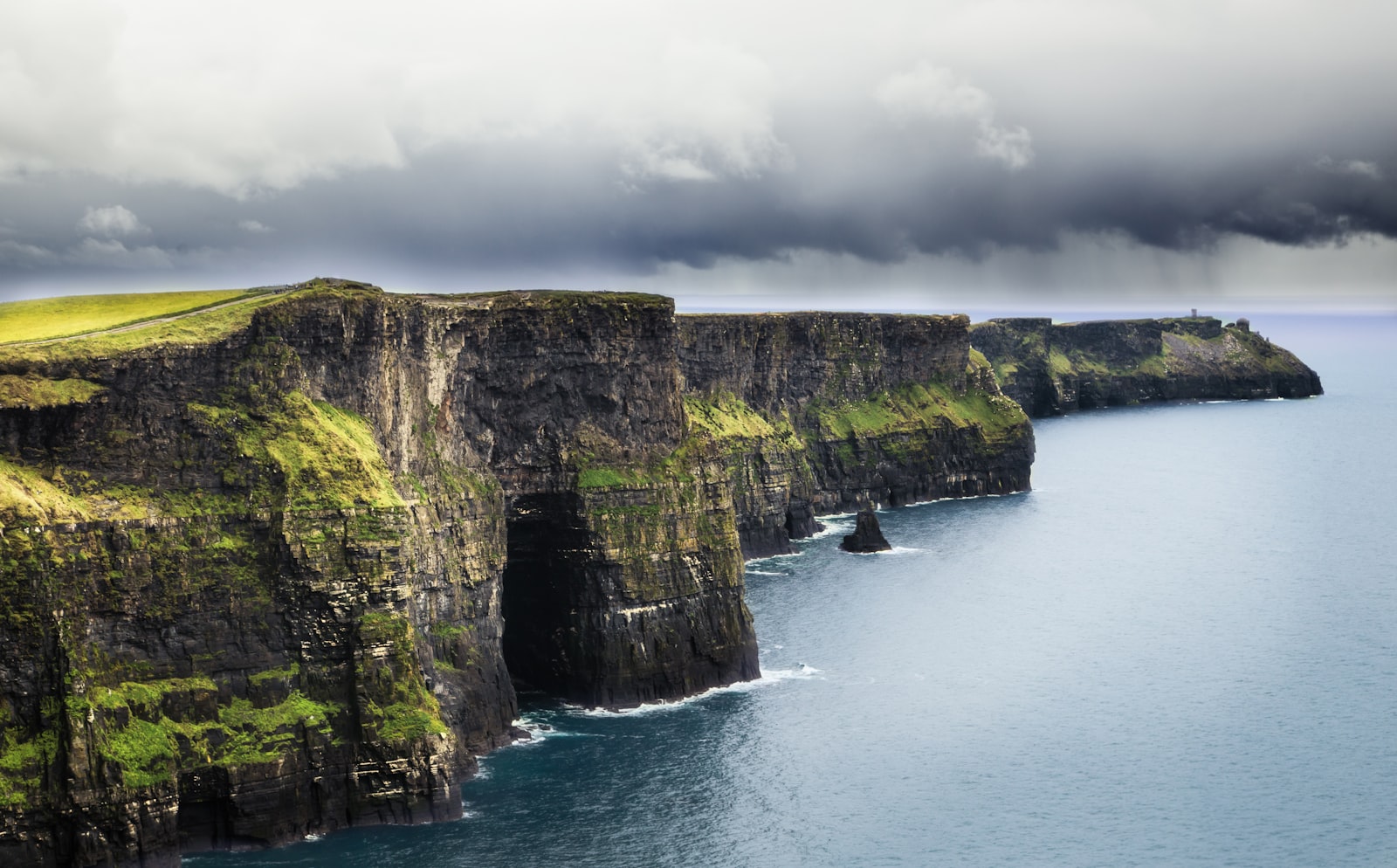
Photo by Saad Chaudhry on Unsplash
Introduction
The Cliffs of Moher have become Ireland’s most iconic image—dramatic, majestic sea cliffs that rise 214 meters above the Atlantic Ocean along the southwestern coast of County Clare. Every year, over one million visitors descend on these cliffs, making them Ireland’s most visited natural attraction by a substantial margin.
Yet despite this immense popularity, the Cliffs of Moher remain genuinely impressive. They deliver on their reputation. The sheer scale, the layers of geological time visible in the rock face, the power of the Atlantic waves crashing below, and the vast panoramic views combine to create an experience that justifies the crowds and validates the superlatives.
For American visitors, the Cliffs of Moher represent quintessential Ireland—the landscape that appears in countless tourism advertisements, films, and cultural representations. But understanding what makes the cliffs special requires looking beyond the photographs. The geological history, the ecological significance, the surrounding landscape, and the practical realities of visiting transform the experience from a quick photo stop into something genuinely meaningful.
Geological Formation and Significance
The Cliffs of Moher stretch for approximately 14 kilometers along the Clare coast, forming part of the western edge of the Burren region. The cliffs rise from around 120 meters in the north to approximately 214 meters at their highest point near O’Brien’s Tower. The visual impact of these heights is extraordinary—the cliffs drop almost vertically to the turbulent waters below.
The rock composition reveals Earth’s geological history. The cliff face consists primarily of sandstone and shale, with bands of different colored rock layers visible in the exposed face. These layers represent sediments deposited in ancient seas over millions of years. The striations visible in the cliff face are geological time made visible—different colored bands represent different time periods and depositional environments.
The landscape beneath the sediments consists of Paleozoic bedrock, part of the larger geological system that underlies much of southwestern Ireland. During the ice age, glaciers didn’t directly impact this coastal area, but sea level changes from glaciation shaped the landscape. Rising seas after glacial retreat created the current coastal configuration.
The cliffs continue to erode—rock falls occur regularly, particularly in winter when freeze-thaw cycles weaken the stone. This erosion is natural geological process, not recent degradation. Over geological time scales, the cliffs will continue to migrate inland. From human perspectives, the erosion rate—approximately 5 centimeters per year in some locations—is virtually imperceptible. The cliffs will endure for millennia.
Ecological Significance and Wildlife
Birdlife
The Cliffs of Moher support one of Ireland’s most important seabird colonies. Over 20,000 seabirds nest on the cliffs annually, representing multiple species. Razorbills, guillemots, and puffins are the primary breeding species. Kittiwakes, shags, and other seabirds also nest on the cliff faces.
Puffins are particularly iconic. These colorful, comical-looking birds breed in underground burrows on cliff-top grassland. Spring and early summer are prime puffin seasons—the birds are colorful and active during breeding season. However, seeing puffins requires patience and careful observation. They’re present and visible but not always obvious.
Watching seabirds from the cliff top provides extraordinary insight into their behavior and ecology. The birds are acrobatic fliers, making spectacular maneuvers to navigate cliff faces and ocean thermals. Hearing the cacophony of thousands of nesting birds creates a sensory experience that photographs cannot capture.
Coastal Plants
The cliff-top grassland supports specialized plant communities adapted to exposure and salt spray. Various plant species grow nowhere else, representing isolated populations that evolved under specific environmental conditions. These plants are small and unassuming compared to seabirds, but they’re ecologically significant.
The grassland is periodically grazed by sheep, maintaining the landscape in its current condition. Without grazing, the grassland would gradually succeed to scrubland and eventually small trees. Grazing represents human land use that maintains the landscape we associate with the cliffs.
O’Brien’s Tower and Tourist Infrastructure
O’Brien’s Tower is the iconic structure associated with the Cliffs of Moher. This circular stone tower, built in 1835, stands on the cliff edge about 2 kilometers south of the cliffs’ northern extent. The tower was built as a tourist attraction—one of Ireland’s first purpose-built tourist structures. It remains one of Ireland’s most recognizable buildings.
The tower’s location is excellent for photography. The structure provides context for understanding the scale and geography of the cliffs. Climbing the narrow, winding stone stairs inside the tower provides 360-degree views from the top—the cliffs stretch in both directions, the Burren landscape extends inland, and on clear days, the Aran Islands and Galway Bay are visible.
The modern Cliffs of Moher Visitor Center, built in 2007, sits partially underground near the tower. The center provides exhibitions about the geology, ecology, and cultural significance of the cliffs. Multiple restaurants, shops, and facilities operate from the center. The architecture has been designed to minimize visual impact—the building’s roof integrates with the landscape, and green vegetation covers parts of the structure.
The visitor center represents modern tourism infrastructure at its most considered. Rather than sprawling on the landscape like typical tourist facilities, the building respects the environment while providing necessary services. The exhibitions are informative and well-designed.
Visiting the Cliffs: Practical Information
Getting There
The Cliffs of Moher are located on the southwestern coast of County Clare, about 40 kilometers south of Galway city. Doolin, a small village known for traditional music, is the closest settlement, about 5 kilometers away.
By car, the cliffs are accessible via the N67 coastal road. The journey from Galway takes approximately one hour. Parking is available at the visitor center (paid parking) or at smaller, free car parks north of the main center.
Public transportation reaches Doolin with regular bus service from Galway and other towns. From Doolin, it’s approximately a 6-kilometer walk or short taxi ride to the visitor center.
The nearest international airports are Shannon (approximately 70 kilometers) or Dublin (approximately 220 kilometers).
When to Visit
The cliffs are accessible year-round, but experience varies dramatically by season.
Summer (June-August) brings warm weather, long daylight hours, and peak crowds. The weather is generally pleasant, though rain is possible. The cliffs can be extremely crowded, particularly mid-day. Arriving very early or visiting in shoulder hours (morning or evening) helps avoid worst crowds.
Spring (March-May) offers good weather, longer daylight, and return of seabirds. Puffins arrive in April and May. Crowds are moderate. Wind can be strong. This is excellent for birdwatchers.
Autumn (September-November) brings beautiful light, fewer crowds than summer, and often excellent visibility. The landscape transitions through rich colors. Weather becomes less predictable. This is arguably the best time for many visitors.
Winter (December-February) offers minimal crowds, dramatic weather, and short daylight hours. The cliffs in storm conditions are extraordinarily impressive—waves crash with tremendous force, and the raw power of nature is evident. However, weather can prevent safe visiting. Cold, strong winds make standing on the cliff edge uncomfortable.
Crowds and Planning
The Cliffs of Moher are incredibly crowded during peak season. On busy days, thousands of visitors arrive simultaneously, creating congestion at parking facilities, the visitor center, and along the cliff paths.
To minimize crowd impact:
- Visit in shoulder seasons (April-May or September-October)
- Arrive very early (before 9 AM) or late afternoon
- Visit on weekdays rather than weekends
- Allow flexibility to visit on days when weather discourages crowds
Even during off-season visits, the site remains moderately busy. Complete solitude is unlikely, but early visits with clear weather can provide relative quiet.
Entry and Facilities
Entry to the cliff-top area is free. The visitor center charges admission (approximately €6) for access to exhibitions and facilities, but this can be avoided by accessing the cliffs directly via walking paths. Parking is paid (approximately €3-5).
The visitor center includes restaurants, cafes, and shops. A small pub offers drinks and simple food. Multiple restaurants provide more substantial meals. Quality is adequate for tourist facilities—not exceptional but acceptable.
Toilets and basic amenities are available. The site is accessible to visitors with mobility limitations, though the cliff-top paths are somewhat uneven.
Weather Considerations
Weather dramatically affects the experience. Clear days provide stunning views and excellent photography. Cloudy days reduce visibility and photography quality but can provide dramatic lighting. Rainy days are common—Ireland’s weather is unpredictable.
Strong winds are nearly constant on the cliff edge. The wind can make standing uncomfortable and photography challenging. Wind gusts can be genuinely dangerous on the cliff edge—visitors have been blown over in extreme conditions. Respect warning signs and your own safety judgment.
Exploring Beyond the Main Site
Northern Walking Trail
A walking trail extends northward from O’Brien’s Tower along the cliff top for approximately 7 kilometers. This path is less crowded than the main visitor center area, offers continuous cliff-top walking, and provides excellent views and birdwatching opportunities. The trail is well-defined and suitable for most fitness levels.
Walking this trail requires time and intention—you can’t do it as a quick addition to a visitor center visit. But for those willing to invest an hour or two, it offers the best experience of the cliffs in relative solitude.
Doolin Village
Doolin is famous for traditional Irish music. Multiple pubs host nightly music sessions, some of which are genuinely traditional and local, others more touristic. The village has become a pilgrimage site for traditional music enthusiasts.
Doolin offers accommodation, restaurants, and a genuine village character despite tourism development. The village is worth visiting in its own right, independent of the cliffs.
The Burren
Immediately inland from the Cliffs of Moher lies the Burren—a unique limestone landscape of extraordinary ecological significance. The Burren’s stark, rocky landscape, underground streams, caves, and specialized plant communities create an ecosystem found nowhere else in Ireland.
Combining a visit to the cliffs with exploration of the Burren provides context for understanding the relationship between coastal and inland landscapes.
Aran Islands
On clear days from the cliff top, the Aran Islands are visible across Galway Bay. These islands are accessible by ferry from Doolin (approximately 45 minutes) and offer their own attractions—ancient fort, archaeological sites, and island life.
Photography and Aesthetic Considerations
The Cliffs of Moher are extraordinarily photogenic, which partly explains their social media ubiquity. However, the best photographs require more than simply pointing a camera at dramatic scenery.
Light quality dramatically affects photographs. Morning light creates warm, directional light that emphasizes texture and three-dimensionality. Evening light creates similar effects from the opposite direction. Midday light is often flat. Cloud cover can create drama or reduce impact depending on its distribution.
Composition matters. Photographer instinct tends toward capturing the cliffs directly—the dramatic vertical drop straight on. However, photographs including foreground interest (grassland, visitors for scale, wildflowers) often create more compelling images.
Weather conditions affect photographic possibility. Rainy, cloudy days can create dramatic, moody images. Storm conditions produce powerful but difficult-to-photograph scenes. Clear days offer excellent visibility but less dramatic lighting.
Avoiding crowds in photographs requires either visiting at uncrowded times or accepting crowds as part of the contemporary image. The cliffs are genuinely crowded; pretending otherwise in photographs creates a distorted representation.
Understanding the Visitor Experience
The Cliffs of Moher experience is paradoxical. The landscape is genuinely magnificent, deserving its reputation. Yet the experience of visiting is mediated by crowds, tourism infrastructure, and the knowledge that you’re one of a million annual visitors seeing essentially the same view.
This paradox doesn’t necessarily diminish the experience—different visitors resolve it differently. Some find the crowds enhance the experience through shared awe. Others find crowds diminish the sense of connection with landscape. Some visit briefly and move on; others invest significant time in deeper exploration.
The honest assessment is this: the cliffs are worth visiting. They’re genuinely impressive and provide legitimate context for understanding Ireland’s landscape, geology, and ecology. However, they’re also crowded tourist attractions that can feel overly commercialized. Both observations are true simultaneously.
Integration into Broader Itineraries
Ring of Kerry Plus Cliffs
The cliffs fit naturally into a Ring of Kerry itinerary, though the Cliffs of Moher are north of the main Ring of Kerry loop. A visit requires a day trip north or integration with Galway-based exploration.
West of Ireland Circuit
Combining the Cliffs of Moher with Galway, Connemara, Doolin, and the Burren creates a comprehensive west of Ireland experience. This circuit showcases the region’s diversity—coastal cliffs, mountain scenery, cultural vitality, and geological significance.
Geological Tour
The cliffs serve as an excellent component of a geological tour of Ireland. The visible rock layers, fossil record, and formation geology make the site significant for understanding Irish landscape formation.
Music and Culture Tour
Combining the Cliffs with Doolin’s music scene, Galway’s cultural vitality, and the Burren’s unique character creates a west-focused cultural experience.
Conservation and Visitor Impact
The Cliffs of Moher are carefully managed to balance accessibility with conservation. The visitor center’s design minimizes visual impact. Path systems direct visitors to areas that can sustain foot traffic without habitat damage. Seabird colonies are monitored to ensure visitor activity doesn’t negatively impact breeding.
Visitors can minimize their impact by:
Climate change represents a longer-term conservation challenge. Rising sea levels and increased storm intensity could eventually affect the cliffs’ stability and accessibility.
Practical Itinerary Suggestions
Half-Day Visit (4 Hours)
Full-Day Visit (8+ Hours)
Multi-Day Integration
Stay in Galway or Doolin; spend a day at the cliffs and surrounding area, then explore Burren, other parts of County Clare, or western Ireland’s other attractions.
Conclusion: Understanding the Cliffs of Moher
The Cliffs of Moher fully deserve their reputation as Ireland’s most iconic landscape. The sheer scale, geological significance, ecological importance, and aesthetic power combine to create a genuinely impressive natural feature. Visiting is worthwhile for most Ireland travelers.
However, understanding the cliffs requires looking beyond the tourist infrastructure and momentary visits. The geological time visible in the rock layers, the seabirds nesting in spring, the human history of tourism and landscape use, and the relationship between the cliffs and surrounding landscape all contribute to meaningful understanding.
For American visitors seeking a quintessential Irish experience, the Cliffs of Moher deliver. Stand on the cliff edge, feel the wind, experience the scale of geological time and natural power, and allow yourself to be affected by genuine landscape magnificence. Yes, you’ll be one of a million annual visitors. But you’ll also be standing on one of Ireland’s most extraordinary natural features—and that experience, despite its crowded context, genuinely matters.

Author: jonathan
Jonathan is the publisher of Irishtopia.net, Anglotopia.net, and Londontopia.net. He's passionate about travel and learning about other cultures. He's been to Ireland several times, and uses his travel expertise for Irishtopia!