
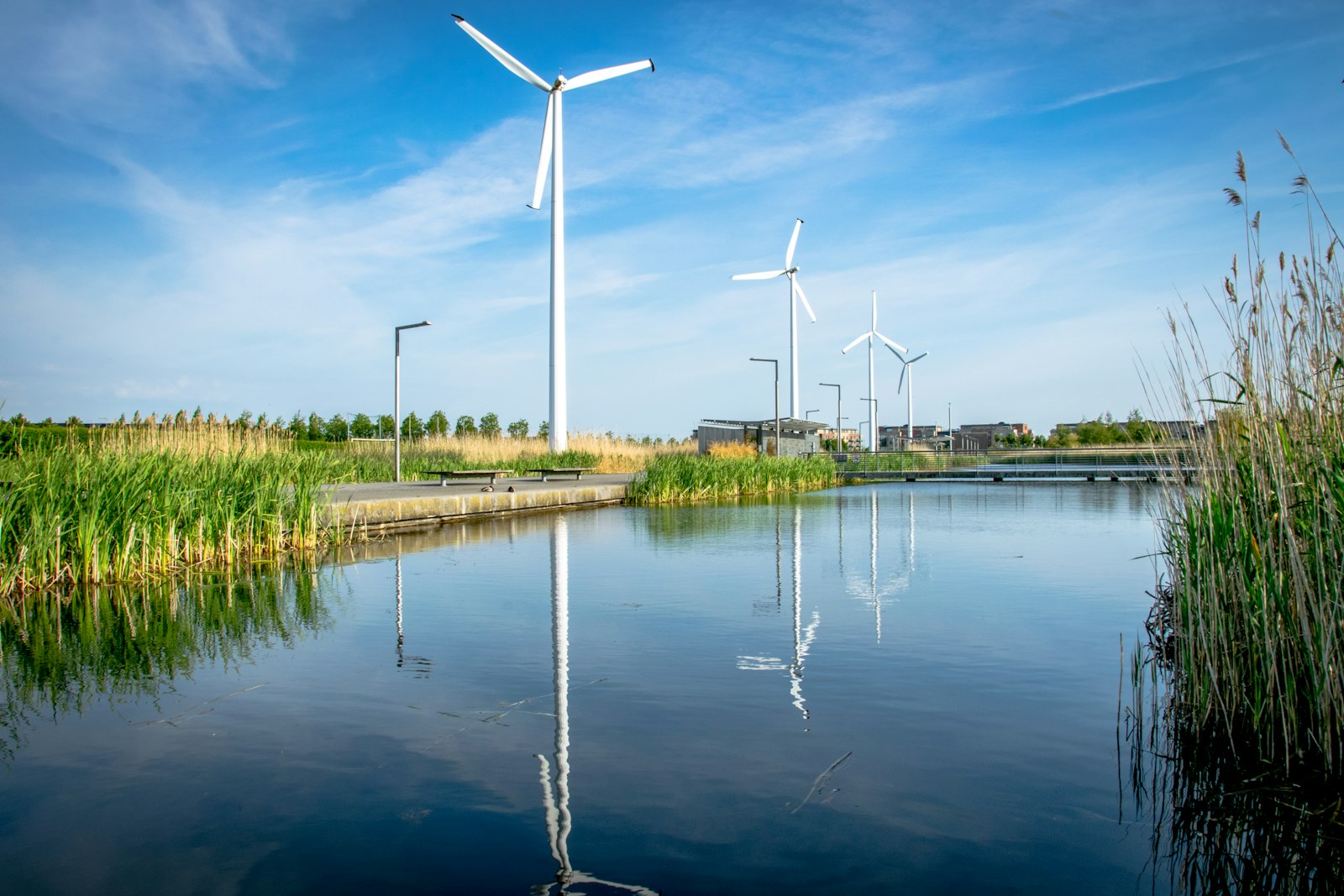
Photo by Armen Sarkissian on Unsplash
Ireland faces climate change in paradoxical ways. As an island surrounded by the Atlantic Ocean, rising sea levels and increasingly severe storms threaten coastal communities and infrastructure. Simultaneously, the nation’s agricultural heritage—farming and livestock production fundamentally important to Irish identity and economy—faces existential pressure from climate shifts requiring dramatic transformation of farming practices. These dual challenges create unique pressures for Ireland, demanding difficult choices between preserving economic sectors and addressing climatic threats.
Climate change in Ireland is not a distant future concern—it’s already happening. Temperatures have risen measurably. Precipitation patterns have changed. Extreme weather events have increased in frequency. Coastal erosion has accelerated. Farmers report shifting growing seasons, changing pest pressures, and increasing unpredictability. The challenge for Ireland is to decarbonize its economy, adapt to climatic changes already unavoidable, and manage the transition in ways that don’t devastate communities dependent on agricultural and coastal economies.
Ireland’s Climate Profile and Vulnerabilities
Ireland’s climate is changing faster than the global average. Temperatures have increased approximately 1.2 degrees Celsius since pre-industrial times, exceeding the global average of approximately 1.1 degrees. This might seem minor, but such increases drive substantial ecological and weather pattern changes. Warmer temperatures mean melting ice sheets and rising sea levels globally, and shifting precipitation patterns, growing season changes, and ecosystem transformations locally.
Ireland’s geographic position makes it particularly vulnerable to sea level rise. Much of Ireland’s population and infrastructure concentrate in coastal areas. Dublin, Ireland’s largest city, sits on the coast at minimal elevation in many neighborhoods. Cork, Limerick, and other major cities are similarly positioned. Rising sea levels directly threaten these population centers with inundation.
Additionally, Ireland’s position on the Atlantic makes it vulnerable to more intense storms. Climate change doesn’t necessarily increase storm frequency, but it increases storm intensity—hurricanes and severe winter storms are stronger. Ireland experienced Storm Eleanor in 2018, Storm Ophelia in 2017, and Storm Brian in 2016, all bringing severe coastal flooding and damage. As oceans warm, more energy is available to power intense storms, and sea levels are higher, making storm surge more severe.
Precipitation is also changing. Ireland historically had relatively consistent moisture year-round. Now, patterns are more extreme—periods of drought followed by intense rainfall causing flooding. This pattern creates challenges for agriculture, flooding for communities, and water management problems. Infrastructure designed for historical climate patterns may be inadequate for new extremes.
Coastal Erosion and Sea Level Rise
Coastal erosion in Ireland has accelerated dramatically. Some areas lose several meters of coastline annually due to storms and rising water levels. The Irish coastline is eroding by an average of approximately 10 centimeters per year, though some areas experience meters-per-year erosion. Communities literally watch their land disappear into the ocean.
The village of Drinagh in County Waterford has experienced extraordinary erosion. The coastline receded so rapidly that houses became uninhabitable as land literally disappeared from beneath them. Entire properties have fallen into the sea. Residents have had to be relocated by the government, abandoning their homes to ocean encroachment. Drinagh represents an extreme case, but similar situations are developing in communities across Ireland’s coast.
This isn’t merely property damage—it’s cultural loss. Coastal communities have often existed in the same locations for centuries. Relocating requires abandoning ancestral lands and community connections. People lose not just homes but identity and cultural continuity.
Beyond immediate coastal communities, rising sea levels threaten major infrastructure. Dublin Airport, which serves as Ireland’s primary international gateway, is near sea level and vulnerable to storm surge flooding. If sea levels continue rising as projected, the airport could require either substantial defensive infrastructure or eventual relocation, both incredibly expensive and disruptive options.
Water infrastructure is also threatened. Water treatment facilities, sewage systems, and other essential infrastructure often locate near coasts or rivers to access water and manage waste. Rising seas and more intense flooding threaten these systems directly. If they fail, communities lose safe water access and sewage treatment, creating public health crises.
Agricultural Transformation Required
Irish agriculture faces perhaps the most profound climate-related challenge. Ireland has been agriculturally dependent for centuries—farming and livestock production are central to the Irish economy and national identity. However, livestock agriculture, particularly cattle and sheep farming, is a major source of greenhouse gas emissions due to methane produced during animals’ digestion. Ireland’s agricultural emissions account for approximately 37 percent of national greenhouse gas emissions—exceptionally high for a developed economy.
Addressing climate change requires reducing these agricultural emissions dramatically. This means fundamentally transforming Irish farming away from intensive livestock production toward alternatives. Yet Irish farmers have built their livelihoods, property values, and identity around livestock farming. Asking them to transition is asking them to abandon their way of life.
One pathway is reducing livestock numbers while improving productivity—producing more meat and dairy from fewer animals. This requires genetic selection for high-producing animals and improved management practices. However, there are limits to this approach—you can’t indefinitely increase productivity without hitting biological limits.
Another pathway is shifting agriculture toward plant-based production. Growing vegetables, grains, and legumes for direct human consumption or plant-based protein products produces far fewer emissions than livestock. However, this requires completely different infrastructure, knowledge, and market relationships. Farmers would need to learn new techniques, develop new equipment, and identify market outlets. This is possible but represents massive transition.
A third pathway involves integrated farming systems combining livestock with carbon sequestration on the same land. Proper management of pasture land can actually sequester carbon while producing livestock. Agroforestry, integrating trees with livestock farming, can produce carbon offsets. These approaches maintain livestock farming while reducing net emissions.
Additionally, renewable energy in agriculture is crucial. Replacing fossil fuel-powered machinery with electric alternatives, implementing solar and wind power on farms, and using biogas from agricultural waste for energy can substantially reduce agricultural sector emissions without eliminating livestock farming entirely.
Water Management and Flooding
Increasingly unpredictable rainfall creates water management challenges. Periods of drought require water conservation and management. Periods of intense rainfall cause flooding, damaging property and disrupting transportation. Climate change makes both extremes more likely, requiring flexible water infrastructure.
Ireland has experienced severe flooding repeatedly. In 2015-2016, Storm Eva and subsequent rainfall caused flooding across the country. Dozens were displaced from homes. Businesses were damaged. Communities that hadn’t flooded in living memory were inundated. Each major flood event becomes costlier in a society where more development occurs in flood-vulnerable areas.
Water infrastructure requires adaptation. Greater water storage capacity is needed to capture rainfall during wet periods for use during drought periods. Flood defenses—barriers, channels, and retention areas—are needed in vulnerable communities. However, there are limits to defensive infrastructure—you can’t engineer away all floods if climate change makes the water in extreme events exceed engineering capacity.
Therefore, some adaptation requires accepting that certain areas may not remain suitable for habitation or development. Planning regulations increasingly restrict building in flood-prone areas. Managed retreat—deliberately relocating development away from vulnerable areas—may be necessary in some locations. This is politically difficult but increasingly recognized as necessary.
Ecosystem Impacts and Biodiversity
Climate change is already transforming Irish ecosystems. Bird populations are shifting, with species arriving earlier and leaving later than historically observed. Plant species distributions are changing. Marine ecosystems are experiencing dramatic shifts—fish species are moving northward as waters warm, disrupting fishing industries dependent on particular species in particular locations.
Biodiversity is declining. Species that require cool, wet climates are struggling. Wetlands, crucial habitats, are drying due to changing precipitation patterns. Native oak forests and other woodlands are stressed. Invasive species, previously unable to survive Irish climates, are thriving. Overall, the diversity of Irish wildlife is declining, with significant ecological consequences.
Wetland loss is particularly concerning. Irish bogs—unique ecosystems with extraordinary biodiversity and cultural significance—are threatened. These ecosystems developed over millennia in Ireland’s wet climate. As conditions change, bogs are drying and becoming less viable as wetland ecosystems. Additionally, peat extraction has historically drained bogs, and climate change further reduces wetland viability.
Protecting remaining habitats and restoring degraded ecosystems is crucial. The Irish government has committed to restoring peatlands and wetlands, protecting forests, and creating nature reserves. However, these efforts are underfunded relative to need. Without substantial investment, biodiversity loss will continue accelerating.
Government Policy and Emissions Targets
The Irish government has committed to net-zero greenhouse gas emissions by 2050 under the Climate Action Plan. Additionally, Ireland must meet EU emissions reduction targets requiring approximately 55 percent reduction from 1990 levels by 2030. These are substantial commitments requiring dramatic changes.
The Irish government has implemented carbon pricing, where businesses must pay for emissions. This creates financial incentives to reduce emissions. Tax incentives have been introduced for electric vehicle adoption, renewable energy installation, and home insulation. Some subsidies support sustainable agriculture transition.
However, critics argue that these policies are insufficient relative to the challenge. Carbon prices remain lower than many economists argue are necessary to drive transformation. Investments in renewable energy infrastructure are substantial but perhaps inadequate for the pace of transition required. Support for farmers and workers needing to transition is meager compared to the challenge they face.
Additionally, policy inconsistencies undermine effectiveness. The government simultaneously commits to decarbonization and supports fossil fuel infrastructure. Peat-fired power plants continue operating longer than climate commitments suggest they should. Agricultural supports sometimes incentivize emissions-intensive production. These contradictions reduce policy credibility.
Transportation and Energy Transition
Transportation is Ireland’s fastest-growing emissions source, driven by increased vehicle ownership and usage. Addressing this requires shifting toward electric vehicles and improving public transportation. The Irish government has announced phase-outs of new petrol and diesel car sales, with Ireland planning bans on new petrol car sales by 2030 and complete transition to electric vehicles by 2035.
However, this transition faces challenges. Electric vehicles remain more expensive than conventional vehicles, creating affordability barriers. Charging infrastructure is limited outside Dublin. Battery production has environmental costs. For rural residents, public transportation alternatives to private vehicles are poor. The transition will be difficult for lower-income people unable to afford electric vehicles.
Energy supply more broadly is transitioning toward renewables. Ireland has invested heavily in wind energy, with offshore wind farms increasingly supplementing onshore wind. Solar energy is expanding. These renewables can theoretically supply all Irish electricity, though seasonal variation requires battery storage or backup generation. The transition away from fossil fuel electricity generation is genuinely progressing.
However, heating—primarily from natural gas—hasn’t seen equivalent progress. Most Irish homes heat with natural gas. Transitioning to heat pumps, renewables-based heating, or other low-carbon alternatives requires retrofitting buildings, which is expensive and disruptive. The government has incentivized heat pump adoption, but uptake remains modest relative to need.
Just Transition and Worker Support
A genuine challenge in climate action is ensuring that workers and communities dependent on emissions-intensive industries can transition to new livelihoods without devastating hardship. Asking coal miners to transition to renewable energy jobs only works if equivalent jobs exist and workers can be trained and transitioned without losing income and dignity.
In Ireland, this challenge is most acute in agriculture. Farmers shouldn’t bear the entire cost of reducing agricultural emissions. Government support for transitioning farming practices, investing in new crops and techniques, and maintaining farmer incomes during transition is essential for just transition.
Additionally, peat extraction workers and communities dependent on peat production need support transitioning to other livelihoods. The Irish government has committed to gradually phasing out peat-fired electricity generation, but workers in those facilities need training and employment alternatives.
Supporting workers and communities through transition is expensive. The Irish government’s commitment to just transition remains somewhat rhetorical—actual spending on support programs is limited. More substantial investment would improve transition outcomes and fairness.
International Cooperation and Responsibilities
Ireland benefits from being relatively small and not a major historical emitter of greenhouse gases. However, Ireland’s current per-capita emissions are exceptionally high due to agricultural intensity. Additionally, as a wealthy developed nation, Ireland has responsibility to reduce emissions rapidly, demonstrating feasibility of decarbonization to other nations.
Internationally, Ireland has committed to support for climate action in developing nations through climate finance. However, actual commitments remain below pledged levels. As wealthy nations, Ireland and other developed countries have responsibility to support developing nations’ climate adaptation and decarbonization, given that wealthy nations bear primary responsibility for historical emissions causing climate change.
Internationally, the transition toward renewable energy, sustainable agriculture, and low-carbon living offers opportunities for Irish companies to develop and export technologies and practices. Irish companies could lead in renewable energy, sustainable agriculture technology, and low-carbon solutions globally. Positioning Ireland as a climate leader creates economic opportunity alongside moral imperative.
Challenges and Uncertainties
The Irish government faces genuine dilemmas. Rapid decarbonization threatens agricultural communities and workers. Coastal protection requires enormous infrastructure spending. Energy transition requires technological capabilities not yet fully developed. These aren’t simple problems with easy solutions.
Additionally, climate change itself is uncertain. While warming is certain, exact impacts vary depending on how much warming ultimately occurs, how quickly it occurs, and how different systems respond. Irish planning must account for this uncertainty, building resilience while understanding that some surprises will occur regardless.
Finally, global action is crucial. Even if Ireland decarbonizes completely, global emissions will continue rising due to development in other nations unless they also transition. Ireland’s unilateral action can’t prevent climate change—it requires global cooperation. This creates frustration—Ireland pays costs for transition while global emissions continue rising if other nations don’t act similarly.
Conclusion: Crisis and Opportunity
Climate change represents one of Ireland’s defining challenges for coming decades. Rising seas threaten coastal communities and infrastructure. Agricultural transformation is required but threatens livelihoods and cultural identity. Energy and transportation transition requires massive investment and social change.
Yet the transition also offers opportunities. Developing renewable energy technology creates jobs. Sustainable agriculture can be economically viable while reducing emissions. Transitioning to low-carbon living can create more resilient, healthier communities. The question is whether Ireland will manage the transition with intention and fairness, supporting affected workers and communities, or whether the transition will be chaotic and inequitable.
For American observers, Ireland’s climate challenge illustrates how geography determines vulnerability. Island nations face unique risks from sea level rise. Agricultural nations face unique challenges transitioning farming. Ireland’s response—attempting to decarbonize while supporting affected populations—provides lessons for other nations facing similar challenges.
The coming decades will determine whether Ireland successfully navigates the climate transition, maintaining prosperity while decarbonizing, or whether inadequate action leads to coastal inundation, agricultural disruption, and climate-driven inequality. The choice is not predetermined—it depends on government commitment, popular support, and global cooperation. Ireland has demonstrated capacity for dramatic social change; whether that capacity extends to climate action remains uncertain.

Author: jonathan
Jonathan is the publisher of Irishtopia.net, Anglotopia.net, and Londontopia.net. He's passionate about travel and learning about other cultures. He's been to Ireland several times, and uses his travel expertise for Irishtopia!