
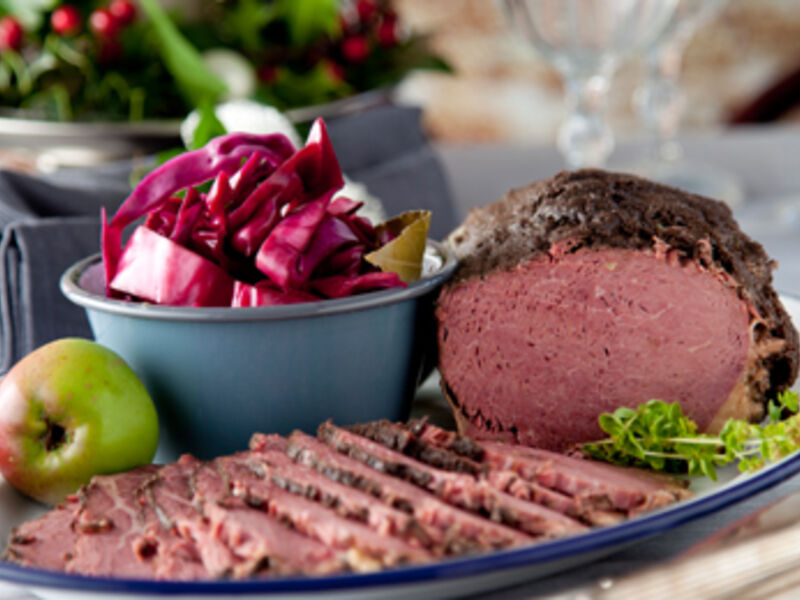
In a country known for its distinctive regional foods and culinary traditions, few dishes define a place as completely as spiced beef defines Cork at Christmas. This intensely flavored, aromatic cured beef isn’t just food in Cork – it’s cultural identity, family tradition, and the taste of Christmas itself. While the rest of Ireland eats turkey and ham, Cork adds spiced beef to the table, creating a Christmas culinary tradition that sets the Rebel County apart and fills Cork people with fierce regional pride.
What Is Spiced Beef?
For those unfamiliar with this Cork specialty, spiced beef bears little resemblance to ordinary roast beef or even other cured meats. It’s a unique preparation that transforms beef through weeks of curing and spicing into something completely its own.
The process begins with a substantial cut of beef, typically silverside (from the hindquarter) or topside. This beef undergoes an extensive curing and spicing process:
- Initial Salting: The beef is coated with a mixture of coarse salt, brown sugar, and saltpeter (potassium nitrate), which begins the curing process. This mixture draws moisture from the meat while beginning to preserve it.
- Spice Application: After initial salting, a complex spice mixture is applied to the beef. Traditional Cork spiced beef spice blends might include:
– Black peppercorns
– Allspice berries
– Juniper berries
– Bay leaves
– Cloves
– Cinnamon
– Nutmeg
– Coriander seeds
– Sometimes additional aromatics like orange peel
- Daily Turning: The spiced beef must be turned daily throughout the curing period, redistributing the brine that forms and ensuring even curing. This labor-intensive process typically lasts 7-10 days, though some traditional recipes call for even longer curing periods.
- Soaking: Before cooking, the cured beef is soaked in cold water to remove excess salt. This step is crucial – insufficient soaking leaves the beef intolerably salty, while excessive soaking dilutes the carefully developed flavors.
- Cooking: The spiced beef is then slowly cooked, traditionally by boiling or braising for several hours until tender. The cooking liquid might include additional aromatics, vegetables, and sometimes Guinness or other liquids to add depth.
- Pressing and Cooling: After cooking, the beef is typically pressed under weights while cooling. This creates a firm texture that slices beautifully when cold.
The result is dark, almost mahogany-colored meat with an aroma and flavor unlike anything else – simultaneously savory, sweet, and warmly spiced, with a firm texture that holds together when sliced thin.
Historical Origins
The origins of Cork’s spiced beef tradition reach back several centuries, though precise beginnings are lost to time.
Preservation Necessity: Spiced beef likely evolved as a preservation method. Before refrigeration, curing with salt and spices allowed meat to be stored safely. The spices served multiple purposes: they added flavor, helped preserve the meat, and masked any off-flavors from meat that might not be perfectly fresh.
Port City Influence: Cork’s history as a significant port city played a crucial role in the spiced beef tradition. Cork had access to imported spices that might be scarce or expensive elsewhere in Ireland. Sailors and merchants brought spices from around the world through Cork’s busy harbor, making the exotic ingredients for spiced beef available to Cork butchers and home cooks.
English Naval Connections: Some historians suggest Cork’s spiced beef tradition may have connections to provisioning the English Navy. Cork served as an important naval supply port, and preserved meat for long sea voyages required extensive curing and spicing. The techniques developed for naval provision may have transferred to civilian Christmas traditions.
Butcher Innovation: Cork’s butchers developed and refined spiced beef preparation over generations. Each butcher had their own proprietary spice mixture and curing techniques, closely guarded secrets that became crucial to their reputation and business. Competition among Cork butchers drove continuous refinement of the craft.
Christmas Timing: The tradition’s association with Christmas timing was practical as well as festive. The curing process took 1-2 weeks, making early December the perfect time to begin preparing beef for Christmas consumption. The cold December weather aided curing and storage.
Cork Identity and Regional Pride
Spiced beef has become inseparable from Cork identity, particularly regarding Christmas. Ask Cork people about Christmas food, and they’ll mention spiced beef before turkey. The tradition defines Cork as distinct from the rest of Ireland in a way that brings fierce local pride.
Regional Distinctiveness: Ireland has remarkably homogeneous Christmas food traditions across most of the country, making Cork’s spiced beef all the more striking. While other counties might have minor variations in preparations, Cork’s tradition is genuinely unique, creating clear cultural differentiation.
Generational Transmission: Cork families pass down spiced beef traditions with the seriousness other families might reserve for property or names. Children grow up eating spiced beef, learning family preferences (which butcher makes the best, how thick to slice it, what to serve it with), and eventually maintaining the tradition themselves.
Cork Diaspora Connection: Cork people living elsewhere often arrange to have spiced beef shipped to them for Christmas. Cork butchers report significant mail order business from Cork expatriates in Dublin, Britain, America, Australia, and beyond. For Cork people away from home, spiced beef provides a tangible connection to Cork Christmas memories.
Topic of Conversation: Throughout December, Cork people discuss spiced beef with an enthusiasm reserved for topics of genuine importance: Have you ordered yours yet? Which butcher are you using? How many pounds did you get? These conversations reinforce community bonds and shared identity.
Cork Media Coverage: Local Cork newspapers, radio, and television feature spiced beef stories every December – interviews with butchers, recipes for home preparation, features on families maintaining the tradition, and celebrations of spiced beef as Cork cultural heritage. This media attention reinforces the tradition’s significance.
The Butchers: Guardians of Tradition
Cork butchers play a central role in maintaining and defining spiced beef tradition. Their shops become December pilgrimage destinations for Cork families, and their reputations stand or fall on their spiced beef quality.
Traditional Butcher Shops: Certain Cork butcher shops have been making spiced beef for generations, with family recipes and techniques passed from father to son. These shops inspire intense loyalty, with families using the same butcher for decades. Switching butchers is nearly unthinkable unless retirement, closure, or serious dissatisfaction intervenes.
Order Taking: Cork butchers begin taking spiced beef orders in November, some even earlier. Regular customers might have standing orders – the same amount of spiced beef, prepared the same way, every year. New customers need to order early as popular butchers sell out quickly.
The Curing Process: Throughout December, Cork butcher shops fill with the aroma of spicing beef. The curing process takes space and attention, with large cuts of beef turned daily, each receiving careful monitoring. This visible process – beef hanging, daily tending, the pervasive smell of spices – makes Cork butcher shops particularly atmospheric in December.
Spice Recipes: Each Cork butcher guards their specific spice mixture jealously. These recipes represent decades or centuries of refinement, and butchers consider them proprietary secrets. Customers develop strong preferences for particular butchers’ spice blends, and debates about whose is best can become heated.
Volume: The amount of spiced beef produced by Cork butchers at Christmas is staggering. A successful Cork butcher might cure several tons of beef during the December season, representing hundreds of individual orders from families across Cork.
Pride and Pressure: Cork butchers feel enormous pressure to maintain spiced beef quality. Their year’s reputation often rests on their Christmas spiced beef. A poor batch can damage a butcher’s standing for years.
Home Preparation
While most Cork families buy their spiced beef from trusted butchers, some maintain the tradition of home preparation – a serious undertaking requiring knowledge, equipment, and commitment.
Family Recipes: Families making their own spiced beef typically follow recipes passed down through generations, often with specific quirks or additions that make their spiced beef distinctive. These recipes might be written down, but more often live in memory and practice, passed through demonstration and experience.
The Process: Home spiced beef preparation requires:
- A suitable large cut of beef (often requiring special orders from butchers)
- Space for curing (traditionally a cool larder or shed, modern homes might use refrigerators though this is less than ideal)
- Daily attention for the full curing period
- Knowledge of when the beef is properly cured
- Proper cooking facilities and time
Challenges: Modern homes present challenges for spiced beef making that didn’t exist in traditional Irish houses. The smell of curing beef, while wonderful to spiced beef enthusiasts, can be overwhelming in a modern heated home. Space for large pieces of curing meat may not exist. Daily attention requirements conflict with busy work schedules.
Why They Do It: Families maintaining home spiced beef preparation cite several reasons:
- Connection to family tradition and heritage
- Ability to control quality and spicing to exact preferences
- Pride in maintaining traditional skills
- Economy (homemade spiced beef costs less than butcher-prepared)
- The satisfaction of preparing their own Christmas food
Declining Practice: Despite these motivations, home spiced beef preparation is declining. Younger generations increasingly rely on butchers, and the knowledge of proper preparation risks being lost as older generations pass away without fully training successors.
Serving and Eating Spiced Beef
Cork spiced beef has specific serving traditions and contexts that govern how it appears on Cork Christmas tables.
Christmas Dinner: Spiced beef typically appears at Christmas dinner alongside turkey and ham. While turkey remains the nominal star, many Cork people consider spiced beef the real highlight. It’s served cold, sliced thin, and needs no accompaniment beyond perhaps mustard, though even that’s optional.
St. Stephen’s Day: Leftover spiced beef appears prominently on St. Stephen’s Day, often in sandwiches. Spiced beef sandwiches made with fresh bread and butter are considered a delicacy, perfect food for recovering from Christmas Day’s feast.
Throughout Christmas: A whole spiced beef might last a Cork family throughout the Christmas period, appearing at various meals and gatherings. Its preserved nature means it keeps well, and many Cork people claim it actually improves over the first few days.
The Slicing: Proper spiced beef slicing requires skill. The meat should be sliced thin – thick slices are considered a sign of poor presentation and waste of good spiced beef. Some families invest in slicers specifically for Christmas spiced beef.
Sandwiches: Spiced beef sandwiches represent a Cork Christmas staple. Simply made with fresh bread, butter, and thin-sliced spiced beef, these sandwiches appear throughout the Christmas period. Some Cork people rank these sandwiches among their favorite foods.
With Drinks: Spiced beef often appears when drinks are served, particularly on St. Stephen’s Day or during Christmas visiting. Thin slices of spiced beef with crackers or bread serve as perfect drinking food.
Beyond Cork: Spiced Beef’s Limited Spread
Despite its excellence and Cork’s evangelism, spiced beef remains primarily a Cork tradition, with limited adoption elsewhere in Ireland.
Dublin Availability: Some Dublin butchers and shops stock spiced beef at Christmas, catering to Cork expatriates and curious Dubliners. However, it remains niche – most Dublin families don’t consider it essential Christmas fare.
Other Regions: Outside Cork and Dublin, spiced beef is rare to non-existent. Many Irish people from other regions have never tasted it, and some haven’t even heard of it. This geographical limitation makes it genuinely unique to Cork.
Why It Hasn’t Spread: Several factors limit spiced beef’s spread beyond Cork:
- The preparation requires significant expertise
- The tradition needs to be experienced from childhood to fully appreciate
- Other regions have established Christmas food traditions
- The strong Cork association might make it seem too regional for others to adopt
Modern Interest: Recent years have seen growing interest in regional Irish foods and traditional preparations. Food writers, chefs, and culinary enthusiasts have given spiced beef attention beyond Cork, though whether this translates to broader adoption remains to be seen.
Commercial Products
The uniqueness of Cork spiced beef has attracted commercial interest, with various attempts to make it available beyond Cork’s butcher shops.
Supermarket Spiced Beef: Some Irish supermarket chains stock spiced beef at Christmas, often made by established Cork butchers under contract. Quality varies, and Cork people generally consider supermarket spiced beef inferior to proper butcher preparation.
Vacuum Packed Products: Various companies produce vacuum-packed spiced beef that ships well and has extended shelf life. While convenient for Cork diaspora, these products rarely match fresh butcher spiced beef quality.
Ingredients and Kits: Some suppliers sell spiced beef curing kits or pre-mixed spice blends for home preparation. These democratize spiced beef making but can’t replace generations of butcher expertise.
Export Challenges: Spiced beef’s nature creates export challenges. As cured meat, it faces regulatory restrictions in many countries. Shipping costs and quality degradation during transit limit international availability.
Cultural Status and Recognition
Spiced beef has achieved recognition as genuine Irish culinary heritage deserving preservation and celebration.
Slow Food: Spiced beef has been included in Slow Food’s Ark of Taste, an international catalog of heritage foods facing extinction. This recognition acknowledges spiced beef’s cultural and culinary significance beyond Cork.
Food Writing: Irish food writers regularly celebrate spiced beef, both as delicious food and as example of living food tradition. Books on Irish food and Christmas traditions prominently feature spiced beef.
Tourism: Cork tourism increasingly promotes spiced beef as part of Cork’s food culture. Visitors to Cork at Christmas can experience this unique tradition, with food tours sometimes including butcher shop visits.
Academic Interest: Food historians and cultural anthropologists study spiced beef as example of regional food tradition persistence, urban food culture, and craft knowledge transmission.
Challenges and Future
Cork spiced beef faces various challenges that could affect its future.
Butcher Decline: Like many traditional trades, butchering faces challenges. Younger generations enter the profession less frequently, and independent butchers compete with supermarkets and changing shopping patterns. If Cork butchers decline, spiced beef tradition becomes endangered.
Knowledge Loss: The specific knowledge required to make excellent spiced beef risks being lost if not properly transmitted to new generations of butchers and home preparers. Elderly butchers with decades of experience need to train successors.
Changing Tastes: Younger generations may not value spiced beef as intensely as their parents and grandparents did. If demand declines, butchers have less incentive to maintain the tradition.
Health Consciousness: Modern concerns about cured meats, salt intake, and red meat consumption could affect spiced beef’s popularity. However, its special-occasion status and moderate consumption patterns likely protect it somewhat.
Competition: The proliferation of Christmas food options gives Cork families alternatives that might compete with spiced beef for table space and budget.
Optimistic Signs
Despite challenges, several factors suggest Cork’s spiced beef tradition remains healthy:
Continued Demand: Cork butchers report strong, stable demand for spiced beef. People continue ordering, often in substantial quantities.
Generational Continuity: Cork families continue introducing children to spiced beef, maintaining the tradition across generations.
Pride Factor: Cork regional pride shows no signs of diminishing, and spiced beef’s role in Cork identity protects it.
Food Culture Interest: Growing interest in traditional foods, local specialties, and food heritage benefits spiced beef.
Quality Maintenance: Cork butchers continue producing excellent spiced beef, maintaining quality that ensures continued customer satisfaction.
Conclusion
Cork’s Christmas spiced beef represents far more than cured meat. It embodies Cork identity, family tradition, craft expertise, and the persistence of distinctive local food culture against pressures toward homogenization. In an Ireland where Christmas food traditions are remarkably uniform across regions, Cork’s spiced beef creates genuine distinctiveness that Cork people celebrate with fierce pride.
The tradition’s survival through centuries, economic changes, and shifting food cultures testifies to its genuine significance to Cork people. The annual ritual – ordering spiced beef, collecting it from the butcher, slicing it thin on Christmas Day, sharing it with family, making sandwiches on St. Stephen’s Day – connects Cork families to their heritage and to each other.
For Cork people, Christmas without spiced beef would be genuinely incomplete, missing an essential element that defines what Cork Christmas means. For visitors to Cork at Christmas, encountering this unique tradition offers insight into how local food cultures persist and the passion that food traditions can inspire.
As long as Cork butchers cure beef with secret spice blends, as long as Cork families order their spiced beef in November, as long as thin slices of dark, aromatic meat appear on Cork Christmas tables, the tradition lives. And given Cork’s fierce attachment to this distinctive piece of their culinary heritage, Cork’s Christmas spiced beef seems likely to endure for generations yet to come.

Author: jonathan
Jonathan is the publisher of Irishtopia.net, Anglotopia.net, and Londontopia.net. He's passionate about travel and learning about other cultures. He's been to Ireland several times, and uses his travel expertise for Irishtopia!