
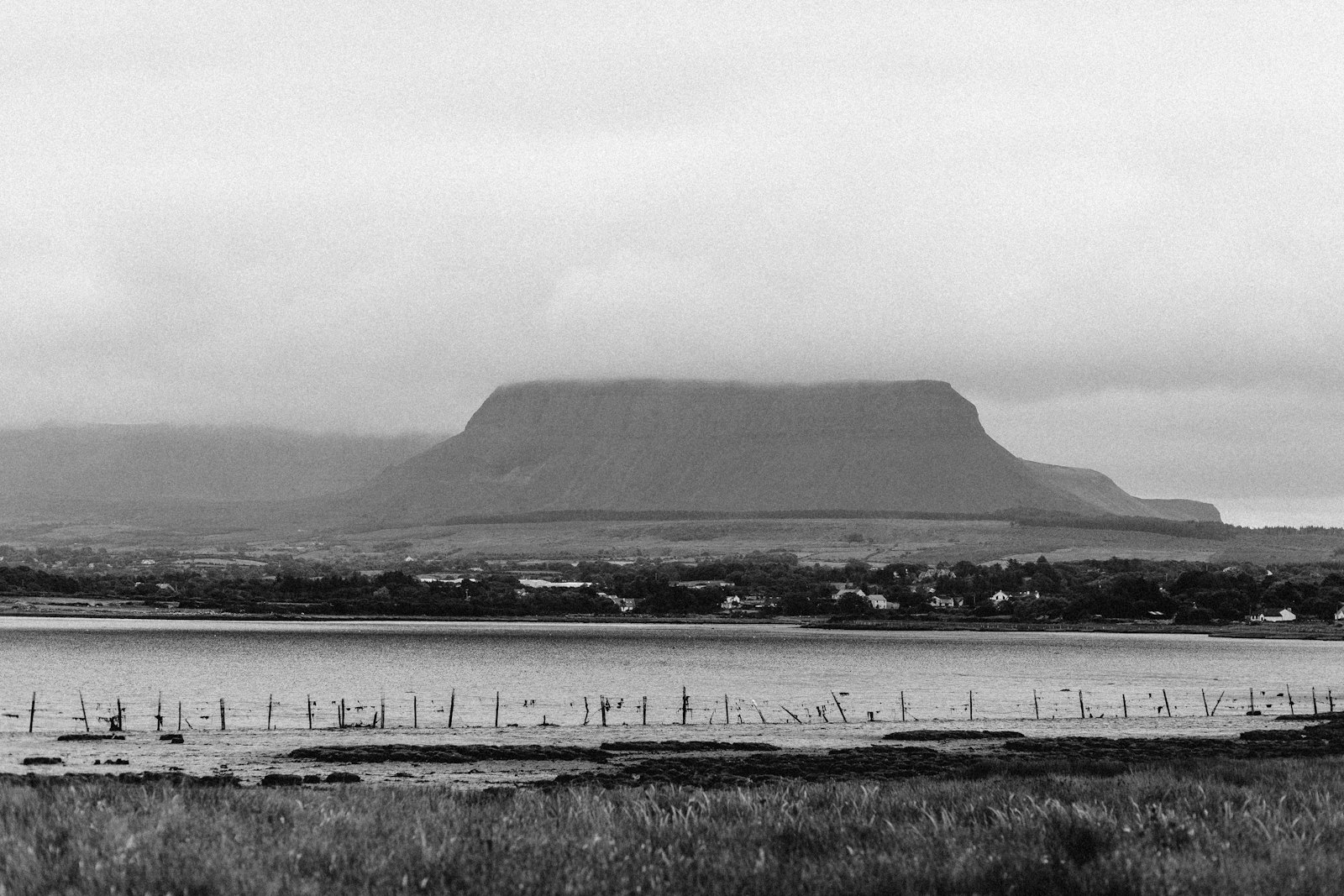
Photo by Adele De Bruyn on Unsplash
County Sligo, in Ireland’s northwest, occupies a unique cultural position defined by a Nobel Prize-winning poet and prehistoric landscape demanding awe. This county of approximately 65,000 residents combines dramatic mountain scenery, extensive archaeological riches spanning millennia, connections to W.B. Yeats and Irish literary traditions, and landscapes so emotionally evocative that they inspired centuries of artistic expression.
For American visitors, County Sligo offers something distinctly different from typical Irish tourist destinations. Rather than primarily visiting medieval castles or monastic ruins, Sligo emphasizes pre-Christian archaeology—standing stones, burial cairns, and passage tombs creating landscapes of prehistoric mystery. Combined with the county’s literary heritage and the landscape’s emotional resonance, Sligo creates profoundly introspective travel experiences that exceed simple tourism consumption.
Understanding Sligo’s Geography and Cultural Identity
County Sligo covers approximately 1,837 square kilometers stretching from the Atlantic coast eastward toward pastoral inland regions. The county’s geography divides into distinct regions—the coastal plains along the Atlantic, the central Ox Mountains, and the dramatic peaks of Ben Bulben and Knocknarea dominating visual attention.
The county’s population concentrates primarily in Sligo town, the regional commercial hub, leaving substantial rural regions sparsely populated. This distribution means that exploring Sligo involves traveling through worked agricultural landscape interspersed with archaeological sites and natural landmarks.
Sligo’s cultural identity remains inseparable from W.B. Yeats, the Anglo-Irish poet born in Dublin but maintaining lifelong connections to his mother’s Sligo family and landscape. Yeats frequently visited Sligo, and the landscape profoundly influenced his poetry. Many of his most famous poems reference Sligo geography—Lough Gill, Ben Bulben, and Knocknarea appear repeatedly in his works. This literary connection created cultural tourism focusing on Yeats-related sites alongside conventional archaeological tourism.
Knocknarea: Cairn and Mountain
Knocknarea (Cnoc na Réigh—Hill of the Kings) dominates Sligo’s visual landscape—a distinctive conical mountain rising 327 meters above surrounding plains. The mountain’s unusual shape, combined with its cultural significance, makes it instantly recognizable to Sligo visitors and frequently photographed from numerous perspectives.
The mountain’s primary historical feature is a massive cairn crowning the summit. This pile of stones, composed of thousands of individual rocks and measuring approximately 55 meters in diameter and 6 meters high, represents one of Ireland’s largest prehistoric monuments. The cairn’s date remains uncertain—possibly Neolithic—making it 4,000-5,000 years old. Its purpose remains debated; archaeological evidence suggests burial function, though the cairn hasn’t been formally excavated.
Local legend attributes the cairn to the mythological Queen Maeve of Connacht, suggesting pre-Christian religious significance. Whether literally true or not, this association creates cultural richness beyond simple archaeology.
Climbing Knocknarea, while not technically difficult, involves ascending a steep path gaining approximately 200 meters elevation over roughly 2 kilometers of walking. The ascent, taking approximately 45 minutes for average hikers, demands decent fitness. Reaching the summit, visitors circumnavigate the cairn and observe panoramic views encompassing Sligo Bay, the surrounding plains, and the inland landscape.
The mountain’s position creates visibility from considerable distances. Many Sligo explorations begin by identifying Knocknarea’s distinctive shape and using it as navigation landmark. This visibility created historical significance—the mountain served as defensive beacon location and territorial marker for ancient populations.
Carrowmore Megalithic Cemetery: Concentrated Prehistoric Landscape
Carrowmore represents one of Ireland’s most extensive megalithic cemeteries—a landscape where prehistoric peoples concentrated burial and ceremonial sites. The site encompasses approximately 30 surviving dolmens and numerous stone circles positioned across pastorally beautiful landscape within Sligo’s suburban area.
The cemetery’s location, just outside Sligo town, makes it easily accessible. The visitor center provides interpretive material explaining the site’s archaeology and historical significance. Walking throughout the cemetery involves moving between individual monuments, each representing different burial traditions and temporal periods.
The dolmens vary in preservation state. Some remain highly intact with capstones and surrounding kerb stones clearly visible. Others appear as simple stone arrangements, their original configurations requiring interpretive imagination. This variation in preservation states communicates the landscape’s temporal depth—these monuments have existed for approximately 5,000 years, weathering processes gradually diminishing them.
The cemetery’s setting—within pastoral landscape with Ben Bulben visible in distance—creates perspective connecting prehistoric peoples to landscape they inhabited. Unlike museum settings isolating archaeological artifacts, Carrowmore allows experiencing archaeology within its original geographic and cultural context.
Early morning visits, before tourist groups arrive, create peaceful experiences. Walking among monuments at dawn, when light remains soft and mist partially obscures distant landscape, creates profoundly contemplative atmospheres where prehistoric significance becomes emotionally resonant.
Ben Bulben: Mountain of Legend and Dramatic Geology
Ben Bulben, rising 526 meters, represents Sligo’s most dramatically sculpted mountain. Rather than possessing a conical shape like Knocknarea, Ben Bulben presents sheer vertical cliffs on its northern face topped with a distinctive flat plateau. This geological formation, created by differential erosion rates on varied rock layers, creates landscape of primal drama.
The mountain appears frequently in Yeats’ poetry, particularly references to landscape’s emotional qualities. The mountain’s dramatic character—the vertical cliffs, the exposed plateau, the cultural associations—inspired literary description transcending simple geographical description.
Walking routes around Ben Bulben accommodate various fitness levels. The base walk, circumnavigating the mountain from the town of Glencar, provides approximately 6-7 kilometers of relatively level terrain offering perspectives on the mountain’s full form. More challenging routes ascend to the plateau, offering panoramic views and access to prehistoric monuments positioned on the summit.
The Glencar Valley, on the mountain’s western side, contains a modest waterfall famous through Yeats’ poetry. “The Stolen Child” references this waterfall, and its appearance in literary context created cultural significance beyond its natural beauty.
Lough Gill and Legendary Landscapes
Lough Gill, situated east of Sligo town, represents a substantial freshwater lake occupying landscape of considerable beauty. The lake’s shoreline contains numerous bays, small islands, and woodland creating visually diverse environment. More importantly, Lough Gill appears repeatedly in Yeats’ poetry, most famously in “The Lake Isle of Innisfree”—possibly Ireland’s most famous contemporary poem.
The poem’s narrator expresses desire to “arise and go now” to the Lake Isle of Innisfree, a small island in Lough Gill, to escape urban existence and return to natural simplicity. This poem created literary pilgrimage focus—visitors attempting to reach Innisfree and experience landscapes inspiring the celebrated verse.
Innisfree Island remains largely inaccessible—boat tours occasionally approach the island, but landing remains generally prohibited to protect archaeological features and natural habitat. The island’s literary significance combined with its physical inaccessibility creates cultural dynamic where imagination exceeds visual confirmation.
Walking shoreline paths around Lough Gill provides pleasant exercise combined with visual beauty. The lake’s setting—with Ben Bulben and other mountains visible across water, woodland lining portions of shoreline, and occasional historical sites—creates photogenic landscape throughout the day as light changes.
Parke’s Castle, positioned on Lough Gill’s eastern shore, represents a fortified 17th-century house combining defensive architecture with residential comfort. The castle’s position directly on the lake creates visually compelling setting. Touring the castle’s interior provides perspectives on life during its operational period while the surrounding grounds allow peaceful exploration.
Passage Tombs and Prehistoric Significance
County Sligo contains extraordinary concentrations of passage tombs—Early Neolithic structures predating the classical Egyptian pyramids by roughly a thousand years. These monuments, constructed using megalithic techniques where massive stones were positioned without mortar to create enclosed burial chambers, represent profound archaeological and cultural significance.
Creevykeel Court Tomb
Creevykeel, located south of Sligo town, represents one of Ireland’s most complete court tombs. The monument consists of a semi-circular open courtyard with entrance leading to a burial chamber composed of massive stones. The court’s purpose remains debated—ceremonial gathering space, ritual center, or burial preparation location all represent interpretations.
Walking among these monuments, observing the massive stones positioned without mortar, creates appreciation for prehistoric people’s engineering capabilities and labor organization. The effort required to transport stones, position them precisely, and construct chambers without modern equipment exceeds easy explanation.
Grange Stone Circle
Grange Stone Circle represents Ireland’s largest stone circle, consisting of approximately 194 stones arranged in a near-perfect circle measuring approximately 80 meters in diameter. Unlike dolmens or passage tombs, stone circles’ purposes remain debated—possible calendrical functions, ritual gathering spaces, or territorial markers all represent interpretations.
The circle’s massive scale, combined with the numerous stones, creates visually impressive monuments. Walking the circle’s circumference provides changing perspectives on the monument’s full form. The stones’ weathered surfaces and the landscape surrounding the circle communicate temporal depth.
Yeats and Literary Tourism
William Butler Yeats, despite being born in Dublin, maintained lifelong connections to County Sligo through his mother’s family origins and frequent childhood and adult visits. The landscape profoundly influenced his poetry—his works contain numerous references to Sligo geography and cultural memory.
The Yeats Society, operating in Sligo, promotes the poet’s legacy through museum exhibitions, literary tours, and cultural programming. The Yeats Building in Sligo town contains exhibitions documenting the poet’s life and connections to the region.
Literary enthusiasts can undertake Yeats-themed tours identifying geographical references in famous poems. While such tourism risks reducing complex poetry to simple geographic representation, it provides legitimate entry points for understanding the relationships between landscape and artistic inspiration.
Practical Information for Sligo Exploration
Getting There: Sligo town is approximately 220 kilometers northwest of Dublin, accessible via the N4 highway. Public transportation connects Sligo to major Irish cities. Exploring the county’s scattered archaeological sites and natural landmarks requires a rental car.
Accommodation: Sligo town provides the widest accommodation range, though smaller towns throughout the county contain guesthouses and bed-and-breakfasts. The coastal town of Strandhill offers beach-focused alternatives. Booking during peak seasons (July-August) requires advance reservations.
Dining: Sligo town supports diverse dining options from casual restaurants to quality establishments emphasizing local ingredients. Smaller towns contain traditional pubs serving food.
Language: English serves as the primary language throughout Sligo. Standard Irish phrases remain appreciated.
Weather: Atlantic proximity creates variable conditions. The coastal location experiences stronger wind than inland regions. Waterproof clothing remains essential.
Timing: May through September provides optimal conditions. April-May and September-October offer shoulder season advantages. Winter involves reduced daylight and potential facility closures.
Costs: Sligo remains less expensive than major tourist destinations. Accommodation and dining offer good value. Most archaeological sites remain free or charge minimal admission.
Activities and Experiences
Archaeological Exploration: Beyond major sites, numerous prehistoric monuments scatter throughout the county. Consulting maps and local directions creates genuine archaeological discovery.
Hiking: Mountain walks around Ben Bulben and Knocknarea provide varied difficulty levels. Valley walks and shoreline strolls accommodate diverse fitness levels.
Literary Pilgrimage: Visiting locations referenced in Yeats’ poetry creates literary engagement with landscape.
Photography: Sligo’s dramatic mountains, extensive archaeological sites, and varied landscapes reward extended photographic attention.
Traditional Music: Sligo maintains reputation as a traditional music center. Pubs throughout town host regular sessions.
Beach Recreation: The coastal areas around Strandhill offer swimming, surfing, and beach walking.
Conclusion: Sligo’s Profound Emotional Resonance
County Sligo offers visitors something increasingly rare in modern tourism—landscape that inspires emotional and intellectual contemplation. The county’s extraordinary archaeological richness spanning millennia, combined with dramatic natural features and literary cultural heritage, creates environments where visitors experience landscapes as something more than visual attractions.
The prehistory encoded in standing stones, cairns, and passage tombs connects modern visitors to human communities existing thousands of years ago. The mountains shape moods—Ben Bulben’s vertical cliffs inspire awe, Knocknarea’s conical form creates recognition, Lough Gill’s water reflects light transforming appearance hourly. The poetry created through landscape inspiration demonstrates how profoundly environment shapes human consciousness.
Sligo rewards contemplative exploration—sitting overlooking Lough Gill and reading Yeats’ poetry, walking among Carrowmore’s monuments and imagining prehistoric ceremonies, ascending Ben Bulben and observing the landscape inspiring artistic creation. These activities transform tourism from consumption of attractions into genuine engagement with place.
American visitors accustomed to tourism emphasizing activity and visible achievement often initially struggle with Sligo’s appeal. This apparent passivity—sitting, observing, reading—gradually reveals itself as profound engagement. Sligo teaches that meaningful travel experiences emerge through slowness, observation, and willingness to be moved by landscape and cultural heritage. Those granting Sligo extended temporal investment, approaching the county with contemplative openness rather than achievement-focused tourism goals, discover why the landscape inspired a Nobel Prize-winning poet and continues captivating visitors across generations.

Author: jonathan
Jonathan is the publisher of Irishtopia.net, Anglotopia.net, and Londontopia.net. He's passionate about travel and learning about other cultures. He's been to Ireland several times, and uses his travel expertise for Irishtopia!