
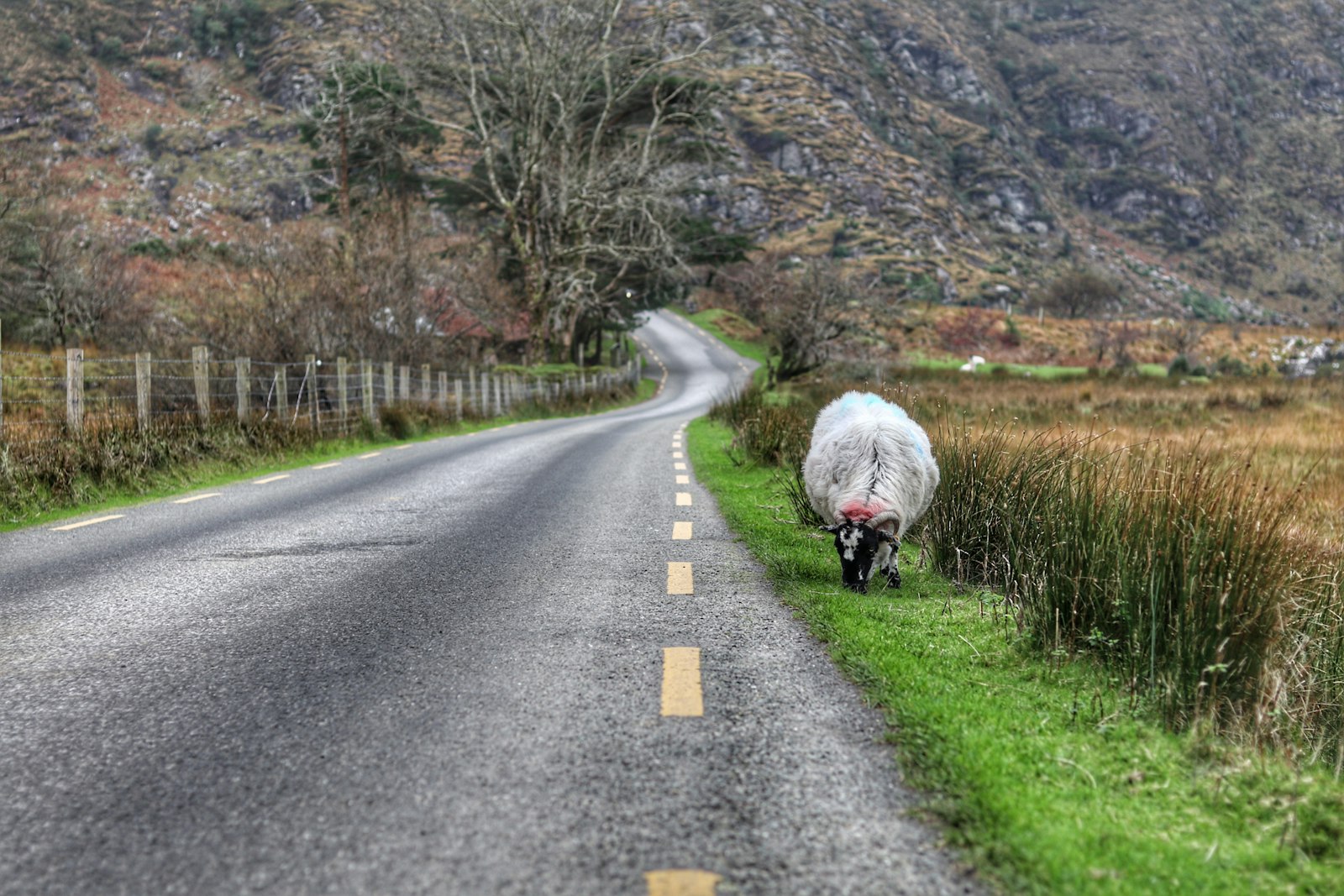
Photo by Rory Hennessey on Unsplash
Driving in Ireland presents a fundamental challenge for American visitors and residents: the British legacy of left-side driving. Roads that American drivers navigate intuitively become disorienting mazes. Roundabouts, ubiquitous in Irish towns, inspire confusion and occasional panic. Narrow country roads with stone walls on both sides and opposing traffic forcing creative passing maneuvers feel chaotic compared to America’s wide, clearly-marked highways.
Yet thousands of Americans successfully drive in Ireland annually. The learning curve is steep but manageable. This guide prepares you for Irish road conditions, explains the rules that govern them, and provides practical strategies for driving safely and confidently through Ireland’s countryside and cities.
The Fundamental Difference: Driving on the Left
Muscle Memory Reversal
Your first Irish drive is disorienting because your entire driving muscle memory—developed over years in America—must reverse. You sit in the right seat of the car. The steering wheel is on the right. You drive on the left side of the road. Traffic comes from your right. Turns that felt natural for decades feel backward.
This confusion is normal and temporary. Most Americans report that after 2-3 hours of driving, the left-side driving becomes intuitive. After a week, they’re comfortable. After a month, they occasionally second-guess themselves when returning to American driving.
The first drive should be in calm conditions—daylight, light traffic, familiar routes. Don’t attempt Dublin’s city center or a motorway during rush hour on your first day. Start with a short drive in a quiet neighborhood, practicing left turns, roundabouts, and basic maneuvers.
Vehicle Layout Differences
Beyond left-side placement, Irish cars differ subtly:
Manual vs. automatic transmissions: Most Irish rental cars are manual transmissions (the gear stick is on your left side, which feels even more awkward than left-side driving initially). If you’re uncomfortable with manual transmission, specify “automatic” when renting, though these cost more.
Parking brake operation: The parking brake is often a foot pedal on the left side of the floor or a small lever separate from the handbrake—different from American cars. Familiarize yourself with how to engage and release it.
Windshield wipers and turn signals: These are often reversed from American cars—turn signals may be on the left, wipers on the right. Spend a moment identifying controls before driving.
Passing and Overtaking
When passing (called “overtaking” in Irish terminology), you pass on the right side of the car in front of you. This still feels wrong, but it’s correct. Check your right mirror thoroughly—traffic coming from behind will approach on the left, so your left mirror is most critical for awareness.
Irish Traffic Rules and Regulations
Speed Limits and Enforcement
Ireland uses kilometers per hour (km/h), not miles per hour. Speed limits are:
- Motorways: 120 km/h (75 mph)
- National roads: 100 km/h (62 mph)
- Regional roads: 80 km/h (50 mph)
- Local roads: 50 km/h (31 mph)
- Residential/urban areas: 50 km/h (31 mph)
Speed enforcement occurs through fixed cameras, mobile cameras, and Gardaí (police). Speeding fines start at approximately €80-€120 for modest violations and increase significantly for more serious speeding. A speeding conviction goes on your driving record and can affect insurance.
Road signs clearly indicate speed limit changes. If you miss a sign change, you’re still responsible for obeying the posted limit.
Seat Belts and Child Restraints
Seat belts are legally required for all passengers. Children under 1.5 meters (about 5 feet) must sit in age-appropriate child seats (infant seats, booster seats). These requirements are strictly enforced, and fines for violations are substantial (€200+ for seatbelt violations).
Mobile Phones and Driving
Using a mobile phone while driving is illegal, including for GPS navigation unless the phone is secured in a hands-free mount. Texting, calls, or holding a phone results in €60-€120 fines and penalty points on your license.
Drink Driving Laws
Ireland has strict drink-driving limits: 50 mg of alcohol per 100 ml of blood (lower than many US states). A single beer can put you at or near the legal limit. Fines for exceeding limits are severe (€600+ and potential jail time), and a conviction means immediate license suspension and insurance complications.
Simply put: if you’re driving, don’t drink alcohol. Ireland’s excellent taxi and rideshare options make this easy to comply with.
Insurance Requirements
All vehicles must carry comprehensive insurance. Unlike some US states, Irish insurance is legally mandatory and actively enforced. Driving without insurance results in significant fines and criminal charges.
Roundabouts: The Irish Driving Culture’s Most Famous Feature
Understanding Roundabout Mechanics
Roundabouts replace many traffic lights in Ireland. They’re circular intersections where traffic circulates counterclockwise (when driving on the left). Vehicles already in the roundabout have priority; entering vehicles must yield to circulating traffic.
How to navigate:
- Approach the roundabout and check for oncoming traffic
- Yield to any vehicles already circulating
- Enter the roundabout when safe
- Stay in the left lane for early exits (right turn in American terms)
- Move to the right lane for later exits (left turn in American terms)
- Signal your exit as you approach it
- Exit when your road appears
This is mechanically simple but requires confidence. Americans often freeze upon approaching roundabouts, which causes hesitation, confusion, and occasional accidents. The key is approaching with clear intent: decide your exit before entering the roundabout.
Different Roundabout Types
Large multi-lane roundabouts in cities are more complex. They have specific lanes designated for different exits. Follow lane markings carefully. If you’re unsure, stay in the left lane and circle again if necessary—better than exiting incorrectly.
Traffic light controlled roundabouts supplement normal roundabout rules with traffic signals. Follow the lights; they control when you can enter and exit.
Small village roundabouts are often narrow, with tight turns. Proceed carefully, watching for pedestrians and other vehicles.
Roundabout Confidence Tips
Irish Road Types and Conditions
Motorways
Irish motorways (M1, M4, M7, etc.) are modern, well-maintained highways comparable to American interstates. They connect major cities and are the fastest way to travel. Speed limit is 120 km/h, enforced through cameras.
Motorways charge tolls on some stretches, particularly around Dublin (the M50). Tolls are approximately €2-€3 per passage. Payment is automatic if you rent through a rental company; they bill your credit card. If you purchase your own vehicle, you can pay tolls online or receive a bill.
Motorways have exit numbers matching kilometer markers, making navigation straightforward. Service stations are well-spaced but occasionally far apart (40-60 km intervals)—fuel up before motorway stretches in rural areas.
National Roads
National roads (N1, N2, N7, etc.) are primary routes between cities. They’re well-maintained but share characteristics with Irish roads generally: narrower than American highways, winding through countryside, sometimes sharing space with slower traffic (tractors, farmers on quad bikes).
Speed limit is 100 km/h. Passing is permitted but requires caution—opposing traffic comes quickly, and narrow shoulders leave little margin for error.
Regional and Local Roads
Regional roads (R-roads) and local roads (L-roads) form Ireland’s secondary and local network. These are where Irish driving character becomes apparent.
Characteristics: Narrow (often single-track with occasional passing spots), winding, lined with stone walls or hedgerows, occasionally rough. Two cars often can barely pass each other.
Speed limits: 80 km/h (regional) and 50 km/h (local), though conditions often dictate slower speeds.
Challenges: Sheep and cattle cross without warning. Cyclists and pedestrians appear suddenly. Potholes and rough sections demand slow navigation. Oncoming traffic requires pulling to the verge (shoulder) to allow passing.
Navigation: GPS is essential on rural roads. Irish place names are often unclear on signage, and roads are poorly marked. Google Maps, Apple Maps, and dedicated navigation apps work well.
Mountain Roads and Challenging Terrain
Ireland’s mountainous regions (Wicklow Mountains, Kerry mountains, Connemara) feature challenging roads with severe grades, hairpin turns, and limited visibility. These roads are exciting but demanding. Brake carefully on descents; modern brakes are reliable, but overheating is possible on very steep roads. Remain in lower gears while descending rather than relying solely on brakes.
Parking in Ireland
On-Street Parking
In towns and cities, on-street parking is regulated through color-coded curbs and signage.
Blue zones: Require a parking disc (purchased at shops, showing arrival time). Typically allow 2-3 hours of free parking.
Yellow zones: Permit parking but often with restrictions (certain times only, resident permits required).
Red zones: No parking any time.
Green zones: Limited stopping (loading/unloading only).
Follow signage carefully. Parking violations result in €60-€200 fines on your rental car, charged to your credit card.
Car Parks (Parking Lots)
Most towns and cities have car parks (parking lots)—either street-level or multi-story. Fees vary by location: Dublin city center runs €2-€3 per hour; smaller towns might be €0.80 per hour or free. Most accept card payment; many allow app-based payment through services like JustPark.
Parking is generally safe; vehicle theft is uncommon.
Disabled Parking
If you have a disability permit, Ireland recognizes several international disability parking permits. Check whether your American permit is recognized before relying on disabled parking spaces.
Fuel and Vehicle Maintenance
Fuel Types and Pricing
Irish fuel is sold in liters (not gallons) and priced per liter. Fuel costs approximately €1.40-€1.60 per liter as of 2024 (roughly $5.30-$6.10 per gallon), significantly higher than most US fuel.
Fuel types are the same as America: petrol (gasoline) and diesel. Most rental cars use petrol; verify before renting. Diesel is slightly cheaper but produces particulates, so if you care about air quality, petrol is preferable.
Finding Fuel Stations
Fuel stations are plentiful in populated areas but sparse on remote roads. Never let your fuel tank drop below a quarter tank when traveling rural areas. Nearest stations might be 40+ km away.
Major fuel brands (Shell, Texaco, Applegreen) are reliable. Small independent stations also exist and often offer competitive pricing.
Vehicle Repairs
If you rent, road assistance is typically included through your rental company. If you own a vehicle and need repairs, Irish garages are competent and reasonably priced compared to American repairs (labor is cheaper, parts are more expensive).
Weather and Seasonal Driving Challenges
Rain and Wet Roads
Ireland’s most consistent weather challenge is rain. It rains frequently and often heavily. Wet roads reduce traction and visibility. Reduce speed in rain, increase following distance, and use headlights to improve visibility.
Rain also affects visibility on mountain roads and in rural areas with poor drainage—small streams cross roads in heavy rain, and standing water can hide deep potholes.
Winter Conditions
Irish winters are mild compared to much of the US (temperatures rarely drop below freezing), but occasional snow and ice occur, particularly in mountainous regions. When snow or ice is forecast, drive extremely carefully. Irish roads aren’t equipped for heavy snow, and salt application is inconsistent.
Practical Driving Tips for Americans
Your First Drive
Rent a car in a quiet area and drive for 30 minutes in daylight with light traffic. Practice left turns, right turns, and navigating a simple roundabout. Build confidence before attempting complex driving situations.
Navigation Technology
Use Google Maps or Apple Maps for navigation. Both work well and understand Irish roads. Plug in your destination before departing. Relying on signage alone is frustrating; GPS eliminates guesswork.
Patience with Other Drivers
Irish drivers are generally courteous and patient. Flash your lights to thank someone who yields to you. Don’t honk horns—it’s considered rude. Yield graciously if someone is clearly lost.
Familiarization Drives
Your first weeks in Ireland, take drives specifically to familiarize yourself with the area. Drive the route to work, explore neighborhoods, and practice various road types. This casual familiarity builds confidence.
Advice from Experienced Drivers
Talk to Irish friends, colleagues, and locals about driving. They can recommend routes, warn about problematic areas, and provide context about local driving culture.
Conclusion: You’ll Adjust Faster Than You Expect
Driving in Ireland challenges American drivers initially, but the adjustment period is brief. Within weeks, left-side driving feels normal. Roundabouts become intuitive. Narrow roads feel navigable. You’ll develop appreciation for Irish roads’ character and efficiency.
The landscape visible from Irish roads is extraordinary. Driving isn’t just transportation; it’s an opportunity to experience the Irish countryside—stone walls, green fields, dramatic mountains, and charming villages. Once you master the mechanics, you’ll enjoy driving in Ireland immensely.
Welcome to the road. Drive safely, and enjoy the journey.

Author: jonathan
Jonathan is the publisher of Irishtopia.net, Anglotopia.net, and Londontopia.net. He's passionate about travel and learning about other cultures. He's been to Ireland several times, and uses his travel expertise for Irishtopia!