
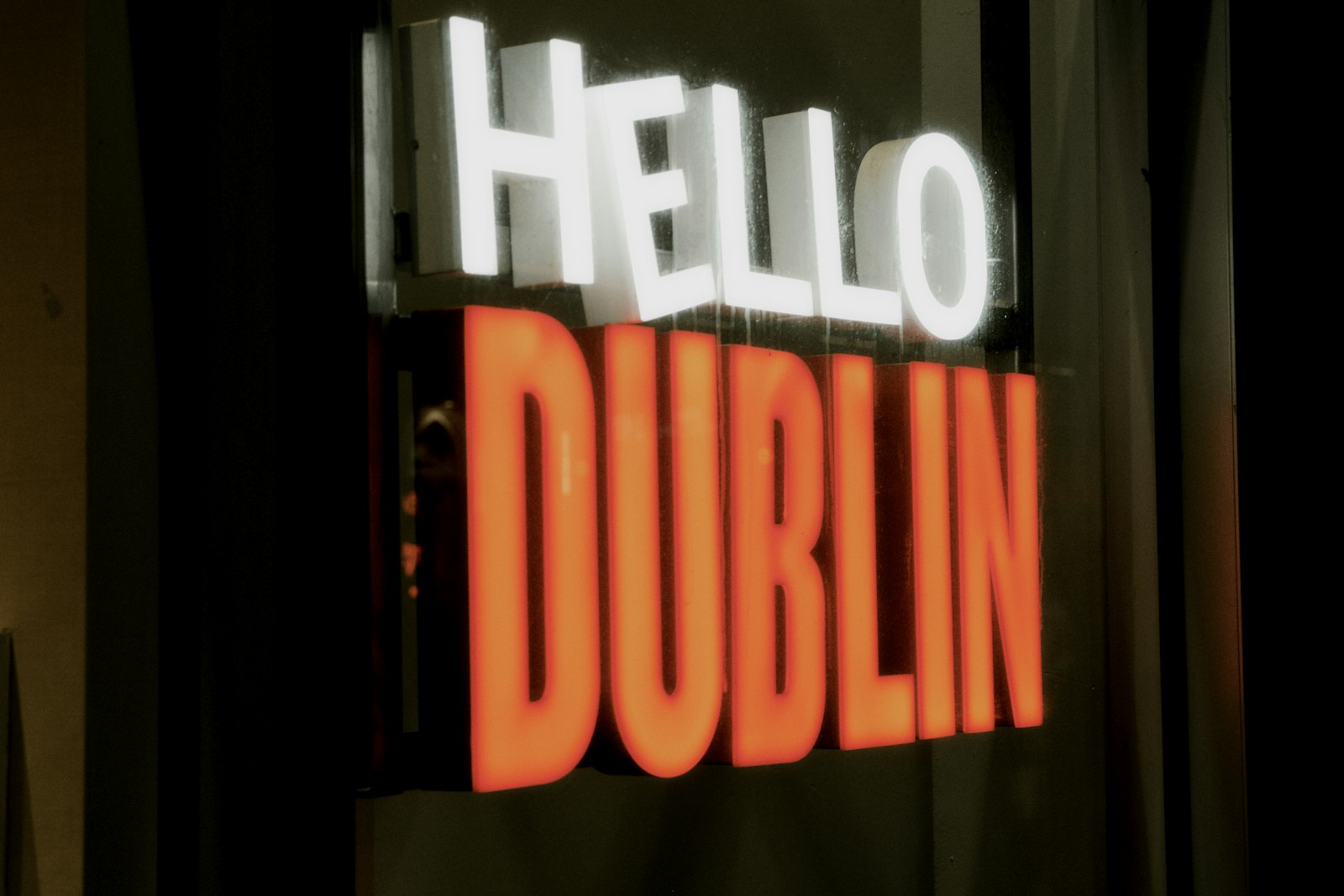
Photo by atelierbyvineeth … on Unsplash
Dublin’s streets pulse with a linguistic energy all their own. Walk through the Temple Bar district or catch a conversation on the LUAS, and you’ll encounter a dialect so distinctive, so packed with flavor and attitude, that it deserves its own encyclopedia. Dublin slang isn’t just how people from Ireland’s capital speak; it’s a cultural phenomenon that’s been exported globally through film, television, and the sheer charisma of Dubliners themselves. If culchie dialect represents rural tradition and preservation, Dublin slang represents dynamism, urban wit, and the particular humor that comes from living in a crowded city where survival depends on quick thinking and quicker comebacks.
For American visitors, Dublin slang presents both challenge and opportunity. The words, the pacing, the self-deprecating humor—all of it comes at you rapidly and with assumptions about shared cultural knowledge that can leave outsiders spinning. But crack the code of Dublin speech, and you’ll discover that the capital’s linguistic culture is not just charming but fundamentally human in ways that transcend nationality. Dublin slang is essentially the language of working-class urban survival expressed through centuries of Irish wit and resilience.
The Essential Dublin Slang Vocabulary
Dublin slang begins with a core vocabulary that locals use dozens of times daily, so ingrained in their speech that many Dubliners don’t even realize they’re using slang.
“Fierce” appears here as well, but Dubliners use it quite differently from culchies. In Dublin, “fierce” typically means good, impressive, or excellent, with slightly less intensity than rural usage. A fierce night out was an excellent evening; a fierce pint is a particularly good one. The word has gentrified somewhat in Dublin, losing some of the desperate intensity it carries in the countryside.
“Grand” represents perhaps the most quintessentially Dublin response to virtually any question or situation. “How are you?” “Grand.” “How was your dinner?” “Grand.” “Your house just burned down?” “Ah, it’s grand, it’ll be grand.” The word carries a profound philosophical acceptance of whatever comes, combined with a refusal to complain or burden others with problems. “Grand” is Dublin’s answer to existential uncertainty.
“Deadly” means good, excellent, or impressive, though it’s been somewhat eclipsed by newer slang among younger generations. An older Dubliner might still describe a film as “deadly” or an evening as “deadly.” The word lacks any negative connotation despite its dark meaning in standard English; in Dublin, deadly is purely positive.
“Eejit” refers to a foolish person, though with varying degrees of affection. Calling someone an eejit among friends is teasing; a stranger being called an eejit might experience it as an insult. The word encompasses stupidity, foolishness, and a particular kind of willful idiocy that Dubliners find amusing. “You’re some eejit if you believe that” combines the insult with an undertone of dark humor.
“Bollix” (or “bollocks”) refers to testicles but also serves as a catch-all insult and expression of frustration. “That’s complete bollix” means something is nonsense or wrong. “You’re a bollix” is insulting. But “ah bollix” might simply express frustration or disappointment in a situation. The word is ubiquitous enough in Dublin that it’s used almost reflexively, though it remains considered quite vulgar in polite company.
“Feckin'” is Dublin’s famous softened profanity, immortalized by the film “The Commitments.” It replaces a more severe profanity but carries the same emotional weight. “That’s feckin’ brilliant” expresses genuine enthusiasm; “Feckin’ hell” expresses surprise or frustration. The word is so woven into Dublin speech that many Dubliners use it without thinking and often don’t notice how vulgar it sounds to outsiders.
“Gobshite” combines “gob” (mouth) with “shite” to describe someone obnoxious, arrogant, or overly talkative. It’s a particularly Dublin insult, implying someone talks too much and without wisdom. You might hear a Dubliner describe a politician or celebrity as a “complete gobshite” without apology.
“Manky” means dirty, unpleasant, or of poor quality. A manky bathroom is disgustingly dirty. Manky food is revolting. A manky film is poorly made and unpleasant to watch. The word conveys aesthetic and moral judgment simultaneously.
“Cop on” means to understand, to get it, or to become aware. “Will you cop on?” is both a question and a mild insult, implying someone is being foolish or failing to grasp something obvious. “Cop yourself on” is an instruction to behave better or understand the situation. The phrase originated from Dublin police (“cops”) but has evolved into its current meaning.
“Gee bag” (or just “gee”) describes an unattractive person, though the term has become somewhat outdated. Older Dubliners might still use it, but it’s fallen out of favor with younger generations who find it overly harsh.
“Fair play” acknowledges someone’s accomplishment or good behavior, often with gentle irony. “You completed a task?” “Fair play” might acknowledge genuine achievement or gently mock someone for finally doing something obvious. Context determines whether the phrase is sincere or sarcastic.
The Architecture of Dublin Insults
Dubliners are particularly skilled at insult comedy, the tradition of friendly ribbing that strengthens bonds through humor rather than hostility. Understanding how Dublin insults work is crucial to appreciating Dublin slang.
“Your man” or “your one” refers to any person, male or female, with a particular emphasis on deflecting personal connection. “Your man over there” avoids using an actual name, creating a strange distance. The construction also appears in affectionate contexts: “Your man’s a legend” might express genuine admiration through linguistic indirection.
“Some [adjective]” creates a particular insult formula. “You’re some eejit” means you’re quite the eejit; “That’s some bollix” means it’s particularly bad bollix; “She’s some fierce woman” means she’s notably impressive or fierce. The construction adds emphasis through seemingly diminished language.
“A dose” or “fierce dose” describes someone annoying, bothersome, or problematic. “That fella’s a fierce dose” means he’s very annoying. The metaphor compares human unpleasantness to taking medicine—you’ve got to endure it but it’s never pleasant.
“A pain in the hole” or more crudely “a pain in the arse” describes someone tiresome or bothersome. The insult combines physical discomfort with emotional irritation through crude anatomical reference, very characteristic of Dublin humor.
Dublinese Expressions and Phrases
Beyond individual words, Dublin slang includes countless phrases that encode particularly Dublin ways of seeing the world.
“What’s the story?” serves as the universal Dublin greeting, almost identical to culchie usage but with a particular Dublin inflection that suggests “what’s the news?” or “what’s happening with you?” The response can be equally minimal: “Story, story, the same old story.”
“How’s the form?” asks how someone is doing, with “form” referring to general condition or mood. “Bad form” means you’re in a bad mood or situation; “good form” means you’re doing well.
“Go on out of that” expresses disbelief or dismissal. Someone claims something unlikely? “Go on out of that” means you don’t believe them. It’s not necessarily rude but expresses skepticism with humor.
“Acting the maggot” means misbehaving or fooling around. A child acting the maggot is being difficult and silly. The expression contains judgment mixed with amusement.
“Fierce busy” or “fierce mad” intensifies adjectives in ways similar to culchie speech but with Dublin’s particular flavor. A Dubliner might be “fierce mad” about something they’re genuinely upset about, but the construction creates a kind of linguistic distance that makes the emotion seem less serious.
“Sure look” opens sentences throughout Dublin, essentially meaning “listen” or “you see.” “Sure look, the whole thing’s a disaster” introduces an explanation or complaint with a gesture toward inevitable acceptance.
“At the end of the day” closes Dublin arguments, similar to American usage but with particularly Dublin fatalism. The phrase suggests that whatever complexity preceded it, certain fundamental truths remain.
The Generational Divide in Dublin Slang
Dublin slang isn’t static; it evolves rapidly, and significant differences exist between generations.
Older Dubliners (60+) tend toward words like “deadly,” “fierce,” “bags,” and more traditional insults. They use more grammatically complex constructions and longer sentences. Their slang is often considered more colorful and creative by younger generations who find it charmingly antiquated.
Middle-aged Dubliners (35-60) represent the peak of traditional Dublin slang usage, comfortable with both older and newer terms. They still use “fierce” and “deadly” regularly but have incorporated newer slang as well.
Young Dubliners (under 35) blend traditional Dublin slang with younger Irish slang and increasingly international influences, particularly from American and British sources. They’re less likely to use traditional terms like “deadly” or “bags” but maintain core Dublin expressions like “fair play,” “cop on,” and “acting the maggot.”
Children and teenagers increasingly use slang from social media and international sources, though family and school influence keeps traditional Dublin patterns alive. The pure Dublin accent and slang are becoming less common as generational change accelerates.
Dublin’s Relationship with Profanity
One cannot discuss Dublin slang without addressing its notably casual relationship with profanity. Dublin speech is peppered with words that would be considered shockingly vulgar in other contexts but which Dubliners use almost reflexively without conscious awareness of vulgarity.
The primary profanities in Dublin speech are “feck,” “bollix,” “shite,” and combinations thereof. These words appear in sentences so naturally that visitors often miss them initially, assuming they’re standard vocabulary. “That’s fierce feckin’ deadly” combines intensifiers with profanity in a sentence that has no particular need for vulgarity but which rolls off Dublin tongues automatically.
Importantly, Dublin profanity rarely carries malicious intent. A Dubliner calling something “complete bollix” isn’t necessarily angry; they might be amused, resigned, or simply describing reality. The words function almost like punctuation, marking emotional content without necessarily indicating hostile intent.
This casualness about profanity reflects Dublin working-class culture where direct speech and rough language were never associated with insufficient education or low character. Professors, doctors, and successful business people in Dublin use the same vocabulary as construction workers and taxi drivers. It’s classless profanity, serving purposes beyond mere vulgarity.
Dublin Slang by Context: Work, Romance, and Conflict
Different contexts require different slang registers, and Dubliners navigate these shifts with remarkable fluidity.
In professional contexts, even Dubliners who speak pure slang at home adapt their speech. They might still drop in “fair play” or “some fella,” but they avoid “gobshite” and excessive “feckin’.” The adjustment isn’t complete removal of Dublin features but rather a dial-down of intensity.
In romantic contexts, Dublin slang actually intensifies. Couples use particular terms of endearment alongside profanity in ways that outsiders would find shockingly crude but which couples understand as genuine affection. “You’re some fierce eejit, so you are” might be a term of endearment in the mouths of longtime partners.
In conflict, Dublin slang becomes particularly creative and cutting. The insult tradition reaches its peak when Dubliners are genuinely angry, with language becoming more inventive and verbally vicious. These conflicts follow an almost ritualistic pattern where insults escalate in complexity and creativity until one party either wins through superior wit or both parties dissolve into laughter.
How Americans Are Perceived in Dublin Slang
Dubliners have particular slang terms for Americans that range from affectionate to dismissive.
“Yanks” is the basic term, neither particularly positive nor negative. “A Yank came into the pub” simply identifies someone as American.
“Septic” (from Cockney rhyming slang “septic tank” = Yank) is older slang that’s falling out of use but which some Dubliners still employ, typically with affection rather than malice.
More commonly, Dubliners simply describe Americans by their characteristics: “That American fella,” “the Yank girl,” etc. They often find Americans loud, overly friendly, and overly earnest, perceptions that find expression in phrases like “fierce American” or “very American,” which can be either complimentary or gently mocking depending on context.
Regional Dublin Variations
Even within Dublin, neighborhood-based slang exists, though the capital’s size and centralization mean these variations are less pronounced than between Dublin and rural areas.
North Dublin working-class areas maintain more traditional slang and stronger accents than the southside. Phrases like “acting the maggot” are more common in North Dublin speech.
South Dublin middle-class and wealthy areas feature less pronounced slang and more standard English, though Dubliners from any part of the city will maintain characteristic Dublin features of speech even when adapting for formal contexts.
Temple Bar and tourist areas have developed a particular version of Dublin slang designed for consumption by outsiders. It’s less authentically Dublin and more “Dublin as Americans imagine it,” though real Dubliners do use these phrases.
Modern Dublin Slang and Anglicization
Younger Dubliners increasingly use slang from British English and American English, particularly through digital communication and social media. Terms like “cringe,” “vibe,” and “mood” have entered Dublin speech, sometimes used alongside traditional Dublin slang, sometimes replacing it.
“Vibes” describes an atmosphere or feeling. “That pub has fierce vibes” combines traditional intensifier with newer vocabulary. “Bad vibes” means something feels wrong or negative.
“Cringe” describes something embarrassing or uncomfortable, common across English-speaking youth globally but adopted into Dublin speech with particular enthusiasm.
“Mad” intensifies in ways similar to American usage: “That film is mad brilliant” means extremely good. Older Dubliners more commonly said “fierce,” but “mad” is increasingly common among younger speakers.
Practical Guide for Americans Learning Dublin Slang
Learning Dublin slang requires immersion, but certain strategies accelerate the process. Start with “grand” and “fair play”—these are safe, friendly, and frequently used. Progress to “fierce” and “deadly,” which, while slang, are less vulgar. Use “your man” and “your one” liberally; they’re the linguistic tics that mark speech as Dublin.
Listen carefully to context with profanity. You can appreciate Dublin humor without immediately adopting the profanity, which can come across as trying too hard. When you do use these words, use them naturally, not as punctuation or for shock value.
Master the questioning pattern. Dubliners ask many questions but often lower their intonation, making questions sound like statements. “You’re having a laugh” might be a question despite the statement pattern. Listen for grammatical clues rather than relying on intonation.
Most importantly, recognize that Dublin slang is fundamentally comedic. It’s built around humor, self-deprecation, and the assumption that life is inherently absurd. When you use Dublin slang, you’re acknowledging this philosophy. When Dubliners use elaborate insults with you, they’re usually showing affection; when they’re genuinely hostile, the language actually becomes more formal and less slang-filled.
Conclusion: The Vitality of Dublin Speech
Dublin slang represents far more than quaint linguistic quirks. It’s a living language that encodes the particular way Dubliners relate to each other, to their city, and to the world. It’s built on wit, self-deprecation, and the understanding that survival in a crowded urban environment requires humor and rapid-fire verbal creativity.
For American visitors seeking to understand Dublin beyond tourist attractions and guidebook descriptions, mastering the basics of Dublin slang offers direct access to authenticity. When a Dubliner calls you “some fierce eejit” with a grin, they’re inviting you into their linguistic world. When they acknowledge your effort with “fair play,” they’re recognizing you as someone who gets it.
The next time you find yourself in a Dublin pub, listening to rapid-fire conversation filled with “feckin'” and “bollix” and “fair play,” you won’t be lost in translation. You’ll understand that you’re hearing a language that’s been refined across generations, that carries centuries of working-class resilience and humor, and that represents one of the world’s great urban dialects. That understanding transforms the experience from listening to a foreign language to participating in a profoundly human conversation.

Author: jonathan
Jonathan is the publisher of Irishtopia.net, Anglotopia.net, and Londontopia.net. He's passionate about travel and learning about other cultures. He's been to Ireland several times, and uses his travel expertise for Irishtopia!