
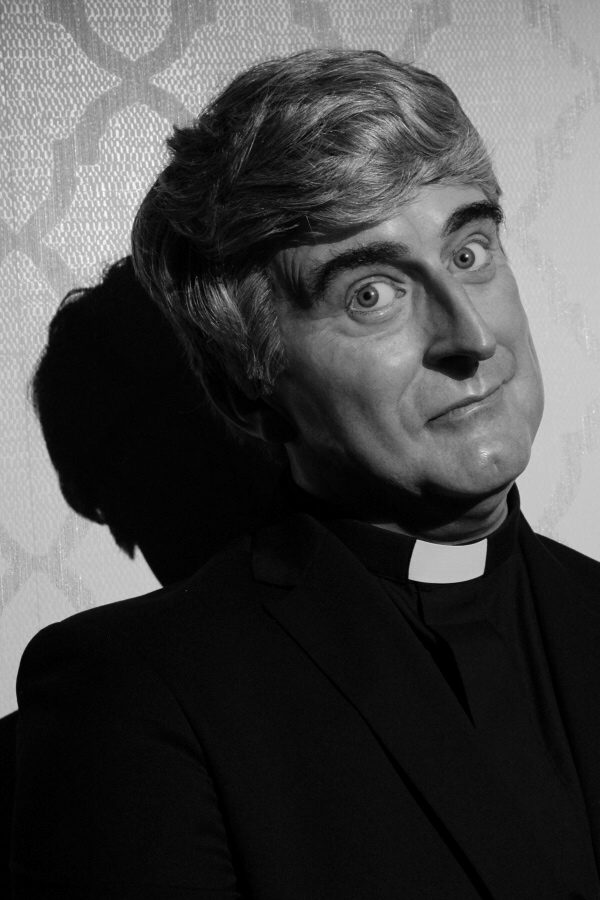
“Father Ted,” the legendary Irish sitcom that aired from 1995-1998, produced two Christmas specials that have become as essential to Irish Christmas television as the Late Late Toy Show. These episodes – “A Christmassy Ted” (1996) and “Flight into Terror” (1997) – capture something essential about Irish Christmas: its combination of religious observance and chaos, its mixing of the sacred and ridiculous, and its ability to find humor in situations that might seem inappropriate for comedy. Understanding Father Ted’s Christmas episodes reveals both the show’s genius and insights into Irish attitudes toward Christmas, religion, and celebration.
Father Ted: Context and Significance
Before examining the Christmas specials specifically, understanding Father Ted’s place in Irish culture is essential.
The Premise: Father Ted Crilly (Dermot Morgan), Father Dougal McGuire (Ardal O’Hanlon), and Father Jack Hackett (Frank Kelly) are three Catholic priests banished to Craggy Island, a remote fictional Irish island, for various misdeeds. They’re supervised by their housekeeper, Mrs. Doyle (Pauline McLynn). The show satirizes Irish Catholicism, Irish culture, and television itself.
Cultural Impact: Despite only three series and a Christmas special, Father Ted became perhaps the most influential Irish sitcom ever made. It:
- Changed how Irish people could discuss Catholicism and clergy
- Created catchphrases that entered Irish vernacular
- Launched careers of its cast and writers
- Became beloved across Ireland, Britain, and internationally
- Continues in endless repeats and streaming
The Creators: Writers Graham Linehan and Arthur Mathews created distinctive comedy that was simultaneously very Irish and universally funny, satirical of Irish Catholicism without being mean-spirited or offensive to most Irish Catholics.
Tragic End: Dermot Morgan died suddenly in 1998, the day after filming the final episode, ending the show at its peak and adding poignancy to its legacy.
“A Christmassy Ted” (1996): The First Christmas Special
The first Father Ted Christmas special aired on Christmas Eve 1996 and established the template for how Father Ted approached Christmas.
The Plot: Ted and Dougal visit Ireland’s largest lingerie section to buy presents, only to be trapped in the section overnight. Meanwhile, Father Jack escapes from the parochial house to wreak havoc. Subplots involve Mrs. Doyle’s obsessive Christmas preparations and various other mishaps.
Key Scenes and Moments:
The Lingerie Department: Ted and Dougal’s entrapment in the lingerie section creates comedy from their obvious discomfort and inappropriate situation for priests. The scene plays with clerical celibacy, sexual awkwardness, and the absurdity of two priests surrounded by women’s underwear. It’s funny precisely because of the incongruity.
Father Jack’s Escape: Jack’s breaking free and subsequent rampage captures the show’s anarchic energy. His drunken destruction of Christmas provides dark counterpoint to typical Christmas sentiment.
Mrs. Doyle’s Christmas Obsession: Mrs. Doyle’s extreme Christmas preparations satirize both Irish Christmas expectations and the burden these preparations place on women. Her desperate need to provide perfect Christmas mirrors real Irish women’s Christmas stress.
The Christmas Morning Scene: The special’s conclusion, with the priests’ chaotic Christmas morning, parodies traditional family Christmas scenes while adding Father Ted’s distinctive absurdist touch.
Themes:
Commerce vs. Religion: The special satirizes Christmas commercialism through the priests’ shopping trip, highlighting tension between Christmas’s religious meaning and commercial reality.
Obligation and Stress: Mrs. Doyle’s preparations show how Christmas creates obligation and stress rather than pure joy, particularly for women bearing preparation burdens.
Clerical Humanity: Ted and Dougal’s discomfort in the lingerie section reminds viewers that priests are human with human awkwardness, fears, and vulnerabilities.
Chaos vs. Control: The special’s escalating chaos battles against characters’ attempts to control Christmas and make it “perfect.”
Reception: “A Christmassy Ted” was warmly received, becoming a Christmas repeat favorite on Irish and British television. It demonstrated Father Ted could handle Christmas without losing its edge.
“Flight into Terror” (1997): The Classic Christmas Special
The second and final Father Ted Christmas special, “Flight into Terror,” aired Christmas Eve 1997 and has become even more beloved than the first special.
The Plot: Father Ted and Dougal are returning to Craggy Island from a trip to Las Vegas when their flight encounters various disasters. The episode parodies disaster films while incorporating Christmas themes.
Key Scenes and Moments:
The Opening: The special opens with Ted and Dougal in Las Vegas, immediately establishing absurdity – why are Irish priests in Vegas? This unexplained incongruity sets the tone.
Richard Wilson: The special features Richard Wilson (Victor Meldrew from “One Foot in the Grave”) playing himself. The running gag about his catchphrase “I don’t believe it!” becomes increasingly absurd and funny.
The Disaster Cascade: The flight experiences multiple disasters – engine failure, pilot incapacitation, bird strikes, fuel shortage – each more ridiculous than the last. The escalation parodies disaster film conventions while maintaining Father Ted’s distinctive humor.
“There’s Something About Richard”: This subplot, involving Richard Wilson’s romantic troubles, provides a B-story that parallels and contrasts with the flight disaster.
Dougal’s Incompetence: Dougal’s complete inability to understand aviation or help in any way creates comedy from his endearing stupidity. His presence makes every situation worse, but lovably so.
The Landing: The special’s conclusion, with various improbable solutions to the disasters, maintains Father Ted’s rejection of realism in favor of comic absurdity.
Themes:
Travel and Homecoming: The special explores Irish Christmas travel – emigrants returning home, visits to family – through its disaster-filled journey. Every Irish person understands Christmas travel stress.
Celebrity and Normality: Richard Wilson’s presence explores how celebrities navigate normal situations, particularly resonant at Christmas when everyone, famous or not, shares similar experiences.
Faith and Doubt: Though not heavily emphasized, the special touches on faith during crisis, with Ted’s prayers and theological discussions amid disaster.
Christmas Expectations: The contrast between Christmas’s supposed peace and joy and the special’s chaos highlights gaps between Christmas ideals and reality.
Parody and Homage: “Flight into Terror” lovingly parodies disaster films (particularly “Airport” and similar 1970s films) while creating original comedy. The parody works whether or not viewers recognize the references.
Reception: “Flight into Terror” became even more beloved than “A Christmassy Ted,” regularly voted among the best British and Irish Christmas specials ever made. It demonstrates Father Ted’s comedy at its peak.
What Makes Father Ted’s Christmas Episodes Work
Several factors make Father Ted’s Christmas specials particularly successful:
Tonal Balance: The specials balance irreverence with genuine warmth. They satirize Christmas without being cynical, maintaining affection for the holiday even while mocking its absurdities.
Irish Specificity: The specials capture specifically Irish Christmas elements – the religious dimension, family obligations, travel home, pub culture – while remaining universally funny.
Character Consistency: The Christmas specials maintain character consistency rather than forcing unnatural “Christmas spirit” moments. Ted remains scheming, Dougal remains stupid, Jack remains drunk, and Mrs. Doyle remains obsessively hospitable.
No Sentimentality: Father Ted refuses Christmas sentimentality. There are no heartwarming lessons, no character growth, no schmaltzy endings – just chaos and comedy.
Physical Comedy: Both specials feature excellent physical comedy – Jack’s rampage, the flight disasters, various pratfalls and stunts – executed with perfect timing.
Quotability: Like all Father Ted episodes, the Christmas specials are endlessly quotable, with lines that entered Irish vernacular and are still referenced years later.
Irish Catholic Context
Understanding Father Ted’s treatment of Christmas requires understanding its relationship with Irish Catholicism.
Post-Crisis Catholicism: Father Ted emerged as Irish Catholicism faced crisis after clergy abuse scandals. The show’s gentle satire of incompetent, flawed priests resonated with Irish people reassessing their relationship with the Church.
Affectionate Satire: The show satirizes Irish Catholicism affectionately rather than maliciously. Irish Catholics could laugh at Father Ted without feeling attacked, perhaps because the show recognized their own ambivalence about Church institutions while maintaining cultural Catholic identity.
Christmas and Religion: The Christmas specials navigate Christmas’s religious meaning carefully. They acknowledge it without emphasizing it, allowing secular enjoyment while respecting religious observers.
Permission to Laugh: Father Ted gave Irish people permission to laugh at their religious traditions without feeling guilty. This permission extended to Christmas, allowing Irish people to acknowledge Christmas’s absurdities while still enjoying it.
Reception and Legacy
Father Ted’s Christmas specials have achieved lasting cultural significance.
Annual Repeats: Both specials air annually on Irish and British television during Christmas. For many Irish families, watching Father Ted’s Christmas specials has become a Christmas tradition as established as any ancient custom.
Cultural References: Lines, scenes, and moments from the Christmas specials are regularly referenced in Irish culture, particularly around Christmas. “I hear you’re a racist now, Father” (from a different episode but often conflated with Christmas specials due to Christmas viewing) exemplifies the show’s linguistic impact.
Comparison to Other Christmas Specials: Father Ted’s Christmas specials are regularly compared to classic British Christmas specials like Only Fools and Horses or Blackadder, holding their own in this distinguished company.
International Appreciation: While deeply Irish, the Christmas specials work internationally. They’ve been appreciated in Britain, America, Australia, and elsewhere, demonstrating universal appeal of their comedy.
Streaming Discovery: New generations discovering Father Ted through streaming services encounter the Christmas specials, ensuring continued relevance and appreciation.
The Shows Irish Audiences Watch at Christmas
Father Ted’s Christmas specials fit into broader patterns of Irish Christmas television viewing:
Comfort Viewing: Irish audiences seek familiar, comfortable viewing at Christmas. Father Ted’s endless rewatchability makes it perfect Christmas comfort viewing.
Communal Experience: Father Ted works well for multigenerational viewing. Families can watch together, with different members appreciating different aspects of the comedy.
Irish Identity: At Christmas, particularly for Irish people living abroad, watching Father Ted affirms Irish identity and connection to home. It’s recognizably, authentically Irish.
Alternatives to Sentiment: In an era of sentimental Christmas programming, Father Ted’s refusal of sentiment provides welcome relief. Some Irish people actively prefer Father Ted’s approach to Christmas.
Critical Analysis
Beyond simple enjoyment, Father Ted’s Christmas specials reward critical analysis.
Social Commentary: The specials comment on Irish society, Catholic culture, consumerism, gender roles, and Christmas itself without becoming preachy or losing entertainment value.
Comedy Theory: The specials demonstrate various comedy techniques – physical comedy, verbal wit, character comedy, parody, absurdism, farce – executed at professional level.
Cultural Documentation: The specials document late 1990s Irish culture, capturing a specific moment in Irish history when the country was rapidly changing while maintaining traditions.
Television Innovation: The specials pushed boundaries of what Christmas specials could be, influencing subsequent Christmas comedy programming.
Why They Endure
Father Ted’s Christmas specials’ endurance reflects several factors:
Quality: Simply put, they’re extremely funny. Quality comedy endures.
Relatability: Despite absurdist elements, the specials touch on genuinely relatable Christmas experiences – stress, travel, family obligations, commercial pressure.
Rewatchability: The specials reward repeated viewing. Jokes that might be missed first time reveal themselves on subsequent viewings.
Nostalgia: For Irish people of certain ages, Father Ted represents their youth. Christmas specials trigger this nostalgia while providing genuine entertainment.
Cultural Significance: The specials represent important Irish cultural artifacts, worth preserving and celebrating beyond their entertainment value.
Comparison to British Christmas Specials
Father Ted’s Christmas specials exist in conversation with British Christmas special traditions:
British Influence: British sitcoms established Christmas special traditions that Father Ted both honors and subverts.
Irish Distinction: While British in production (made for Channel 4), the Christmas specials are distinctly Irish in content, sensibility, and cultural reference.
Quality Comparison: Father Ted’s Christmas specials hold up favorably against classic British Christmas specials, demonstrating Irish capacity for world-class comedy.
The Tragedy Element
Dermot Morgan’s death adds unavoidable poignancy to Father Ted’s Christmas specials.
Final Performances: Watching Morgan in these specials knowing they were among his final performances adds emotional weight unavailable during original broadcast.
Lost Potential: Morgan’s death ended Father Ted at its peak. The Christmas specials represent what was and what might have been if the show had continued.
Legacy: The Christmas specials became part of Morgan’s legacy, remembered as examples of his comedic genius.
Conclusion
Father Ted’s Christmas specials represent peak achievement in Christmas comedy, combining absurdist humor, social satire, character comedy, and parody into entertaining, rewatchable, culturally significant television. They capture something essentially Irish about Christmas – the mixing of sacred and profane, the gap between expectation and reality, the ability to laugh at ourselves and our traditions while maintaining affection for them.
“A Christmassy Ted” and “Flight into Terror” have earned their place in Irish Christmas traditions through quality, relatability, and their distinctive approach to Christmas comedy. They refuse sentimentality while maintaining warmth, satirize Christmas without cynicism, and create comedy from situations other shows might consider inappropriate or too risky.
For Irish audiences, watching Father Ted’s Christmas specials has become as much a Christmas tradition as any ancient custom, providing annual reminder that Irish Christmas can be simultaneously reverent and ridiculous, meaningful and absurd. The specials give Irish people permission to acknowledge Christmas’s chaos and commercialism while still enjoying the holiday.
As Irish Christmas continues evolving, Father Ted’s Christmas specials will likely remain fixtures of Irish Christmas television, introducing new generations to their distinctive comedy while providing annual comfort and laughter to those who’ve watched them for years. They demonstrate that great Christmas specials don’t need sentiment or schmaltz – just brilliant writing, perfect performances, and genuine understanding of what makes Christmas simultaneously wonderful and ridiculous.
In capturing Irish Christmas in all its absurd glory, Father Ted’s Christmas specials created comedy that will likely be watched, quoted, and loved for generations to come, ensuring Ted, Dougal, Jack, and Mrs. Doyle remain part of Irish Christmas long into the future.

Author: jonathan
Jonathan is the publisher of Irishtopia.net, Anglotopia.net, and Londontopia.net. He's passionate about travel and learning about other cultures. He's been to Ireland several times, and uses his travel expertise for Irishtopia!