
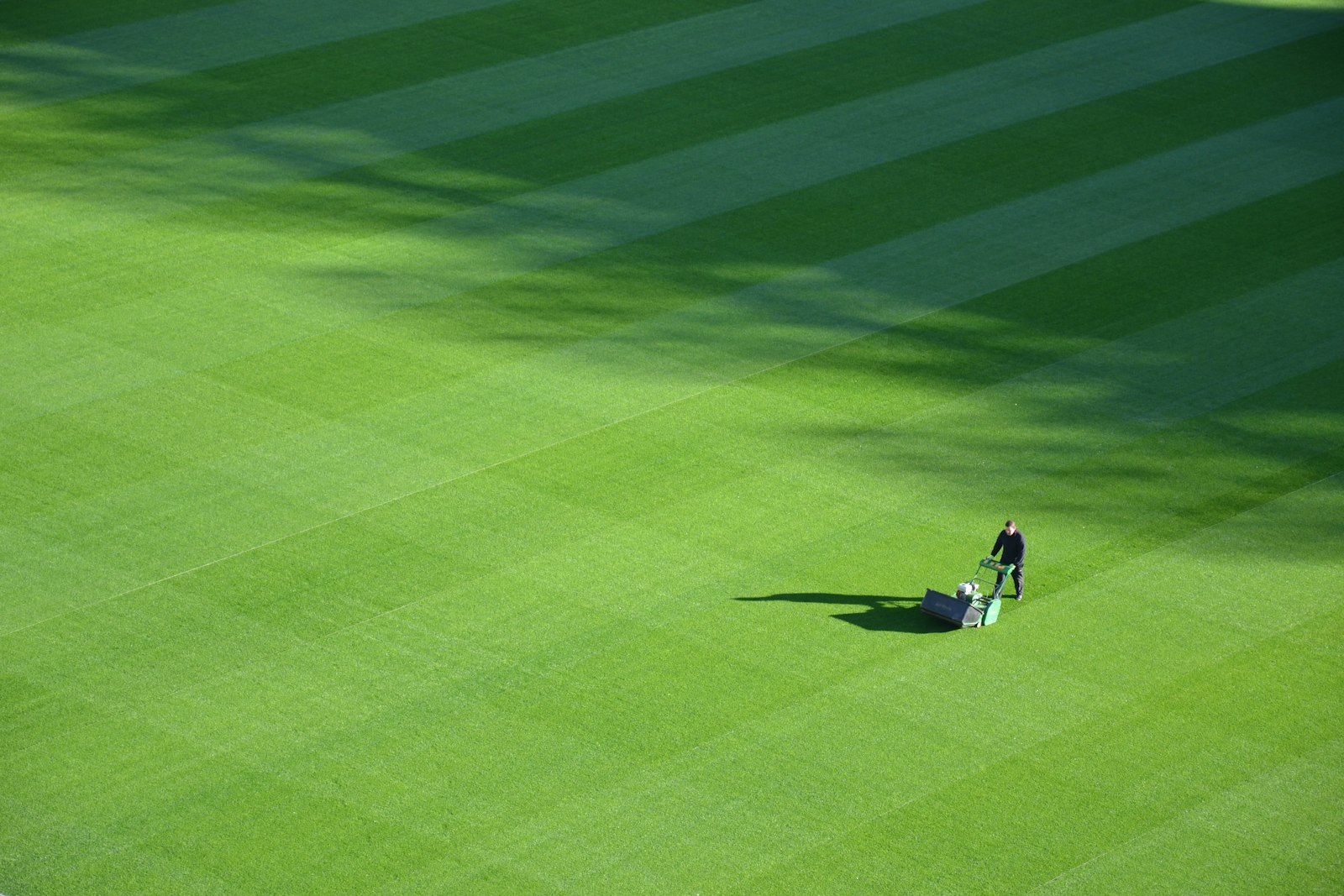
Photo by Rémi Müller on Unsplash
If you’re an American sports fan trying to understand Gaelic football, you’ll immediately notice similarities to sports you already know. The oval-shaped field resembles an American football or rugby pitch. The ball is round like a soccer ball. Players can both kick and hand-pass. There are goals and points. Yet despite these surface resemblances, Gaelic football is utterly distinctive—a sport that evolved in isolation on the island of Ireland and has developed characteristics found nowhere else in the world.
Gaelic football is played by over 200,000 people in Ireland and represents one of the two pillars of the GAA. If hurling is Irish sport at its most elegant and explosive, Gaelic football is Irish sport at its most tactical and flowing. The game rewards athleticism, technical skill, tactical understanding, and collective teamwork. It’s a sport that can seem chaotic to outsiders but follows a specific internal logic once you understand its rules and strategic dimensions.
The Origins and Evolution of Gaelic Football
Unlike hurling, which can claim ancient origins, Gaelic football is more recent. The sport appears to have evolved during the 18th and 19th centuries, influenced by various folk football traditions and the codification of modern sports like rugby and association football (soccer).
The earliest recorded instances of football being played in Ireland date to medieval times, with references to a ballgame in various historical texts. However, these early games bore little resemblance to modern Gaelic football. They were chaotic affairs, played between towns with minimal rules and potentially unlimited numbers of players. Matches sometimes lasted multiple days and involved rough, often violent play.
The modern version of Gaelic football was formally codified by the GAA in 1884, just like hurling. The first All-Ireland Senior Football Championship was held in 1888. Early versions of the sport were more rugby-like, with significant emphasis on scrimmaging (called scrums in rugby) and forward play. Over the subsequent decades, the sport evolved to become faster, more skillful, and more emphasizing kicking and handpassing.
A major influence on Gaelic football’s development was association football (soccer). As soccer spread in Ireland during the late 19th century, football enthusiasts modified Gaelic football to create a sport that was distinctly Irish but incorporated elements of soccer. Similarly, rugby’s influence is visible in the sport’s structure and play.
The evolution continued throughout the 20th century, with rule changes and tactical innovations gradually transforming the sport. The television era brought new emphasis on ball movement and scoring, leading to a more attacking, entertaining version of the game. Contemporary Gaelic football is faster, more skillful, and more free-flowing than historical versions.
Understanding the Rules and Play
Gaelic football is played with 15 players per side on a rectangular field slightly larger than a rugby pitch, approximately 130-145 yards long and 80-90 yards wide. The H-shaped goal (with net below) is identical to the one used in hurling.
The ball is spherical, traditionally leather, and weighs 14-16 ounces (slightly larger than a soccer ball). Players can catch the ball by hand and carry it for up to four steps. After four steps, they must bounce it to the ground (similar to dribbling in basketball) and catch it, resetting their step count. Alternatively, they can kick the ball directly, bypass the step limitation.
Scoring is identical to hurling: a goal (under the crossbar into the net) counts as three points, and a point (over the crossbar) counts as one point. Matches consist of two 35-minute halves at the senior level (70 minutes total), though this varies by competition level.
The fundamental mechanics are deceptively simple, but their combination creates complex possibilities. A player might catch a high ball, take three steps, hand-pass to a teammate, who catches it, takes two steps, then boots the ball toward goal. Alternatively, a player might catch the ball, immediately kick it forward to a free teammate, keeping the momentum flowing. The balance between catching/carrying and kicking creates constant tactical choices.
What distinguishes Gaelic football from rugby or American football is the combination of continuous play (no scrums, no huddles, constant movement), hand-passing (which is unique to Gaelic and hurling), and kicking (which is more prominent than in rugby or American football). The result is a sport that flows naturally, with transitions from defense to attack happening rapidly.
The Tactical Dimension
While Gaelic football can appear chaotic to newcomers, the sport has significant tactical sophistication. Teams employ various strategic approaches depending on their strengths, the opposition, and the match situation.
Attacking Systems
The fundamental attacking objective is to move the ball toward the goal and create scoring opportunities. Teams can do this through several systems:
Possession-based football involves moving the ball through hand-passing, keeping possession, and gradually advancing up the field. Teams employing this approach emphasize skill, ball control, and maintaining attacking structure.
Direct football involves more kicking, attempting to move the ball quickly toward the goal rather than building attacks gradually. This approach can be effective for teams with excellent kickers or poor possession control.
Running game emphasizes individual carriers taking the ball forward, using their athleticism to break opposing defensive lines. Some of the most exciting moments in Gaelic football come from individual players taking the ball forward at high speed, evading defenders.
Different teams employ different approaches. Limerick’s dominant teams of recent years were known for possession-based, technical football. Kerry traditionally emphasized individual brilliance and attacking flair. Dublin’s recent success came from a more physical, structured approach.
Defensive Systems
Defensive structures also vary significantly. Most teams employ some version of zone defense, where defenders are assigned to areas of the field rather than individual opponents. This requires communication, positioning sense, and understanding of defensive assignments.
Man-to-man defense involves assigning a defender to each opponent, with the defender marking their opponent across the field. This approach can be effective against teams with star individual players.
Pressing defense involves defenders aggressively attacking the ball carrier and forcing turnovers. Teams might employ high-pressing tactics to prevent the opposition from advancing.
The tactical sophistication comes in how teams balance defensive compactness (difficult for the opposition to score) with defensive spread (coverage across the field). A team might defend tightly near their goal but more loosely in midfield. Depending on the score and match situation, a team might adjust their defensive approach.
The Physicality and Intensity
Gaelic football is a physical sport, though less formally structured in contact than rugby or American football. Players can use their bodies to shield the ball, create space, and contest for possession. However, formal tackling (wrapping the arms around an opponent and bringing them to the ground) is forbidden. The referee penalizes excessive physicality with foul calls.
What this creates is a sport where physicality is present but controlled. Players absorb contact, muscle for position, and occasionally clash, but the play remains relatively continuous. Injuries do occur, but they’re less structured and less frequent than in contact-focused sports.
The intensity is undeniable. Players cover enormous distances—elite players run 7-9 kilometers (4-5 miles) per match, with bursts of high-speed movement throughout. The cardiovascular demands are exceptional, and players must maintain physical intensity throughout the match.
Positional Play and Roles
While Gaelic football is less rigidly positional than sports like American football, there are general positional categories:
The goalkeeper is a specialized position, standing at the goal and attempting to prevent scores. Like in hurling, the goalkeeper can move anywhere on the field but spends most of their time near the goal.
Defenders occupy the back line and are responsible for preventing the opposition from scoring. Full-backs (three defenders across the back) are typically tall and physical, specializing in one-on-one contests. Good defenders read the game well and position themselves to intercept passes.
Midfielders occupy the center field and are often the most important position. Elite midfielders are exceptional athletes who can contest high balls, link defense with attack, and control the game’s tempo. Midfielders typically have the most diverse responsibilities of any position.
Forwards occupy attacking positions and are primarily responsible for scoring. Corner forwards occupy wide positions and are often excellent kickers. Full forwards occupy central attacking positions and frequently score. Attacking midfielders have more freedom to roam and link with other attacking players.
The distinction between positions is less rigid than in American football. A midfielder might drop back to help defend, or a defender might move forward to support an attack. This positional flexibility requires intelligence and game awareness.
The All-Ireland Championship and Contemporary Competition
The All-Ireland Senior Football Championship is Gaelic football’s premier competition, organized similarly to the hurling championship. Thirty-two counties compete, initially in provincial championships, then in qualifying rounds, before the latter stages.
The championship runs from spring through autumn, with the final traditionally held in early September at Croke Park. Recent All-Ireland finals have drawn over 80,000 spectators, making it one of Ireland’s most important sporting events.
Contemporary Gaelic football has been dominated by several teams:
Dublin won three consecutive All-Irelands (2015, 2016, 2017) and four of five from 2015-2019, establishing themselves as the sport’s dominant team. Their success was built on exceptional athleticism, strength and conditioning, and a modern, organized approach to the sport.
Kerry is traditional Gaelic football royalty, having won 37 All-Ireland championships (the second-highest total). Known for attacking flair and individual brilliance, Kerry has produced numerous legendary players.
Meath, Galway, and Offaly are other counties with rich football histories and multiple All-Ireland championships.
Tyrone and Armagh represent the north’s football tradition, combining technical skill with physical intensity.
In recent years, Limerick has emerged as a dominant football power, winning back-to-back championships in 2022-2023 and establishing themselves as contenders alongside Dublin and Kerry.
Famous Players and Personalities
Gaelic football has produced numerous legendary players whose skills and personalities have shaped the sport.
Páidí Ó Sé was a legendary Kerry player and manager, known for his football intelligence and tactical acumen. His teams played beautiful, attacking football.
Mick O’Dwyer managed Kerry to eight All-Ireland championships, establishing himself as perhaps the greatest football manager in history.
Collie O’Neal was an iconic Dublin player of the 1970s-80s, known for his athleticism and all-around excellence.
Roy Keane and Brendan Martin represented modern football excellence, bringing athletic and tactical sophistication to the sport.
Diarmuid Connolly was a contemporary Dublin star, combining athleticism with exceptional technical skill. His fierce intensity and competitive drive made him one of the sport’s most recognizable figures.
Séan Cavanagh represented Tyrone football excellence, playing at a high level for years and bringing national team success to the north.
Kieran Donaghy was a modern Kerry legend, a multiskilled forward whose athletic ability and football intelligence made him one of the sport’s finest players.
The Tactical Evolution
Over recent decades, Gaelic football has experienced significant tactical evolution. Early football emphasized ground play and close-range shooting. Modern football emphasizes long-range kicking, expansive attacking, and defensive structures designed to limit opposition scoring.
The influence of basketball and American sports is evident in some modern approaches. Some analysts argue that modern Gaelic football has become less artistic than historical versions, more structured and less individually creative. Others contend that the contemporary game is faster, more skillful, and more tactically sophisticated.
The introduction of the “handpass” rule is an example of tactical evolution. For years, the rule about hand-passing was somewhat vague. Clarification and consistent enforcement has affected how teams move the ball and develop attacks.
The modern emphasis on strength and conditioning has also transformed the sport. Teams now employ full-time coaching staffs, sports scientists, and nutritionists. Players are stronger, faster, and more powerful than historical players. This physical evolution has made the sport faster and more physical.
Women’s Football and Camogie’s Sister Sport
Ladies’ Gaelic Football has experienced dramatic growth in recent years. Established as a formal competition in 1974, women’s football was long marginalized but is now receiving significant attention and resources.
Contemporary ladies’ football features extraordinary athleticism and skill. Teams are increasingly competitive, well-trained, and supported by dedicated coaching staffs. The All-Ireland ladies’ final now draws substantial crowds and media attention.
The growth of women’s sport at the grassroots level is significant. Young girls now have the opportunity to play Gaelic football from an early age, participate in club structures, and compete at county and national levels.
Club Football: The True Heart of the Sport
While the All-Ireland championship receives the most attention, club football is arguably the true heart of Gaelic football. Across Ireland, thousands of clubs compete in local and regional championships. These clubs are the foundation of the sport, providing the players who feed into county teams.
Club football creates deeper community bonds than championship football. Players represent not just their county but their specific community. Club matches often feel more emotionally intense than championship games because they’re played among people who know each other intimately.
Club championship matches in late summer and early autumn are major community events. Entire families attend, rivalries that have spanned generations resurface, and local pride is at stake.
The Coaching and Development System
Modern Gaelic football features sophisticated coaching and development systems. County teams employ multiple coaches specializing in different aspects (attacking play, defensive structure, strength and conditioning, goalkeeping, etc.). Teams have strength and conditioning programs, nutritional support, and sports science backing.
Club-level coaching is more variable. Wealthier clubs might employ experienced coaches, while smaller clubs rely on volunteer coaches. This creates some disparity in player development between affluent and less resourced clubs.
Nonetheless, the meritocratic nature of Gaelic football means talented players can develop in any club. The best players eventually make their way to county teams regardless of their club’s resources.
Conclusion: Understanding Gaelic Football
For American sports fans, Gaelic football offers a familiar yet distinctive sporting experience. It resembles rugby and American football but is fundamentally different in important ways. It emphasizes continuous play, hand-passing, and tactical sophistication in ways that create a uniquely Irish sporting experience.
Gaelic football represents the modern evolution of Irish sport. It’s connected to tradition but constantly evolving. It maintains its amateur status while incorporating modern athletic science. It’s a sport rooted in community but attracting elite-level athleticism.
Whether you approach it as a cultural enthusiast curious about Irish identity or a sports fan seeking a new athletic pursuit, Gaelic football repays attention. The sport offers drama, skill, athleticism, and community significance in abundance. Understanding Gaelic football means understanding something essential about contemporary Ireland—a nation that honors its traditions while embracing modernity, that values community participation while reaching for elite excellence. That combination makes Gaelic football more than just a sport; it’s a window into Irish life itself.

Author: jonathan
Jonathan is the publisher of Irishtopia.net, Anglotopia.net, and Londontopia.net. He's passionate about travel and learning about other cultures. He's been to Ireland several times, and uses his travel expertise for Irishtopia!