
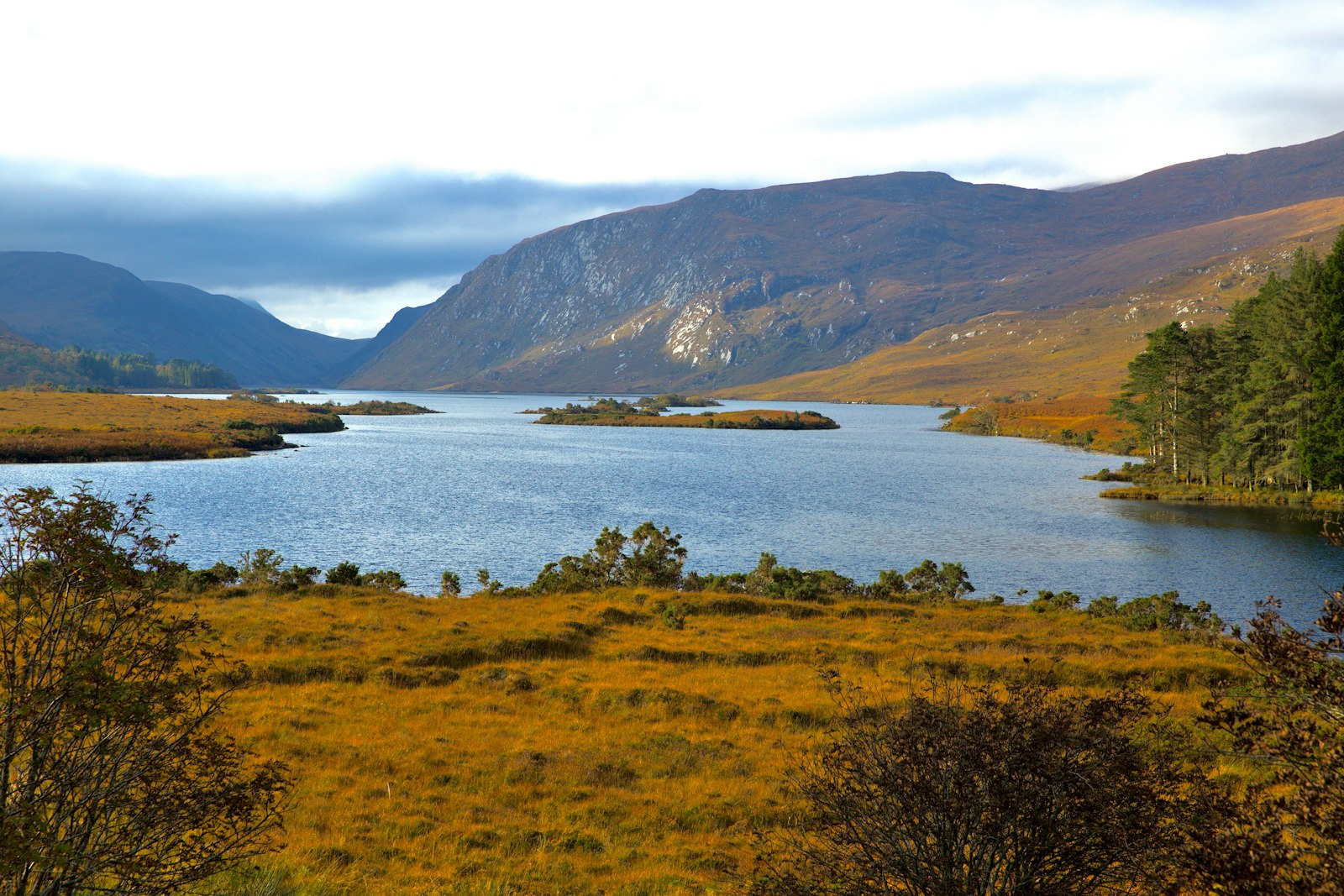
Photo by Brian Kelly on Unsplash
Glenveagh National Park, located in County Donegal’s interior, encompasses 24,000 hectares of landscape combining dramatic mountain terrain, pristine lake environments, and the remarkable Glenveagh Castle with its meticulously maintained gardens. For American visitors seeking natural beauty integrated with cultural heritage sites, Glenveagh offers concentrated experiences where both natural and constructed environments merit equal attention.
The park’s appeal extends beyond typical national park focus on natural features. While the Derryveagh Mountains and Lough Veagh provide profound natural beauty, Glenveagh Castle and its gardens demonstrate human creativity in designing spaces that enhance rather than dominate landscape. The combination creates unique experiences where natural splendor and human cultural achievement coexist and complement each other.
Understanding Glenveagh’s Geography and Formation
Glenveagh National Park occupies a remote Donegal valley stretching approximately 10 kilometers inland from the Atlantic coast. The park encompasses the entire Glenveagh valley—from coastal regions to the mountains defining the valley’s boundaries. This integrated geography creates diverse ecological zones from coastal heathland through temperate forest to alpine terrain on mountain peaks.
The Derryveagh Mountains, surrounding the valley on three sides, rise to approximately 700 meters at their highest point. These mountains, while modest by international standards, dominate the landscape visually and create drama through the contrast between steep slopes and the valley floor below. The mountains’ rocky terrain, sparse vegetation on exposed slopes, and the omnipresent Atlantic wind create alpine character despite the modest elevation.
Lough Veagh, the valley’s focal geographic feature, occupies approximately 2,000 hectares creating an aquatic environment of considerable beauty. The lake’s clear waters reflect surrounding mountains, creating visual poetry when weather conditions align. The lake supports native fish species and bird populations, creating ecological richness.
The park’s establishment in 1975 represented relatively recent conservation effort. The land previously functioned as private estate—Glenveagh Castle and surrounding land remained in private ownership until public acquisition enabled national park designation. This recent establishment means that park infrastructure, while well-developed, hasn’t achieved the long-standing institutions of older national parks.
Glenveagh Castle: Victorian Gothic in Landscape Context
Glenveagh Castle occupies a peninsula jutting into Lough Veagh’s southern shore. The castle, constructed in 1870 by John George Adair, combines Victorian Gothic architectural sensibilities with practical fortress elements. The castle’s distinctive crenellated towers and dramatic positioning on the peninsula create iconic appearance.
The castle’s architectural style reflects the era’s romantic sensibilities regarding medieval forms. Adair, a wealthy merchant, designed the castle to evoke historical fortress romance while providing contemporary Victorian comforts. The resulting structure communicates Victorian confidence in technology and taste—the castle features cutting-edge-for-the-period plumbing and heating systems while maintaining medieval aesthetic presentation.
Touring Glenveagh Castle reveals meticulously maintained interiors preserving original furnishings and design schemes. The castle’s rooms communicate Victorian life through authentic artifacts and decoration. The library, drawing room, and dining facilities demonstrate the space allocation and design priorities of Victorian upper-class life.
More importantly for contemporary visitors, the castle remained inhabited and maintained throughout the 20th century, preserving interior details often lost in castles converted to institutional uses. Walking through the castle, you experience spaces as they were actually inhabited—not museum recreations but genuine domestic environments.
Castle Interiors and Furnishings
The castle’s furnishings tell stories of the families inhabiting the space. Original artworks adorn walls—paintings and sculptures collected through decades of connoisseurship. The library contains volumes reflecting intellectual interests spanning centuries. Intimate furnishings—writing desks, sitting areas, personal artifacts—communicate daily life details.
The kitchen facilities, preserved from the period when the castle operated as a private residence, reveal the technical sophistication and labor organization required for maintaining Victorian estates. The kitchens communicate the servant class structures supporting upper-class existence.
Views and Exterior Appreciation
The castle’s exterior, viewed from the surrounding grounds, creates photogenic compositions from numerous perspectives. The castle’s positioning on the peninsula creates reflections in the lake, and the surrounding mountains create dramatic backdrops. Different weather conditions, times of day, and seasons create varying visual presentations rewarding repeated viewing.
Walking the grounds surrounding the castle provides opportunities to appreciate the landscape context shaping the castle’s design. The peninsula positioning provides practical defensive advantages while the views from castle windows encompass surrounding mountains and lake.
Glenveagh Gardens: Cultivated Landscapes of Extraordinary Refinement
The gardens surrounding Glenveagh Castle represent one of Ireland’s finest examples of landscape design and horticultural achievement. Spanning approximately 20 hectares, the gardens transition from formal areas immediately adjacent to the castle through increasingly naturalistic designs toward wild landscape at the gardens’ periphery.
The gardens, developed over more than a century, reflect evolving design philosophies and horticultural knowledge. The formal gardens near the castle employ traditional geometric designs creating visual order and controlled spaces. Moving outward, the gardens transition through transitional zones toward the gardens’ periphery where designed landscapes merge with wild nature.
Formal Gardens and Designed Spaces
The formal gardens immediately adjacent to the castle employ classic landscape design principles—symmetry, geometric forms, and controlled vegetation creating ordered beauty. These gardens provide respite from the raw landscape beyond and frame views toward surrounding mountains.
The walled gardens, a distinctive feature, protect sensitive plantings from Atlantic wind and coastal salt spray. Within these walls, conditions permit cultivation of species requiring protection from harsh environmental conditions. The contrast between flourishing plants within walls and hardy vegetation without communicates environmental management sophistication.
Herbaceous Borders and Seasonal Displays
The gardens’ herbaceous borders create seasonal visual displays of extraordinary richness. Spring reveals emerging perennials and early-blooming species creating fresh color palettes. Summer progresses through successive waves of flowers, with careful design ensuring continuous bloom and visual interest.
The border designs employ color theory and horticultural knowledge creating harmonies and contrasts. Visiting the gardens during different seasons reveals entirely distinct visual presentations—spring’s pastels transition to summer’s vibrant saturations then to autumn’s warm tones as seasons progress.
Woodland and Naturalistic Areas
The gardens’ outer areas employ more naturalistic design principles where vegetation is encouraged to achieve natural forms within designed frameworks. Woodland areas provide shade and ecological diversity supporting native species alongside cultivated plantings.
These more naturalistic areas provide visual respite from the intensity of formal gardens while maintaining design intentions. The transition from formal to naturalistic demonstrates sophisticated understanding of how human design integrates with natural processes.
Hiking and Mountain Exploration
Beyond the castle and gardens, Glenveagh National Park offers hiking opportunities accommodating various fitness levels and temporal commitments.
Established Hiking Trails
The park’s established trail network provides structured options for visitors preferring guided routes. Trails range from short valley walks accessible to visitors of modest fitness to challenging mountain routes requiring good conditioning.
The Lakeside Trail provides approximately 6 kilometers of easy walking along Lough Veagh’s shoreline. This walk offers beautiful lake views combined with accessible difficulty, making it suitable for families and less experienced hikers.
The Boglands Walk explores the park’s heathland ecosystems—landscape less visually dramatic than mountains but ecologically significant. The walk provides opportunities to understand the ecological zones supporting rare species and traditional land management practices.
Mountain Routes
The Derryveagh Mountains offer more challenging hiking opportunities. The ascent to the range’s highest point—approximately 700 meters—requires approximately 3-4 hours and involves elevation gain of roughly 500 meters. The walk passes through varied ecological zones from valley floor through moorland to alpine terrain.
Reaching the mountain summit rewards with panoramic views encompassing the entire park, surrounding landscape, and on clear days, views extending toward the Atlantic coast.
Valley Walks and Exploration
Beyond established trails, the valley itself invites exploration. Walking through the valley on less-developed routes, you encounter landscape at intimate scale—the mountains’ dramatic slopes become apparent only at short range, vegetation details reward close observation, and the valley’s geological features become visually evident.
Flora and Fauna: Ecological Richness
Glenveagh’s ecological significance extends beyond landscape beauty. The park protects diverse habitats supporting rare and endemic species.
The park’s mountain terrain supports alpine flora typically associated with much higher elevations. The exposed, windswept conditions create environments resembling true alpine regions at substantially lower elevations. Plants adapted to harsh conditions thrive in these exposed positions.
The lake and wetland environments support breeding bird populations, including golden eagles—Ireland’s rarest large bird species. Patient observers, viewing from designated locations, occasionally observe these magnificent raptors.
The woodland environments support diverse plant and animal life adapted to temperate forest conditions. The integration of multiple habitat types within the park’s boundaries creates ecological richness supporting high biodiversity.
Practical Information for Glenveagh Exploration
Getting There: Glenveagh National Park is approximately 25 kilometers west of Letterkenny, Donegal’s largest town. The park entrance is accessible via the R251 and R254 roads. Driving from Donegal town takes approximately 1.5 hours. Dublin is approximately 280 kilometers distant.
Visitor Center: The modern visitor center provides orientation information, exhibits regarding park ecology and history, parking facilities, and services. The center’s position allows access to primary attractions without requiring extensive navigation.
Accommodation: Letterkenny, approximately 40 kilometers distant, provides the nearest substantial accommodation options. Smaller villages near the park entrance contain guesthouses and bed-and-breakfasts. Booking peak season accommodations (July-August) requires advance reservations.
Park Operations: The park operates year-round though facility hours vary seasonally. Peak season (April-October) offers maximum facility availability. Winter visits involve reduced hours and potential weather challenges.
Dining: Limited food services operate within the park. Visitors should plan accordingly—bringing picnics or eating before/after park visits represents standard practice. Letterkenny offers numerous dining options for those basing there.
Weather: Atlantic proximity creates variable conditions. Wind represents a constant factor—exposed areas experience substantial wind even when conditions appear calm elsewhere. Waterproof clothing is essential. Weather changes rapidly—flexibility regarding plans based on conditions remains wise.
Timing: May through September provides optimal weather and maximum facility availability. April-May and September-October offer shoulder season advantages. Winter involves reduced daylight hours and potentially severe weather.
Accessibility: The visitor center and immediate castle grounds accommodate disabled visitors. However, many hiking trails involve rough terrain—visitors with mobility challenges should plan accordingly.
Activities and Experiences
Castle Tours: Guided or self-guided castle exploration provides cultural history integration with landscape appreciation.
Garden Exploration: The gardens reward extended exploration—moving slowly through various zones and observing seasonal displays creates enriching experiences.
Hiking: Multiple trail options accommodate various fitness levels and temporal commitments.
Photography: The park’s varied landscapes—mountains, lake, castle, gardens—offer exceptional photographic opportunities throughout the year.
Nature Observation: Bird watching, observing plant species, and understanding ecological relationships contributes to environmental appreciation.
Picnicking: The park’s beauty and accessibility make it suitable for outdoor dining and leisure time.
Integration of Culture and Nature
What distinguishes Glenveagh from purely natural landscapes is the successful integration of cultural features with natural beauty. The castle and gardens demonstrate human creativity in enhancing rather than dominating landscape. The resulting environments create perspectives that nature and culture can coexist and mutually enhance each other’s appreciation.
Conclusion: Glenveagh’s Integrated Appeal
Glenveagh National Park represents a destination where natural beauty and cultural heritage sites create complementary rather than competing experiences. The dramatic mountain landscape and pristine lake environment provide the foundation, while the castle and gardens add layers of cultural significance and human creativity.
For American visitors seeking Irish landscapes and cultural sites of substantial quality, Glenveagh offers exceptional concentration of attractions. A single day permits experiencing mountain terrain, lake landscape, castle history, and horticultural achievement. Multiple-day visits allow deeper engagement with each element.
The park’s relative remoteness—several hours drive from major urban centers—limits casual visitation while attracting committed visitors. This demographic self-selection contributes to the park’s character—it remains sufficiently developed to support visitor needs while retaining authentic natural character.
Those granting Glenveagh adequate temporal investment discover a destination that rewards through multiple dimensions—natural splendor, cultural heritage, horticultural achievement, and ecological richness combine to create experiences transcending simple landscape tourism. The result is a destination meriting strong consideration within any Donegal or broader northwest Ireland itinerary.

Author: jonathan
Jonathan is the publisher of Irishtopia.net, Anglotopia.net, and Londontopia.net. He's passionate about travel and learning about other cultures. He's been to Ireland several times, and uses his travel expertise for Irishtopia!