
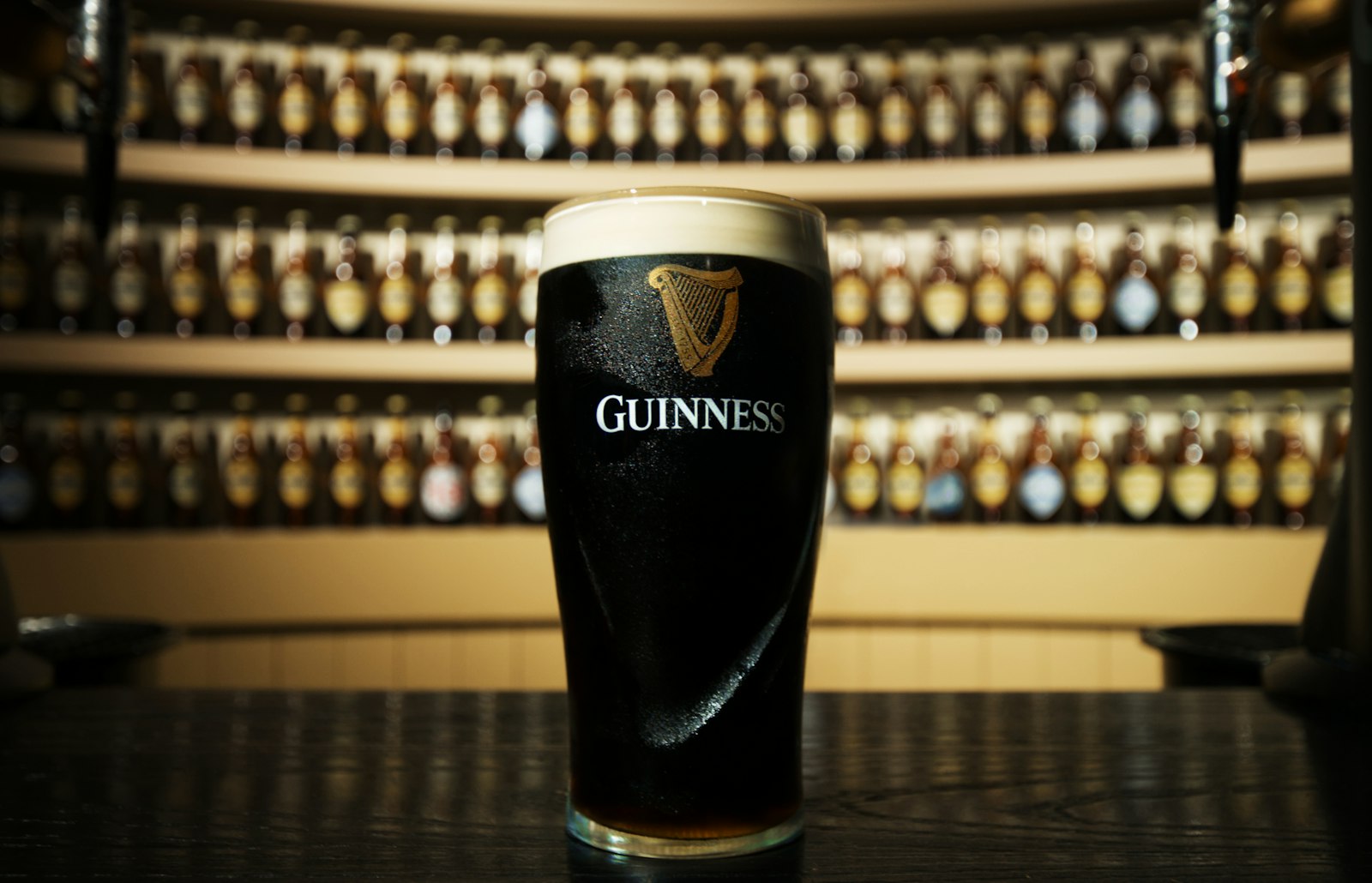
Photo by Christopher Zapf on Unsplash
When you think of Ireland, a pint of Guinness inevitably comes to mind. The creamy, dark pour with its distinctive white head has become so iconic, so inseparable from Irish identity, that it’s easy to forget that this global phenomenon began as the vision of one man in one Dublin brewery more than 260 years ago. The story of Guinness is not merely the story of a beer—it is the story of how savvy entrepreneurship, consistent quality, and brilliant marketing transformed a local beverage into a global icon that has shaped how the world perceives Ireland itself.
The Beginning: Arthur Guinness and St. James’s Gate
The tale begins in 1759, when a brewer named Arthur Guinness signed a lease for the St. James’s Gate Brewery in Dublin. The terms of the lease were remarkable: 9,000 years at £45 annually. Though Guinness obviously could not have anticipated he would lease the space for nine millennia, he was committing himself to a location and a vision that would indeed endure centuries.
Arthur Guinness was not the first brewer in Dublin, nor was he the only one operating in the city in the mid-eighteenth century. What set him apart was an unwavering commitment to quality, an ability to respond to changing consumer preferences, and a keen business sense that understood how to build and maintain market share. When Guinness arrived at St. James’s Gate, the brewery had been operating for several decades, but it was the new owner’s ambition and skill that would transform it from a modest local operation into something transcendent.
The Dublin of the 1750s and 1760s was a thriving city, the second largest in the British Isles, with a substantial population of consumers with disposable income. The local beverage of choice at the time was actually not beer, but rather ale and porter. Porter, a dark, robust style of beer that had become popular in London in the early eighteenth century, was beginning to find favor in Dublin as well. Arthur Guinness recognized the market opportunity: if he could produce a superior porter, he could capture market share from the existing suppliers.
Building the Brewery and the Brand
Arthur Guinness was meticulous about his work. He sourced the finest ingredients available, carefully managed his brewing process, and personally ensured that quality standards were maintained. The water at St. James’s Gate, drawn from a pure source in the surrounding area, possessed qualities that were particularly suitable for brewing. Guinness began experimenting with the grain bill, the proportion of different malts and other grains that went into his beer. He discovered that adding a proportion of roasted barley created a distinctive flavor that set his product apart from competitors.
The name “Guinness” itself became associated with reliability and quality. Unlike many other brewers of the era who might vary their product based on available ingredients or cutting corners to maximize profit margins, Arthur Guinness maintained consistent standards. When someone ordered a pint of Guinness, they knew exactly what to expect: a dark, smooth, slightly bitter porter with a distinctive character.
By the 1770s, Guinness porter had become the favored beer of Dublin’s working classes. Its smooth character and reasonable price made it accessible to ordinary people, while its quality earned respect from more discerning drinkers. The brewery expanded, production increased, and Arthur Guinness, having proven his business acumen, began exporting his product beyond Dublin to other parts of Ireland.
The Evolution of a Recipe: Creating Guinness as We Know It
Throughout the nineteenth century, Arthur Guinness’s successors refined the product. The recipe was adjusted, not on whim, but based on careful experimentation and response to consumer preferences and market conditions. The family business maintained the values established by the founder: quality never compromised, consistency never sacrificed for short-term profit.
One crucial evolution in the Guinness story was the development of what would become known as Guinness Extra Stout (or Foreign Extra Stout in export markets). As the brewery began shipping its product internationally, particularly to warm climates in Africa and the Caribbean, it discovered that the warmer temperatures affected how the beer aged during sea voyages. Brewers responded by creating a higher alcohol-content version, fortified to withstand the journey and the conditions at the destination. This necessity drove innovation that would ultimately create one of the most distinctive beer styles in the world.
The distinctive properties of Guinness that modern drinkers recognize developed through both intention and happy accident. The creamy head, that iconic white foam that sits atop a pint, is not accidental—it results from the use of nitrogen gas in addition to carbon dioxide in the carbonation process. The dark color, nearly black, comes from the roasted barley. The slight bitterness combined with subtle sweetness reflects the careful balance of ingredients and fermentation processes.
Expansion and the Industrial Revolution
The nineteenth century was the age of industrial expansion, and the Guinness brewery transformed from a local operation into one of the largest and most efficient breweries in the world. Arthur Guinness’s descendants invested in the latest brewing technology and expanded capacity at St. James’s Gate dramatically. By the mid-1800s, the brewery was producing over 100,000 barrels annually—a staggering volume for the era.
This expansion required not just new equipment but new thinking about production, distribution, and quality control. The Guinness family implemented innovations that were ahead of their time: systematic record-keeping of fermentation temperatures and times, quality testing of ingredients, standardization of production processes. These weren’t romantic notions of craft brewing—they were scientific approaches that ensured consistency and reliability at an industrial scale.
The Irish railway system, expanding rapidly in the nineteenth century, proved invaluable to Guinness distribution. The brewery could now move its product from Dublin to other parts of Ireland with unprecedented efficiency. Barges transported barrels down the Liffey to Dublin port, where they were loaded onto ships bound for Liverpool, Glasgow, and London. From there, Guinness was distributed throughout the British Isles and beyond.
The British Empire at its height created unexpected advantages for Guinness. As British military personnel, administrators, and settlers spread across India, Africa, and other colonial territories, they carried their taste for Guinness with them. The British Raj in India, in particular, became an enormous market for Guinness Extra Stout, exported in specially prepared shipments designed to withstand tropical heat and long sea voyages. Irish soldiers fighting in colonial conflicts drank Guinness. British settlers in Kenya, South Africa, and Nigeria sought out the familiar beverage from home.
Marketing Genius: Making Guinness a Cultural Icon
What distinguishes Guinness from countless other successful breweries is not just the quality of the product, but the extraordinary marketing and branding campaigns that transformed it into a cultural icon. In the twentieth century, the Guinness family and the executives they employed demonstrated a remarkable understanding of modern advertising and brand building.
The famous advertising campaigns, beginning in the 1930s and accelerating through the mid-twentieth century, became legendary in marketing circles. Slogans like “Guinness is Good for You” seemed almost outrageous—a health claim for beer—yet it captured something true about how Guinness drinkers felt about the product. It was nourishing, substantial, even medicinal in its way. The advertising campaigns featured memorable imagery: a surfer riding a wave of Guinness, a tucan carrying a pint, a man with an enormous head of foam Guinness atop his skull.
These campaigns, created by the advertising agency S.H. Benson, achieved something remarkable: they made Guinness aspirational. It wasn’t just a drink you consumed—it became a statement about your taste, your sophistication, your connection to Irish culture. The advertising appealed not just to actual Guinness drinkers but to people who wanted to be Guinness drinkers, who wanted to be part of the cultural identity that Guinness represented.
The marketing extended beyond advertisements. The Guinness Book of Records, established in 1955, was itself a stroke of marketing genius. Created initially to settle pub arguments about various world records, the book became a phenomenal success. It kept the Guinness name in the public consciousness, associated with excellence, achievement, and recordbreaking. Every year, millions of people around the world purchased the Guinness Book of Records, encountering the Guinness brand name alongside narratives of human and natural achievement.
The Guinness Book of Records: Building a Legacy Beyond Beer
The Guinness Book of Records deserves special mention in the story of how Guinness became a global icon. Initially conceived as a marketing tool to be given away in pubs, the book surprisingly became a best-seller in its own right. Each annual edition sold hundreds of thousands of copies, then millions as it became an international phenomenon. People consulted it not because they needed to know who brewed their beer, but because they wanted to look up the world’s tallest person, the largest pumpkin, or the longest human chain.
Yet every copy carried the Guinness name prominently. The book created a halo effect, associating the Guinness brand with achievement, accuracy, and the pursuit of excellence. When people thought of Guinness, they didn’t just think of a dark beer—they thought of achievement, records, and something that mattered on a global scale.
The book’s success also created a feedback loop. More people encountered the Guinness name, which increased brand awareness, which made the beer more familiar and more appealing to broader audiences. The book appealed to children and families, building awareness of the Guinness brand among people who wouldn’t yet be drinking beer.
The Global Expansion
Throughout the twentieth century, Guinness expanded globally with calculated strategic precision. The brewery identified key markets where Irish immigration created natural demand for the product. The United States, with its large Irish-American population, became a critical market. Though American prohibition temporarily disrupted Guinness sales in America, the market revived after repeal in 1933, and Guinness became deeply embedded in Irish-American community life and culture.
The advertising campaigns were tailored for different markets. In America, Guinness marketing emphasized heritage and authenticity. In Asia and Africa, campaigns highlighted the sophisticated worldliness of Guinness drinkers. The core identity remained constant—quality, authenticity, connection to Ireland—but the presentation varied to suit local sensibilities and preferences.
Guinness invested in production facilities beyond Ireland, building breweries in other countries to serve local markets more efficiently. A Guinness brewery was established in Nigeria in 1962, for instance, which became one of the largest stout producers in the world. Similar facilities opened in Jamaica, Ghana, and other locations. These weren’t merely copies of the Dublin operation—they were full-scale breweries producing Guinness according to Dublin standards but adapted for local conditions and preferences.
The diversity of these operations created a paradox: Guinness was simultaneously a deeply Irish product and a truly global one. Whether you drank Guinness in Dublin or Lagos, Lagos or Shanghai, you experienced a product that was authentically Guinness, yet also responsive to local tastes and production conditions.
The Pour: Ritual and Perfection
Part of what makes Guinness distinctive is not just the product itself, but the ritual of consuming it. A perfect pint of Guinness isn’t simply poured—it’s created through a specific technique that has become ritualized and celebrated.
The iconic 45-degree angle pour, where the bartender tilts the glass while drawing the pint, followed by a top-off to create the perfect head, has become a recognizable ritual. This technique isn’t merely aesthetic—it’s functional, allowing the nitrogen gas to settle properly and create the distinctive creamy head. Guinness bars, particularly in Ireland, pride themselves on the quality of their pint. A skilled barman or woman is not merely someone who pulls drinks—they are a craftsperson whose ability to pour the perfect pint is recognized and celebrated.
This ritualization of consumption transformed Guinness drinking into an experience. You weren’t just consuming beer; you were participating in a tradition. The care and attention required to pour a proper pint suggested that Guinness was worth the extra effort, that it was a superior product deserving of superior service. This self-reinforcing cycle—the best bars took pride in their Guinness service, which attracted discerning drinkers, which motivated bartenders to maintain high standards—created a halo effect around the brand.
Modern Guinness: From Kegs to Cans to Nitrogenated Packaging
The late twentieth and early twenty-first centuries brought innovations in how Guinness could be served. For centuries, Guinness was only available on draught in bars and pubs, where skilled bartenders could pour it properly. The development of canned and bottled Guinness with nitrogen-carbonation technology meant that drinkers could enjoy authentic Guinness experiences in their homes.
The surge-and-settle cans, which contain a floating nitrogen widget that mimics the draught experience when opened, became commercially available and revolutionized home consumption of Guinness. Suddenly, the distinctive creamy head that had been exclusively available in pubs could be experienced at home. This innovation opened new markets and occasions for Guinness consumption.
More recently, innovations have continued. Guinness 0.0, the non-alcoholic version, has been introduced to appeal to health-conscious consumers and those avoiding alcohol. Different variants, such as Guinness Blonde Ale and Guinness Caribbean Stout, have been developed to appeal to consumers seeking different flavor profiles while remaining within the Guinness family of products.
Guinness and Irish Identity
More than any other product or brand, Guinness has become the global ambassador for Irish culture and identity. To billions of people worldwide who have never visited Ireland, Guinness represents Ireland. When international travelers arrive in Dublin, their visit to an Irish pub for a pint of Guinness is a pilgrimage to authenticity, a direct connection to Irish culture.
This status wasn’t accidental. The Guinness company, and Guinness marketing, consistently positioned the product as the authentic expression of Irish culture. Guinness ads featured Irish music, Irish imagery, and celebrated Irish identity. St. Patrick’s Day celebrations worldwide feature Guinness prominently—for many people outside Ireland, drinking Guinness is the primary way they celebrate their Irish heritage or participate in Irish-American cultural identity.
Guinness has also been remarkably effective at creating aspirational cultural associations. To drink Guinness is to identify with a tradition of quality, sophistication, and authenticity. These associations are cultural and emotional rather than purely rational, yet they are incredibly powerful in driving consumer behavior and brand loyalty.
The Global Guinness Phenomenon Today
Today, Guinness is sold in over 150 countries and is the best-selling stout beer in the world by a considerable margin. Annual production exceeds 10 million barrels, most consumed outside Ireland. The St. James’s Gate Brewery remains in operation in Dublin, though much of modern production occurs at other facilities around the world.
The Guinness Storehouse in Dublin has become one of Ireland’s most popular tourist attractions, drawing hundreds of thousands of visitors annually. Tourists ascend seven stories through the building’s exhibit spaces, learning the history of the brand, viewing advertising campaigns, and culminating at the top in the Gravity Bar, where visitors can pour their own pint and enjoy a 360-degree view of Dublin while consuming their drink. This attraction transforms the Guinness brand from a mere product into a destination experience, deepening emotional connections to the brand.
Conclusion: A Beer That Changed the World
The Guinness story is remarkable not because it is unique—there are many successful beer companies—but because of how completely and thoroughly Guinness succeeded in transforming itself from a local Dublin product into a global icon. The combination of genuine product quality, consistent execution, brilliant marketing, strategic international expansion, and the alignment of the product with Irish identity created something that transcends normal commercial success.
For American consumers, Guinness represents more than just a beer—it represents an accessible entryway into Irish culture and heritage. When an Irish immigrant or Irish-American orders a Guinness, they are connecting with centuries of tradition, with a product that has remained fundamentally unchanged while the world transformed around it. When a visitor to Ireland savors their first pint of Guinness served in a Dublin pub, they are experiencing something genuine, something with centuries of history and craft behind every sip.
The black pint with its white head, created from a lease signed in 1759 and continuously perfected for over 260 years, represents the enduring appeal of quality, tradition, and authenticity. Arthur Guinness’s nine-thousand-year lease has long since passed its expiration, yet the legacy he established continues unabated, ensuring that Guinness will almost certainly remain one of the world’s great beverages for generations to come.

Author: jonathan
Jonathan is the publisher of Irishtopia.net, Anglotopia.net, and Londontopia.net. He's passionate about travel and learning about other cultures. He's been to Ireland several times, and uses his travel expertise for Irishtopia!