
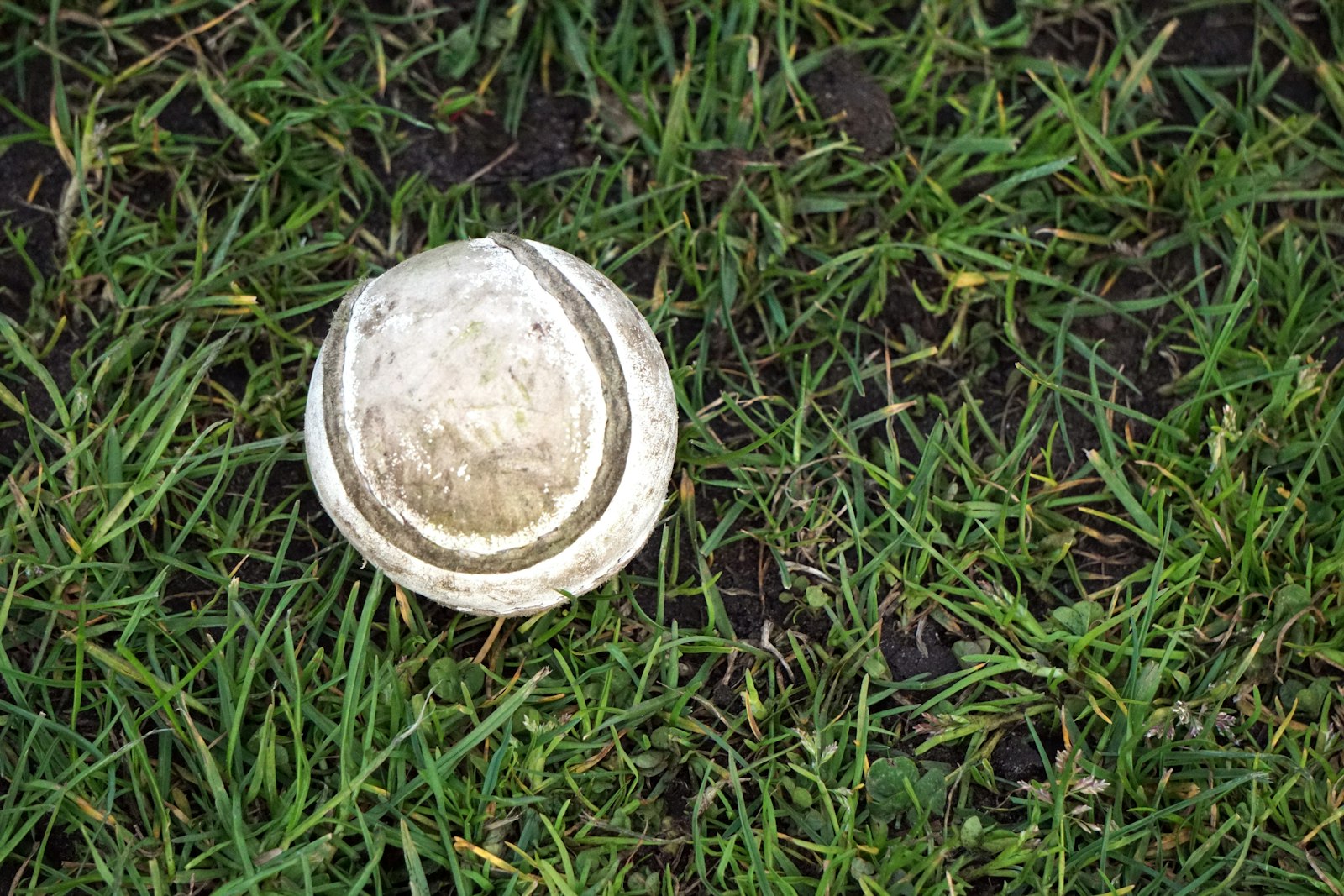
Photo by Adrian Payne on Unsplash
If you’ve never seen hurling, it’s difficult to appreciate just how fast and intense the sport is. Imagine watching a sport where the ball routinely travels at 100 mph, where players are simultaneously ballet dancers and contact athletes, where a single mistake can cost a team the match. That’s hurling—a game with roots stretching back centuries, now played with modern athletic sophistication and explosive energy. For American sports fans, hurling offers a thrilling alternative to traditional sports, a uniquely Irish experience that combines elegance and brutality in equal measure.
Hurling is often called the fastest sport on earth, and there’s credible evidence supporting this claim. The ball moves faster than a tennis serve, players must make split-second decisions about whether to catch, strike, or avoid an incoming ball traveling at tremendous velocity, and the game’s pace rarely slows. Yet unlike sports that rely on constant stoppage and structure, hurling flows with remarkable continuity. It’s a sport that generates its own rhythm, building momentum through periods of intense play followed by brief moments of resetting.
The History of Hurling: From Ancient Origins to Modern Game
Hurling’s origins are lost to prehistory, but they run deep in Irish culture. References to hurling appear in medieval Irish manuscripts and sagas, suggesting the game was played for thousands of years. The sport was mentioned in early Irish literature and law texts, indicating it held cultural significance in ancient Irish society.
Unlike many sports with clear evolutionary paths (baseball from cricket, for example), hurling’s exact development is unclear. What we know is that by the medieval period, hurling was established in Ireland, and it bore similarities to the modern game. The basic concept—striking a ball with a wooden stick—has remained constant for centuries.
The modern codification of hurling rules came with the establishment of the GAA in 1884. Before that, hurling was played with widely varying rules depending on the region. Teams could have dozens of players. The field could be any available space. The rules were determined by local agreement before each match.
The GAA standardized the game, creating uniform rules that allowed competitive matches between teams from different regions. The first All-Ireland Hurling Championship was held in 1888, just four years after the GAA’s founding. From that point forward, hurling began evolving into the modern sport.
Throughout the 20th century, hurling developed and professionalized in structure, though it maintained amateur status. Rules were refined, training methods became more sophisticated, and the sport’s popularity grew. The television era brought hurling to wider audiences, and contemporary hurling is faster, more skillful, and more physically demanding than ever before.
Understanding the Game: Rules and Play
To appreciate hurling, you need to understand its basic mechanics. The sport is played with two teams of 15 players each on a rectangular grass field approximately 130-145 yards long and 80-90 yards wide. At each end of the field is an H-shaped goal consisting of two vertical posts connected at the top (with a crossbar) and net below.
Each player carries a wooden stick called a hurley, traditionally made from ash wood. The hurley has a flat, curved blade (called the bas) and a long handle (called the shafts). Players use the bas to catch and strike a small ball called a sliotar, which is roughly the size of a baseball.
The basic mechanics of play are deceptively simple. A player can catch the sliotar with their hand and carry it for up to four steps. After four steps, they must either throw the ball, hit it with the hurley (called a strike or stroke), or bounce it on the hurley (called a solo). When a player bounces the sliotar on the ground, they can catch it again on the hurley, resetting their four-step count.
Scoring is straightforward: hitting the ball under the crossbar and into the net scores a goal (three points, written as a number with a letter H—so 2-14 means 2 goals and 14 points, totaling 20 points). Hitting the ball over the crossbar scores a point (one point). A match consists of two 35-minute halves (70 minutes total), though this varies by competition and age group.
What makes hurling comprehensively complex is combining these simple mechanics with the sport’s pace and physicality. Players must decide in milliseconds whether an incoming ball is catchable, how to position their body for impact, whether to pass or shoot, and how to move without being tackled. The sport never stops for substitutions, injuries are usually treated quickly with play resuming, and there’s a remarkable emphasis on keeping the game flowing.
The Physical and Technical Demands
Hurling is exhausting. Players cover enormous distances during a match, estimated at 5-7 kilometers (3-4 miles). They’re sprinting, changing direction, jumping, and colliding at high intensity throughout the match. The cardiovascular demands are among the highest of any sport.
But hurling isn’t just about running. The technical skills required are exceptional. Players must develop extraordinary hand-eye coordination. They need to be able to catch a ball traveling at high speed, sometimes while being defended by an opponent. They need to strike the ball accurately from various angles and positions. They need spatial awareness to understand where teammates and opponents are positioned while focusing on the ball.
The catching skill is perhaps most distinctive. In hurling, a clean catch is executed by cradling the ball against the curve of the hurley while simultaneously bringing both hands down to secure it. It’s a fluid motion that takes years to master. Young players spend countless hours practicing catching, developing the muscle memory necessary to make the action automatic.
Striking a hurley is also highly technical. Unlike baseball, where the bat is thicker and the ball arrives on a predictable trajectory, the hurley is thin and the ball can come from any angle. Players must adjust their striking technique based on the ball’s height and velocity. A poorly struck hurley can completely miss the ball or result in a weak, ineffective strike.
The hand-pass is another crucial skill. Instead of throwing the ball overhand like in baseball or American football, hurlers pass by holding the ball in one hand and striking it with the open palm or flat side of the hand. This motion requires significant wrist strength and precision to pass accurately over distances of 20-50 yards.
Positional Play and Tactics
While hurling appears chaotic to outsiders, there’s significant tactical sophistication. Teams are organized into three main lines: defenders, midfielders, and forwards.
The goalkeeper (or goalie) is a specialized position. Standing in front of the goal, the keeper must be fearless, as hurling balls arrive at high velocity. A good goalkeeper makes extraordinary saves, sometimes using the hurley to block shots or their hands to catch the ball. Interestingly, the goalkeeper can move anywhere on the field during play, sometimes charging forward to intercept passes.
Defenders occupy the back line and are responsible for protecting the goal. They clear the ball away from danger, mark opposing forwards, and organize the defensive structure. Good defenders are often tall (to contest high balls) and possess excellent positional sense.
Midfielders occupy the center of the field and are perhaps the most important players in terms of modern hurling. They contest for the ball when it’s hit into the air (called a high ball or dropping ball), link defense with attack, and control the tempo of the game. Elite midfielders are exceptionally athletic and skilled.
Forwards are responsible for scoring. They occupy attacking positions and look for opportunities to shoot or set up teammates. Different forwards have different roles—corner forwards might specialize in one-on-one battles with defenders, while attacking midfielders have greater freedom to roam.
The tactical sophistication comes in how teams position themselves. A team might employ a “puck-out strategy” (how the goalkeeper starts play after a point) designed to win midfield battles. A team might use close marking (assigning a defender to shadow each attacker) or zone defense. Teams adjust tactics based on the opposition’s strengths.
Famous Teams and Players
Irish hurling has a pantheon of legendary teams and individual players who’ve shaped the sport’s evolution.
Historic Teams
Kilkenny is perhaps the most successful hurling county in history. The Cats (as they’re affectionately known) have won 36 All-Ireland championships—more than any other county by a significant margin. Their success is built on a culture of excellence and a strong tradition of player development. Watching Kilkenny play is often a masterclass in hurling fundamentals.
Tipperary is another powerhouse, with 28 All-Ireland championships. The Premier County (as it’s known) has produced numerous individual stars and plays an elegant, skillful brand of hurling.
Limerick, Cork, and Wexford are other major hurling powers with rich histories. In recent years, Limerick has dominated, winning four consecutive All-Irelands from 2020-2023, establishing themselves as the sport’s premier team.
Individual Stars
Kilkenny’s Henry Shefflin is widely considered one of the greatest hurlers ever. A forward with extraordinary skill and longevity, Shefflin won 13 All-Ireland championships (more than any individual player in modern times) and was known for his ability to score from any angle.
Brian Cody, Kilkenny’s longtime manager, is perhaps the greatest coach in hurling history. His teams won 11 All-Irelands, and he’s credited with evolving hurling tactics and maintaining Kilkenny’s competitive advantage for decades.
Joe Canning of Galway is a modern superstar—a player with rare skill, scoring ability, and athleticism. Canning could operate at any position and score from 70+ yards away.
Limerick’s Declan Hannon and Gearóid Hegarty are contemporary stars, representing the new generation of elite hurlers. These players combine athleticism, skill, and tactical awareness at the highest level.
The All-Ireland Championship: Hurling’s Premier Event
The All-Ireland Senior Hurling Championship is the sport’s most prestigious competition. Established in 1888, it’s the longest-running annual sports championship in the world.
The championship is structured so that the 32 Irish counties (plus some teams from outside Ireland) compete in a series of provincial championships. Winners of the four provincial championships (Leinster, Munster, Ulster, and Connacht) advance to the latter stages. Other teams get a second chance through a qualifying structure.
What makes the championship compelling is how it builds momentum through the summer. The provincial championships run in May and June, the earlier qualifying rounds in July, and the latter stages in August. The All-Ireland final is traditionally held on the first Sunday of September at Croke Park.
The championship produces some of sport’s greatest drama. Teams that haven’t won in decades occasionally make surprising runs. Young players emerge as stars seemingly overnight. Matches between neighboring counties carry centuries of rivalry.
The 2023 All-Ireland final between Limerick and Kilkenny exemplified modern hurling at its finest. Both teams played attacking, skillful hurling. The match was competitive throughout, with Limerick eventually winning 1-32 to 0-26 in a demonstration of sustained excellence.
The Physicality and Intensity
While hurling emphasizes skill, it’s also a physical contact sport. Players collide regularly, and the intensity can be jarring to those unfamiliar with the sport.
What distinguishes hurling physicality from sports like American football is that there’s no formal structure for contact. Players can’t tackle by wrapping arms around an opponent (that’s a foul), but they can use their bodies to shield the ball, create space, and make competitive plays. A defender might lean against an attacker, bump them off the ball, or position their body to make a catch difficult.
The result is a sport that’s more violent than soccer or basketball but less structured than rugby or American football. Players absorb punishment, but because the sport is continuous and there’s no formal tackling, injuries (while they occur) are often less severe than in contact-focused sports.
Interestingly, hurling has strict rules designed to promote safety. Throwing the hurley is forbidden, as is excessive physicality. Players who lose their temper or engage in dangerous play receive yellow cards (caution) or red cards (ejection). The sport’s referees work to maintain control and ensure play remains competitive but safe.
Training and Player Development
Modern hurling training is sophisticated and demanding. Elite players train multiple times per week, combining skill work, tactical training, and physical conditioning.
Club training typically occurs twice weekly, with additional sessions for strength and conditioning. County training (for teams competing in the All-Ireland championship) occurs 3-4 times per week during the competitive season. Players at the highest level dedicate 15-20+ hours per week to hurling while maintaining other employment or studies.
Player development begins in childhood. Most clubs have youth teams starting at ages 6-8, progressing through age-group championships. Talented players move through progression ranks—juvenile (under 16), minor (under 17-18), and intermediate (under 20)—before reaching the senior ranks.
The best players develop in club settings first, then progress to county teams. Many attend hurling academies or specialized training centers during their teenage years. The development system is meritocratic—talented players from any background can rise to elite levels if they have ability, work ethic, and determination.
Hurling Culture and Community
Beyond the sport itself, hurling represents a distinctive cultural practice. In hurling communities, the sport is woven into the social fabric. Children play hurling in school physical education classes. Young people grow up dreaming of playing for their county. Adults organize their social lives around club events and matches.
Match days are community celebrations. Before a championship match, entire villages mobilize. Supporters paint their faces in county colors, wear jerseys, and fill minibuses traveling to matches. The clubhouse before and after matches is a center of social activity.
There’s also a particular aesthetic to hurling culture. The colors of county jerseys (Kilkenny’s black and amber stripes, Limerick’s white and green, Tipperary’s blue and gold) carry cultural significance. Players are celebrities in their home communities, recognized and celebrated.
The social aspect shouldn’t be underestimated. For many Irish people, hurling provides a framework for community participation, friendship development, and shared identity. It’s a social glue that binds communities together.
International Hurling and Global Reach
While hurling is distinctly Irish, the sport is played in other countries. The World Games features hurling and camogie (women’s hurling), allowing teams from different nations to compete. The United States, Australia, and several European countries have hurling clubs.
However, international hurling remains limited in scope compared to the domestic Irish championship. The All-Ireland championship is where the sport’s finest talent concentrates, and most international players are Irish emigrants or their descendants maintaining cultural connection.
There’s occasional discussion about growing hurling internationally, but the sport’s Irish-specific identity means expansion is limited. Unlike soccer or rugby, which are global phenomena, hurling is understood as inherently Irish. This cultural specificity is part of what makes it special.
Women’s Hurling: Camogie
Women’s hurling, called camogie, has its own long history and is now experiencing a renaissance. The sport was established in the early 20th century and run by a separate organization (Camogie Association), though it’s increasingly integrated with the male GAA structure.
Camogie is played with slightly different rules than men’s hurling—the field is slightly smaller, the ball is larger, and goals count as points (though still worth three to one point). The skill level is exceptional, and contemporary camogie players are among Ireland’s finest athletes.
The growth of camogie in recent years has been remarkable. Participation has surged, and matches are increasingly well-attended. The All-Ireland camogie final draws substantial crowds, and the quality of play rivals men’s hurling in terms of athleticism and skill (though the sport has different tactical characteristics).
Conclusion: Why Hurling Matters
For American sports enthusiasts, hurling offers something genuinely different. It’s a sport with ancient roots played with modern sophistication. It combines individual skill with team play, violence with elegance, tradition with contemporary athletic science.
Watching hurling for the first time can be disorienting—the pace is relentless, the skill is extraordinary, and the passion is evident in every movement. But once you understand the sport’s basics and appreciate its nuances, hurling becomes captivating.
Hurling represents something essential about Irish culture. It’s a sport that’s been played for centuries, that defines regional identity, that builds community, and that challenges athletes to reach the highest levels of performance. Whether you’re an Irish person reliving childhood memories or an American discovering the sport for the first time, hurling offers an unmatched blend of athletic excellence, cultural significance, and pure sporting drama. That’s what makes it the fastest sport on earth—not just in terms of the ball’s velocity, but in the speed at which it captures the hearts of those who watch it.

Author: jonathan
Jonathan is the publisher of Irishtopia.net, Anglotopia.net, and Londontopia.net. He's passionate about travel and learning about other cultures. He's been to Ireland several times, and uses his travel expertise for Irishtopia!