
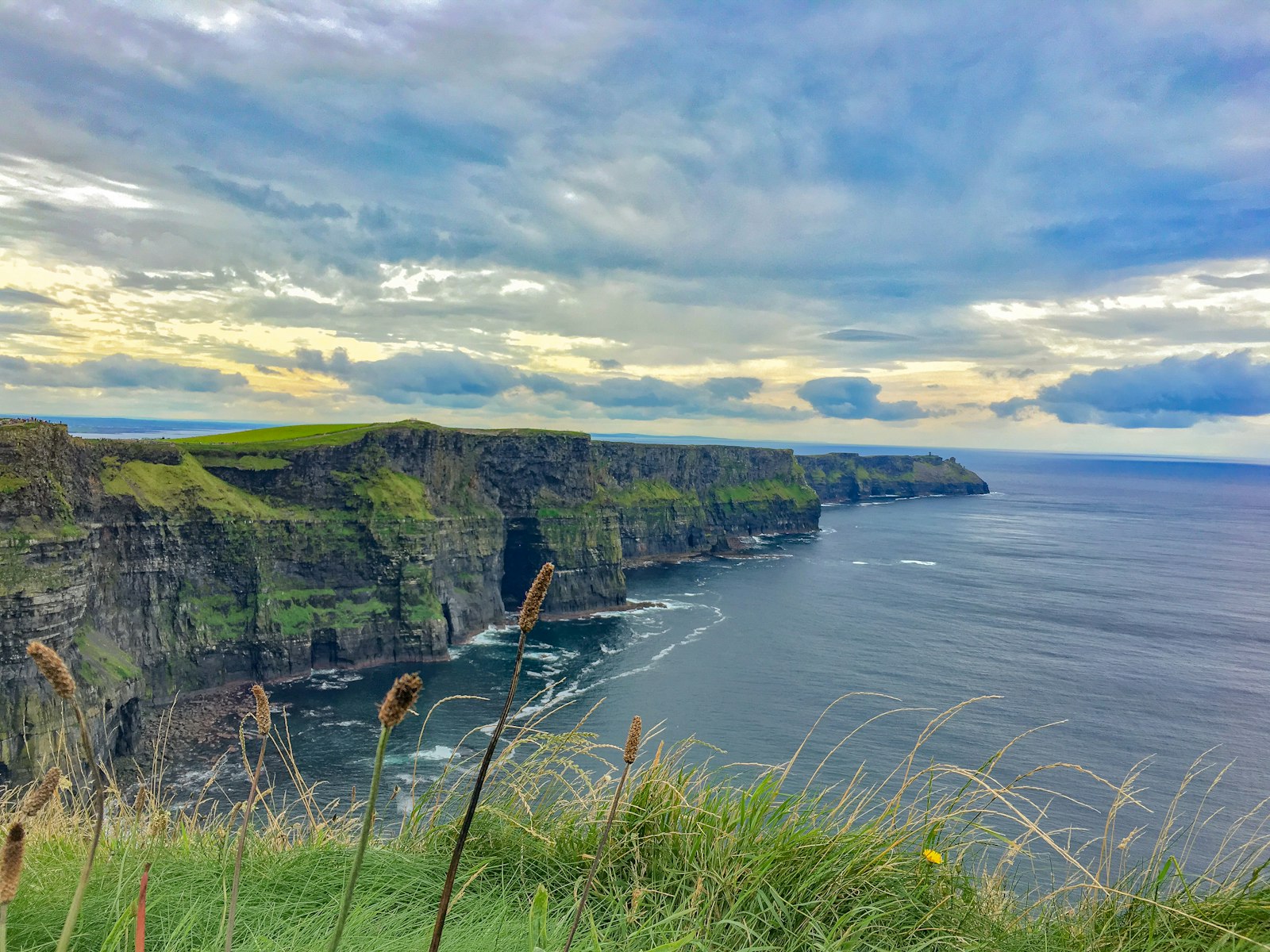
Photo by Leighton Smith on Unsplash
Deep in the Irish countryside, at the beginning of February, something begins to stir. The coldest nights of winter may still be ahead, snow might yet fall, and frost continues to crystallize across the land each morning. And yet, for centuries, Celtic peoples marked February 1st as the moment when spring began. Not spring as modern calendars define it—that would come weeks later at the equinox—but spring in the deeper, more essential sense of the year turning toward growth, toward light, toward renewal. This day was called Imbolc, and it remains one of the four great Celtic festivals, though it’s the least known to modern Americans, even those familiar with Halloween (Samhain) or May Day (Beltane).
The name “Imbolc” likely comes from the Old Irish “oimelc,” meaning “ewe’s milk” or “sheep’s milk,” reflecting the festival’s primary association with the shepherding cycle. By early February, the ewes who would give birth in spring begin to lactate in preparation for their lambs. For pastoral societies depending on flocks for survival, the appearance of milk was a crucial sign: winter’s scarcity was ending, sustenance would soon increase, the animals were preparing for birth. For these people, Imbolc wasn’t an arbitrary date; it was written into the bodies of their animals, observable in nature, and spiritually significant as a moment when the earth itself began to awaken.
Today, Imbolc remains obscure to most Americans, even compared to other Celtic festivals. Yet understanding Imbolc provides crucial insight into how Celtic peoples experienced the year’s cycle, how they read spiritual significance in natural phenomena, and how they navigated the psychological and spiritual challenges of winter. For those interested in Irish heritage and Celtic spirituality, Imbolc offers something precious: a way of thinking about seasons and renewal that can be personally and spiritually meaningful, regardless of where you live.
The Agricultural and Pastoral Context: Imbolc as Practical Threshold
To understand Imbolc, one must understand the world of Celtic pastoral and agricultural societies. Unlike modern economies where food comes from supermarkets and seasons barely register in daily life, ancient Celtic societies were entirely dependent on successful harvests and healthy animals. The year was experienced primarily through the lens of these cycles.
Winter in Celtic lands was genuinely dangerous. Food stores from the autumn harvest had to last until spring. Livestock had to survive on stored fodder. Cold could kill both animals and humans. Every year, there was a period—usually late winter in January and early February—when the stored food was running low, animals were at their weakest, and the community faced a genuine question: would they make it through to spring? This season of scarcity was the most psychologically and spiritually challenging time of the year.
Then came February 1st. At this precise moment, something observable and significant happened: the ewes began to produce milk. This wasn’t universal; not all sheep would necessarily lactate on exactly the same day. But the appearance of milk among the flocks was a reliable sign that came roughly in early February, that the shepherds watched for, and that marked a genuine turning point. The appearance of ewe’s milk meant that birth and new life would soon follow. It meant that the animals themselves were beginning to recover and grow. It meant that new sources of food—milk, cheese, and soon lambs—would begin to restore the community’s depleted resources.
For people living at the edge of survival, this was profound. Imbolc wasn’t merely a date; it was a witnessed reality, an observable sign that winter was ending and spring was coming. It was the moment when the animals themselves announced that renewal was possible, that life would continue, that winter’s hardship would eventually end.
Imbolc and the Spiritual Calendar: The Year’s Four Quarters
Like all Celtic festivals, Imbolc’s significance extended beyond the practical to the spiritual and cosmological. The Celtic year was divided into four great festivals that marked crucial transitions, each associated with particular spiritual qualities and divine energies.
Imbolc, coming after Samhain (November 1st, when the year turned toward darkness and withdrawal) and before Beltane (May 1st, when the year turned powerfully toward light and growth), occupied a specific place in the cosmic year. Samhain was the time of darkness, death, and communing with the dead. Imbolc was the time of awakening, of the first stirrings of growth, of hope and renewal after winter. Beltane was the full explosion of summer. Lughnasadh (August 1st) was the harvest and the turning toward the darker half.
Each of these festivals carried specific spiritual energies and required specific rituals to maintain the relationship between human community and divine forces. Imbolc, as the moment of awakening, was associated with beginnings, with purification and cleansing (washing away the spiritual heaviness of winter), with poetry and inspiration, and with the feminine (the ewe’s milk is deeply associated with the feminine creative force in Celtic spirituality).
One of the most important associations of Imbolc is with the goddess Brigid, or more accurately, with the saint who embodied and Christianized Brigid. Brigid was a major deity in pre-Christian Celtic religion, associated with healing, poetry, smithcraft, and particularly with the forge fire—the transformative power of fire. When Christianity came to Ireland, a historical (or partly mythological) saint named Brigid was canonized on February 1st, the very date of the ancient Imbolc festival. Whether or not a historical Saint Brigid existed or was connected to the goddess of the same name, the association was clear: Imbolc became associated with Brigid, and this association preserved the festival’s spiritual significance even as Ireland officially Christianized.
The Spiritual Significance: Purification and Awakening
For the ancient Celtic peoples, Imbolc was understood as a moment of purification and spiritual renewal, aligned with the natural world’s beginning to awaken from winter dormancy. Just as the earth was beginning to shake off winter’s numbness, humans needed to undergo ritual purification and awakening.
This wasn’t understood as literal uncleanliness but as spiritual heaviness—the accumulation of darkness, introversion, and stagnation over the winter months. Long nights, cold, limited food, and the close proximity of people in winter dwellings for months created psychological as well as spiritual fatigue. Imbolc rituals were designed to cleanse this heaviness and prepare for the growth season ahead.
In Irish tradition, Imbolc was associated with ritual fire, particularly the sacred fire of purification. People would light fires—not the great communal bonfires of Beltane, but smaller, household fires—and pass through the smoke as a cleansing practice. Some traditions involved lighting candles in the home as a symbolic rekindling of the inner light after winter’s darkness. These weren’t merely symbolic; from a pre-Christian Celtic perspective, fire was understood as a spiritually transformative element, and passing through or being touched by smoke was believed to actually transform one’s spiritual state.
Another important aspect of Imbolc was its association with inspiration and creativity. In Celtic tradition, Brigid was the goddess of poets and poets invoked her for inspiration. Imbolc, celebrated in her name, was understood as a time when inspiration and creative power flowed more freely. Winter was a time of storytelling and myth-making (the long nights were perfect for recounting tales), but spring required active creation and making. Imbolc was the moment when that creative power began to be externalized, turned toward the world, focused on making and building and creating.
Rituals and Practices: How Imbolc Was Observed
Our knowledge of ancient Imbolc practices comes from scattered references in medieval Irish texts, from folklore preserved in rural Ireland into the modern era, and from the patterns that connect to other Celtic festivals and practices. While we don’t have complete descriptions, a consistent picture emerges.
The lighting of fires was central to Imbolc. These domestic rather than communal fires served purposes both practical and spiritual. They provided warmth during still-cold February nights, they lit homes that had seen only darkness and dim light for months, and spiritually, they were understood as participatory actions in the world’s rekindling after winter. Some traditions describe leaving lamps or candles lit in homes all night on Imbolc Eve, a practice that may have evolved into later Saint Brigid traditions of perpetual flames.
Ritual purification was another central element. This might involve bathing (particularly significant as it would require warming water), passing through smoke or fire, or symbolic cleansing using elements associated with purification. Water, particularly water from sacred wells or sources, was believed to have purifying properties and was used ritually.
Food offerings were made to the divine powers and to the land itself. Unlike Samhain, when food was left for the dead, Imbolc offerings were to goddesses and spiritual forces associated with fertility, growth, and renewal. These offerings might be left on doorsteps, at natural sacred sites like wells or ancient stones, or made at communal gatherings.
Divination, as in all Celtic festivals, was part of Imbolc. But Imbolc divinations were less focused on foretelling misfortune or death (as Samhain divinations often were) and more focused on understanding what would grow in the coming season, what creative projects would flourish, what relationships would develop.
The Saint Brigid Connection: Christianization of Imbolc
The Christianization of Imbolc through Saint Brigid is one of history’s most elegant examples of how the Church accommodated pre-Christian traditions while officially Christianizing them. Whether or not a historical Saint Brigid existed (scholars debate this), the timing and association are too perfect to be coincidental: a saint celebrated on February 1st, the exact date of the ancient festival, with associations to fire, healing, and female power that mirror the goddess Brigid perfectly.
This substitution allowed the festival to continue. Communities could still light fires, still celebrate on February 1st, still invoke Brigid—now officially for the saint’s intercession rather than the goddess’s power, but preserving the essential ritual and spiritual significance. The change was more in theology than in practice.
Saint Brigid became deeply beloved in Irish Christianity. She became the patron saint of Ireland (along with Saint Patrick), associated with sheep and shepherding (fitting given Imbolc’s pastoral origins), with healing and midwifery, and with fire. Traditions of weaving Saint Brigid crosses—small crosses made from rushes—became associated with the day. Though probably not an ancient practice (crosses would be a later Christian addition), the weaving and placement of these crosses in homes became a central way of observing the day.
The perpetual flame at Saint Brigid’s sanctuary in Kildare became famous throughout medieval Christendom—a sacred fire kept burning continuously by nuns, an island of eternal flame that people could visit to receive blessing or healing. Whether or not this flame was directly connected to ancient Imbolc fires, the association would have been clear to people of the time: the sacred fire of Imbolc had been preserved and perpetuated, now under Christian auspices.
Imbolc in Medieval and Early Modern Ireland
As we move into documented history and enter the medieval period, our knowledge of Imbolc becomes clearer. Imbolc continues to be observed throughout Ireland, particularly in rural and pastoral areas. References in Irish law tracts and administrative documents show that Imbolc remained a recognized significant day, a day when specific activities (like the movement of animals or the payment of rents) were scheduled.
The festival continued to be observed through the combination of Christian saint celebration and folk tradition. Saint Brigid’s Day on February 1st became a significant day in the Catholic calendar, with particular prayers and observances associated with it. Simultaneously, folk practices—many clearly descended from pre-Christian Imbolc traditions—continued. The lighting of candles, the weaving of Brigid crosses, particular foods associated with the day, protective rituals performed for animals and homes—these persisted in Irish communities.
In rural Ireland, particularly in areas where Gaelic language and culture remained strong, Imbolc continued to mark the beginning of the pastoral year. The appearance of lambs, the renewal of milk supplies, and the return to outdoor work marked this season as fundamentally different from the winter that preceded it. Even if people no longer understood Imbolc in explicitly spiritual or cosmological terms, it remained the practical threshold between winter and spring.
Imbolc in Modern Ireland and Irish-America
In the 19th and 20th centuries, as Ireland modernized and urbanized, some Imbolc traditions faded, particularly the explicitly spiritual practices. But Saint Brigid’s Day remained recognized, and in Irish culture, it maintained significance. In the current era, there’s been a revival of interest in Imbolc, both as a cultural connection to Irish heritage and as a spiritual practice among those interested in Celtic spirituality or modern paganism.
In Ireland today, February 1st is not an official holiday as Halloween (Samhain) has become, but it maintains cultural significance. Rural communities still observe it, particularly in areas where shepherding and pastoral tradition remain important. Saint Brigid’s crosses are still made and displayed in homes, whether from tradition or from deliberate revival of the practice. In more urban and secular contexts, Imbolc is less observed, though it receives attention in cultural preservation efforts and among those consciously interested in Celtic traditions.
In Irish-American communities and among Americans interested in Irish culture, Imbolc has become increasingly known, particularly over the past two decades. Modern pagan and Wiccan practices, which have incorporated the Celtic festivals into their spiritual calendars, have created renewed interest in Imbolc. Saint Brigid has become a figure of interest both for those practicing Irish Catholicism and for those interested in pre-Christian spirituality. The festival has found new audiences and new contexts, even as its original pastoral and agricultural significance has largely faded.
Modern Imbolc: Revival and Reimagining
Contemporary observers of Imbolc, whether from spiritual or cultural motivation, have revived and reimagined this ancient festival for modern contexts. In the modern pagan movement, Imbolc (also called “Candlemas” in some traditions) is observed as one of the eight major sabbats of the year. Modern Imbolc celebrations typically involve:
Lighting of candles or fires, understood as symbolic rekindling of the world’s light after winter and of personal inner light after spiritual darkness.
Cleansing rituals of homes and persons, often involving elements like water, smoke, or salt.
Creative practices, reflecting Imbolc’s association with inspiration and the beginning of creative projects.
Invocation of Brigid, who is celebrated in modern pagan contexts as both goddess and saint, with particular emphasis on her domains: poetry, healing, smithcraft (understood metaphorically as transformation).
Gatherings and community celebrations, reflecting the festival’s historical function as a communal marker of seasonal transition.
Some modern Imbolc celebrations are quite elaborate, involving theatrical performance and community participation. Others are intimate personal practices—a single person or small group lighting candles, making offerings, and setting intentions for the approaching season. This diversity reflects how Imbolc has transformed from a required communal practice into something more optional and individually determined.
The Psychological Significance: Imbolc and the Modern Experience
What’s particularly interesting about Imbolc, compared to the other Celtic festivals, is its psychological and spiritual relevance to modern life, even for people disconnected from agricultural cycles. February is genuinely difficult for many people in northern climates. Days are still short, winter fatigue is at its peak, seasonal affective disorder peaks in February, and the psychological burden of winter can feel crushing.
Imbolc, celebrated as the moment of awakening and renewal, offers a psychological and spiritual response to this difficulty. It says: winter is not endless; renewal is coming; the first stirrings of growth are already happening. Even if the external world still looks frozen and dormant, at the level of spiritual and cosmic truth, spring has begun. This is genuinely comforting, genuinely meaningful, to people experiencing the depths of winter.
For this reason, Imbolc has found contemporary relevance beyond those specifically interested in Celtic heritage. It serves a function similar to modern candlemas celebrations or the Japanese concept of “shun” (being present with seasonal transitions): it’s a way of psychologically and spiritually marking a difficult moment and transforming it from mere suffering into meaningful transition.
Conclusion: Imbolc as Gateway to Ancient Wisdom
Imbolc, the least known of the great Celtic festivals, offers something precious: a window into how people living much closer to natural cycles experienced and marked time, and how they found spiritual and psychological meaning in natural phenomena. The ewe’s milk appearing in early February was not merely a practical indicator for shepherds; it was understood as cosmic communication, the earth announcing that renewal was possible, that winter would end, that life would continue.
This way of reading spiritual significance in natural phenomena, of seeing in observable events a deeper cosmic significance, of marking threshold moments as sacred—these are not irrelevant to modern people. They offer an antidote to the flattening of seasons that climate control and global food systems have created, a reminder that we are part of larger cycles, and a way of investing ordinary moments with deeper meaning.
Whether celebrating Imbolc as a spiritual practice, as a connection to Irish heritage, or simply as a meaningful acknowledgment of the season’s turning, this ancient festival remains relevant. Light your candles on February 1st. Acknowledge that while winter continues, its grip is beginning to loosen. Set intentions for the growth and creation of the coming season. You’ll be participating in a practice thousands of years old, one that has survived Christianization, modernization, and the massive disruption of traditional lifeways. That resilience itself speaks to something true and necessary in the human experience: the need to mark transitions, to hope for renewal, and to participate in the cycles of nature and time.
Imbolc waits for you in early February—in the first signs of growth, in the light of candles, in the possibility of beginning again.

Author: jonathan
Jonathan is the publisher of Irishtopia.net, Anglotopia.net, and Londontopia.net. He's passionate about travel and learning about other cultures. He's been to Ireland several times, and uses his travel expertise for Irishtopia!