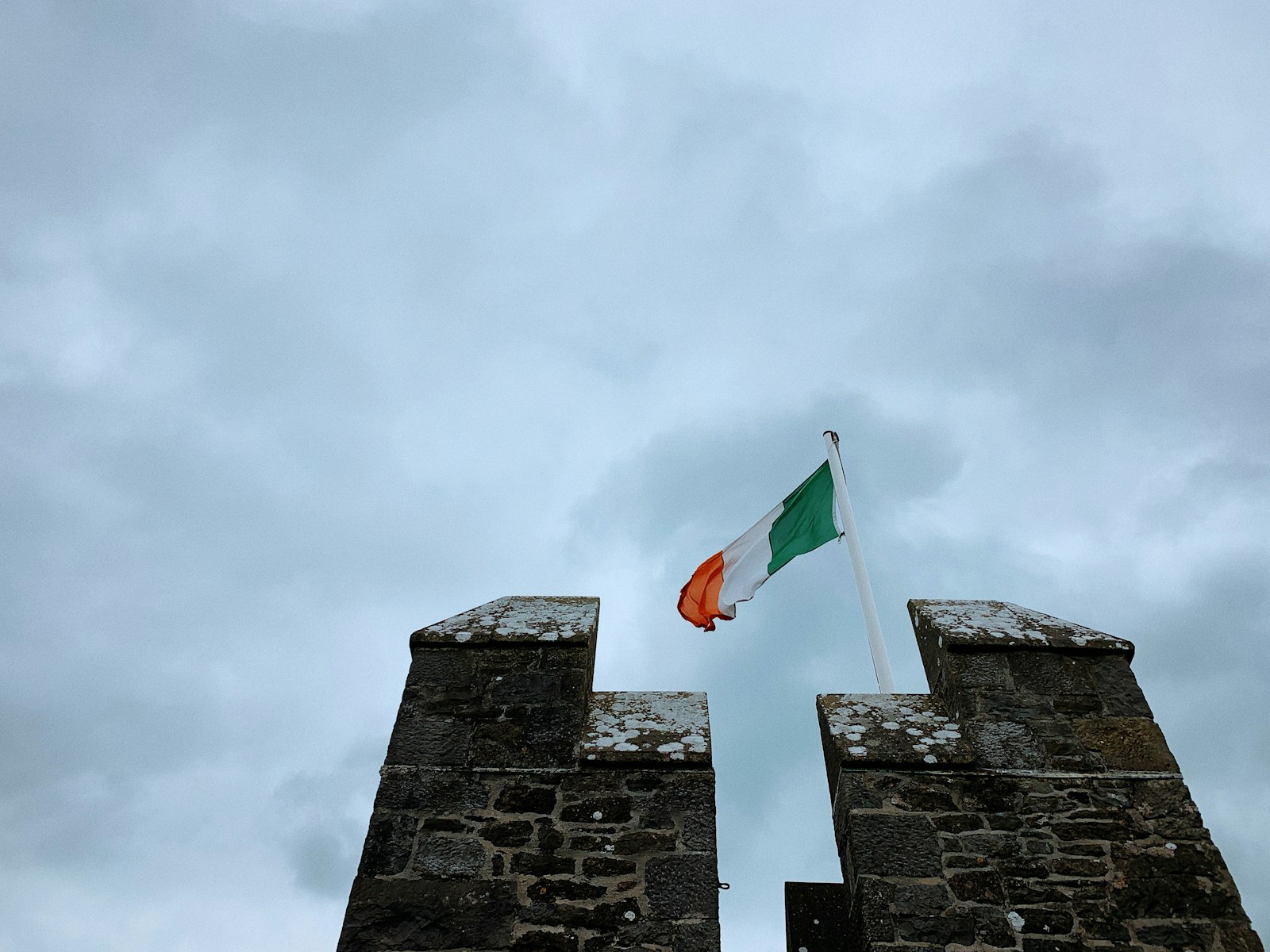
Photo by Tommy Bond on Unsplash
Among the most distinctive elements of Irish culture are the blessings and expressions that have been woven into everyday Irish speech for generations. From “May the wind be at your back” to “May you be in heaven half an hour before the devil knows you’re dead,” Irish blessings carry a particular blend of spirituality, humor, warmth, and cultural sensibility that immediately identifies them as distinctively Irish. These are not merely pleasant sentiments or empty wishes, but rather expressions that carry cultural meaning, spiritual weight, and often a particular Irish philosophy about life, death, blessing, and human connection.
Irish blessings and expressions have become familiar to Americans interested in Irish culture, often appearing on greeting cards, mugs, wall plaques, and other merchandise. Yet beneath the commercialization lies something genuine and meaningful: a set of expressions that reflect Irish values, Irish understandings of blessing and goodwill, and Irish ways of using language to create connection and meaning. Understanding Irish blessings requires looking past the commercialization to understand what these expressions actually say about Irish culture and why they’ve persisted and been transmitted across generations and across oceans.
For Americans with Irish heritage, Irish blessings offer a way of maintaining connection to Irish culture through language and practice. For those interested in Irish spirituality and culture, understanding blessings provides insight into how Irish people have understood spirituality, community, and the power of language and blessing. For those interested in language and culture more broadly, Irish blessings demonstrate how expressions embedded in a culture carry meaning and cultural significance.
The Spiritual Context: Blessing as Spiritual Practice
To understand Irish blessings, one must understand that in Irish culture, blessing has been understood as a spiritually significant practice, not merely as a polite expression. To bless someone—to wish them well, to invoke divine protection and goodwill upon them—is understood as having real spiritual consequences. Blessing is not simply wishing someone well; it’s understood as potentially contributing to their actual wellbeing through the power of words and intention.
This understanding of blessing reflects both pre-Christian and Christian influences in Irish culture. In pre-Christian Celtic understanding, words had power—blessings and curses were understood as having real effects. Names and words were understood as carriers of power and meaning. The druid class in ancient Celtic culture were understood as having special power through words, through poetry, through knowledge of correct formulas and invocations.
When Christianity came to Ireland, the understanding of blessing was incorporated into Christian practice. Christian blessing—invoking divine grace and protection—found resonance with pre-existing understandings of blessing as spiritually significant. Priests and religious leaders were understood as having particular power to bless, but blessing was also understood as a practice available to ordinary people as a way of invoking divine goodwill and protection.
This understanding of blessing persists in Irish culture. To bless someone is understood as more than a polite gesture; it’s an invocation of spiritual goodwill, a calling down of grace and protection. When someone says “God bless you” in Irish contexts, they’re not simply making a pleasant gesture; they’re actually invoking divine blessing and protection.
Common Irish Blessings: Forms and Meanings
Irish blessings take multiple forms, from brief expressions that might be used in everyday speech to more elaborate blessings used in particular contexts:
“May the road rise up to meet you”: This opening line of perhaps the most famous Irish blessing (often called “The Irish Blessing” or “An Irish Prayer”) expresses a wish for ease and favorable circumstances in the recipient’s journey. The “road” is both literal and metaphorical—the road of life. The blessing wishes that circumstances will favor the blessed one, that difficulties will be minimized, and that life’s journey will be eased.
“May the wind be at your back”: Similar to the above, this blessing wishes for favorable circumstances. Wind at your back means literal ease in traveling, but also metaphorically means favorable forces supporting you.
“May you be in heaven half an hour before the devil knows you’re dead”: This blessing, while seemingly dark, is actually a warm wish for long life and for favorable judgment after death. It expresses the wish that the person will live a long life and that when they do die, divine judgment will be favorable. The humor in the expression (the suggestion that the devil would pursue them) makes the blessing warmer and more human than if it simply wished for long life.
“God bless you” and variations: Simple blessing expressions, invoking divine blessing and protection. These might be said when someone sneezes, when parting from someone, when greeting someone, or in many other contexts.
“Go n-éiri an bóthar leat”: An Irish language blessing meaning “May the road rise with you” or “May the road be favorable to you,” this is a fundamental Irish blessing expressing wish for ease and favor.
“Is fearr Gaeilge bhriste, ná Béarla cliste”: An Irish language expression meaning “Broken Irish is better than clever English,” this expresses a value placed on Irish language even imperfectly spoken, valuing cultural identity over linguistic perfection.
“Slán go fóill”: Irish for “goodbye for now,” this expression carries a sense of temporary parting with hope of reunion, different in connotation from an absolute goodbye.
“Ní neart go cur le chéile”: Irish for “There is no strength without unity,” this proverb expresses a cultural value of community and collective action.
Cultural Values in Blessings: What They Reveal
Irish blessings, taken collectively, reveal several important cultural values:
Faith and spirituality: The prominence of God and divine blessing in Irish expressions reflects the centrality of spirituality in Irish culture. Whether explicitly Christian or drawing on older spiritual understandings, Irish culture has been understood as oriented toward spiritual reality and divine power.
Community and connection: Many Irish blessings and expressions emphasize community, togetherness, and mutual support. The repeated invocation of “we” rather than “I,” the emphasis on collective strength, reflects the cultural value placed on community bonds.
Goodwill and hospitality: Irish blessings typically express warmth and genuine goodwill. The willingness to bless others, to invoke good fortune upon them, reflects a cultural value of hospitality and genuine care for others’ wellbeing.
Acceptance of difficulty with humor: Many Irish expressions acknowledge difficulty, hardship, or mortality, but do so with humor and acceptance. This reflects an Irish approach to hardship: acknowledging it while maintaining humor and perspective. This is sometimes called “Irish humor” and is understood as a coping mechanism for dealing with adversity.
Language as powerful: The attention paid to particular expressions, the exact wording of blessings, and the understanding that words carry power reflects a cultural understanding of language as significant and powerful. The way something is said matters; the choice of words matters.
Spirituality in daily life: The integration of blessing and spiritual expressions into everyday speech reflects an understanding that spirituality is not separate from daily life but is woven throughout it. Spiritual expression is not confined to religious contexts but is part of how people speak and interact.
The Irish Language and Blessings: The Power of Irish
While Irish blessings are expressed in English in many contemporary contexts, the Irish language itself carries blessings and expressions with deep cultural significance. The revival of the Irish language in the 20th and 21st centuries has involved recovering and maintaining these expressions in the original language.
Irish language expressions carry particular weight because the language itself is understood as carrier of Irish cultural identity and heritage. Speaking Irish, even partially or imperfectly, is understood as maintaining connection to Irish culture and as honoring Ireland and Irish heritage.
Some key Irish language concepts and expressions:
“Céad míle fáilte”: “A hundred thousand welcomes”—a traditional welcome expression that emphasizes warmth and genuine openness to guests.
“Tiocfaidh ár lá”: “Our day will come”—an expression of hope and resilience, historically significant in Irish independence movements.
“Saoirse”: “Freedom”—a word with deep significance in Irish history and culture, carrying the weight of centuries of struggle for independence.
The language itself: Irish speakers often express that the language carries something essential about Irish identity and Irish ways of understanding the world. Even those who don’t speak Irish fluently often understand the language as carrier of cultural heritage.
Blessings in Irish-American Culture: Continuity and Adaptation
Irish immigrants brought blessings and characteristic Irish expressions with them to America, and they persisted in Irish-American communities. These expressions became ways of maintaining Irish identity while adapting to American contexts.
Irish-American expressions sometimes adapted Irish originals to American English. They were used in homes and communities to maintain Irish cultural identity and to transmit that identity to children. For many Irish-Americans, even those who don’t speak Irish and have limited connection to Ireland itself, Irish blessings remain familiar and valued expressions.
In contemporary Irish-American culture, Irish blessings are often used:
In greeting and parting: “God bless you,” “Go with God,” and other blessings continue to be used as ways of expressing care and goodwill.
In family traditions: Families pass down particular blessings or expressions as part of family culture, using them to maintain connection across generations.
In spiritual practice: Those interested in Irish spirituality or Celtic spirituality often use Irish blessings as part of spiritual practice and as ways of connecting to Irish spiritual tradition.
In cultural affirmation: Using Irish expressions and blessings is a way of asserting and maintaining Irish cultural identity, particularly among those interested in preserving Irish heritage.
The Commercialization: When Blessings Become Merchandise
In contemporary times, Irish blessings have become commercialized, appearing on cards, mugs, posters, decorative plaques, and other merchandise. This commercialization has both positive and negative aspects:
Positively, commercialization has made Irish blessings visible and available to broad audiences, including people with no Irish heritage but interested in the warm, spiritual character of the expressions. It has supported Irish-themed businesses and cultural products. It has kept Irish blessings visible and transmitted them to new generations.
Negatively, commercialization can trivialize the spiritual and cultural significance of blessings, reducing them to mere decorative elements. It can lead to inauthentic or invented “Irish blessings” marketed to tourists. It can flatten the depth and cultural specificity of genuine Irish blessings.
Some of the most famous Irish blessings, particularly “The Irish Blessing” (beginning “May the road rise up to meet you”), have become so commercialized that they appear on countless cards and decorative items. While this has increased their visibility, it has also sometimes distanced them from their cultural and spiritual contexts.
Contemporary Practice: Blessings in Modern Irish Culture
In contemporary Ireland, Irish blessings continue to be used, though often in adapted forms. “God bless you” and similar expressions remain common in everyday speech. In more traditional or rural contexts, longer blessings and formal blessing practices may persist. In secular or urban contexts, while blessings may be less common, they’re still recognized as distinctively Irish expressions.
Modern Irish spirituality, including both Christian and non-Christian expressions, often draws on blessings as spiritual practices. Those interested in Celtic spirituality or in Irish spiritual traditions frequently engage with blessings as practices.
Contemporary Irish poets and writers sometimes reference and work with blessing traditions, using the form of blessing as a literary and spiritual device. This shows how traditional blessing practices continue to be creatively engaged with and adapted in contemporary cultural contexts.
Conclusion: Words That Connect
Irish blessings represent something significant: a set of expressions that carry cultural meaning, spiritual weight, and cultural identity. They are not merely pleasant sentiments or tourist attractions, but rather genuine expressions reflecting Irish understanding of blessing, spirituality, community, and the power of language.
For Americans interested in Irish heritage, engaging with Irish blessings—learning them, using them, understanding their meanings—offers a way of maintaining connection to Irish culture through language and through spiritual practice. It offers a reminder that in Irish tradition, words matter, blessings have power, and expressions of goodwill and blessing are ways of creating and maintaining connection.
Whether used in their original Irish language forms or in English adaptations, Irish blessings carry forward a cultural tradition in which language is understood as powerful, in which spiritual expression is woven throughout daily life, and in which goodwill expressed toward others is understood as genuinely meaningful. In using Irish blessings, we’re not simply speaking pleasantries; we’re participating in a tradition that stretches back through generations and across centuries, a tradition that understands blessing as spiritually significant and that values the expression of genuine care and goodwill toward others.
May you be blessed with health, happiness, and the knowledge of your rich Irish heritage. May the road rise up to meet you.

Author: jonathan
Jonathan is the publisher of Irishtopia.net, Anglotopia.net, and Londontopia.net. He's passionate about travel and learning about other cultures. He's been to Ireland several times, and uses his travel expertise for Irishtopia!