
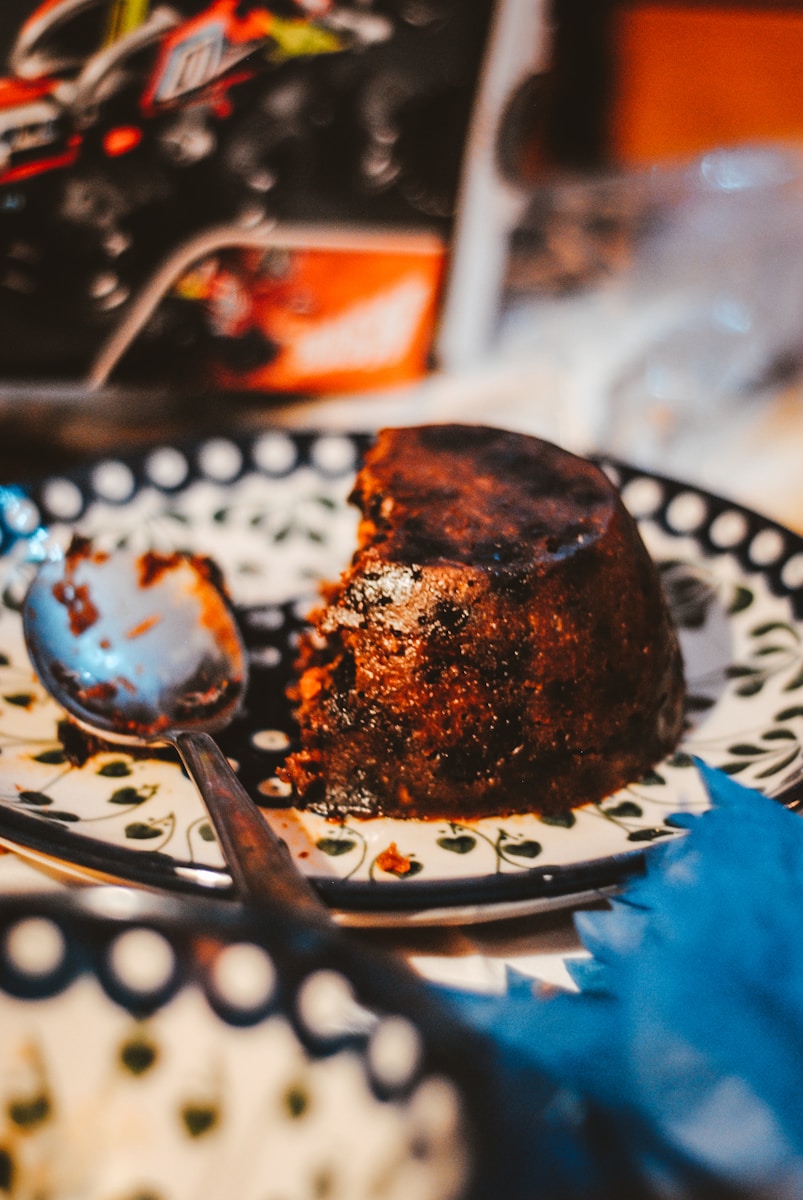
Irish Christmas features two iconic desserts that often confuse outsiders but hold distinct and important places in Irish holiday traditions: Christmas cake and Christmas pudding. While both are dense, fruit-laden, alcohol-soaked creations made weeks before Christmas, they’re actually quite different in composition, preparation, serving style, and role in Christmas celebrations. Understanding these two traditional Irish Christmas desserts reveals much about Irish food culture, the evolution of holiday traditions, and the layering of British and distinctly Irish influences in Irish Christmas celebrations.
What’s the Difference?
The fundamental distinction between Christmas cake and Christmas pudding lies in their basic nature, though both are fruit-rich and heavily spiced.
Christmas Cake:
- A traditional fruit cake (in the British/Irish sense, not the American fruitcake)
- Made with flour, creating a cake structure
- Baked in the oven like regular cake
- Served cold, in slices
- Typically covered with marzipan and royal icing or fondant
- Often elaborately decorated
- Eaten throughout the Christmas season at tea time or as snack
- Generally lighter and more cake-like in texture
Christmas Pudding:
- A steamed pudding (also called plum pudding)
- Made with breadcrumbs or flour, suet, and eggs
- Steamed for many hours rather than baked
- Served hot as a dessert after Christmas dinner
- No icing – served as is, perhaps with holly decoration
- Often flambéed with brandy or whiskey at serving
- Dense, moist, and rich
- Specifically a Christmas Day dessert
These differences mean Christmas cake and Christmas pudding serve different roles in Irish Christmas celebrations, and most traditional Irish families have both, using each appropriately for its intended purpose.
Christmas Cake: History and Tradition
Christmas cake in its current Irish form represents the evolution of several earlier traditions.
Historical Development: The Christmas cake evolved from medieval honey cakes and spiced breads eaten during winter festivals. By the Victorian era, the modern Christmas cake had emerged in Britain and Ireland: a rich fruit cake covered with marzipan and icing, decorated elaborately, and served throughout the Christmas season.
The Making Timeline: Traditional Irish families begin making Christmas cake in November, sometimes even October. The process involves:
- Preparing Fruit: Raisins, currants, sultanas, candied peel, and sometimes cherries are soaked in alcohol (traditionally brandy, but Irish whiskey, sherry, or even tea work well) for several days or weeks before baking.
- Mixing and Baking: The fruit is combined with flour, butter, sugar, eggs, spices (cinnamon, nutmeg, mixed spice), and sometimes ground almonds. The mixture bakes slowly at low temperature for several hours.
- Feeding: After baking and cooling, the cake is “fed” – pierced and drizzled with more alcohol weekly until Christmas. This keeps it moist and develops flavor.
- Marzipan Layer: One to two weeks before Christmas, the cake receives a layer of marzipan (almond paste), which provides smooth foundation for icing and adds its own flavor.
- Icing and Decoration: Finally, the cake is covered with royal icing (made from egg whites and sugar) or rolled fondant. This is decorated elaborately – perhaps with piped designs, Christmas scenes, figurines, or family-specific decorations.
Family Traditions: Many Irish families have Christmas cake recipes passed through generations. Grandmothers teach daughters and granddaughters, passing not just recipes but techniques, timing, and family-specific touches. The annual cake-making might be a communal family activity, with multiple generations participating.
Shop-Bought Alternatives: While homemade Christmas cakes remain valued, many Irish families now buy Christmas cakes from bakeries or supermarkets. Quality varies enormously, with good bakery cakes acceptable substitutes for homemade, while cheap supermarket cakes are considered poor imitations.
Christmas Pudding: History and Tradition
Christmas pudding has a more ancient lineage than Christmas cake, though its modern form also crystallized in the Victorian era.
Medieval Origins: Christmas pudding descends from medieval meat puddings made with suet, meat scraps, dried fruits, and spices. Over centuries, the meat content diminished while fruit increased, though suet (beef or mutton fat) remained essential for authentic pudding.
Stir-Up Sunday: The traditional day for making Christmas pudding is “Stir-up Sunday” – the last Sunday before Advent begins. This timing allows the pudding to age for several weeks before Christmas. The name comes from the opening of that Sunday’s Anglican Collect prayer: “Stir up, we beseech thee, O Lord, the wills of thy faithful people…”
The Making Process:
- Ingredients Assembly: Dried fruits (raisins, currants, sultanas, candied peel, sometimes dates or prunes), breadcrumbs or flour, suet (traditionally beef or mutton, though vegetarian alternatives exist), brown sugar, eggs, spices, and alcohol (brandy, whiskey, or Guinness in Irish versions).
- The Stirring Ritual: Each family member stirs the pudding mixture clockwise (representing the journey of the Three Wise Men) while making a wish. This ritual connects family members to the pudding and to each other.
- Adding Treasures: Traditionally, small coins or charms are mixed into the pudding. Finding one in your Christmas Day serving brings luck. (Modern food safety concerns have reduced this practice, though some families maintain it with properly cleaned coins or specially made silver charms.)
- Steaming: The pudding mixture is placed in a pudding basin, covered with parchment and cloth, and steamed for many hours (often 6-8 hours for the initial cooking). The long steaming creates the pudding’s characteristic dark color and dense, moist texture.
- Aging: Like Christmas cake, Christmas pudding benefits from aging. It’s stored in a cool, dark place, and some families “feed” it with additional alcohol periodically.
- Christmas Day Steaming: On Christmas Day, the pudding is steamed again for 1-2 hours to heat it through before serving.
Serving Ritual: Christmas pudding arrives at the table with considerable ceremony:
- Decorated with a sprig of holly
- Doused with warmed brandy or whiskey
- Set alight, arriving at the table flaming
- Served with brandy butter, cream, custard, or ice cream
This theatrical presentation makes Christmas pudding serving a memorable event, particularly for children.
Ingredients and Recipes
While specific recipes vary by family, certain ingredients and techniques define authentic Irish Christmas cake and pudding.
Common Ingredients in Both:
- Dried fruits (raisins, currants, sultanas)
- Candied peel
- Spices (cinnamon, nutmeg, mixed spice)
- Brown sugar
- Eggs
- Alcohol for soaking and feeding
Christmas Cake Specifics:
- Plain flour
- Butter (not suet)
- Light and dark muscovado sugar
- Ground almonds (often)
- Lemon and orange zest
- Treacle or golden syrup (sometimes)
- Baking powder (sometimes, for lighter texture)
Christmas Pudding Specifics:
- Breadcrumbs (traditionally) or flour
- Suet (essential for authentic pudding)
- Black treacle or molasses
- Darker sugar
- More spices generally than cake
- Sometimes grated carrot or apple
- Guinness or stout (in Irish versions)
Alcohol Choices: Traditional recipes call for brandy, but Irish versions often substitute or supplement with:
- Irish whiskey
- Irish cream liqueur
- Sherry
- Port
- Guinness or other stout
- For non-alcoholic versions: strong tea or fruit juice
Regional and Family Variations
Despite basic recipe similarity, significant variations exist across Ireland and among families.
Cork Variations: Cork Christmas traditions extend to desserts. Some Cork families make their puddings with Cork’s famous Murphy’s or Beamish stout rather than Guinness. Cork might also show different spicing preferences.
Dublin Sophistication: Dublin families sometimes elaborate on basic recipes with additions like crystallized ginger, exotic dried fruits, or more complex spice blends, reflecting urban sophistication and access to diverse ingredients.
Rural Traditions: Rural Irish families might maintain older, simpler recipes passed down largely unchanged through generations. These traditional recipes sometimes use ingredients that were locally available rather than imported exotic fruits.
Protestant vs. Catholic: Historical Protestant and Catholic communities sometimes had slight variations in Christmas food traditions, though these distinctions have largely faded in modern Ireland.
Modern Adaptations: Contemporary Irish families increasingly make adaptations:
- Vegetarian puddings using vegetable suet
- Gluten-free versions for those with celiac disease
- Reduced sugar for health-conscious families
- Vegan alternatives (challenging but possible)
- Individual puddings rather than one large pudding
Making vs. Buying
Irish families face decisions about whether to make Christmas cake and pudding from scratch or purchase them.
Arguments for Making:
- Family tradition and connection to heritage
- Control over ingredients and quality
- Personal satisfaction and pride
- Teaching children traditional skills
- Exact customization to family preferences
- Often superior flavor to bought versions
Arguments for Buying:
- Time savings (making both is very time-consuming)
- Modern busy lifestyles don’t allow for lengthy preparation
- Some bakeries and shops produce excellent versions
- Not everyone has the skills or confidence to make them well
- Less risk of failure
Compromise Positions: Many modern Irish families compromise:
- Making one (usually cake) while buying the other (usually pudding)
- Making in alternate years
- Making simpler versions that require less time
- Buying but “feeding” with alcohol at home to add personal touch
- Decorating bought cakes to make them feel more personal
Serving Contexts
Christmas cake and Christmas pudding occupy different niches in Irish Christmas celebration.
Christmas Cake Occasions:
- Afternoon tea throughout December and early January
- Offering to visitors during Christmas calls
- Late evening snack with tea after Christmas dinner
- St. Stephen’s Day gatherings
- Throughout the Twelve Days of Christmas
- Sometimes breakfast on Christmas morning (in some families)
- New Year’s celebrations
Christmas Pudding Occasions:
- Almost exclusively Christmas dinner dessert
- Sometimes St. Stephen’s Day dinner
- Rarely (if ever) outside these specific occasions
This different deployment means both can coexist in Irish Christmas traditions without redundancy – each has its specific role.
Accompaniments
How Christmas cake and pudding are served matters as much as the desserts themselves.
Christmas Cake Served With:
- Strong tea (most traditional)
- Irish coffee
- Sherry or port
- Coffee
- Simply on its own
- Sometimes thin slices of cheese (cheddar or Irish farmhouse cheese)
Christmas Pudding Served With:
- Brandy butter (butter, sugar, and brandy beaten together)
- Irish whiskey butter (same concept, different alcohol)
- Cream (fresh or whipped)
- Custard (either proper custard or Bird’s Custard)
- Ice cream (increasingly popular)
- Some families offer multiple accompaniments
Leftover Strategies
Both Christmas cake and pudding produce leftovers (intentionally – you make enough to last throughout Christmas).
Christmas Cake Leftovers:
- Continues being served at tea through early January
- Some families keep cake through Women’s Christmas (January 6th)
- Wrapped well, cake can last weeks or even months
- Can be refreshed with additional alcohol if drying out
Christmas Pudding Leftovers:
- Reheated portions throughout Christmas period
- Fried in butter for breakfast (traditional but less common now)
- Turned into trifle by some families
- Generally consumed faster than cake due to its density
Cultural Significance
Both Christmas cake and Christmas pudding represent more than dessert in Irish culture.
Continuity and Heritage: Making or eating these traditional desserts connects Irish families to their past, to previous generations who made the same recipes, to Irish and British heritage.
Effort and Love: The time and effort required to make proper Christmas cake and pudding represent care and love for family. The person who makes them (traditionally mother or grandmother) gives a gift of significant labor.
Community Bonds: Sharing Christmas cake with visitors or exchanging pudding recipes with neighbors reinforces community relationships.
Religious Connections: Both desserts carry religious associations – the Stir-up Sunday pudding making, the deliberate preparation timing related to Advent, the Christmas Day serving all connect to Christian calendar and observance.
Class and Status: Historically, the richness of Christmas cake and pudding signaled prosperity. Families who could afford abundant dried fruit, expensive spices, and alcohol demonstrated their economic position through these desserts.
Modern Challenges
Traditional Christmas cake and pudding face various challenges in contemporary Ireland.
Time Constraints: Modern busy lifestyles make the time-intensive preparation difficult. Starting cake and pudding in November requires organization and commitment many families struggle to maintain.
Changing Tastes: Younger generations sometimes find these dense, rich, traditional desserts less appealing than lighter, modern alternatives. Health consciousness makes some hesitant about high-calorie, high-sugar, high-alcohol desserts.
Skills Gap: Not everyone learns to make proper Christmas cake and pudding. As fewer people make them, traditional knowledge risks being lost.
Availability of Alternatives: The proliferation of dessert options means Christmas cake and pudding compete with numerous attractive alternatives.
Commercialization: Bought versions of variable quality might turn people off these desserts if their experience is with poor supermarket versions rather than good homemade or bakery products.
Preservation Efforts
Various efforts work to preserve these traditional Irish Christmas desserts.
Recipe Preservation: Cookbooks, websites, and cooking shows document traditional recipes and techniques, making them accessible to those who weren’t taught by family members.
Teaching and Classes: Community centers, cooking schools, and cultural organizations offer classes in making traditional Christmas foods.
Media Coverage: Irish media regularly features Christmas cake and pudding at appropriate seasonal times, maintaining cultural presence and encouraging continuation.
Celebrity Chefs: Irish chefs and food personalities promote these traditional desserts, sometimes with modern twists that make them appealing to new generations.
Conclusion
Irish Christmas cake and Christmas pudding represent the layering of traditions, the persistence of labor-intensive food practices despite modern alternatives, and the deep connections between food, family, and cultural identity. While superficially similar – both dense, fruity, alcoholic, made-ahead Christmas treats – they actually serve distinct roles in Irish Christmas celebration: cake for tea and snacking throughout the season, pudding as the grand finale to Christmas dinner.
Understanding these desserts provides insight into Irish Christmas beyond simple recipes. The timing of their making (weeks in advance), the rituals surrounding them (Stir-up Sunday, feeding with alcohol, decorating), their serving (cake casual throughout the season, pudding ceremonial at Christmas dinner), and their persistence despite modern convenience alternatives all speak to what Irish people value about Christmas and tradition.
For Irish families maintaining these traditions, making or serving Christmas cake and pudding connects them to their heritage, expresses care for family, and creates the authentic Irish Christmas experience. For visitors or those encountering these desserts for the first time, they offer a taste of Irish Christmas culture – rich, complex, traditional, and deeply meaningful beyond their ingredients and flavors.
Whether homemade by dedicated family bakers or carefully selected from trusted bakeries, whether traditional recipes or modern adaptations, Irish Christmas cake and Christmas pudding continue to claim their essential places on Irish Christmas tables, representing continuity with the past while remaining relevant and enjoyed in the present.

Author: jonathan
Jonathan is the publisher of Irishtopia.net, Anglotopia.net, and Londontopia.net. He's passionate about travel and learning about other cultures. He's been to Ireland several times, and uses his travel expertise for Irishtopia!