
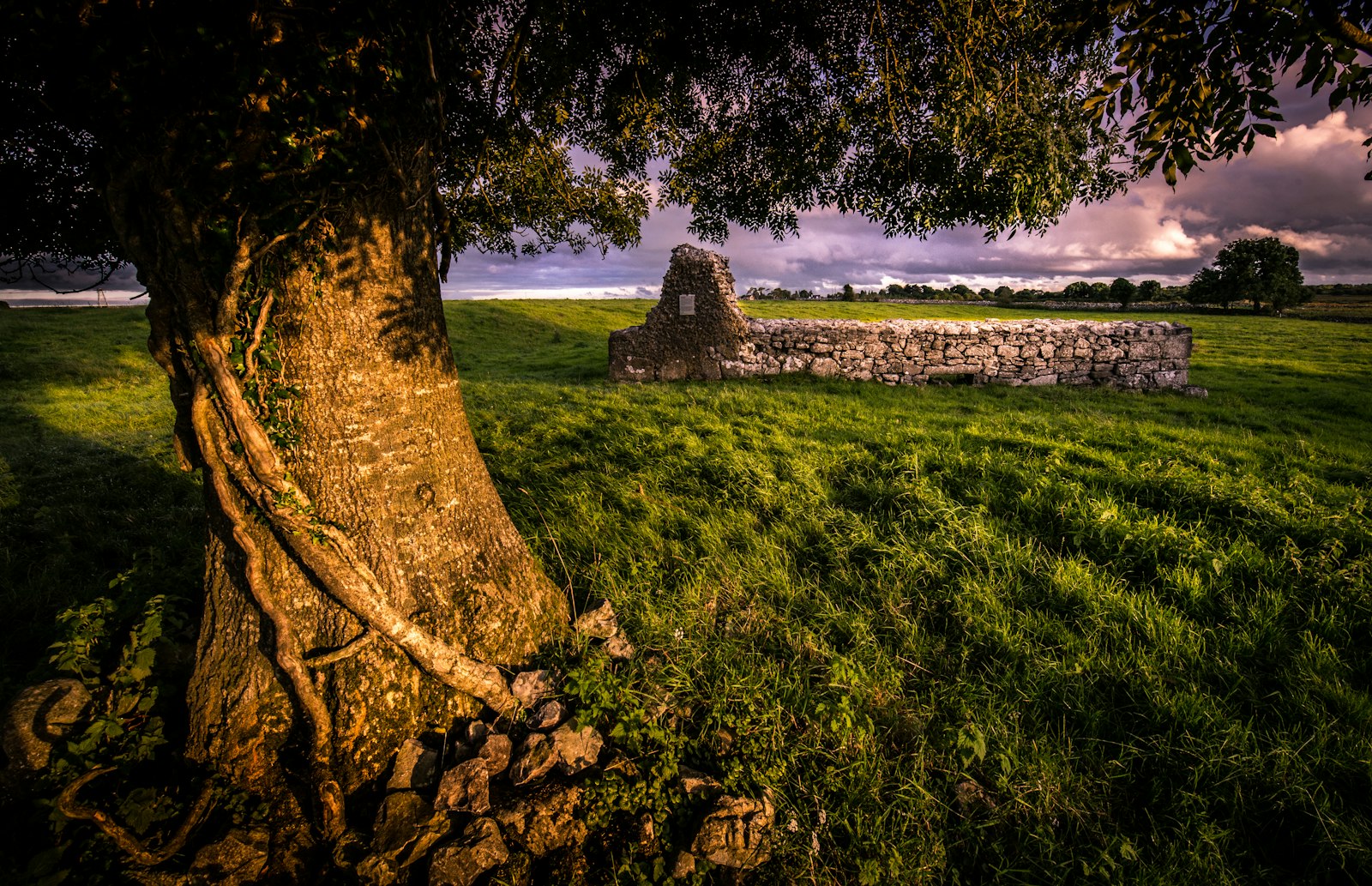
Photo by Mike Kenneally on Unsplash
When the Roman Empire collapsed in the 5th century, the infrastructure of Roman civilization—its cities, roads, administrative apparatus, and educational institutions—crumbled across much of Western Europe. Yet in Ireland, which had never been part of the Roman Empire, an extraordinary development occurred: Christian monasteries became the primary preservers and transmitters of classical learning, maintaining texts and intellectual traditions that were being lost elsewhere. The contribution of Irish monasteries to the preservation of Western civilization’s intellectual heritage is one of the most important developments of the early medieval period, yet it is often overlooked in narratives focused on continental Europe.
The Monastic Movement in Ireland
Christianity arrived in Ireland in the 5th century, brought by Saint Patrick and other missionary efforts. As the Irish church developed, the monastic movement became its dominant institutional form. Unlike in some other regions, where the bishop and cathedral served as the primary ecclesiastical institution, Irish Christianity came to be organized primarily around monasteries. These institutions came to dominate religious, intellectual, and much of the economic and political life of early medieval Ireland.
The early Irish monasteries were sometimes established by a single charismatic holy man or woman who founded a community and attracted followers through reputation for sanctity and learning. Monasteries grew to substantial size, sometimes encompassing thousands of monks and extending their influence widely. They accumulated extensive lands through donations from pious nobles seeking spiritual merit, they established networks of daughter monasteries extending their influence across the island, and they attracted wealth in the form of precious objects, manuscripts, and other gifts.
The principal spiritual motivation for monasticism was the pursuit of holiness and closeness to God through ascetic practice. Monks withdrew from secular society to pursue lives of prayer, meditation, and spiritual discipline. This monastic spirituality, while otherworldly in its focus, came to serve worldly purposes by making monasteries centers of learning and preservation of knowledge.
The Irish Monastic Rule
Early Irish monasticism developed distinctive characteristics partly shaped by the Rule of Saint Benedict, a guide for monastic life that originated in Italy and gradually spread throughout Christian Europe, but also shaped by indigenous Irish traditions and the particular conditions of Irish society.
Irish monastic communities were often organized around a charismatic abbot (or abbess, in the case of some convents for women) who held considerable authority over the community. The abbot was responsible for organizing the monastery’s spiritual and material life, making decisions about the community’s activities and priorities. Some early Irish monasteries were notably autonomous and independent, while others developed networks of affiliation and relationships of subordination to more powerful monasteries.
The daily life of monks in Irish monasteries involved a balance between communal prayer and work. The community gathered for prayers at specific times throughout the day—services held at regular intervals from before dawn through nightfall. Between these times, monks engaged in various forms of labor: agricultural work maintaining the monastery’s lands, craft production (metalwork, textile production), teaching and learning, and the copying and creation of manuscripts.
The Irish monastic tradition also emphasized particular forms of spiritual practice that became distinctive to Irish monasticism. These included intense personal asceticism—monks undertaking voluntary deprivation and hardship to strengthen spiritual discipline—and the pursuit of particular forms of contemplative practice. Some monks engaged in pilgrimage, traveling to distant holy sites to deepen spiritual experience. Others sought hermitage, withdrawing from even the monastic community to pursue solitude in remote locations.
Monasteries as Intellectual and Educational Centers
While the primary purpose of monasteries was spiritual, they rapidly became centers of intellectual activity and learning. This occurred partly because the Christian faith itself required literacy—access to scripture and theological texts required the ability to read. Monasteries maintained schools to educate monks in reading, writing, and other skills necessary for religious life. Some of these schools eventually attracted external students, including young men (and occasionally women) from surrounding regions who came to study.
The scriptoria—the writing rooms where manuscripts were produced—became the intellectual heart of major monasteries. Monks engaged in copying texts, creating new manuscripts, and sometimes producing original works. Copying manuscripts was considered a form of spiritual work; monks believed that they were serving God by preserving and transmitting the sacred texts and other valuable writings that they copied.
Major monasteries accumulated libraries of manuscripts. Some of these manuscripts were texts central to Christian faith—biblical texts, patristic writings (works by early Church fathers), and theological commentaries. But monasteries also preserved secular learning—classical texts in grammar, rhetoric, mathematics, philosophy, and science. While the primary motivation for preserving such texts was often that they contained knowledge useful for understanding scripture or for educating monks, the consequence was that vast amounts of classical knowledge were preserved through monastic copying.
The Preservation of Classical Learning
The monasteries’ role in preserving classical learning became increasingly crucial as conditions in Western Europe deteriorated in the early medieval period. The collapse of Roman urban life, the decline of literacy in the secular population, and the degradation of the educational infrastructure meant that classical learning was in danger of being lost entirely. While some continental monasteries also preserved classical texts, Irish monasteries became particularly renowned for their extensive preservation of classical and patristic learning.
The reasons for this exceptional preservation are complex. First, Irish monasteries were established after the classical world had largely disappeared, so they didn’t inherit the same assumptions that continental monasteries had about which texts were essential and which were luxuries. Irish monasteries acquired their classical texts through trade and contact with the continent, rather than inheriting them from local Roman institutions. This created a somewhat different collection from what continental monasteries possessed. Second, Irish monasteries were well-funded and had the resources to produce numerous copies of texts, which helped ensure their preservation through multiple copies.
The most famous example of a classical text preserved through Irish monastic copying is the works of the Roman author Livy. While Livy’s complete history was lost on the continent and known only through fragmentary references, Irish monks preserved enough copies that complete or nearly complete texts survived and were eventually recovered by Renaissance scholars. Many other classical and patristic texts survived primarily because Irish monasteries had copied and re-copied them.
Major Monastic Centers
Several Irish monasteries became particularly renowned for their learning and influence. Clonmacnoise, located on the Shannon River, was one of the most important monastic centers. Founded in the 6th century, it grew to become an enormous complex with multiple churches, a high round tower (used as a retreat and refuge in case of attack), and numerous monastic buildings. Clonmacnoise attracted students from across Ireland and abroad, and its scriptoria produced high-quality manuscripts.
Kells became famous not only for its monastery but particularly for the production of the Book of Kells, one of the most spectacular illuminated manuscripts of the early medieval period. The monastery at Kells maintained connections to Iona, the famous Scottish monastery, and it is possible that the Book of Kells was created at Iona and moved to Kells for safety.
Armagh, in northern Ireland, was the ecclesiastical center of the archdiocese and claimed authority as the successor to Saint Patrick’s original church. The monastery at Armagh accumulated a renowned library and maintained significant power within Irish Christianity.
Lismore, Durrow, and numerous other monasteries also achieved fame for their learning, their manuscript production, and their influence. The network of these monasteries, particularly through connections of affiliation and monastic families (monasteries founded by monks from other monasteries), created an intellectual network spanning Ireland and extending to Scotland and the continent.
Artistic and Technological Achievement
Beyond their preservation of texts, Irish monasteries achieved extraordinary artistic and technological accomplishments. The production of the Book of Kells, with its intricate illuminations and sophisticated artistic design, represents the pinnacle of monastic artistic achievement in the period. But numerous other fine manuscripts were produced in Irish scriptoria, many of which survive today.
Irish monks also developed sophisticated techniques for producing durable manuscripts. They created vellum from animal skin, developed inks from natural materials that proved remarkably durable, and employed techniques of page layout and decoration that enhanced both the beauty and the functionality of manuscripts. The practice of careful binding and preservation of manuscripts helped ensure their survival.
Irish metalwork and other crafts produced in monasteries also achieved high quality. Monastic centers produced religious objects—chalices, crosses, reliquaries—that were works of fine craftsmanship. The elaborate High Crosses that survive in Ireland, many associated with monastic centers, demonstrate the sophisticated sculptural and design traditions that existed in Irish monasteries.
The Role of Irish Monks in Continental Christianity
The influence of Irish monasticism extended beyond Ireland through the activity of Irish monks who traveled to the continent. In the 6th and 7th centuries, Irish monks became missionaries, establishing monasteries and communities in Wales, Scotland, England, and continental Europe. Saint Columban, an Irish monk of the 6th-7th century, founded monasteries in France and Italy and became influential in the development of continental monasticism.
These Irish missionaries brought with them the distinctive practices of Irish monasticism and their commitment to learning and manuscript production. They also brought texts from Ireland, contributing to the circulation of books and ideas. In some cases, they engaged in conflicts with the continental church over monastic practices, particularly regarding the calculation of Easter and other liturgical matters. These conflicts reflect the existence of a somewhat distinctive Irish Christian tradition with its own practices and perspectives.
The Impact of Viking Raids
The remarkable achievements of Irish monasteries came under severe stress in the 8th and 9th centuries as Viking raids intensified. Major monasteries like Iona and Clonmacnoise experienced repeated attacks from Norse raiders. These raids were devastating—they resulted in the deaths of monks, the destruction of buildings and artwork, and the theft of precious objects and sacred texts.
The frequency and intensity of Viking raids led monasteries to adopt defensive measures—the construction of round towers that could serve as refuges, the movement of valuable manuscripts to safer locations, and in some cases the relocation of entire monastic communities. The relocation of the community of Iona to Kells is one example of how monasteries responded to Viking threats.
Paradoxically, while Viking raids damaged Irish monasteries, the intensity of raids may have accelerated the process of European cultural integration. Irish monks may have moved to continental monasteries to escape the violence, taking manuscripts and learning with them. This contributed to the dissemination of Irish learning and manuscript traditions throughout Europe.
Decline and Legacy
The power of Irish monasteries began to decline from the 12th century onward, partly due to the development of other ecclesiastical institutions (particularly the emergence of cathedral chapters and the increasing authority of bishops), partly due to the arrival of continental religious orders (Cistercians and others) that brought different organizational models, and partly due to the Norman invasion of Ireland in 1170, which brought different cultural and ecclesiastical traditions.
However, the legacy of Irish monasteries in the preservation and transmission of classical learning was immense. Irish monks had kept alive texts that would otherwise have been lost, preserving the intellectual traditions of the classical world through the Dark Ages. When the European intellectual Renaissance began in the 11th and 12th centuries, one of the sources that fed that renaissance was the classical and patristic knowledge that had been preserved in Irish monasteries and transmitted to the continent.
The contribution of Irish monasteries to the preservation of Western civilization’s intellectual heritage is now widely recognized by scholars. The phrase “How the Irish Saved Civilization,” used as the title of a popular history by Thomas Cahill, captures this understanding, though some scholars argue that the title overstates the case. Regardless of the precise formulation, the achievement of Irish monasteries in preserving knowledge and learning during a period when much of Europe was experiencing cultural decline was remarkable and consequential.
For Americans interested in Irish history, the achievements of Irish monasteries represent a moment when Ireland held an important place in the intellectual life of Christian Europe. The vision of Irish monks laboriously copying manuscripts by candlelight, preserving texts that would be treasured by later generations, has become an iconic image of Irish cultural achievement and contribution to Western civilization. Understanding the monasteries allows us to recognize Ireland not merely as the receiving end of cultural influence from Rome or continental Europe, but as an active participant and contributor to the intellectual life of medieval Europe.

Author: jonathan
Jonathan is the publisher of Irishtopia.net, Anglotopia.net, and Londontopia.net. He's passionate about travel and learning about other cultures. He's been to Ireland several times, and uses his travel expertise for Irishtopia!