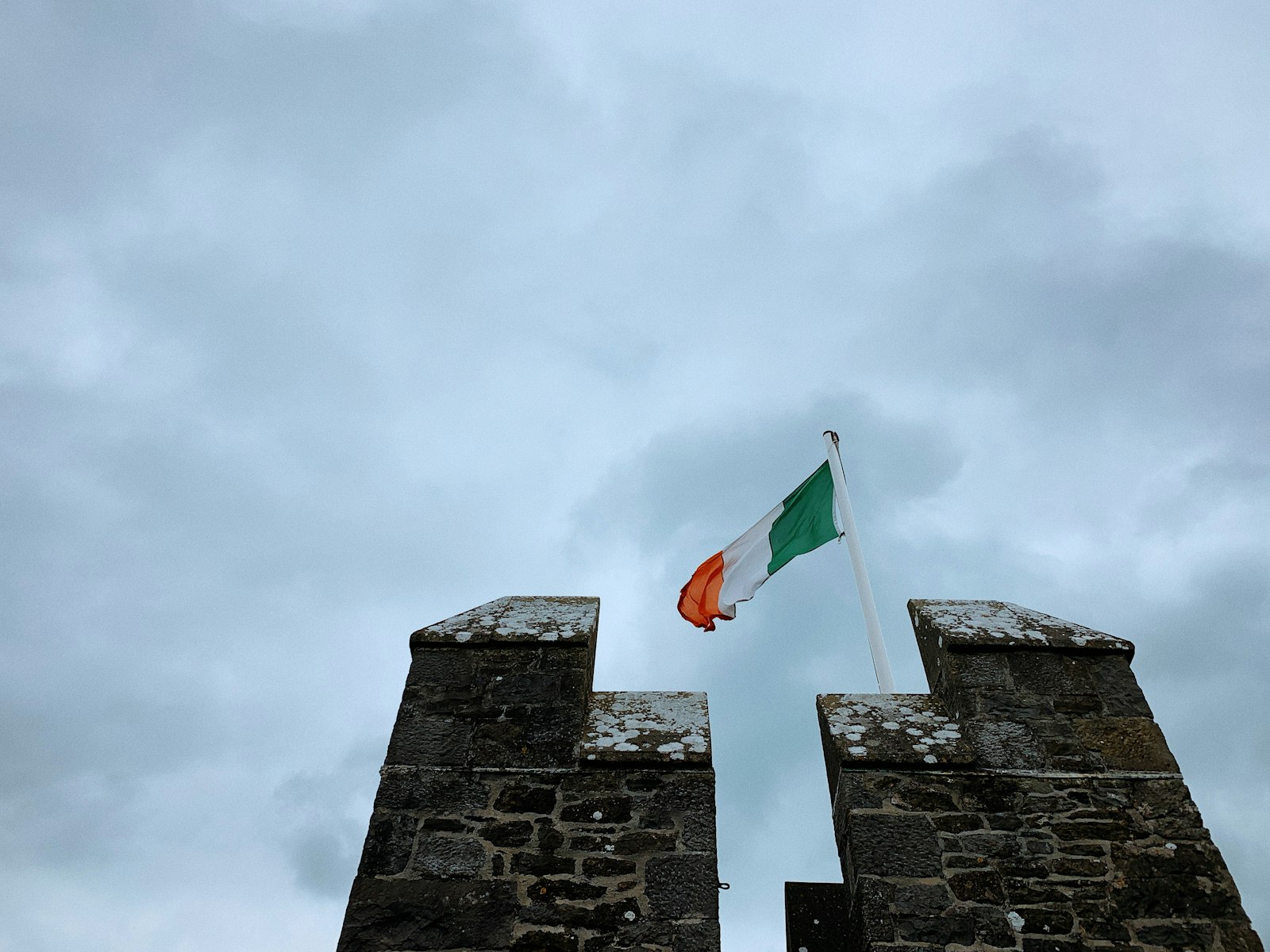
Photo by Tommy Bond on Unsplash
If you’ve ever wondered about the meaning behind an Irish name, or if you carry an Irish name yourself, you’ve likely discovered that these names carry layers of history, mythology, spirituality, and cultural significance that most modern names don’t possess. An Irish name isn’t simply a label; it’s a connection to centuries of Irish history, a link to ancestors, an expression of values and hopes that parents held for their children. In Irish naming traditions, there’s a philosophy embedded: names matter, they connect us to something larger than ourselves, and the act of naming is invested with spiritual and social significance.
For Americans with Irish heritage, understanding the meanings and origins of Irish names offers more than etymological interest. It provides insight into Irish values, into how Irish people understood identity and family, and into the continuities and disruptions in Irish culture as traditions evolved through centuries of change. Whether you’re researching your own family name, considering an Irish name for your child, or simply interested in understanding Irish culture more deeply, the stories behind Irish names reveal much about Ireland itself.
The Historical Development: How Irish Names Evolved
Irish naming traditions evolved significantly over the centuries, shaped by cultural changes, language evolution, and external influences. To understand modern Irish names, one must understand this historical journey.
In pre-Christian Ireland, people had single names, often descriptive of appearance, character, or parentage. These names were frequently changed or supplemented throughout a person’s life based on achievements or circumstances. Names like “Fionn” (fair), “Dubh” (dark), and “Liath” (grey) describe appearance. Names like “Cumhal” (possibly meaning “constraint”) describe character. This system was fluid and personal rather than fixed and hereditary.
With Christianity’s arrival in the 5th century came significant changes to naming practices. Christian saints’ names were adopted, particularly among the clergy and the elite. Patrick became the patron saint of Ireland, and “Padraig” (Patrick) became one of the most common Irish names. Other early Christian saints’ names—Brigid, Columcille, Cormac—became integrated into Irish naming. Over centuries, Christian names became predominant, though some pre-Christian Celtic names persisted, particularly among the nobility and in certain regions.
The Norman invasion in the 12th century brought Anglo-Norman surnames and naming practices to Ireland. While the Norman influence was strongest among the English Pale (the area around Dublin), Irish naming practices remained distinct and differently organized for centuries. This is why Irish surnames often have distinctly Celtic patterns different from English or Norman names.
One of the most important developments in Irish names was the evolution of the “O'” prefix in surnames. “O'” (or “Ó” in Irish) comes from the Irish “ua” or “ó,” meaning “descendant of.” Over time, “O’Brien,” “O’Sullivan,” “O’Flannery,” and hundreds of other “O'” surnames became standard. This prefix literally means that the surname identifies someone by their ancestry, their descent from a particular person. This reflects a fundamental Irish value: identity is rooted in family and ancestry.
Similarly, the “Mac-” prefix comes from “mac,” meaning “son of.” “MacLeod,” “MacDonald,” “MacIntosh”—all identify someone as the descendant of a particular male ancestor. In Scottish Gaelic, this became even more systematized, creating surnames like MacDonald that reflect male lineage. In Irish, “Mac” names were also common, though the “O'” prefix eventually became more prevalent.
The Meanings: What Irish Names Actually Tell Us
Irish names carry meaning in ways that English names often don’t. Where an English child might be named “Jack” simply because a parent liked the name, an Irish child historically might be named “Seán” (John in Irish), consciously connecting the child to a saint’s patronage, to family tradition, or to ancestral lineage. Many Irish names were chosen to explicitly honor parents, grandparents, or saints.
Consider the name “Siobhan” (pronounced “Shevawn”), the Irish form of the name Joan or Jeanne. The name comes from the Hebrew “Johanna” (God is gracious) through the Latin “Johanna” and French “Jeanne,” ultimately finding its Irish form. The name’s meaning—divine grace—carries forward through these linguistic transformations, but the specifically Irish form marks it as belonging to Irish tradition and identity.
Many traditional Irish names relate to nature: “Síle” (journey), “Niamh” (brightness), “Sorcha” (brightness, clarity). These nature-related names reflect the Celtic and pre-Christian understanding of nature as sacred and spiritually significant. Even after Christianization, this connection persisted. A child named “Niamh” was not merely given an arbitrary label but was being associated with brightness and clarity, blessed by those qualities.
Some Irish names carry mythological significance. “Oisín” (Ossian) refers to the legendary poet and warrior from Irish mythology, the son of Fionn mac Cumhaill. To name a child “Oisín” was to invoke that legendary connection, to hope that the child would embody the literary and martial prowess associated with that name. Similarly, “Fionn” directly invokes the legendary Fionn mac Cumhaill, the greatest of the Fianna (bands of warriors) in Irish mythology.
The name “Liam” has become hugely popular in recent decades, but its origins are interesting: it’s a shortened form of “Uilliam,” which is the Irish version of William. While it has become associated with Irish identity, it’s actually of Germanic origin (Wilhelm). This demonstrates how Irish naming traditions have historically adopted and adapted names from other cultures, making them distinctly Irish through pronunciation and spelling changes.
“Brigid” remains one of the most popular traditional Irish girls’ names, derived from the goddess Brigid and later the saint of the same name. To name a child Brigid was to invoke both the pre-Christian goddess and the Christian saint, whether the namer was consciously invoking the goddess, the saint, or both. The name carries layers of meaning: healing, poetry, smithcraft, and power.
Gender and Naming: How Irish Names Differ by Gender
Traditional Irish has distinct masculine and feminine forms for many names, a feature that’s becoming less common as Irish naming conventions modernize. The feminine form is often created by adding specific endings or through vowel changes.
The masculine “Seán” (John) has a feminine equivalent “Siobhan” (Joan). “Colm” (Columba) becomes “Colma” or “Colmcille” in feminine forms. “Pádraig” (Patrick) doesn’t have a direct feminine form, but “Paddy” as a masculine form sometimes has “Paddy” as feminine in English contexts, though this is not traditional Irish.
Some names work equally well for both genders, particularly older Celtic names. “Donovan” (derived from “Donndubháin,” meaning dark-brown) can be masculine or feminine. “Morgan” (derived from “Mór,” meaning great) has no inherent gender marking.
The tendency in modern Irish naming is toward gender-neutral choices, particularly among younger Irish parents. English versions of names have become more common, sometimes losing the distinctly Irish character. “Siobhan” is often anglicized to “Siobhann” or “Siobhan” spelled without the accent marks. “Caoimhe” (Kee-va, meaning beautiful/precious) remains distinctly Irish but is sometimes anglicized to “Kayla” or “Keeva.”
The Religious Dimension: Saints’ Names and Spiritual Identity
Given Ireland’s deep Catholic heritage, many of the most common Irish names are saints’ names, and this wasn’t accidental. To name your child after a saint was to place that child under that saint’s patronage and protection. The saint’s day (the feast day of that saint) would be the child’s name day, celebrated much like a birthday in some Irish traditions.
“Cormac” is both a pre-Christian name (Cormac mac Airt was a legendary high king of Ireland) and a saints’ name (multiple Saint Cormacs existed). The name carries dual significance, appealing both to those wanting connection to pre-Christian heritage and to those wanting connection to Christian tradition.
“Declan” refers to Saint Declan, an early Irish saint. “Brendan” refers to several saints, most famously Saint Brendan the Navigator, legendary saint who supposedly sailed to America centuries before Columbus. “Kevin” comes from the Irish “Caoimhín” (beautiful birth), honoring Saint Kevin. “Aisling” (a-shling) refers to a literary vision form in Irish culture, but became used as a name perhaps partly because of Saint Aislinn.
For Catholic Irish families, choosing a saint’s name was how you hoped to shape your child’s spiritual destiny. The child would be baptized and confirmed with that name. On that saint’s day, they might receive gifts or special recognition. The saint became a kind of spiritual guardian and inspiration throughout the child’s life.
Family Naming Patterns: How Names Stayed Connected to Ancestry
Irish family naming traditions often involved specific patterns. Firstborn sons were frequently named after the paternal grandfather; the second son after the maternal grandfather. Daughters might be named after maternal or paternal grandmothers. This wasn’t accidental but represented a deliberate effort to maintain connections to ancestors and to honor family lineage.
In large families, younger children might be named after aunts, uncles, or more distant relatives. This created a web of connections within a family, with names creating visible links across generations. When a child was named after a deceased relative, it was believed that something of that relative’s character or qualities would be passed to the child, that naming carried spiritual significance and created connection.
This practice meant that walking through Irish graveyards and seeing surnames repeated across generations, with the same first names recurring, wasn’t accidental. A family might have multiple John Murphys, Mary Murphys, and Patrick Murphys across generations. This created both connection and potential confusion, but it was valued for the way it maintained family continuity and honored ancestors.
The Irish naming tradition of the “O'” and “Mac” prefixes literally encoded this family connection into the name itself. Your surname told you who your father was (or grandparent, depending on the prefix), who your clan belonged to, and sometimes where your family originated.
Modern Transformations: How Irish Names Have Changed
In recent decades, Irish naming practices have undergone significant transformation. Many factors contributed to this change: the Irish diaspora carried Irish names around the world where they were anglicized and transformed; increased secularization reduced the influence of Catholic naming practices; globalization exposed Irish people to naming practices from other cultures; increased Irish nationalism led to a revival of traditional Irish names; and the internet made parents aware of names from cultures they might never have encountered.
One significant trend has been the revival and celebration of traditional Irish names among Irish parents. Names that had nearly disappeared—like “Oisín,” “Fionn,” “Caoimhe,” “Saoirse” (freedom)—have made a comeback. This is partly driven by Irish cultural pride and partly by a broader trend globally toward seeking “unique” names. Irish names, with their distinctive sounds and spellings, appeal to parents wanting names that stand out.
Simultaneously, anglicization of Irish names continues. “Siobhan” might be spelled “Chevaughn” or “Shavonne” by people unfamiliar with Irish spelling and pronunciation. “Caoimhe” becomes “Kayla.” “Saoirse” becomes “Searcey.” In some cases, these anglicized versions have become so distinct that they’re effectively different names, though still descended from Irish originals.
The rise of Irish nationalism and the revival of the Irish language in the 20th and 21st centuries has led to increased consciousness about names and their meanings. Parents choosing traditional Irish names are often deliberately making a cultural and political statement about identity and heritage. The choice to name your child “Siobhan” rather than “Joan” or “Brigid” rather than “Bridget” is a choice with implications beyond simple aesthetics.
The Diaspora and Global Spread: How Irish Names Traveled
Irish immigration to America, particularly during and after the Great Famine (1845-1852), brought Irish names to America in huge numbers. Irish immigrants arrived with names like Murphy, Sullivan, O’Brien, Kelly, and Flannery. These names, sometimes anglicized and sometimes kept in their Irish forms, became part of American naming landscape.
What’s interesting is how Irish-American naming has evolved differently from naming in Ireland. Irish-Americans sometimes kept more traditional forms and pronunciations of Irish names longer than Irish people in Ireland did (partly because Irish immigration happened during the diaspora and somewhat “froze” Irish naming traditions). But simultaneously, Irish-American names became americanized, and in many cases, Irish heritage was maintained through surname rather than through first names.
In recent decades, there’s been something of an Irish name revival among Irish-Americans. Conscious recovery of Irish first names—choosing “Siobhan” for a daughter, “Seán” for a son—represents a way of reasserting connection to Irish heritage that may have been lost or suppressed. The popularity of Irish first names among Americans with Irish heritage, and indeed among many Americans without specific Irish heritage, reflects the appeal of these names’ distinctiveness and perceived “authenticity.”
The internet and globalization have made Irish names visible to people without Irish heritage. American parents seeking distinctive names increasingly choose Irish names: “Liam,” “Aidan,” “Brianna,” “Fiona.” Some of these names are traditionally Irish; others are modern creations inspired by Irish naming patterns. The result is that Irish names, once carried primarily by Irish and Irish-American communities, have become part of the broader American naming landscape.
Pronunciation Challenges: Why Irish Names Confuse English Speakers
One of the most obvious and consistent challenges with Irish names is pronunciation. English speakers often struggle with Irish name pronunciation because Irish spelling doesn’t follow English pronunciation rules. Gaelic languages use different pronunciation conventions, different vowel sounds, and different consonant sounds than English.
“Siobhan” (SHIV-awn) doesn’t look like it should be pronounced that way to English speakers. “Saoirse” (SER-sha) is a source of endless confusion. “Caoimhe” (KEE-va) trips up English speakers repeatedly. “Niamh” (NEEV) is frequently mispronounced as “NYE-um.”
These pronunciation challenges reflect the linguistic distance between Irish (Gaelic) and English. In Irish, certain letter combinations produce sounds entirely different from English. “Bh” produces a “V” sound. “Dh” is silent or produces a soft “y” sound. “Th” doesn’t produce the English “th” sound but rather a “h” sound. Once you understand these rules, Irish pronunciation becomes logical, but to an English speaker unfamiliar with Irish language conventions, it seems cryptic and arbitrary.
For Irish-Americans and Irish diaspora communities, correct pronunciation of names has become an increasing concern. There’s recognition that anglicizing or mispronouncing Irish names represents a loss of cultural identity, and many people are now working to preserve and teach correct Irish pronunciations.
Conclusion: Names as Connection and Identity
Irish naming traditions reveal much about Irish culture: the importance of family and ancestry, the integration of spirituality into everyday life, the way identity is understood as rooted in lineage and place, the balance between inherited tradition and individual identity. A name is never just a name; it’s a carrier of history, meaning, and connection.
Whether you carry an Irish name yourself, are considering an Irish name for a child, or are simply interested in understanding the names in your family history, exploring Irish naming traditions offers rich rewards. Each name has a story: where it came from, what it means, who your ancestors who carried that name were. In learning about Irish names, you’re learning about Ireland, about how Irish people understood identity and family, and about your own connection to a culture and tradition that stretches back centuries.
The next time you encounter an Irish name, take a moment to consider its meaning and origins. You may find that you’re holding a piece of history in that name, a connection to ancestors, and an invitation to understand a culture and a people through the names they chose to pass down.

Author: jonathan
Jonathan is the publisher of Irishtopia.net, Anglotopia.net, and Londontopia.net. He's passionate about travel and learning about other cultures. He's been to Ireland several times, and uses his travel expertise for Irishtopia!