
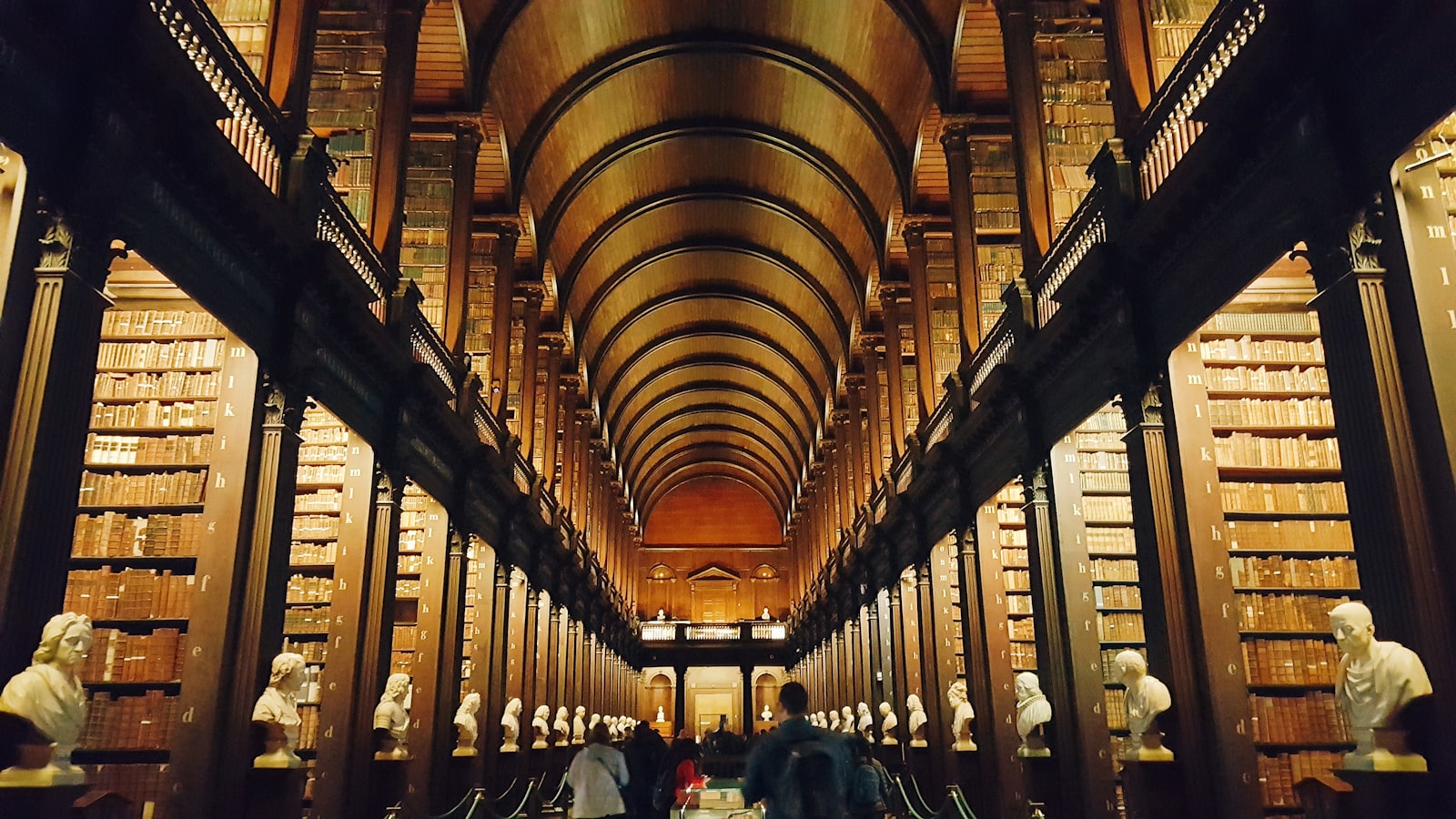
Photo by Naomi Hutchinson on Unsplash
Irish poetry extends far beyond the celebrated figures of William Butler Yeats and Seamus Heaney. Throughout the 20th and 21st centuries, Irish poets have created remarkable bodies of work that explore Irish experience, engage with literary tradition, and address universal human concerns. From Patrick Kavanagh’s meditation on rural life to contemporary poets exploring identity and belonging, Irish poetry offers readers access to distinctive sensibilities and voices. This article explores essential Irish poetry collections and contemporary voices that demonstrate the continuing vitality of Irish poetic tradition.
Understanding Irish poetry collections offers insight into how Irish poets have understood and represented their experience, how they’ve engaged with literary and national tradition, and how they’ve negotiated identity and belonging across generations. The collections discussed here represent important achievements and demonstrate the breadth and depth of Irish poetic tradition.
Patrick Kavanagh: The Poet of Rural Life
Patrick Kavanagh (1904-1967) was a poet of extraordinary importance in Irish literary tradition. Born in rural County Monaghan and working as a farmer before becoming a writer, Kavanagh brought intimate knowledge of rural Irish life to his poetry. His work demonstrates that the seemingly ordinary, the parochial, the local could be the subject of great poetry.
Kavanagh’s masterpiece, “The Great Hunger,” published in 1942, is an extended narrative poem depicting the life of an Irish farmer. Through the figure of Maguire, a middle-aged bachelor farmer living a life of deprivation and suppressed desire, Kavanagh explored the human cost of Irish rural poverty and the Church’s moral constraints on Irish sexual life. The poem is compassionate but unflinching in its depiction of the constraints and disappointments of rural Irish life.
“The Great Hunger” was controversial in Ireland, seen by some as demeaning to Irish rural culture and insulting to the Church. Yet the poem’s power lies precisely in its unflinching realism and its refusal to romanticize rural Irish life. Kavanagh refused to present rural Ireland as idyllic or spiritually pure; instead, he depicted the real struggles and deprivations of rural people.
Kavanagh’s later work moved away from the bleakness of “The Great Hunger” toward more affirmative vision. Poems celebrating Irish landscape, Irish identity, and simple human joys suggest a more hopeful understanding of Irish experience. Collections like “A Soul for Sale” and “Recent Poems” demonstrate Kavanagh’s continued development and his capacity for joy even while maintaining realistic awareness of human suffering.
Thomas MacDonagh and the Easter Rising
Thomas MacDonagh (1878-1916) represents a different tradition of Irish poetry—one more directly connected to political nationalism. MacDonagh was a poet, playwright, and Irish nationalist who participated in the 1916 Easter Rising and was executed following its failure.
MacDonagh’s poetry engaged directly with Irish nationalist concerns. His work celebrated Irish identity and mourned the deprivations of colonial rule. While his poetry never achieved the artistic heights of the greatest Irish poets, it remains important as an example of poetry in service of nationalist purposes and as evidence of the passion and commitment of Irish nationalists.
MacDonagh’s execution as a rebel fundamentally shaped his literary legacy. His relatively minor poems achieved greater significance because he was willing to die for Irish independence. Yet MacDonagh deserves recognition not just as a nationalist martyr but as a poet who took language and literary tradition seriously and who created works of genuine artistic merit alongside his political commitment.
Austin Clarke and Modern Irish Poetry
Austin Clarke (1896-1974) was a major figure in Irish poetry of the mid-20th century. Clarke’s work engaged deeply with Irish medieval literature, with Irish language and linguistic traditions, and with Ireland’s Catholic heritage. He created a body of work that attempted to bring Irish literary tradition into dialogue with modernism.
Clarke was influenced by modernist techniques and by the Irish Literary Renaissance, but he created distinctive work that was thoroughly Irish. His satire and wit made his work entertaining while addressing serious themes. His engagement with Irish medieval literature and with Irish mythology created connections between contemporary Irish poetry and ancient Irish tradition.
Clarke’s work sometimes addressed controversial themes, particularly regarding sexuality and Church authority. His satirical treatment of Catholic moral teaching and his frank discussion of sexual desire in an Irish Catholic context made his work controversial in Ireland. Yet Clarke’s refusal to simply accept Church authority or to treat religion as beyond criticism demonstrated the possibility of Irish poetry that was both culturally rooted and intellectually independent.
Brendan Behan: The Poet of Wit and Rebellion
Brendan Behan (1923-1964) is perhaps better known as a playwright than as a poet, yet his poetry is significant and interesting. Behan was an Irish Republican activist and a writer of genius, though his life was cut short by alcoholism and illness at age 41.
Behan’s poetry reflects his experience as an Irish nationalist, as someone imprisoned for his political activities, and as a writer living in a period of Irish independence struggle and civil conflict. His work combines wit, anger, and affection for Irish culture. His poems often employ humor and linguistic playfulness while addressing serious political and personal themes.
Behan represents a strand of Irish poetry that refused detachment from political struggle. Unlike poets like Heaney who maintained that poetry should remain autonomous from politics, Behan allowed his political commitments to shape his work. His poetry celebrates Irish nationalism, mourns Irish suffering, and asserts Irish cultural pride.
Contemporary Irish Poets: New Voices
Contemporary Irish poetry has produced numerous important poets working in diverse styles and addressing varied themes. These poets demonstrate the continuing vitality of Irish poetic tradition while also showing how Irish poetry has adapted to contemporary circumstances.
Eavan Boland (1944-2020) was one of the most important Irish poets of recent decades. Her work explored gender, Irish history, feminism, and the experience of being a woman writing in Irish tradition. Boland’s poetry demonstrated how Irish literary tradition could be claimed and transformed by women poets who insisted on their own voices and perspectives.
Boland’s work often engaged with Irish history and mythology, but from explicitly feminist perspective. She questioned traditional depictions of Irish womanhood and demanded recognition of women’s actual experiences and voices. Her poetry demonstrated that Irish literary tradition was large enough to accommodate women’s voices and perspectives, even if those voices challenged conventional understandings.
Michael Longley is an important contemporary Irish poet whose work, like Heaney’s, emerged from Northern Ireland. Longley’s poetry demonstrates remarkable technical mastery and addresses themes of landscape, nature, love, and human relationship. His work is often more personal and intimate than Heaney’s, focusing on domestic and emotional experience.
Longley’s engagement with classical literature, particularly Homer, parallels Heaney’s interest in literary tradition. His translations and adaptations of classical works bring ancient literature into conversation with contemporary Irish experience. His nature poetry demonstrates remarkable precision and attention to natural world.
Paul Muldoon represents another important contemporary Irish voice. Muldoon’s work is often experimental and formally innovative, employing complex structures and playing with language in ways that challenge readers. His poetry is frequently comic and playful while also addressing serious themes. Muldoon’s work demonstrates that Irish poetry could be thoroughly contemporary and experimental while remaining engaged with Irish tradition and experience.
Northern Irish Poetry: Voices from the Conflict
Northern Irish poets have produced important work emerging from the experience of the Troubles. These poets navigated the complex reality of living in a divided society, experiencing sectarian conflict, and maintaining literary commitments amid political violence.
Derek Mahon is an important Northern Irish poet whose work engages with history, political conflict, and literary tradition. His work often employs historical reference and literary allusion to explore contemporary political situations. Mahon’s poetry is intellectually sophisticated and formally accomplished.
Ciaran Carson represents another important voice from Northern Ireland. Carson’s work often employs narrative structure and explores urban experience, the violence of the Troubles, and the texture of everyday life in divided communities. His poetry is accessible and powerful, using narrative and dialogue to convey human experience.
Medbh McGuckian is an important female voice in Northern Irish poetry. Her work explores identity, gender, Irish history, and political conflict from a woman’s perspective. McGuckian’s poetry is often complex and challenging, employing experimental techniques and exploring the psychological dimensions of living in divided communities.
Translation and Adaptation of Irish Poetry
An important dimension of contemporary Irish poetry involves translation and adaptation of earlier Irish poetry, including poetry in the Irish language. Many contemporary Irish poets have engaged in translating Irish-language poets, making their work available to English-language readers.
This translation work is important because the Irish-language poetic tradition, while less well-known in English-language contexts, is rich and substantial. Poets like Nuala Ní Dhomhnaill, writing in Irish, have created important work that deserves wider audience. Translation makes this work accessible while also creating interesting dialogue between Irish-language and English-language poetic traditions.
Translation also allows contemporary poets to engage with literary tradition and to test their own artistic abilities through the challenge of translating others’ work. Many important Irish poets have produced translations that are not merely serviceable but are substantial artistic achievements in their own right.
Contemporary Women Poets
Women poets have become increasingly prominent in Irish poetry in recent decades. This development represents both recognition of women’s actual literary achievement and transformation in Irish literary culture that has created space for women’s voices and perspectives.
Mary Oliver, though born in the United States, has significant Irish heritage and her work often engages with Irish themes. Her poetry celebrates nature, spirituality, and human connection in language that is accessible and powerful. Oliver has achieved wide readership and her work demonstrates the appeal of contemporary poetry that grounds itself in natural observation and emotional authenticity.
Rita Ann Higgins is an Irish poet whose work addresses themes of poverty, gender, Irish working-class experience, and social injustice. Her poetry is often humorous and accessible while addressing serious themes. Higgins’s work demonstrates Irish poetry’s capacity to speak to social and political concerns while maintaining artistic integrity.
Themes in Contemporary Irish Poetry
Contemporary Irish poetry addresses diverse themes while maintaining connections to Irish tradition and Irish experience. Questions of identity, belonging, and what it means to be Irish in contemporary Europe are recurring concerns. Poets navigate between Irish tradition and contemporary global culture, asking how Irish identity can be maintained and expressed in an increasingly globalized world.
Immigration and emigration remain important themes, reflecting Ireland’s transformation from a nation of emigrants to a nation attracting immigrants. Poets explore the experiences of newcomers to Ireland and the changing character of Irish society and culture.
Gender and sexuality are increasingly important themes in contemporary Irish poetry, particularly following Ireland’s legalization of same-sex marriage in 2015 and the growing visibility of LGBTQ+ voices. Contemporary poets explore these themes with openness and sophistication.
Environmental concerns also appear in contemporary Irish poetry, as poets respond to climate change and environmental degradation. Irish landscape, long central to Irish poetry, becomes a site for exploring environmental crisis and human relationship to nature.
Publishing and Literary Culture
The landscape of Irish poetry publishing has changed significantly in recent decades. While major publishers continue to publish Irish poetry, smaller independent presses have also emerged, creating opportunities for experimental and innovative work. Digital platforms and online journals have democratized poetry publishing and reading.
Irish literary journals and magazines play important roles in supporting poetry. Publications like “The Irish Times,” “Poetry Ireland,” and various literary journals provide venues for publishing and discussing Irish poetry. These institutions help sustain literary culture and provide platforms for emerging poets.
Reading tours, poetry festivals, and literary events create opportunities for poets to connect with audiences. Ireland hosts numerous poetry festivals and literary events that celebrate Irish poetry and bring poets and readers together. These events create communities of readers and writers who sustain literary culture.
Conclusion: The Continuing Vitality of Irish Poetry
Irish poetry remains a vital and productive tradition. From contemporary poets exploring identity and belonging to those engaging with political and social concerns, Irish poetry demonstrates its capacity to address contemporary experience while maintaining connection to literary and cultural tradition.
For American readers and those interested in Irish culture, contemporary Irish poetry offers access to Irish sensibilities, Irish concerns, and Irish ways of understanding experience. Reading contemporary Irish poetry allows readers to understand how Irish writers are navigating contemporary globalized world while maintaining connection to Irish heritage and tradition.
The range and diversity of contemporary Irish poetry—the variety of forms, styles, approaches, and concerns—demonstrates that Irish poetry is not monolithic but rather a living tradition capable of encompassing many voices. This vitality and diversity suggest that Irish poetry will continue to produce important work and to influence world literature for generations to come.

Author: jonathan
Jonathan is the publisher of Irishtopia.net, Anglotopia.net, and Londontopia.net. He's passionate about travel and learning about other cultures. He's been to Ireland several times, and uses his travel expertise for Irishtopia!