
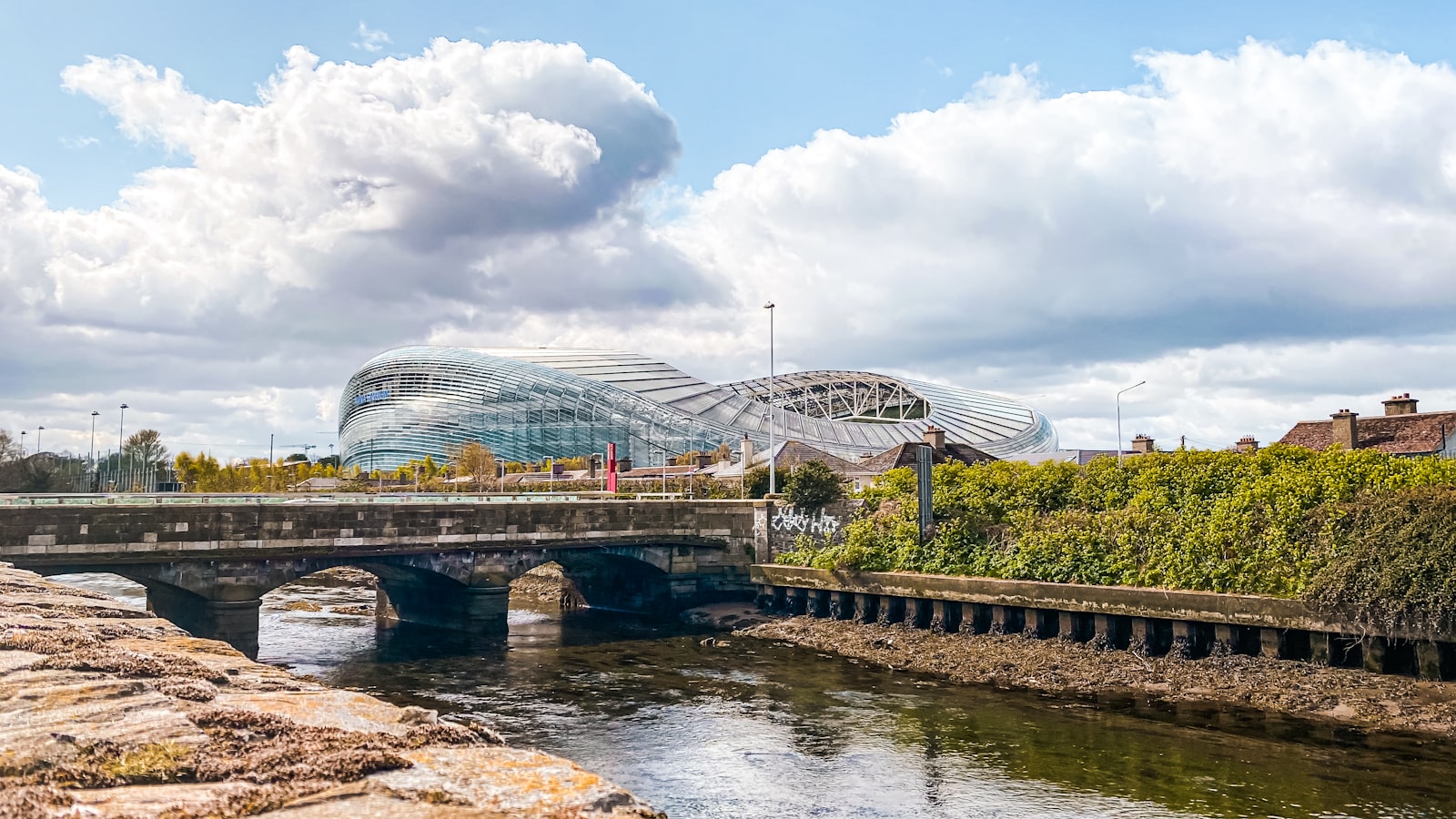
Photo by Diego Alves on Unsplash
Rugby occupies a unique place in Irish sporting culture. Unlike the GAA, which is distinctly and proudly Irish, rugby is part of a worldwide tradition with roots in England. Yet Ireland has adopted rugby as its own, developing world-class teams and players that have dominated international competition. The Irish national rugby team competes under the name Ireland, representing the entire island regardless of political divisions—one of the few sporting venues where the island competes as a unified entity. For American rugby enthusiasts, Irish rugby offers high-quality competition, compelling narratives, and insight into how a relatively small island nation has become a genuine rugby superpower.
The History of Irish Rugby: From Colonial Import to National Passion
Rugby arrived in Ireland during the 19th century, brought by British colonists and adopted by the Irish Protestant upper and middle classes. The sport spread rapidly among schools and universities, becoming embedded in Irish culture despite its British origins.
The Irish Rugby Football Union was established in 1875, making it one of the oldest rugby unions in the world (predating many other nations’ rugby organizations). The first official international match played by Ireland was in 1875 against England, a 0-0 draw at Leinster Cricket Club.
Interestingly, rugby’s early adoption in Ireland was concentrated among the Protestant community, particularly in the northeast. This created a religious and class dimension to Irish rugby that persisted for decades. Historically, rugby was viewed as an upper-class Protestant sport, while the GAA sports (hurling and Gaelic football) were more accessible to the broader Irish population, particularly Catholics.
This dynamic changed gradually, particularly after Irish independence. Over time, rugby became increasingly integrated across Irish society and religious lines. By the mid-20th century, rugby had become a genuinely national sport, embraced across the island and across religious and class boundaries.
The Structure of Irish Rugby
Rugby in Ireland operates through a hierarchical structure that differs from the GAA model. The sport is organized by the Irish Rugby Football Union, which oversees the national team and domestic competition.
The highest level of domestic rugby is the United Rugby Championship (formerly the Pro14 and earlier the Celtic League), a professional competition featuring teams from Ireland, Wales, Scotland, South Africa, and Italy. Four Irish teams compete: Leinster, Munster, Ulster, and Connacht.
Below this is the All-Ireland League, a semi-professional competition featuring clubs from across Ireland. Teams progress up through regional and provincial competition, with the top-performing clubs ultimately competing in the All-Ireland League.
The national team, simply called Ireland, competes in the Six Nations Championship (an annual competition with England, France, Italy, Scotland, and Wales), the Rugby World Cup (held every four years), and other international competitions. The Irish team also competes in periodic tours against teams from the Southern Hemisphere (Australia, New Zealand, South Africa).
Irish Rugby’s Golden Age
Irish rugby experienced its golden age in the 1970s, when the national team reached extraordinary heights. The period from 1970-1984 saw Ireland win the Five Nations Championship (the precursor to the Six Nations, before Italy’s inclusion) three times and the Grand Slam (winning all matches) twice.
During this era, Ireland boasted some of rugby’s finest players. Willie John McBride, a second row (lock) forward, was perhaps the greatest Irish rugby player of that generation. McBride was a towering physical presence, a leader, and a player of exceptional skill. He captained Ireland and the British and Irish Lions (a combined team from the UK, Ireland, and other nations).
The 1978 Grand Slam team, captained by McBride, is often considered one of the greatest Irish sporting achievements. The team played with intensity, skill, and tactical sophistication that was ahead of its time.
However, after this period, Irish rugby experienced a relative decline. While the team remained competitive, it failed to reach the same heights achieved in the 1970s. Throughout the 1980s and into the 1990s, Ireland was consistently outclassed by the Southern Hemisphere rugby powers (New Zealand and Australia) and by improving European teams.
The Professional Era and Consistent Excellence
When rugby became professional in 1995, a transformation began. Professional structures allowed for better player development, coaching, and team organization. Irish rugby adapted to professionalism and gradually improved.
The 2000s saw Irish rugby reach new heights of consistency. Brian O’Driscoll emerged as one of rugby’s greatest centers, a player of extraordinary skill, intelligence, and leadership. O’Driscoll captained Ireland through a period of sustained excellence, winning three Six Nations championships as captain.
The appointment of Declan Kidney as coach in 2008 proved transformative. Under Kidney’s guidance, Ireland won the Six Nations in 2009 and reached the Rugby World Cup quarterfinals in 2011 (an improvement from previous tournaments).
However, the most significant transformation came with the appointment of Joe Schmidt as coach in 2013. Schmidt, a New Zealand-born coach who had previously coached Leinster, brought a new level of professionalism and tactical sophistication to Irish rugby.
The Joe Schmidt Era and Unprecedented Success
From 2013-2017, Joe Schmidt transformed Irish rugby into the world’s second-best team (after New Zealand). His tenure was characterized by systematic improvement, tactical innovation, and sustained competitive success.
Schmidt’s Ireland won the Six Nations three times (2014, 2015, 2018) and the Grand Slam twice (2014, 2015, 2018). More impressively, Ireland achieved unprecedented consistency, maintaining a high level of performance across multiple seasons.
Schmidt’s coaching emphasized phase play (structured attacking movements), defensive organization, and individual skill development. His teams were characterized by technical excellence and tactical sophistication. Ireland became known for their structured, organized approach—quite different from the more physical, direct approach associated with some traditional rugby teams.
Schmidt’s greatest achievement might be Ireland’s performance in the 2018 Rugby World Cup in Japan, where Ireland advanced to the quarterfinals before losing to New Zealand in one of the tournament’s memorable matches. The team’s performance demonstrated that Ireland had become a genuine world rugby power.
Contemporary Irish Rugby: The Andy Farrell Era
Following Schmidt’s departure, Andy Farrell, a former England coach and professional rugby player, took over as Ireland coach. Farrell has continued Ireland’s competitive success while implementing some tactical adjustments.
The most significant recent achievement came in 2023, when Ireland won the Six Nations and subsequently achieved a historic feat: winning a test match against New Zealand in New Zealand. This victory against the world’s most traditional rugby power on their home soil was a watershed moment for Irish rugby.
The 2023 victory over New Zealand was particularly significant because it was the first time Ireland had won in New Zealand since 1976. The match demonstrated that Irish rugby had achieved parity with the Southern Hemisphere’s traditional rugby powers.
The Provincial System and Leinster’s Dominance
While the national team captures popular attention, much of Irish rugby’s quality emerges from the provincial teams, particularly Leinster.
Leinster is Ireland’s most successful rugby team, having won a record number of domestic and international titles. The team is based in Dublin and draws players from the greater Dublin area and surrounding regions. Leo Cullen, formerly a player and now Leinster’s coach, has established Leinster as a consistent European and domestic powerhouse.
Johnny Sexton, Ireland’s fly-half (one of rugby’s most important positions) and captain, emerged from Leinster and has been central to Ireland’s recent success. Sexton is Ireland’s greatest contemporary player—a world-class decision-maker, kicker, and leader.
Munster is historically the province most deeply connected to rugby culture. Based in Limerick and Cork, Munster has a passionate fan base and a proud history. The province has produced numerous legendary players and remains a source of national pride.
Ulster and Connacht are the other two provinces. Ulster, based in Belfast, has a strong rugby tradition and has produced notable players. Connacht, based in Galway, is the least resourced province but has shown competitive moments.
Key Players and Personalities
Modern Irish rugby has been defined by several exceptional players:
Brian O’Driscoll is widely considered Ireland’s greatest player and one of rugby’s all-time greats. A center with exceptional athleticism, intelligence, and leadership, O’Driscoll captained Ireland for many years and achieved unprecedented success. His ability to break through defensive lines and create scoring opportunities was extraordinary.
Johnny Sexton has been the face of contemporary Irish rugby. A fly-half of exceptional skill, Sexton makes the tactical decisions that control the game. His kicking ability, decision-making, and leadership have been crucial to Ireland’s success.
Paul O’Connell was a lock (second row forward) of immense importance to Irish rugby success. O’Connell was a physical powerhouse, a lineout specialist, and a leader who helped define Irish rugby in the 2000s and 2010s.
Ronan O’Gara was another fly-half legend, famous for his kicking ability and competitive drive. O’Gara was the backup to another fly-half but emerged as a leader and important player.
Rory Best was Ireland’s hooker and captain, a player of exceptional durability and leadership who represented Irish rugby values.
Peter O’Mahony and CJ Stander are contemporary backrow forwards representing modern Irish rugby excellence.
The Six Nations: Annual Drama and National Passion
The Six Nations Championship is rugby’s most prestigious annual competition. Held each February and March, it features matches between England, France, Ireland, Italy, Scotland, and Wales.
For Irish rugby fans, the Six Nations is the highlight of the sporting calendar. International matches create tremendous national interest, with matches broadcast on national television and attended by enthusiastic crowds. The atmosphere at Lansdowne Road (Ireland’s national rugby stadium in Dublin) during Six Nations matches is electric.
Ireland’s rivalry with England is particularly intense, rooted in centuries of political history. Matches between England and Ireland at Lansdowne Road are fierce, competitive affairs with significant national pride at stake.
France matches are also highly competitive, as France has consistently produced world-class rugby teams. Wales matches have historical significance rooted in rugby tradition and close geographical proximity.
Winning the Six Nations is a major achievement, demonstrating consistent superiority across all competition levels. Winning the Grand Slam (defeating all opponents) is extraordinary and happens infrequently.
The Rugby World Cup and International Competition
The Rugby World Cup, held every four years, is rugby’s world championship. Ireland has historically been competitive but hasn’t won the tournament (the Southern Hemisphere teams, particularly New Zealand, have dominated).
Ireland’s best Rugby World Cup performance came in 2019 (in Japan), when the team reached the semi-finals before losing to New Zealand. This performance demonstrated that Irish rugby had achieved genuine world-class status.
The Lions tours (where the best players from England, Scotland, Wales, and Ireland form a combined team to tour a Southern Hemisphere nation) provide additional international competition. Irish players regularly comprise significant portions of Lions teams, reflecting Ireland’s competitive strength.
Challenges and Future Prospects
Despite unprecedented recent success, Irish rugby faces challenges. The sport is entirely professional, creating significant financial pressure on players to perform at the highest level. The salary levels required to attract and retain world-class talent are substantial.
The departure of Joe Schmidt created some uncertainty about coaching direction and tactical approach. While Andy Farrell has proven effective, the transition required adjustment.
Additionally, the professional era creates challenges for the development of young players. Competition for places is fierce, and less successful teams struggle to attract talented young players who increasingly seek opportunities at wealthier, more successful clubs or provinces.
The success of Southern Hemisphere teams, particularly New Zealand, remains a challenge. While Ireland has improved dramatically, closing the final gap to consistent parity with New Zealand requires continued investment and development.
Rugby Culture and the Irish Fan
Irish rugby fans are notably passionate. International matches create tremendous national interest, and rugby clubs develop strong local communities similar to GAA clubs.
The difference between rugby and GAA culture reflects broader differences. Rugby, while increasingly accessible, maintains some connection to its middle and upper-class roots. Rugby clubs often have bar facilities and social aspects beyond just athletics.
The rugby community intersects with Ireland’s Anglo-Irish heritage and international connections. Rugby players and fans maintain connections to British and international rugby cultures in ways that GAA participants don’t.
Despite these differences, rugby has become truly integrated into Irish national identity. The national team represents Ireland united, and rugby success is a source of genuine national pride.
Women’s Rugby in Ireland
Women’s rugby has experienced dramatic growth in recent years. The Ireland women’s rugby team has become competitive internationally and has attracted increased media attention and resources.
The women’s team competes in the Six Nations (a women’s version) and the Rugby World Cup. Participation rates among young women have surged, and women’s rugby is now a genuinely integrated part of the Irish rugby culture.
The growth of women’s rugby reflects broader trends in Irish sports toward greater gender equality and representation.
Conclusion: Irish Rugby’s Place in Global Sport
Irish rugby represents something significant in global sporting culture. A relatively small island nation with a population of approximately six million has developed and maintained a world-class rugby team that competes with the world’s rugby superpowers.
For American sports enthusiasts, Irish rugby offers high-quality competition, compelling team narratives, and insight into a different sporting culture. The sport combines physical intensity with technical skill, tradition with modern professionalism, and national pride with respect for international competition.
Understanding Irish rugby means understanding how a nation can embrace a sport imported from another culture, develop it as their own, and achieve genuine excellence. It means appreciating how sport creates national identity and unites communities across historical divisions. Most fundamentally, it means recognizing that rugby excellence doesn’t require the massive commercial infrastructure or huge populations that some assume necessary. With proper coaching, structures, and commitment, a nation can develop world-class rugby. That’s the story of Irish rugby—a story of transformation from an imported sport to a genuine source of national pride and international competitive success.

Author: jonathan
Jonathan is the publisher of Irishtopia.net, Anglotopia.net, and Londontopia.net. He's passionate about travel and learning about other cultures. He's been to Ireland several times, and uses his travel expertise for Irishtopia!