
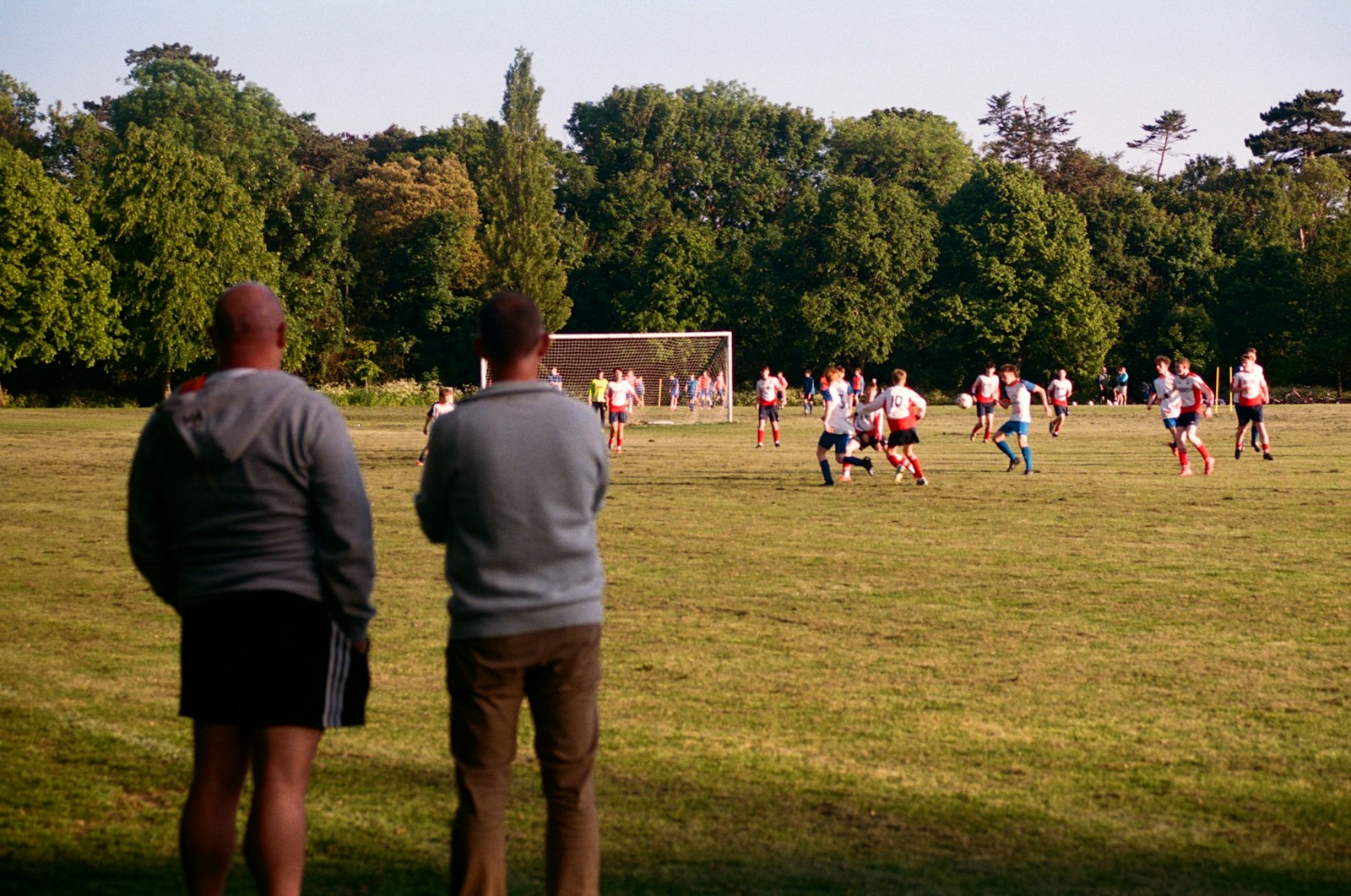
Photo by Zahotoo _ on Unsplash
Soccer—or football, as it’s known outside North America—arrived in Ireland during the 19th century and was initially viewed as a sport for the working class and the less culturally nationalist. The GAA explicitly opposed football’s growth, viewing it as an English import incompatible with Irish cultural identity. Yet despite this resistance, soccer established roots in Ireland, particularly in Dublin and urban areas. Today, soccer is one of Ireland’s most popular sports, with the national team representing a source of intense national pride. The story of Irish soccer is one of gradual growth, periodic breakthrough achievements, and the complicated relationship between sport and national identity in a formerly colonized nation.
For American sports fans, Irish soccer offers a different cultural context than typical English soccer coverage. The Irish national team has never won a World Cup or European Championship, yet their passionate fan base, surprising playoff victories, and compelling narratives make Irish soccer worth following. The 2016 European Championship in France showcased Irish soccer at its finest—a team of journeymen players, managed by an unconventional coach, achieving surprising success against continental Europe’s powerhouses.
The Early History of Irish Soccer
Soccer was played in Ireland as early as the 1870s, with the Irish Football Association (IFA) established in Belfast in 1880. The sport spread initially among working-class communities and was viewed with suspicion by nationalist and religious leaders who saw it as a British import incompatible with Irish cultural identity.
The GAA’s explicit prohibition against Gaelic athletes playing “foreign games” (including soccer, rugby, and cricket) reflected this tension. Until the 1990s, a GAA member could face suspension for playing soccer. This prohibition reflected a cultural conflict: the GAA saw itself as the keeper of Irish cultural identity, while soccer represented British colonial culture.
Despite this resistance, soccer gradually spread throughout Ireland, particularly in urban areas like Dublin. Irish clubs competed in the English Football League, and Irish players emigrated to play professional soccer in England. The development of an independent Irish state created complications—the Irish Free State (later the Republic of Ireland) and Northern Ireland both had separate soccer organizations.
For most of the 20th century, Irish soccer was a minor sport in terms of national attention. The vast majority of Irish soccer fans followed English teams (particularly Liverpool, Manchester United, and Arsenal). Domestic Irish soccer lacked the infrastructure, investment, and prestige of soccer in continental Europe.
The National Team: Decades of Mediocrity and Sudden Success
The Irish national team’s early history was undistinguished. From the 1930s through the 1980s, Ireland consistently underperformed at World Cups and European Championships. The team qualified for major tournaments infrequently and performed poorly when they did.
The breakthrough came in 1990, when Jack Charlton, an English former footballer and manager, took over as Ireland’s coach. Charlton implemented a direct, physically intense style of soccer that suited the Irish team’s strengths. The 1990 World Cup in Italy saw Ireland advance to the quarterfinals—their first World Cup knockout appearance.
This achievement was transformative. The Irish national team suddenly mattered, and fans who had previously ignored domestic soccer began following the national team. The 1990 World Cup sparked a national enthusiasm that propelled soccer toward greater prominence in Irish culture.
The success continued. Ireland qualified for the 1994 World Cup in the United States and again reached the quarterfinals. While Charlton’s tactical approach was often criticized as unsophisticated (opponents derided it as “kick and rush” football), it was effective.
The Irish team’s success in the 1990s created a paradox: a nation with limited domestic soccer quality was competing with continental Europe’s most developed soccer cultures. This disparity reflected the reality that Irish success depended on individual players who developed their talents in English and European leagues, then returned to represent Ireland.
The Saipan Incident and Roy Keane’s Legacy
The 2002 World Cup in South Korea saw Irish soccer experience an unprecedented crisis. Roy Keane, Ireland’s captain and arguably their best player, had a public dispute with manager Mick McCarthy over training conditions and player preparation. Keane and McCarthy had a heated argument, Keane left the team, and McCarthy sent him home.
The incident divided Irish public opinion. Some saw Keane as justified in his criticism of inadequate preparation; others viewed him as insubordinate and damaging to the team. The controversy overshadowed the tournament, though Ireland made a respectable World Cup run.
The Saipan incident (named for the location where it occurred) had lasting consequences. Keane never played for Ireland again, despite his club dominance at Manchester United. The incident revealed tensions between individual player expectations and the resources available to the Irish national team.
The Ray Houghton Era and Consistent Mediocrity
After Charlton’s departure and subsequent managers, Irish soccer returned to relative mediocrity. The team qualified for major tournaments sporadically and performed inconsistently when they did.
The early 2000s saw Ireland fail to qualify for the 2006 and 2010 World Cups. The 2010 World Cup did produce one memorable moment—Thierry Henry’s handball that went undetected by the referee, allowing France to advance instead of Ireland. The incident became infamous in Irish sports history and symbolized Irish soccer’s bad luck.
Manager Giovanni Trapattoni led Ireland to qualification for the 2012 European Championship, but the team performed poorly. The 2014 World Cup qualifiers saw Ireland win a playoff against Estonia to qualify for Brazil, but the team performed disappointingly, advancing only one match before elimination.
This period reflected the reality of Irish soccer: the team was competitive enough to occasionally qualify for tournaments but lacked the consistent quality to perform well. The gap between Irish soccer and continental Europe remained significant.
The Martin O’Neill Appointment and 2016 Euro Success
The 2016 European Championship in France represented a watershed moment for Irish soccer. Martin O’Neill, a former player with success as a manager, took charge of the national team. O’Neill implemented a more organized, defensive approach than some predecessors, but the key to his success was instilling belief and confidence.
The Irish team qualified for Euro 2016 by winning a playoff against Bosnia and Herzegovina. In France, against most expectations, Ireland performed brilliantly. They were drawn in a group with Belgium, Italy, and Sweden.
The team’s opening match against Sweden ended in a 1-1 draw. Then came one of the most memorable results in Irish sports history: a 1-0 victory over Italy, achieved through a stunning Robbie Brady header. The Italian match demonstrated that Irish soccer had reached a competitive level against continental Europe’s elite.
Finally, a 0-0 draw with Belgium secured Ireland’s advancement to the knockout stages. Against all expectations, Ireland advanced as one of the group’s top teams.
In the Round of 16, Ireland faced France, the host nation and tournament favorites. In one of sports’ great upsets, Ireland came close to victory before losing in extra time 2-1. The match was heartbreaking but also affirming—Ireland had proven competitive against world-class opposition.
The 2016 Euro run transformed Irish soccer. The team captured the nation’s imagination in a way rarely experienced in Irish sports. Despite not winning, the tournament success created pride and belief that Irish soccer could compete at the highest levels.
Post-2016: The Continued Evolution
Following Euro 2016’s success, there was optimism that Irish soccer had reached a new level. However, the 2018 World Cup qualifiers saw Ireland fail to qualify, losing to Denmark on goal difference. While disappointing, this reflected the reality that tournament success is difficult to replicate.
Martin O’Neill’s tenure continued, but subsequent tournament performances were inconsistent. The 2019 Euro qualifiers saw Ireland reach the playoffs but ultimately fall short, losing to Slovakia.
In 2020, Stephen Kenny replaced O’Neill as manager, introducing a more possession-based, attacking style of soccer. Kenny’s tactical approach represented a departure from O’Neill’s defensive, pragmatic style.
Kenny’s early results were disappointing, with Ireland struggling in World Cup qualifiers. However, his long-term project showed signs of progress. The team’s playing style became more attractive, focusing on possession and creative play rather than direct, defensive approaches.
Contemporary Irish Soccer and the Path Forward
Modern Irish soccer faces a fundamental challenge: the nation’s best players develop internationally rather than domestically. Seamus Coleman, Shane Duffy, Callum Robinson, and other key players developed their talents in the English Premier League rather than in Irish domestic leagues.
This reality reflects soccer’s global structure. The Premier League and European elite leagues pay substantially higher salaries and offer better developmental opportunities than Irish soccer. As a result, Irish soccer development depends on players earning their educations abroad and returning to represent their country.
The domestic Irish soccer league (now called the League of Ireland) struggles with limited investment, small attendances, and the dominance of English soccer. Most Irish soccer fans follow Premier League teams, which limits the development of domestic soccer culture.
Despite these challenges, Irish soccer maintains passionate support. International matches, particularly against traditional rivals England and Germany, generate tremendous national interest. The Irish national team still represents a source of national pride despite inconsistent results.
Notable Irish Players and Their Impact
Irish soccer has produced several players of genuine quality who’ve performed at the highest levels:
Robbie Keane is Ireland’s all-time leading goalscorer and perhaps their greatest player. Keane played for numerous English Premier League clubs and international teams, establishing himself as one of Europe’s most prolific strikers. His commitment to the Irish national team was remarkable—he continued playing for Ireland until his late thirties.
Brendan Rodgers, while primarily known as a manager (managing Liverpool, Celtic, and other clubs), was an important player in Irish soccer’s development. His managerial success at elite clubs has provided a template for Irish soccer ambition.
Seamus Coleman is contemporary Irish soccer’s best player—a defender with Premier League experience who captains the Irish national team. Coleman has been instrumental in maintaining Irish competitiveness against top opposition.
Shane Duffy is a central defender who has played at the Premier League level and represents modern Irish defensive quality.
Conor McGregor, while primarily known for combat sports, maintains a passion for Irish soccer and has been a public figure connecting sports cultures.
The Cultural Role of Soccer in Modern Ireland
Soccer’s role in Irish culture has evolved significantly. What was once viewed as an English import is now genuinely Irish. The national team represents a source of pride, and Irish fans maintain intense support despite inconsistent tournament results.
The relationship between soccer and the GAA has also evolved. While the GAA historically opposed soccer, the sports now coexist. Some communities support both GAA teams and soccer clubs. The tension between sports remains in some areas but is far less contentious than historically.
Soccer’s growth reflects Ireland’s broader cultural evolution. Increasing contact with international culture, European integration, and globalization has made foreign sports increasingly acceptable within Irish culture.
Women’s Soccer: The Emergence of a Powerhouse
While men’s Irish soccer has been historically competitive but often unsuccessful, women’s soccer has experienced remarkable recent growth. The Irish women’s national team, managed by Vera Pauw, qualified for the 2023 World Cup and the 2024 European Championship.
This success represents a watershed moment for women’s soccer in Ireland. The team’s qualification for the World Cup captured national imagination and demonstrated that Irish women’s soccer could compete at the highest levels.
Players like Katie McCabe, Megan Campbell, and others have become national sporting figures. The growth of women’s soccer reflects broader trends in Irish sports toward greater investment in women’s athletics.
Challenges and Future Prospects
Irish soccer faces ongoing challenges. The domestic league struggles with limited investment and viewership. The reliance on players developed elsewhere means the talent pipeline is vulnerable to injuries or career disappointments to key players.
The gap between Irish soccer and continental European powers remains significant. While Euro 2016 showed that Ireland could occasionally compete at high levels, sustained success requires consistent development of elite players and sophisticated coaching structures.
Climate change, economic pressures, and facility limitations also challenge Irish soccer development. However, the recent success of women’s soccer and the continued passion of fans suggest that Irish soccer has a foundation for future growth.
Conclusion: Irish Soccer’s Unique Story
Irish soccer represents a distinctive story in global sports. A nation without a deep soccer tradition developed a competitive national team through unconventional methods. Irish soccer success has often depended on individual brilliance, passionate supporters, and occasional managerial innovation rather than systematic development programs.
The 2016 Euro Championship run epitomized this approach—a team of journeymen players, managed by an Irish manager, nearly defeating the host nation using a compact defensive system and individual quality. It wasn’t beautiful soccer by continental standards, but it was effective and emotionally compelling.
For American sports fans seeking to understand Irish culture, soccer offers insight into how global sports culture integrates with national identity. It demonstrates how a sport once viewed as foreign and threatening became genuinely Irish. It shows how passion and belief can occasionally overcome limited resources.
Irish soccer may never win a World Cup or European Championship. But the sport has achieved something significant: it represents modern Ireland competing at the highest levels while maintaining national identity and community connection. In a world increasingly dominated by global sports franchises and commercialization, Irish soccer—with all its struggles and limitations—represents something distinctly Irish and genuinely competitive. That’s a story worth following.

Author: jonathan
Jonathan is the publisher of Irishtopia.net, Anglotopia.net, and Londontopia.net. He's passionate about travel and learning about other cultures. He's been to Ireland several times, and uses his travel expertise for Irishtopia!