
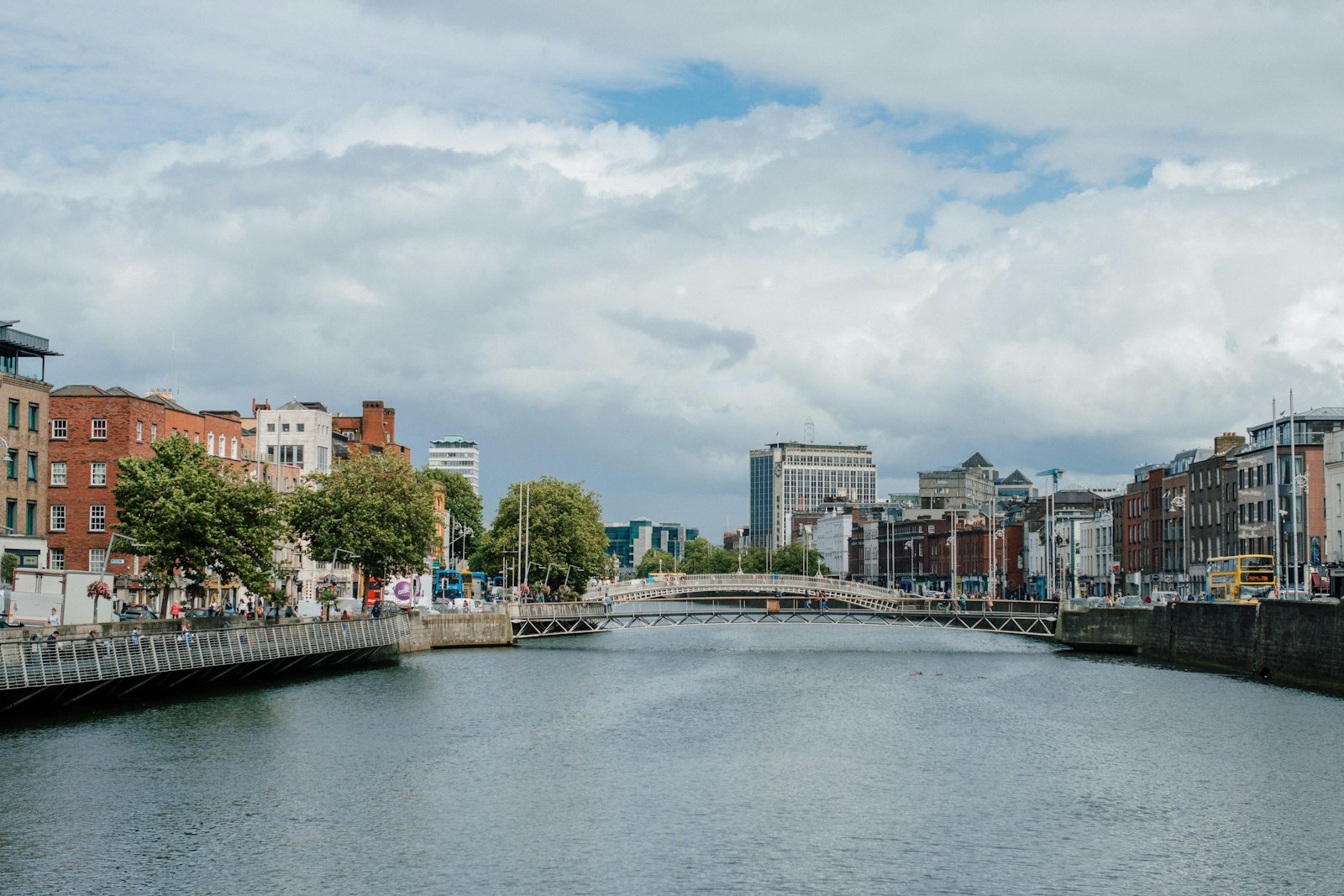
Photo by Gadiel Lazcano on Unsplash
In 1987, Apple Computer opened its first European manufacturing facility in Cork, Ireland. The facility was modest, producing circuit boards for export to the rest of Europe. Few observers recognized it as the beginning of Ireland’s transformation into a global technology powerhouse. Thirty-five years later, Ireland hosts the European headquarters for virtually every major technology company on Earth—Google, Meta, Amazon, Microsoft, Apple, and hundreds of others—making Dublin and Cork technology cities rivaling San Francisco, Seattle, and Bangalore.
This transformation from agricultural nation to technology hub happened with startling speed. Ireland’s tech sector now generates over €190 billion in annual economic output, representing nearly 40 percent of the entire nation’s GDP. The sector employs over 200,000 people directly and hundreds of thousands more indirectly, making technology the engine driving Irish prosperity. Yet this rapid ascent deserves closer examination: How did a small island nation become indispensable to global tech? What forces enabled this transformation? And what challenges threaten Ireland’s position as tech capital of the non-American world?
The Perfect Storm: Timing, Policy, and Geography
Ireland’s tech boom emerged from the convergence of several factors in the 1980s and 1990s. First, Ireland deliberately positioned itself as a haven for foreign investment through corporate tax policy. While most developed nations imposed corporate tax rates of 30-40 percent, Ireland enacted a 12.5 percent rate for foreign manufacturing companies, later expanded to nearly all corporate activity. This rate was revolutionary—a massive incentive for companies to locate operations in Ireland rather than Germany, France, or Belgium.
Second, Ireland joined the European Union in 1973, gaining access to the entire EU market. Geographic location between North America and Continental Europe gave Ireland strategic importance as a base for companies serving both markets. A technology company could house European headquarters in Dublin, shipping products throughout the EU and serving North American clients through transatlantic connections.
Third, Irish education policy emphasized technical training and English-language fluency. The Irish government invested in universities and technical colleges, producing a growing population of engineers, computer scientists, and technical professionals. Crucially, these professionals were native English speakers, eliminating language barriers that complicated operations in other European nations.
Fourth, Ireland benefited enormously from American cultural affinity. American corporations found Ireland culturally familiar—English-speaking, technologically sophisticated, with a populace eager to embrace American business practices and innovation culture. Dublin’s “Temple Bar” cultural district and Irish pub culture appealed to American business travelers and executives. Within technology circles, Irish people were perceived as both culturally compatible with Americans and sophisticated enough to handle advanced technical work.
The 1990s: Establishing the Beachhead
The 1990s represented Ireland’s decisive decade in establishing technological dominance. Intel, recognizing the tax advantages and labor availability, established major manufacturing facilities in Kildare, producing computer chips at scale. This wasn’t merely assembly work; Intel’s Irish operations involved advanced semiconductor manufacturing, the most technically demanding segment of chip production.
Microsoft arrived in Dublin in 1985 with a small office, but expanded dramatically through the 1990s, establishing a regional center for European operations. Google arrived in 1998, establishing what became continental Europe’s largest operations outside the company’s California headquarters. Facebook (now Meta) followed, recognizing Dublin’s potential as a European base.
The critical factor wasn’t merely these individual company decisions—it was the aggregate effect. Once Apple, Intel, Microsoft, and Google had established substantial operations in Dublin, other companies naturally followed. Tech workers could find employment with global leaders without relocating to Silicon Valley. Universities could attract computer science graduates with the prospect of top-tier employers in their home country. Supplier companies and service providers concentrated in Dublin to support the growing ecosystem.
By 1999, Dublin had begun its transformation into a technology city. The Irish government, recognizing the sector’s importance, initiated the “Intelligent Island” initiative, investing in broadband infrastructure, technology education, and tax incentives. While skeptics questioned whether Ireland could compete with California or Washington State, the foundation had been laid.
The 21st Century: Explosive Growth and Dominance
The 2000s brought explosive growth. Google’s Irish operations expanded from hundreds to thousands of employees, processing European search traffic and managing European product development. Meta established continental Europe’s largest office outside Dublin, eventually employing over 5,000 people. Amazon, Apple, and Microsoft followed with substantial Dublin centers.
The .com crash of 2000-2001 temporarily slowed the sector but didn’t reverse its trajectory. Indeed, companies that survived the crash—Google, Amazon, Microsoft—became even more dominant in their fields and expanded their Irish operations significantly during the recovery.
By 2010, Ireland’s tech sector had become genuinely enormous. The four largest private employers in Ireland were all technology companies. Dublin’s skyline changed, with corporate campuses and office parks transforming the cityscape. The Irish government celebrated tech as the future, allocating resources to expand education and infrastructure to support continued growth.
The 2010s witnessed the sector’s transition from primarily headquarters and support operations to genuine innovation and development centers. Google’s Dublin office became a primary center for Android development. Meta’s Dublin facility became the primary center for European product development. These weren’t merely back-office operations or customer service centers—they were centers of actual technological innovation and product development.
International companies didn’t merely transplant operations to Dublin; they genuinely invested in research and development, creating new technologies and products. This represented a qualitative shift—Ireland wasn’t just processing global commerce from Ireland; it was generating innovation.
The Taxation Question: Benefits and Controversies
Ireland’s 12.5 percent corporate tax rate has been enormously valuable in attracting investment, but it’s also generated substantial international controversy. Essentially, Ireland offers multinational corporations a rate roughly one-third of rates in most other developed nations, creating a powerful incentive to establish operations there.
The tax advantage becomes even more powerful when combined with intellectual property strategies. A technology company can assign valuable patents and intellectual property to its Irish subsidiary, then pay Irish taxes on profits generated by that intellectual property rather than paying higher taxes in the country where products are developed or customers are located.
For example, if a company develops technology in California but earns profits from its worldwide operations, it might assign patent rights to an Irish subsidiary and license the patents internally at specific rates, ensuring most profit flows to Ireland rather than California. While technically legal under tax law, this strategy essentially redirects profits from high-tax jurisdictions to low-tax Ireland—a practice critics call “tax dodging.”
In 2016, Apple paid Irish tax of only €50 million on worldwide profits estimated at €230 billion—an effective rate of roughly 0.22 percent. The Irish government awarded Apple this favorable treatment through a private tax agreement, which was later deemed illegal by EU authorities. Similar arrangements existed for Google, Meta, and other tech giants.
International pressure has mounted to constrain these tax strategies. The OECD developed a “base erosion and profit shifting” (BEPS) initiative to reduce profit-shifting opportunities. More recently, over 130 countries agreed to a 15 percent global minimum corporate tax rate, scheduled to take effect by 2024. This agreement significantly reduces the value of Ireland’s 12.5 percent rate—the new floor eliminates the incentive to shift profits to Ireland if the origin country will impose the missing 2.5 percent as a top-up tax.
The Irish government is navigating this transition cautiously. The minimum tax rate doesn’t eliminate Ireland’s advantage—12.5 percent is still lower than most countries’ base rates—but it reduces the dramatic incentive that motivated decades of investment. Whether Ireland can maintain its position as a tech hub when tax advantages substantially diminish remains one of the sector’s greatest unknowns.
The Irish Tech Ecosystem: More Than Just Multinationals
While multinational technology companies receive the most attention, Ireland has also developed a robust startup ecosystem. Dublin and Cork host hundreds of technology startups focused on software, fintech, biotechnology, and artificial intelligence. Companies like Intercom (customer service software), Stripe (online payments), and Trustpilot (review platform) were founded by Irish entrepreneurs or founders operating from Ireland and achieved billion-dollar valuations.
This startup ecosystem was enabled by the presence of major tech companies. Ambitious engineers could gain experience working for Google or Meta, then launch their own ventures with deep technical knowledge and understanding of market needs. Venture capital money concentrated in Dublin, knowing that the city had exceptional technical talent and entrepreneur interest.
Government programs supported startup growth, including programs like Startup Ireland and various tax incentives for early-stage companies. Universities expanded entrepreneurship programs, incubators, and technology transfer offices, attempting to commercialize research.
Stripe exemplifies the Irish tech success story. Founded in 2010 by Irish brothers Patrick and John Collison, Stripe became the world’s leading infrastructure for online payments. The company is based in Dublin, employs over 4,000 people globally with significant Irish operations, and maintains its primary technology development in Ireland. Stripe’s valuation reached $95 billion, making it one of the world’s most valuable privately-held companies, and it demonstrates that Ireland can generate genuine entrepreneurial success rather than merely hosting global companies.
Education and Talent Development
Ireland’s success in attracting technology investment depends fundamentally on consistent talent supply. The Irish government recognized this and invested substantially in education. University programs in computer science, engineering, mathematics, and related fields expanded dramatically. Trinity College Dublin, University College Dublin, Cork Institute of Technology, and others developed world-class programs attracting international students.
Importantly, Ireland recruited international talent as well. While the domestic supply of Irish engineers grew, immigration supplemented domestic talent with experienced professionals from across Europe, North America, and beyond. Immigration policy was deliberately crafted to attract technology professionals, with visa programs favoring skilled workers in high-demand fields.
The sector created a virtuous cycle: high-paying technology jobs attracted talented people globally, these talented people generated innovation and economic growth, which attracted more companies, which created more jobs and opportunities, which attracted more talent. Ireland’s population grew substantially due to immigration, with foreigners comprising nearly 20 percent of the Irish population by 2020, concentrated particularly in the technology sector.
However, rapid growth created capacity challenges. Ireland’s universities could not produce computer science graduates at rates matching employer demand. The shortage pushed salaries higher, reflecting genuine scarcity of technical talent. Companies poached employees from competitors, paying premium salaries to attract experienced professionals. This intense competition for talent became a limiting factor on continued expansion.
Manufacturing and Hardware: Intel and Beyond
While software and services dominate contemporary discussions of Irish tech, Ireland remains a significant hardware manufacturing location. Intel’s fabrication plants in Kildare produce advanced semiconductor technology, representing among the world’s most technically demanding manufacturing. Intel’s Irish operations employ thousands of highly skilled engineers and technicians, making it one of Ireland’s largest private employers.
Intel’s presence anchors a broader semiconductor supply chain. Companies supplying Intel’s operations, providing materials and specialized services to support chip manufacturing, concentrate in Ireland. This vertical integration creates genuine competitive advantage—suppliers can locate near customers, reducing transport costs and enabling closer collaboration.
Other manufacturers also established operations in Ireland. Bausch + Lomb manufactures medical devices in Waterford. Various companies produce pharmaceutical manufacturing equipment, semiconductor manufacturing tools, and specialized hardware in Ireland. This hardware sector provides diversity beyond the software-dominated tech image, generating high-value employment in technical and manufacturing roles.
The Challenges Ahead: Housing, Regulations, and Competition
Despite extraordinary success, Ireland’s tech sector faces significant challenges. The housing crisis discussed elsewhere in this publication directly impacts the tech industry. Attracting international talent requires offering relocation packages that enable comfortable life in Dublin. When housing costs are astronomical and housing availability is critically constrained, recruitment becomes difficult. Tech companies report increasing difficulty recruiting talent who are unwilling to relocate to Ireland when housing uncertainty exists.
The housing challenge is particularly acute because technology workers, highly compensated, can outbid ordinary families and renters for limited housing. A software engineer earning €200,000 annually can afford housing costs that would bankrupt a schoolteacher. This creates distortion, with tech workers absorbing housing supply that otherwise would serve less-wealthy residents.
Regulatory challenges also loom. The European Union has become increasingly skeptical of American technology companies’ market dominance and data practices. The Digital Markets Act and Digital Services Act regulate how large tech companies operate in Europe, imposing requirements on data handling, market competition, and content moderation. These regulations increase compliance costs and potentially constrain the business models that made Irish tech operations attractive.
Global tax competition may also present challenges. As countries increasingly enact minimum corporate taxes and profit-shifting restrictions, the tax arbitrage that initially attracted companies to Ireland diminishes. The Irish government continues reducing its corporate tax rate as incentive for staying, potentially eroding government revenue and limiting the government’s ability to invest in infrastructure and education.
Additionally, competition from other regions threatens Ireland’s dominance. Portugal, Spain, and Eastern European nations now offer lower corporate tax rates, English-speaking talent pools, and lower costs. Tech companies, particularly those without deep existing roots in Ireland, might find these alternatives more attractive as traditional advantages diminish.
The Environmental Dimension: Energy and Sustainability
Ireland’s data centers, powering global internet services, consume extraordinary amounts of electricity. Google’s Irish data centers alone consume as much electricity as a small city. This creates sustainability challenges, particularly because Ireland’s electricity supply has historically depended on fossil fuels. Data center energy demands have forced the Irish government to invest in renewable energy capacity—wind farms and hydroelectric facilities—to supply the power these facilities require.
This has actually been beneficial for Ireland’s sustainability goals. Data center demand drove investment in wind energy, and Ireland now produces among the highest percentages of renewable electricity in Europe, roughly 30-35 percent of annual consumption. The sector has effectively become a driver of Irish renewable energy transition.
However, environmental groups express concern about continued data center expansion. The facilities require cooling systems, often using water, straining local water supplies in some areas. Communities near proposed data centers sometimes oppose expansion due to environmental concerns. Balancing the economic benefits of tech industry growth against environmental sustainability impacts represents an ongoing challenge.
Looking Ahead: Resilience and Adaptation
As Ireland’s tech sector matures, questions emerge about its long-term sustainability. The initial advantages—low corporate taxes and English-speaking talent—remain valuable but less overwhelming. The sector must evolve from primarily attracting multinational operations toward genuinely generating innovation and entrepreneurship.
Signs are positive. The startup ecosystem continues developing, with more Irish-founded companies achieving significant valuations. Research and development activities within Irish operations have deepened, with multinational companies genuinely innovating in Ireland rather than merely managing European operations. Universities continue producing talented engineers and computer scientists.
The sector also increasingly focuses on technology with social purpose—artificial intelligence, renewable energy technology, biotech—addressing genuine human needs rather than purely financial engineering. This gives the sector moral purpose beyond profit generation, potentially providing resilience if pure financial incentives diminish.
Conclusion: From Satellite to Authentic Hub
Ireland’s transformation from agricultural society to global technology hub represents one of the most dramatic economic transitions of recent decades. Within a single generation, Ireland evolved from a nation exporting workers to a nation attracting global talent and wealth. This transformation didn’t happen by accident—it resulted from deliberate policy choices, educational investments, and strategic positioning.
Yet Ireland’s position is not entirely secure. The tax advantages that catalyzed the initial boom are diminishing under international pressure. Competition from other regions intensifies. Housing constraints threaten talent recruitment. The sector faces pressure to evolve beyond merely hosting multinational operations toward generating genuine Irish innovation.
Despite these challenges, Ireland’s tech sector has fundamentally matured. It’s no longer merely a satellite office for companies headquartered elsewhere—it’s a genuine innovation hub where significant technology development, research, and entrepreneurship occurs. Whether Ireland can maintain this position through the challenges ahead will largely determine whether the tech boom’s benefits persist or whether the sector gradually shifts toward other regions with lower labor costs or more favorable tax regimes. For now, though, Ireland remains indispensable to global technology, and Dublin—once a center of literature and history—is now also a center of the technological future.

Author: jonathan
Jonathan is the publisher of Irishtopia.net, Anglotopia.net, and Londontopia.net. He's passionate about travel and learning about other cultures. He's been to Ireland several times, and uses his travel expertise for Irishtopia!