
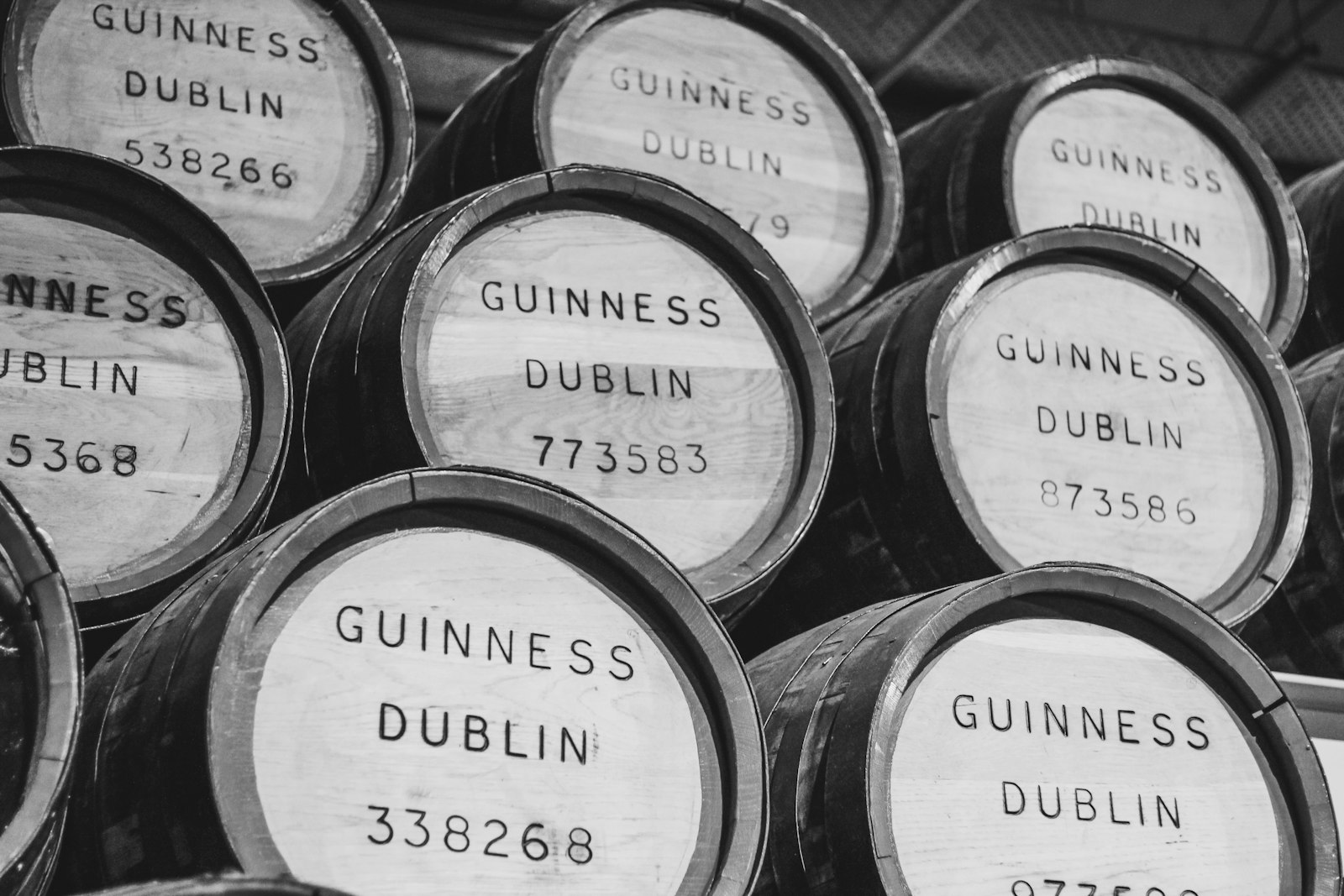
Photo by Jessica Johnston on Unsplash
There was a moment, not so long ago, when Irish whiskey seemed destined to fade into history. In the 1960s, the spirit that had once dominated the world stage was nearly extinct, overshadowed by Scottish rivals and American competitors. The grand distilleries that had powered nineteenth-century Ireland lay silent and crumbling. The knowledge that had passed from generation to generation of Irish whiskey makers threatened to vanish forever. Yet today, we stand in the midst of a remarkable comeback story. Irish whiskey is booming, becoming one of the fastest-growing spirits categories globally, with new distilleries opening at an unprecedented rate across the island. This is the story of how a nation reclaimed its most precious liquid legacy.
The Golden Age: Irish Whiskey’s Dominance
To understand the drama of Irish whiskey’s decline and resurrection, we must first appreciate the heights from which it fell. In the nineteenth century, Irish whiskey was the undisputed king of the spirits world. Dublin alone was home to numerous major distilleries, and the wider Irish countryside hosted dozens more. Whiskey production was woven into the fabric of Irish life and economy, from the grain farmers who supplied the raw materials to the merchants who exported barrels across the globe.
By the early 1900s, Irish whiskey dominated global markets with approximately half of all whiskey consumed worldwide. Distillers like Jameson, Powers, and Roe in Dublin, along with distilleries in Midleton, Bushmills, and Tullamore, had achieved something remarkable: their products were synonymous with quality, craftsmanship, and Irish identity itself. An Irishman traveling to Boston, New York, or London could find his native whiskey waiting in bars and restaurants, a taste of home in a foreign land.
The production methods that made Irish whiskey distinctive were meticulous. The use of triple distillation, a practice that set Irish whiskey apart from its Scottish counterpart, created a smoother, lighter spirit with fewer harsh congeners. The inclusion of unmalted barley in the mash bill added complexity and a subtle grain spice that connoisseurs prized. Irish distillers aged their spirits in a variety of cask types, creating flavor profiles that ranged from rich and oaky to light and fruity. These weren’t innovations made for marketing purposes—they were the hard-won discoveries of craftsmen experimenting with their art over centuries.
The Troubles: A Perfect Storm of Decline
The fall of Irish whiskey was neither swift nor simple. Rather, it resulted from a convergence of historical, political, and economic factors that conspired to push the industry toward irrelevance. The Irish War of Independence and subsequent Civil War disrupted production and commerce throughout the 1920s. Prohibition in America, which lasted from 1920 to 1933, eliminated what had been the largest and most lucrative market for Irish spirits. Even as prohibition ended, Irish whiskey struggled to reclaim American shelf space against Scotch and bourbon, which had maintained supply networks and marketing presence throughout the lean years.
Tariffs and trade disputes further wounded the industry. After Irish independence, trade relationships that had sustained Irish whiskey for generations were severed or restricted. The Irish government, attempting to protect the nascent nation’s economy, enacted policies that sometimes worked against the distilling industry’s interests. British-Irish trade wars in the 1930s added insult to injury, creating barriers between the island’s producers and potential international customers.
Yet the cruelest blow came from within: the consolidation of Irish whiskey production. In 1988, the industry reached a nadir when nearly all remaining whiskey production on the island was consolidated under Irish Distillers, which operated a single facility at Midleton in County Cork. The grand distilleries of Dublin—Jameson, Powers, and Roe—were closed, their stills silent, their buildings slowly deteriorating. The knowledge held by master distillers and blenders, accumulated over centuries, was now concentrated in a single location. Should disaster strike or should Irish Distillers abandon the business, the entire industry risked vanishing from the island entirely.
By the 1960s and 1970s, Irish whiskey’s market share had plummeted to roughly 2 percent globally. In home markets where Irish whiskey once reigned supreme, Scotch had become the whiskey of choice. A generation of Irish consumers grew up drinking Scotch, regarding it as more sophisticated and prestigious than their own indigenous product. The international reputation Irish whiskey had built over centuries seemed to be slipping away, relegated to the dusty bottles in the back rooms of old Irish pubs.
The First Stirrings of Revival
The seeds of revival were sown in darkness. By the 1990s, a handful of Irish entrepreneurs and whiskey enthusiasts began to recognize a tremendous opportunity. The consolidation that had seemed like a death knell to the industry actually presented a chance: if one company controlled most of the supply, and if that company wasn’t fully capitalizing on the market opportunity, then new producers could enter the field and claim niches that had been abandoned.
The turning point came when Irish Distillers, recognizing the potential in their heritage, began investing seriously in their brands again. Jameson, in particular, received substantial marketing attention. The brand was repositioned not as a relic of the past, but as a sophisticated, approachable spirit for modern consumers. Marketing campaigns brought Jameson to American college campuses and bars, where it resonated with young drinkers who appreciated its smoothness and heritage story. The Jameson brand began its climb from obscurity back toward mainstream recognition.
Simultaneously, the first new distillery to open in Ireland in more than a century began operations. Cooley Distillery, established in County Louth in 1987, was founded by John Teeling, an entrepreneur with deep conviction that the Irish whiskey industry could be revived. Cooley produced single pot still whiskey and single malt whiskey, styles that had been nearly abandoned during the consolidation years. The distillery’s existence proved that Irish whiskey could be produced outside the Midleton monopoly, that new voices and approaches could succeed.
The Modern Renaissance Begins in Earnest
The twenty-first century brought an acceleration of revival. The global spirits market shifted in favor of premium and craft products, and Irish whiskey—with its heritage, distinctive production methods, and terroir—was positioned perfectly to benefit from these trends. Consumers increasingly sought out spirits with authentic stories, with genuine connections to place and tradition. Irish whiskey possessed these qualities in abundance.
The Irish government and various tourism boards began to recognize whiskey as both a cultural treasure and an economic asset. Supporting the industry became a priority. Tax incentives and regulatory support helped lower barriers to entry for new distillers. The Craft Distillers Act of 2010 was particularly transformative, allowing small producers to operate their own distilleries without the need to produce minimum volumes, radically expanding the possibilities for boutique producers.
New distilleries began opening across the island, each with its own vision and approach. Bushmills, the world’s oldest registered distillery in Northern Ireland, began producing innovative expressions. Tullamore D.E.W. increased production and expanded globally. But more importantly, completely new producers emerged from the countryside and cities. Dingle Distillery in County Kerry, Kilbeggan in County Westmeath, Glendalough in County Wicklow, Roe & Co. in Dublin, and dozens of others began production, each contributing to the renaissance.
These new distilleries didn’t simply copy the methods of the past. They innovated while respecting tradition. Some experimented with unusual cask finishes—wine casks, beer casks, rum casks—creating flavor profiles that surprised and delighted consumers. Others revived forgotten or rarely-used production methods, such as pot still whiskey, a style unique to Ireland that combines malted and unmalted barley. Still others focused on terroir, using local water sources, local grains, and local production methods to create spirits that embodied specific places within Ireland.
The Growth Explosion
The numbers tell a remarkable story. In 2008, there were only three distilleries operating in the whole of Ireland. By 2015, that number had more than doubled. Today, there are over thirty distilleries in operation, with dozens more in planning or construction stages. Visitor centers and distillery tours have become major attractions for tourists visiting Ireland, with hundreds of thousands of people annually experiencing whiskey production firsthand.
Production volumes have surged dramatically. In 2009, Irish whiskey production stood at approximately 6 million liters. By 2023, that figure had reached over 20 million liters annually, with projections suggesting it could exceed 30 million liters within the next several years. More significantly, Irish whiskey has returned to being a major export category, with annual export values exceeding $1 billion globally.
The premium and luxury segment has been particularly robust. Single pot still whiskies, once nearly extinct, have become celebrated expressions commanding high prices from collectors and connoisseurs. Limited edition and cask-strength releases regularly sell out within hours of being announced. Irish whiskey has earned recognition in international competition, with numerous distilleries’ products receiving awards and critical acclaim from prestigious judging bodies and respected whiskey publications.
The Flavors of Revival: What Makes Modern Irish Whiskey Special
Modern Irish whiskey production honors tradition while embracing innovation. The core characteristics that distinguish Irish whiskey remain central to the renaissance. Triple distillation continues to be a defining feature of most Irish whiskey, creating that signature smooth character that appeals to consumers who find some heavily-peated Scottish whiskies too intense.
The variety of production styles has expanded considerably. Single malt whiskeys, produced from malted barley in pot stills and aged in wood, represent the international standard. Yet pot still whiskey, containing a minimum of 30 percent unmalted barley, remains a uniquely Irish specialty. This style creates whiskeys with a distinctive spicy character, almost a hint of clove or pepper, that sets them apart from other whiskey categories. Blended whiskeys, combining malt and grain spirits, continue to represent much of the production volume, offering accessible drinking experiences that appeal to broad audiences.
Cask selection has evolved into something approaching an art form. While American oak barrels, particularly ex-bourbon casks, form the foundation of most aging programs, contemporary distillers explore diverse wood influences. Ex-wine casks impart fruitiness and tannins. Sherried casks create richness and complexity. Irish oak is being revived as a finishing wood, adding subtle indigenous character. These experiments aren’t done haphazardly; they’re undertaken by educated palates working with deep understanding of how wood compounds interact with spirit.
The influence of Irish water is increasingly appreciated. Just as water is fundamental to Scottish whisky production, it has always been essential to Irish whiskey. Different water sources across the island contain different mineral compositions, subtly influencing flavor development. Distillers now highlight these terroir elements, much as winemakers do with their products.
The Community Behind the Comeback
The Irish whiskey renaissance isn’t driven by large multinational corporations alone, though major spirits companies have invested heavily in the category. Instead, a significant portion of growth comes from passionate entrepreneurs and small producers who have dedicated themselves to reviving and reimagining Irish whiskey culture.
Master blenders, many trained in the old traditions or educated in modern distillation science, have become celebrities within whiskey enthusiast circles. Their knowledge of how different spirits age, how wood compounds develop over time, and how components blend together to create sophisticated flavor profiles is integral to the industry’s success. These skilled professionals have preserved and transmitted knowledge that could have been lost.
Local communities have embraced distillery tourism as an economic revitalization tool. In rural areas where agricultural production was declining, distilleries have provided employment and renewed economic purpose. Urban distilleries in Dublin, Cork, and other cities have attracted tourists and created vibrant destinations. The whiskey industry has become intertwined with Irish heritage tourism more broadly, supporting heritage centers, museums, and cultural initiatives.
Global Recognition and Market Dominance
The world is taking notice. Irish whiskey sales have grown exponentially in key markets. In the United States, Irish whiskey consumption has tripled over the past decade, making it one of the fastest-growing spirits categories. In travel retail, particularly at major international airports, Irish whiskey now commands shelf space and consumer attention that it hadn’t enjoyed in generations.
Major spirits companies have taken notice of the category’s potential. Guinness parent company Diageo has invested substantially in Irish whiskey brands like Jameson and Bushmills, with massive marketing campaigns introducing the spirits to new consumers globally. Independent distillers have found premium positioning in specialty cocktail bars and high-end restaurants, commanding premium prices for limited releases.
The Irish government has embraced whiskey as a national treasure and economic asset. The “Irish Whiskey Tourism Strategy” supports expansion of distillery visits and whiskey-related experiences. Various organizations work to protect the term “Irish whiskey” through geographical indication, ensuring that only products made according to specific standards on the island of Ireland can claim the designation.
Challenges and Opportunities Ahead
Despite the remarkable growth, challenges remain. Production capacity, while expanding rapidly, still doesn’t fully meet global demand for many brands. Some established distilleries struggle to keep up with orders, with waiting lists for certain cask strengths and limited editions. As new distilleries come online, supply should ease, but the popularity of Irish whiskey may continue to outpace availability for some years to come.
Environmental concerns around grain consumption, water usage, and energy requirements of distillation will require ongoing attention. Forward-thinking distilleries are implementing sustainable practices, from renewable energy sourcing to water treatment innovations, but industry-wide sustainability remains a work in progress.
The surge in production capacity also means that Irish whiskey entering the market in coming years will be from newly-established distilleries still building their reputations. Some will undoubtedly produce excellent products; others may struggle to find their voice or market niche. Maintaining quality standards as production scales up will be crucial to sustaining consumer confidence.
A Spirit Restored
The Irish whiskey renaissance represents something more profound than simply the revival of a distressed industry. It is a restoration of cultural pride, a reassertion of a nation’s right to its own heritage, and proof that authentic craftsmanship and genuine quality never truly lose their appeal.
For American consumers, this renaissance offers the opportunity to experience one of the world’s great spirits at a moment of genuine renaissance and innovation. Whether discovering a traditional Jameson, exploring a rare single pot still expression, or sampling craft products from emerging distilleries, there has never been a better time to appreciate Irish whiskey. The ashes have become flames, the near-extinct has become vibrant, and the forgotten craft has been restored to glory. Irish whiskey has reclaimed its place not just in Irish culture, but on the world stage as a spirit of supreme quality, deep tradition, and boundless potential.

Author: jonathan
Jonathan is the publisher of Irishtopia.net, Anglotopia.net, and Londontopia.net. He's passionate about travel and learning about other cultures. He's been to Ireland several times, and uses his travel expertise for Irishtopia!