
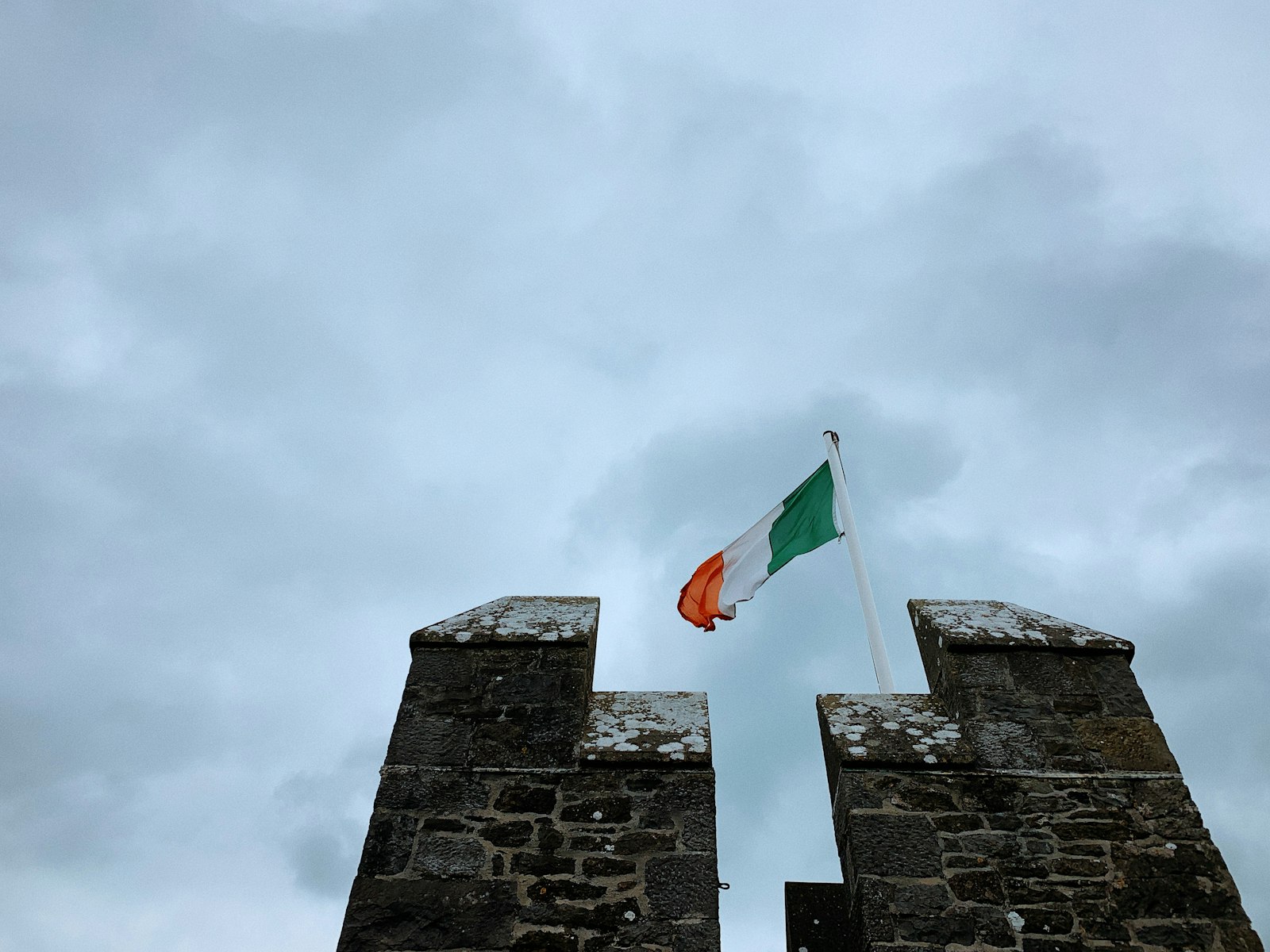
Photo by Tommy Bond on Unsplash
In the first days of August, as summer reaches its peak and the first signs of autumn begin to appear, Irish communities have historically gathered to celebrate Lughnasadh, one of the four great festivals of the Celtic year. The name comes from the Irish god Lugh and the word “nasadh” (commemoration), making it literally “the commemoration of Lugh.” This festival marked the beginning of the harvest season and occupied a unique place in the Celtic calendar: it was not purely about practical concerns of gathering food, but was infused with spiritual significance, competitive games, and communal gathering that went far beyond mere agricultural necessity.
Lughnasadh reveals something important about how ancient Celtic peoples understood work and community. The harvest was recognized as requiring effort and coordination, yes—but it was also a moment for celebration, for testing human skill and strength, for gathering people together in ways that reinforced community bonds and social hierarchies. At Lughnasadh, the practical and the spiritual, the competitive and the communal, the earthly and the divine were all woven together into a complex festival that lasted not just a day but an entire month.
For Americans interested in Irish tradition and heritage, Lughnasadh offers insight into ancient pagan values that still resonate today: the importance of marking the seasons, the interweaving of work and celebration, the role of competition and games in building community, and the spiritual significance placed on the relationship between human effort and divine blessing. Understanding Lughnasadh means understanding not just a historical festival, but a set of values and ways of being that shaped Irish culture for centuries.
The Festival Itself: The Pattern and Timing of Lughnasadh
Unlike Imbolc, Beltane, and Samhain—the other three great Celtic festivals—Lughnasadh marked no dramatic cosmic transition. Imbolc signaled the first stirrings of spring; Beltane marked the explosion into summer; Samhain announced the approach of winter. But Lughnasadh occurred at summer’s height, a time when there was no dramatic shift in temperature or daylight. Instead, what marked Lughnasadh was human concern: the beginning of the grain harvest.
In Ireland’s climate and agricultural systems, grain harvest began in August. The previous months’ work—plowing, planting, tending—had culminated in this moment when the grain would be cut, gathered, and processed for storage. This was crucial work; the success or failure of the harvest determined whether the community would eat well or face hunger in the coming year. Yet rather than being approached with anxiety, Lughnasadh transformed the hard work of harvest into celebration and sacred ritual.
The festival itself was month-long. It wasn’t a single day’s celebration but an extended period during which the first fruits of the harvest were ceremonially used, games and competitions took place, and communities gathered. The exact calendar of celebration varied by region and period, but the pattern was consistent: August began with ritual and celebration, work was engaged in with a sense of sacred purpose, and the community’s successful cooperation was acknowledged and celebrated.
Lughnasadh was also often the occasion for assemblies and gatherings that had purposes beyond the merely agricultural. Kings held court at Lughnasadh. Legal disputes were settled. Marriages were arranged. It was the time for gathering not just the harvest but the community, for settling accounts and relationships before the year moved toward its darker half.
Historical Evidence: What We Know About Ancient Lughnasadh
Our understanding of Lughnasadh comes from multiple sources, including medieval Irish texts that preserved memories of pre-Christian practices, Irish mythology that sets important events at Lughnasadh, archaeology that identifies sites used for Lughnasadh gatherings, and folklore preserved into the modern era.
One of the most important sources is the medieval Irish text known as “Óenach Tailteann” (the Assembly of Tailten), which describes in detail a great gathering held at the place of Tailten (modern Telltown in County Meath) at Lughnasadh. According to the text, this assembly was established by the god Lugh himself as a funeral games commemorating his foster-mother Tailten. The games included competitions in running, jumping, swimming, chariot racing, boxing, and spear-throwing—essentially all the physical competitions that would be valued in a warrior society.
The “Óenach Tailteann” describes these games as drawing participants and spectators from across Ireland, as lasting for several weeks, as involving not just competitions but also the resolution of disputes, the conducting of commerce, and the celebration of community bonds. The text, though written down by Christian monks centuries later, clearly preserves memories of a real festival that had been genuinely significant in pre-Christian Irish society.
Archaeological evidence supports these written accounts. Sites like Tara and Tailten show evidence of having been places of assembly and gathering. Artifacts from these sites suggest they were used for ritualized gatherings that involved significant numbers of people. The patterns of these gatherings suggest they occurred seasonally, and the season most likely for such gatherings would be Lughnasadh, when the community gathered for both practical harvest purposes and social and legal business.
Irish mythology contains numerous references to Lughnasadh. Important events in Irish mythological narratives are often set at Lughnasadh, suggesting that this was understood as a significant and liminal moment—a time when important things happened, when the normal order of things was open to disruption and change. This mythological pattern mirrors what we know of actual Lughnasadh gatherings: they were times when normal social order was temporarily suspended and reconfigured through games, competition, and assembly.
The Spiritual Significance: Lugh and Divine Harvest Blessing
To understand Lughnasadh’s deeper significance, one must understand the god Lugh and his place in Celtic religion. Lugh was understood as a god of many skills—he was called “Lugh Samhildánach,” meaning “Lugh of many crafts.” He was associated with craftsmanship, skill, excellence, and the power of human capability. In some traditions, he was also associated with the sun and with light.
The name Lughnasadh—the commemoration or games of Lugh—reflects a complex relationship. The festival celebrated Lugh’s excellence and the human capacity for skill, craft, and achievement. But it also celebrated the harvest as something granted by the divine, something that humans participated in but that ultimately depended on divine blessing. By gathering at Lughnasadh, by engaging in games and competitions, by celebrating the first fruits of the harvest, the community was honoring both human capability and divine generosity.
The competitions at Lughnasadh were not simply entertainments. They were spiritually significant acts. In ancient Celtic understanding, competitive games had ritual importance. Through games, the strongest, the fastest, the most skillful were identified and honored. This had practical significance (identifying who would be trusted with important tasks) but also spiritual significance: the community’s wellbeing depended on having strong, capable, skilled people. By holding competitions and honoring the winners, the community was affirming its own strength and fitness.
There’s also evidence that Lughnasadh involved the ritual use of the first grain and other harvest products. In some traditions, bread made from the first grain was ceremonially eaten, and in some accounts, portions were burned as offerings to divine forces. These practices transformed the harvest from a merely practical concern into a sacred act—the community was not simply taking what it needed, but was acknowledging the divine source of what it received and offering back to the divine in gratitude.
The Games and Competitions: Lughnasadh’s Central Drama
If bonfires were central to Beltane and Samhain, and if ritual purification was central to Imbolc, then games and competitions were the heart of Lughnasadh. The Irish assembly at Tailten, as described in the medieval texts, featured numerous competitions: foot races of various distances, swimming races, diving competitions, boxing matches, wrestling, spear-throwing, chariot racing, horse racing, and games we might now call track and field events.
These competitions served multiple purposes. Most obviously, they identified the strongest and most skilled community members and gave them public honor. In a warrior society where physical prowess was valued, these competitions allowed men to prove their worth and capability. Winners would be rewarded with prizes—gold, treasures, cattle, and most importantly, prestige and honor.
But the competitions also served a deeper social purpose. Through organized competition under agreed-upon rules, potentially violent conflict was channeled into ritualized forms. Young men could test themselves against each other and prove their worth without warfare actually breaking out. The games maintained and reinforced the social hierarchy while also allowing for the possibility of advancement: a young man from a lesser family might prove himself through his performance at games.
There’s also evidence that women participated in Lughnasadh in ways different from some other festivals. While the great games at Tailten seem to have been primarily male events, women had their own competitions, and women were spectators and participants in the broader celebration. Some accounts mention women’s foot races and other competitions. This suggests that Lughnasadh, despite its association with masculine competition and prowess, had a more inclusive character than might be assumed.
Lughnasadh’s Agricultural Dimension: The Ritual Harvest
While the games and competitions grab the attention of modern historians and storytellers, the agricultural dimension of Lughnasadh remained central to the festival. This was, fundamentally, a harvest celebration. The gathering of grain required significant labor, and the successful completion of the harvest was crucial for the community’s survival through the coming winter.
Agricultural folklore surrounding Lughnasadh preserved the understanding that the harvest required both human labor and divine blessing. In some Irish traditions, the last sheaf of grain was left standing to acknowledge the spirits of the grain and the earth. In other traditions, the first portion of the grain was ceremonially used—made into bread that was offered to the gods or eaten by the community in a ritualized way. These practices transformed the practical work of harvest into sacred action, a cooperation between human effort and divine blessing.
In some regions, particular food traditions became associated with Lughnasadh. Bilberries, which ripen in August, were gathered and eaten. Bread made from grain (once the harvest began) became associated with the festival. In Ireland, the tradition of making colcannon—a dish of potatoes and cabbage—became associated with Lughnasadh in some regions. These foods were not merely practical; they were ceremonial, marking the transition from summer abundance to the harvest season.
The beginning of the grain harvest marked a significant shift in the community’s concern. From Beltane through much of summer, the focus had been on protecting and increasing the herds, on growth and expansion. Now, with Lughnasadh, the focus shifted toward gathering, storing, and ensuring survival through the coming lean months. Work intensified. The long days of summer began to noticeably shorten. The year had reached its turning point, though it would take the darkness of Samhain to fully acknowledge the shift toward winter.
The Four Quarters: Lughnasadh’s Place in the Celtic Year
To fully understand Lughnasadh’s significance, one must see it as part of the larger pattern of the four great festivals and how they divided the year. Each festival marked a significant transition and carried particular spiritual and practical significance:
Imbolc (February 1st) marked the beginning of the pastoral year, the first stirrings of spring, the awakening after winter darkness.
Beltane (May 1st) marked the full arrival of summer, the lighting of the great bonfires, the driving of herds to summer pastures, and the celebration of fertility and growth.
Lughnasadh (August 1st) marked the beginning of harvest, the first turning toward the darker half of the year, and the celebration of community gathering and human capability.
Samhain (November 1st) marked the full arrival of darkness, the end of harvest, the beginning of the Celtic new year, and the threshold to the realm of the dead.
These four points divided the year into quarters, each with its own character, its own spiritual significance, its own rituals and observances. Lughnasadh’s place was crucial: it marked the turn from the light half to the dark half, from growth and expansion to gathering and conservation, from the season of Beltane’s fertility to Samhain’s acknowledgment of death and loss.
The Christianization: From Pagan Festival to Christian Holiday
Like all the great Celtic festivals, Lughnasadh faced Christianization when the Church arrived in Ireland. Unlike Samhain (which aligned with All Saints’ Day) or Imbolc (which aligned with Saint Brigid’s Day), there was no obvious Christian saint’s day to which Lughnasadh naturally corresponded. Instead, the Church took a different approach.
Lughnasadh became associated with Lammas, the Christian festival celebrated on August 1st. “Lammas” comes from “Loaf Mass,” referring to the practice of making bread from the first grain of the harvest and bringing it to church as an offering. In this way, the Church took the existing harvest celebration and its association with the first fruits of the grain, and incorporated it into Christian practice. The offering of the first grain bread, which in pre-Christian contexts would have been made to gods or divine forces, was redirected toward Christian worship.
The games and competitions associated with Lughnasadh persisted, though they were increasingly secularized or claimed to have Christian purposes. In some areas, parish games and competitions held in August were understood as part of the Christian celebration of the season rather than as pagan ritual. The underlying significance—testing human capability, honoring excellence, gathering community—persisted even as the explicitly religious meaning shifted.
By the medieval period, Lughnasadh had become thoroughly Christianized in its official forms, though folk traditions and agricultural practices associated with the festival continued largely unchanged. The great assemblies like the Óenach Tailteann faded, probably due to the disruption of social structures and the centralization of power under Christian kings and the Church. But in rural areas, the festival continued to mark the beginning of harvest, and Lughnasadh continued to be recognized as a significant day in the agricultural calendar.
Lughnasadh in Medieval and Early Modern Ireland
As we move into documented medieval history, our knowledge of Lughnasadh practices becomes clearer. The festival continued to be observed throughout Ireland, though often in forms that blended Christian and folk elements. Lughnasadh assemblies at traditional gathering sites continued in some areas, though these became more localized and less formally organized than the grand pre-Christian gatherings.
County fairs and markets came to be held at Lughnasadh in many Irish communities. These fairs had a character similar to the ancient assemblies: people gathered from a wide area, goods were bought and sold, entertainment was provided, and the occasion was marked as significant and special. While superficially these fairs were simply commercial gatherings, they served many of the same social and community functions as the ancient Lughnasadh festivals.
In rural Ireland, the pattern of Lughnasadh as harvest-time remained fundamental to how the year was experienced. Lughnasadh marked the moment when the work shifted from caring for growing things to gathering harvest. The beginning of grain harvest required intensive labor and marked the beginning of the community’s preparation for winter. Even in areas where explicitly pagan observance had faded, Lughnasadh remained significant as an agricultural threshold.
Food traditions associated with Lughnasadh continued, and in many cases, the foods associated with the festival (bread, berries, certain vegetables) became part of an Irish culinary tradition without people necessarily connecting them to the ancient festival. But the connection persisted in folklore, and people knew that Lughnasadh time was when these foods were eaten, even if they didn’t fully understand why.
Modern Lughnasadh: Continuation and Revival
In modern Ireland, Lughnasadh as an explicit festival has largely faded, though it remains recognizable in agricultural communities where Lammas continues to mark an important moment in the yearly cycle. However, among those interested in Celtic spirituality and modern paganism, Lughnasadh has undergone a significant revival.
In contemporary pagan practice, Lughnasadh (August 1st) is observed as one of the eight major sabbats, alongside Samhain, Imbolc, and Beltane. Modern Lughnasadh celebrations often involve:
Making bread from grain or other harvest products and sharing it communally, reflecting the Lammas tradition of offering first fruits.
Games and competitions, reviving the athletic contests that characterized ancient Lughnasadh.
Feasting and celebration, honoring both the harvest and human capability and excellence.
Acknowledgment of the turning toward darkness, recognizing that while summer is not yet over, the light half of the year is ending.
In Ireland specifically, there has been some revival of interest in the ancient Lughnasadh assemblies. Some communities have attempted to revive traditional gathering sites or to create modern equivalents that capture something of the ancient festival’s character. These modern revivals vary: some are quite theatrical and commercial, others are focused on historical accuracy and spiritual practice, still others are community celebrations that don’t necessarily claim explicit connection to the ancient festival but that maintain the basic pattern of a late summer community gathering.
The Psychological Significance: Lughnasadh and the Turning Year
What’s particularly interesting about Lughnasadh from a psychological perspective is that it marks a turning point that’s often not consciously registered by modern people. We speak of spring as the season of renewal and new beginnings, and indeed, the equinox and the bursting forth of spring command attention. But Lughnasadh marks a turning that’s equally significant, though it happens at the peak of summer: the turn toward darkness, the beginning of the year’s descent toward winter.
August can feel like summer’s height, and in terms of warmth and daylight, it is. But from the perspective of the turning year, August marks a crucial threshold. Days are noticeably shortening. The first hints of autumn appear in the quality of light, in the beginning of seeds’ ripening, in the shift from growth to harvest. The ancient Celtic understanding, marking this as Lughnasadh and treating it with ritual significance, acknowledges a truth that modern people often miss: the year’s fundamental turn happens at summer’s height, not at the autumn equinox.
For those interested in marking seasons and cycles in their lives, Lughnasadh offers something valuable: a moment to acknowledge that the year has turned, that even at the height of one season, we must begin to prepare for the next, that nothing grows forever and all things eventually harvest and settle toward rest. It’s a reminder that transitions are constant, that change is built into the very structure of time, and that celebrating our achievements and capabilities (as Lughnasadh’s games celebrate human excellence) is important not because things will always be as they are, but precisely because they will change.
Conclusion: Lughnasadh’s Enduring Significance
Lughnasadh, the least dramatically marked of the four great Celtic festivals, offers something essential: a celebration of human capability, skill, and excellence in the context of cooperation with divine forces and natural cycles. The games and competitions that characterized ancient Lughnasadh weren’t frivolous entertainments distracting from serious agricultural labor; they were a way of honoring the strength and capability that the community depended on for survival, and of channeling competitive impulses into structured, rule-governed forms that strengthened rather than shattered community bonds.
For modern people, particularly those interested in Irish heritage, Lughnasadh offers a way of thinking about work and celebration, about human achievement and divine blessing, about the importance of marking seasonal transitions even (or especially) when they happen at unexpected moments. It reminds us that the year’s turning is not a single dramatic moment but a continuous process of shift and change, and that acknowledging these shifts through ritual and celebration has real psychological and spiritual value.
As August arrives and the first fruits of growth begin to be gathered, whether you’re harvesting vegetables from a garden, completing projects that began months ago, or simply noticing that the light is beginning to shift, you can choose to mark this moment as Lughnasadh. Light a candle. Share bread with others. Acknowledge both what you’ve achieved and that you now turn toward a new season. You’ll be participating in a festival whose roots stretch back thousands of years, and in doing so, you’ll participate in the timeless human project of marking time, honoring excellence, and gathering community.

Author: jonathan
Jonathan is the publisher of Irishtopia.net, Anglotopia.net, and Londontopia.net. He's passionate about travel and learning about other cultures. He's been to Ireland several times, and uses his travel expertise for Irishtopia!