
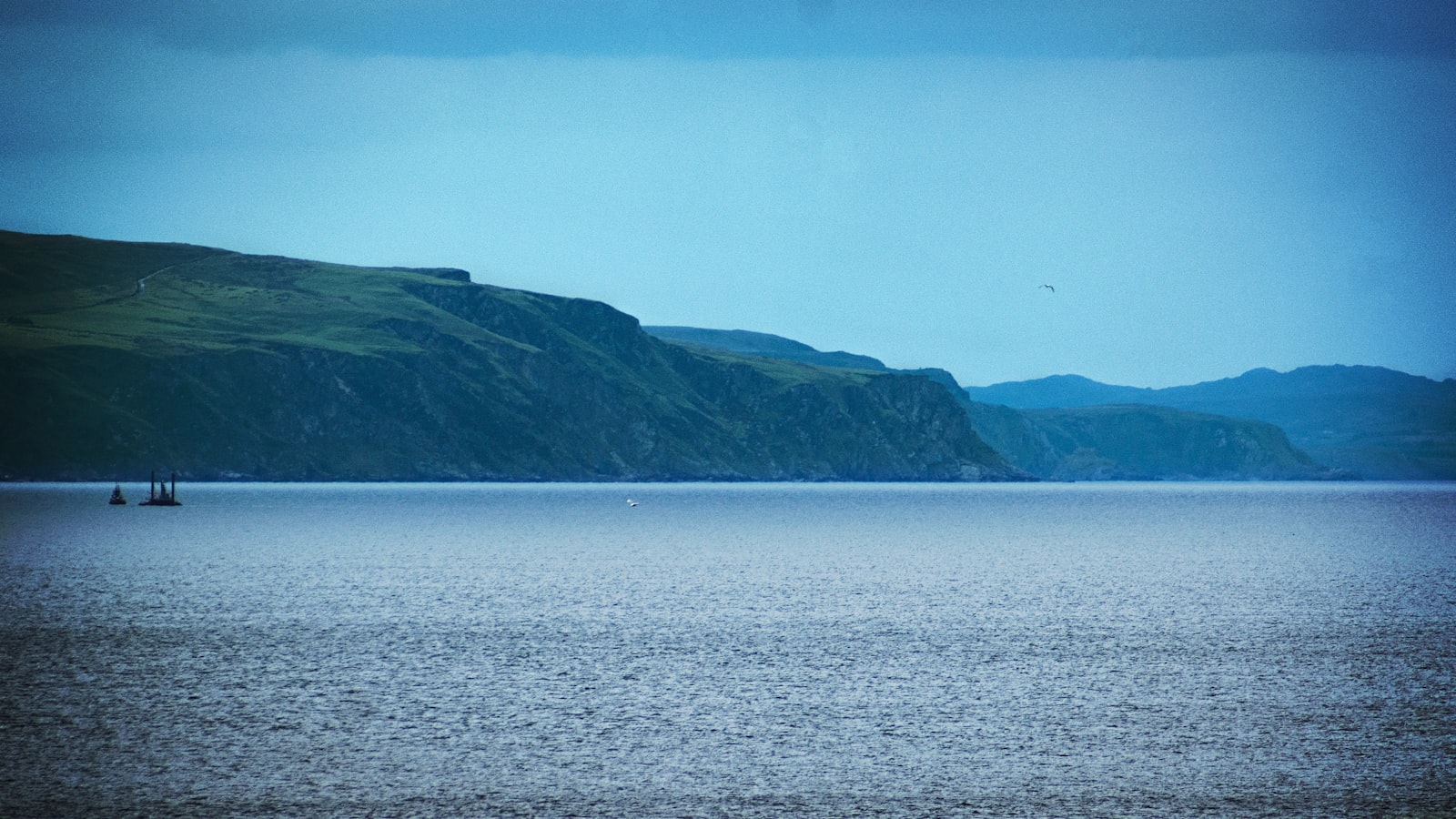
Photo by K. Mitch Hodge on Unsplash
When the United Kingdom held its referendum on European Union membership in June 2016, Northern Ireland voted to remain in the EU by a margin of 56 to 44 percent. Yet when Britain voted nationally to leave by 52 to 48 percent, Northern Ireland found itself bound to exit the European Union despite its clear preference to remain. This democratic contradiction created unprecedented complications for Northern Ireland, threatening the delicate political arrangements established through the 1998 Good Friday Agreement and raising fundamental questions about borders, sovereignty, and Irish reunification that had been geopolitically dormant for decades.
Northern Ireland’s situation represents one of Brexit’s most significant complications. Unlike mainland Britain, which could negotiate a straightforward exit, Northern Ireland shares a land border with the Republic of Ireland, which remained in the EU. Brexit created a previously non-existent hard border between two parts of the island, disrupting centuries of free movement and commerce while creating novel legal and political complications. The border issue has become the defining question of post-Brexit Northern Ireland, threatening political stability and reigniting fundamental questions about the partition of Ireland established over a century ago.
Historical Context: Partition and Perpetual Tension
Understanding the contemporary border crisis requires grasping Northern Ireland’s tortured history. When Ireland achieved independence from Britain in 1921, partition occurred, creating two separate states: the Irish Free State (later the Republic of Ireland) and Northern Ireland, which remained part of the United Kingdom. This partition was deeply contested—Irish nationalists viewed it as unjust division of their nation, while unionists in predominantly Protestant Northern Ireland feared being marginalized in a Catholic-majority Ireland.
The result was perpetual conflict. From the 1960s through the 1990s, Northern Ireland experienced sustained violence between republican and unionist paramilitaries, security forces, and civilians. Tens of thousands died in “The Troubles,” which transformed Northern Ireland into a conflict zone where violence was ubiquitous and divisions between Catholic nationalists (seeking reunification) and Protestant unionists (supporting remaining in the UK) defined everything.
The 1998 Good Friday Agreement established a peace framework allowing the conflict to gradually subside. The agreement created a power-sharing government where both nationalists and unionists shared decision-making authority. Importantly, it allowed Northern Ireland to exist with a somewhat ambiguous constitutional status—officially part of the UK, but with a provision allowing for reunification if a majority in Northern Ireland voted for it. The agreement also eliminated the physical border, allowing free movement between North and South across the Irish land border.
For two decades, this arrangement worked. Violence declined dramatically. Communities began integrating. Young people grew up without knowing the intensity of The Troubles. The EU’s role was crucial—both Northern Ireland and the Republic of Ireland were EU members, creating a common regulatory framework that eliminated the need for border infrastructure. People and goods moved freely without documentation or inspection.
The Brexit Vote: Unexpected Disruption
The 2016 Brexit referendum shattered this fragile equilibrium. Northern Ireland’s vote to remain in the EU was ignored. The United Kingdom, of which Northern Ireland remained a part, was leaving the EU. This created an unprecedented situation: an EU member state (Republic of Ireland) sharing a land border with a non-EU state (Northern Ireland/UK) that was also subject to different trade regulations.
The implications were immediate and severe. If Northern Ireland left the EU without special arrangements, a hard border would need to be established—physical border infrastructure, customs checkpoints, immigration controls. This would violate the Good Friday Agreement’s letter and certainly its spirit, which depended on an open border. Additionally, reimposing a border in a region that had finally moved beyond violence seemed catastrophically counterproductive. A border would become a symbolic flashpoint for nationalist and unionist tensions.
The border also posed practical commercial complications. Hundreds of thousands of people live near the border, with lives intimately connected across it—jobs on one side and homes on the other, businesses serving customers on both sides, families split by geography. A hard border would severely disrupt these relationships.
The UK government and the EU negotiated intensely, recognizing that the border question was the central Brexit complication. Britain wanted maximum autonomy to diverge from EU regulations. The EU wanted to protect the single market and its border. Northern Ireland was caught between these competing interests.
The Irish Border Protocol and the Northern Ireland Protocol
Initial negotiations produced the Irish Border Protocol, later renamed the Northern Ireland Protocol, which proposed a solution: Northern Ireland would maintain regulatory alignment with the EU even after the UK left. This meant Northern Ireland would remain in the EU’s single market for goods, allowing the open border to continue without physical infrastructure.
However, this created an unexpected complication: Northern Ireland would diverge from the rest of the UK. While mainland Britain could establish different regulations or trade arrangements, Northern Ireland would remain bound to EU standards. Additionally, trade between Northern Ireland and the rest of the UK would require customs checks because goods leaving Northern Ireland to go to GB were effectively leaving the EU’s single market.
This created the “border in the Irish Sea”—a practical, if invisible, border between Northern Ireland and Great Britain. Unionist communities saw this as an existential threat to the Union, separating Northern Ireland from the rest of the UK. If goods needed inspection entering Northern Ireland from GB, weren’t they effectively treating Northern Ireland as something other than fully British? Nationalists, meanwhile, saw it as acceptable compromise accepting Northern Ireland’s unique position.
Political Upheaval and the DUP’s Crisis
The border solution created severe political consequences in Northern Ireland. The Democratic Unionist Party (DUP), which represents much of Northern Ireland’s unionist population, opposed the protocol vehemently. The DUP had been crucial partners in maintaining the UK government’s parliamentary majority. In response to DUP opposition, the UK government, now led by Boris Johnson, renegotiated the protocol, creating the “Windsor Framework,” which provided additional flexibility in applying EU regulations in Northern Ireland.
However, the DUP remained unsatisfied. In 2022, the DUP took the extraordinary step of withdrawing from the Northern Ireland power-sharing government, suspending the assembly and demanding even more fundamental changes to the protocol/Windsor Framework arrangement. This was a dramatic escalation—the power-sharing arrangement, the foundation of the Good Friday Agreement’s stability, was being abandoned by a major political party over Brexit complications.
The DUP’s crisis raised fundamental concerns about whether post-Brexit arrangements could be stable. The party argued it was responding to genuine unionist concerns about being isolated from the rest of the UK and subjected to EU regulations decided without their voice. But the crisis also seemed potentially destabilizing—if major political parties abandoned power-sharing over disagreements, was the peace process itself endangered?
Trade and Economic Disruption
The practical consequences of the border have been substantial. Northern Ireland businesses have faced increased administrative burdens and costs due to customs checks and regulatory compliance. Trade between Northern Ireland and Great Britain has declined. Some businesses have relocated southward to the Republic to reduce friction. Investment uncertainty has dampened economic activity.
Grocery supply chains have been particularly disrupted. British retailers and suppliers faced additional costs serving Northern Ireland due to regulatory requirements. Some products available throughout the UK became unavailable in Northern Ireland due to suppliers finding the costs of compliance prohibitive. For consumers, this meant reduced choice and potential price increases on certain goods.
The complications have also affected social cohesion. The trading difficulties created grievances within unionist communities, who felt that remaining in the UK had resulted in economic disadvantage compared to the more straightforward trade relationship they previously had. These grievances fed into broader resentment about the border protocol, regardless of the specific economic data.
The Broader Reunification Question
The border complications have reignited fundamental questions about Irish reunification, dormant for decades. As Brexit has illustrated the complications of partition in a modern EU context, some Irish nationalists and even some neutral observers have questioned whether reunification might ultimately be simpler than maintaining the current arrangement.
The Good Friday Agreement contains a provision allowing for a border poll—a referendum on reunification—if the Secretary of State determines that reunification is likely to win. No poll has been held, but demographics suggest this might eventually change. Northern Ireland’s Catholic population, largely aligned with nationalism and reunification support, is growing while the Protestant population, largely aligned with unionism, is shrinking. Demographic projections suggest that within coming decades, Catholics will likely outnumber Protestants.
If a border poll were held and reunification approved, it would require negotiation with the UK government and reconciliation with unionist communities who would find themselves in a reunified Ireland despite their opposition. This would create immense complications, potentially undoing two decades of peace work.
However, even unionist politicians have begun considering whether more fundamental changes to the current constitutional arrangement might be preferable to the ongoing friction. Some unionists have discussed potential alternatives to simple partition—perhaps a shared sovereignty arrangement, or mechanisms allowing Northern Ireland closer relationships with both the UK and the EU. These discussions remain preliminary, but they reflect recognition that the current arrangement is unsustainable long-term.
International Dimensions and the US Role
The United States has played an unusual role in the Northern Ireland border crisis. The Good Friday Agreement was negotiated with significant US mediation and involvement, particularly from President Bill Clinton. The US has a substantial Irish-American population with historical connections to Irish nationalism and reunification. American politicians, particularly those with Irish heritage, have expressed strong interest in ensuring the peace process remains stable.
In 2023, President Joe Biden visited Northern Ireland and emphasized American support for the Good Friday Agreement and the peace process. The US indicated that any Brexit arrangement that threatened the peace process would be viewed negatively. This American concern was not merely symbolic—it reflected recognition that the US has genuine interests in European stability and concern that further Irish instability could have broader geopolitical implications.
The US position also reflected Irish-American political interests. Many American politicians oppose arrangements that appear to compromise Irish unity or treat the island as genuinely divided. While American pressure is unlikely to determine the outcome, it does provide international legitimacy for those arguing that the border situation requires fundamental rethinking.
The London Perspective and Political Considerations
The UK government has been caught between competing interests. The DUP’s demands for fundamental protocol changes are difficult to grant because the EU has been quite firm that the protocol cannot be substantially revised without fundamentally altering the post-Brexit arrangement. The EU won’t accept a border with tariffs and checks on the Republic of Ireland’s border with the UK—the entire protocol was designed to prevent exactly that. Granting DUP demands would mean reestablishing a hard border on the island of Ireland, which would violate the spirit of the Good Friday Agreement.
Additionally, British sovereignty has become complicated. If Northern Ireland remains in the EU’s single market, it’s not fully under the UK’s independent regulatory authority. Yet removing Northern Ireland from the single market would require border infrastructure, which is also politically untenable. The UK has essentially been trapped between irreconcilable demands.
The UK government has attempted incremental improvements to the protocol/Windsor Framework, providing additional flexibility and reducing bureaucratic friction. These changes haven’t satisfied the DUP, but they reflect recognition that some accommodation was necessary to maintain stability.
Civil Society and Community Perspectives
Beyond political parties, civil society perspectives deserve attention. Many citizens, business leaders, and community organizations across Northern Ireland and the border region have expressed frustration with both the border complications and the political dysfunction it’s engendered. Business groups have lobbied for arrangements reducing trade friction. Border communities have worried about deteriorating relationships built over two decades.
Younger people, who grew up after the peace agreement, often don’t have strong positions on reunification or partition. Polling suggests that younger people are more interested in pragmatic solutions—whatever arrangement allows for economic prosperity and peaceful coexistence—than in constitutional questions. This might suggest potential for creative solutions that transcend traditional nationalist/unionist binary.
Some civil society actors have proposed novel arrangements, including greater North-South cooperation on specific issues (agriculture, infrastructure, education) that could be pursued without requiring full political reunification. These gradual integration approaches might reduce tensions by establishing practical cooperation while leaving constitutional questions for future resolution.
Possible Futures
Several futures remain possible. One scenario involves the UK government and EU negotiating further adjustments to the Windsor Framework, with the DUP gradually accepting an arrangement that provides sufficient flexibility and autonomy while maintaining Northern Ireland’s position in the single market. This represents the status quo trajectory.
Another possibility is eventually holding a border poll and reunification occurring. This would require shifting unionist sentiment or demographic change producing nationalist majorities. If reunification occurred, it would require extensive negotiation regarding how unionists would be protected in a reunified Ireland and how North-South governance would function. Irish and UK governments have begun preliminary discussions about reunification processes, though actual reunification remains politically difficult.
A third scenario involves continued political dysfunction, with power-sharing government potentially remaining suspended. This would be deeply destabilizing, suggesting the Good Friday Agreement’s power-sharing arrangement couldn’t accommodate the strains imposed by Brexit. It might eventually lead to some constitutional rethinking, though in a crisis context rather than through deliberate negotiation.
Conclusion: Brexit’s Lingering Crisis
The Northern Ireland border represents one of the EU and UK’s most intractable post-Brexit complications. No perfect solution exists—any arrangement disappoints some constituency. The core tension remains unresolved: Northern Ireland cannot simultaneously be fully part of the UK’s independent trade regime AND maintain an open border with the EU.
The crisis illustrates how Brexit has raised fundamental questions about Irish partition that had seemed dormant. For nearly a century, the border had become simply an accepted geographic fact. Brexit has reintroduced it as a political issue, resurrecting historical questions about whether partition was justified and sustainable.
Whether through further accommodation, gradual institutional integration, or potentially reunification, Northern Ireland faces pressure to address the border fundamentally. The current arrangement cannot persist indefinitely—either it must be adjusted to satisfy stakeholders, or it must be replaced through some more fundamental constitutional change.
For American observers, the Northern Ireland situation illustrates both how Brexit complications persist and how historical territorial settlements can become unstable when circumstances change. The situation also highlights the good faith importance of peace processes like the Good Friday Agreement—when governments undermine such frameworks, even unintentionally, the consequences can be severe and long-lasting. Northern Ireland’s future remains uncertain, but what’s clear is that the border will remain central to that future, whether as a border between Ireland and the UK or as a negotiated arrangement reflecting some novel constitutional relationship between the island’s communities.

Author: jonathan
Jonathan is the publisher of Irishtopia.net, Anglotopia.net, and Londontopia.net. He's passionate about travel and learning about other cultures. He's been to Ireland several times, and uses his travel expertise for Irishtopia!