
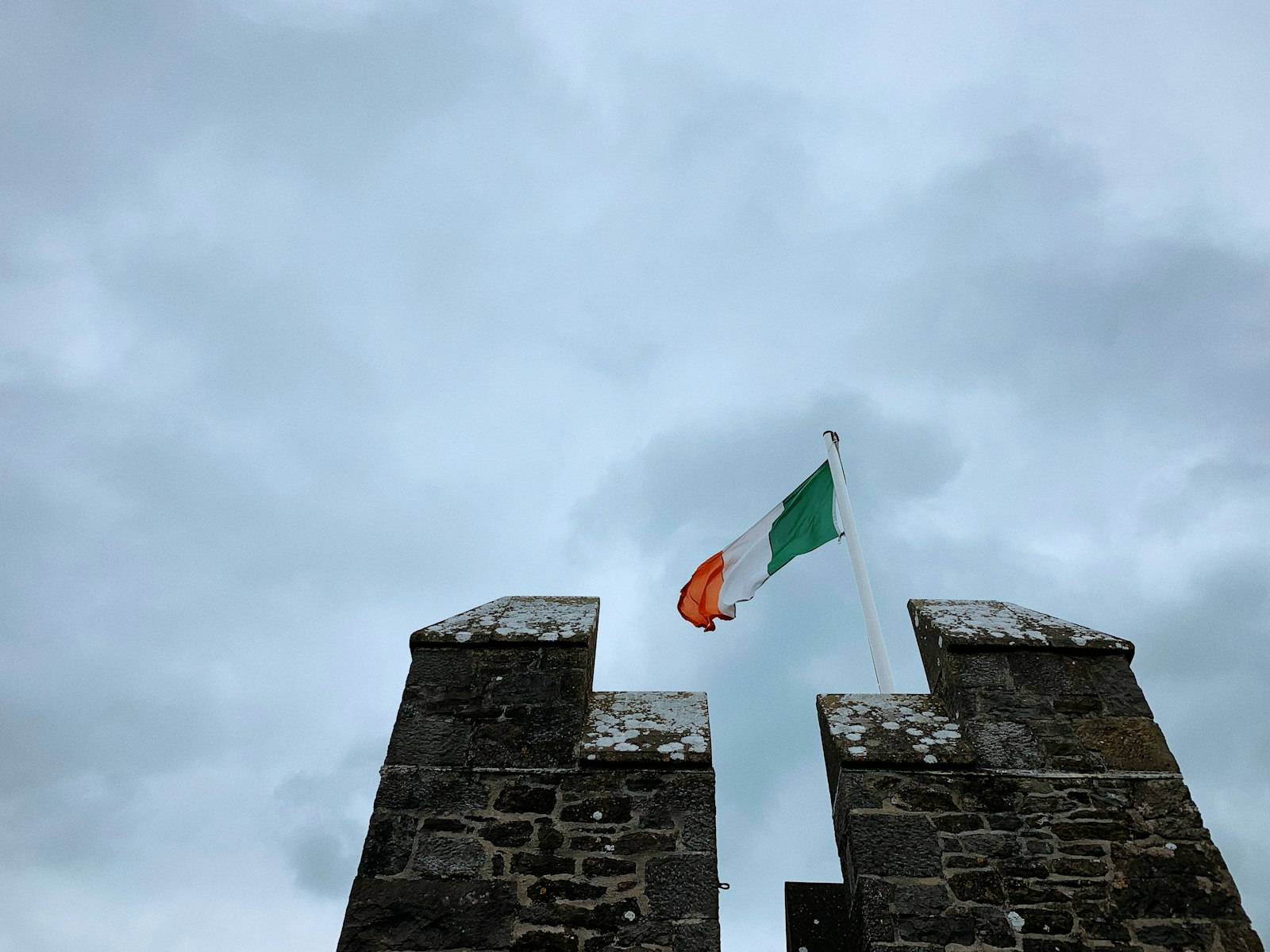
Photo by Tommy Bond on Unsplash
Introduction
In the late 16th century, as English power in Ireland was expanding and English settlers were establishing themselves through plantation schemes, one Irish warrior rose up to resist. Hugh O’Neill, Earl of Tyrone, organized the most significant Irish rebellion since the Norman conquest. The Nine Years War (1594-1603) that bore his name represented the last great effort of Gaelic Ireland to resist English conquest before falling to superior military force.
Hugh O’Neill was a fascinating and complex figure. He was educated in English and had served in the English military before breaking with the Crown and leading Irish rebellion. He understood English military tactics and strategy, making him a particularly dangerous opponent. For nine years, he mobilized Irish forces and fought the most powerful military machine of the era to a standstill.
Ultimately, O’Neill’s rebellion failed. He was forced to negotiate surrender and accept English authority. Yet his rebellion was significant not for its success but for what it represented—the final chapter of Gaelic Ireland’s effort to maintain independence. After O’Neill’s rebellion, Gaelic Ireland would gradually be subordinated to English rule, and the old Irish nobility would eventually flee into exile.
Hugh O’Neill: The Unlikely Rebel
Hugh O’Neill was born around 1550 into the O’Neill family, which had dominated Ulster and northern Ireland for centuries. But his path to becoming the greatest Irish rebel of his era was unusual. As a young man, O’Neill was fostered by the English and educated in English ways. He learned English military tactics and strategy. He served in the English military and was recognized by the English crown.
In fact, the English authorities initially trusted O’Neill. They granted him the title Earl of Tyrone and gave him authority over Irish territories in Ulster. O’Neill was supposed to be a loyal English subject who would help extend English authority into the Irish territories. The English believed they had successfully co-opted Irish nobility by offering them English titles and authority.
However, O’Neill’s position was complex. While he had been educated in English ways and had titles from the English crown, he remained connected to his Irish heritage and his family’s traditional power. He controlled substantial territories and could mobilize significant military forces. He understood that English expansion into Ulster threatened not just his power but the entire Gaelic Irish way of life.
As English settlers arrived in Ulster through plantation schemes, and as English administrators demanded greater submission to English authority, O’Neill gradually shifted from cooperation to opposition. By the 1590s, O’Neill had become convinced that accommodation with English expansion was impossible. The only choice was resistance.
The Outbreak of Rebellion
The rebellion that bore O’Neill’s name began in 1594, though O’Neill had been preparing for it for years. In 1593, O’Neill requested that the English declare him a rebel, a request that was denied. This refusal freed O’Neill from having to maintain the pretense of loyalty. In 1594, he openly broke with English authority and began organizing rebellion.
O’Neill was a skilled military strategist who understood that he couldn’t hope to match the English in conventional open-field battles. The English had superior equipment, training, and resources. Instead, O’Neill organized a campaign based on guerrilla tactics, ambush, and use of terrain.
He mobilized Irish forces from Ulster and gradually extended his alliance to include other Irish chieftains and nobles. He created a network of alliances that extended beyond Ulster into other provinces. He understood that successful rebellion required not just military force but political coordination among the fractious Irish nobility.
O’Neill also sought external support. He contacted Spanish authorities and attempted to coordinate with Spanish military support against the English. The Spanish, who were hostile to English expansion, had some interest in supporting Irish rebellion. However, Spanish support was limited and came too late to be decisive.
The War and the Military Campaign
The Nine Years War was essentially a struggle between O’Neill’s coalition of Irish forces and the English military attempting to suppress the rebellion. The war was named for its duration—it lasted from 1594 to 1603.
O’Neill’s military campaign was sophisticated. He used guerrilla tactics to harass English forces. He ambushed English patrols and supply trains. He avoided open battle when the English could bring superior force. Instead, he used knowledge of terrain and superior mobility to strike and retreat.
The English sent numerous military commanders to suppress the rebellion. The most famous was the Earl of Essex, a favorite of Queen Elizabeth I, who arrived in 1599 with a large army. Essex conducted campaigns against O’Neill but was unable to achieve decisive victory. Essex eventually returned to England in disgrace after failing to suppress the rebellion.
The English gradually increased military resources devoted to suppressing the rebellion. More soldiers were sent. More fortifications were built. The English attempted to cut off O’Neill’s supplies and create conditions making rebellion unsustainable.
The Turning Point: The Battle of the Yellow Ford
The most famous military engagement of the Nine Years War was the Battle of the Yellow Ford (Bel-Atha-an-Bhuidhe) in 1598. O’Neill ambushed an English military force attempting to bring supplies to an English garrison. O’Neill’s forces, positioned along a river crossing, inflicted a devastating defeat on the English.
The Battle of the Yellow Ford was significant because it demonstrated that Irish forces could defeat English military units. It was a major Irish victory and a serious setback for the English. The victory boosted Irish morale and demonstrated that the rebellion might actually succeed.
However, the victory at Yellow Ford didn’t translate into broader success. The English responded by sending more military resources and more troops. The resources devoted to suppressing the Irish rebellion increased. Over the next few years, despite the Yellow Ford victory, the military situation gradually turned against O’Neill.
The Strain of Prolonged Warfare
As the war continued, the strain on both sides became apparent. For the Irish, maintaining supplies, weapons, and military coordination over nine years was incredibly difficult. The English military, for all its power, was unable to decisively defeat O’Neill but was able to prevent him from winning.
By the early 1600s, O’Neill was facing increasing pressure. English forces were expanding their control and reducing the territory under O’Neill’s effective control. His allies were wavering. Some Irish nobles made peace with the English to protect their own interests. O’Neill’s ability to maintain the coalition was deteriorating.
The Spanish, from whom O’Neill had hoped for support, finally sent a military expedition in 1601. A Spanish force landed at Kinsale in Munster (south of O’Neill’s Ulster base). O’Neill marched south to link up with the Spanish and jointly campaign against the English.
The Battle of Kinsale and the Final Defeat
The confrontation between O’Neill and the English came at the Battle of Kinsale in December 1601. O’Neill, arriving with Irish forces, attempted to coordinate with the Spanish garrison at Kinsale to fight the English forces besieging the city.
However, the coordination between O’Neill and the Spanish was poor. The English commander, Charles Blount (Lord Mountjoy), was skilled and aggressive. The English, though outnumbered, attacked decisively. O’Neill and the Spanish were defeated in the battle.
The defeat at Kinsale was catastrophic for O’Neill’s rebellion. With the Spanish defeated and the English energized, the rebellion’s chances of success evaporated. O’Neill retreated to Ulster, but his position was increasingly desperate.
The Flight and the Surrender
As the military situation became hopeless, O’Neill faced a choice. He could continue fighting in a losing cause, or he could attempt to negotiate surrender terms. He could flee Ulster and seek refuge elsewhere, as some Irish nobles had done.
In 1603, O’Neill negotiated the Treaty of Mellifont with the English. The treaty granted O’Neill and other Irish lords recognition as English earls, with territories and titles, in exchange for accepting English authority. O’Neill was granted substantial lands in Ulster and recognition as the Earl of Tyrone.
On the surface, it seemed like a triumph for O’Neill. He had resisted English authority for nine years and was now being recognized as an English earl with significant territory. Yet the reality was less triumphant. O’Neill had accepted English authority after failing to maintain independence. The Gaelic Irish way of life he had fought to preserve was being eroded by English settlers and English authority.
The Aftermath: Betrayal and Flight
After the surrender, O’Neill attempted to maintain his position as an English earl while preserving Gaelic Irish culture and practices in his territories. However, the new English Lord Deputy began implementing policies designed to undermine O’Neill’s power.
The English began distributing lands and granting settlers access to O’Neill’s territories. The traditional Gaelic structure of society that O’Neill had fought to preserve was under assault. O’Neill watched as English settlers arrived and his power was gradually diminished.
By 1607, convinced that his position was hopeless and that the English would ultimately deprive him of his lands and power, O’Neill made the fateful decision to flee Ireland. In the Flight of the Earls (discussed in detail in another article), O’Neill and other Irish nobles boarded ships at Rathmullan in Donegal and sailed toward Europe, never to return.
O’Neill died in Rome in 1616, never having returned to Ireland or achieved the restoration he had hoped for. His rebellion had failed. Irish independence was not achieved. English rule over Ireland would gradually become complete.
The Significance of O’Neill’s Rebellion
Despite its failure, O’Neill’s rebellion was profoundly significant. For nine years, one of the greatest military powers of the era (England) was tied down fighting an Irish rebel. O’Neill had demonstrated that Gaelic Irish forces could be organized, could resist effectively, and could even achieve significant victories against English forces.
O’Neill’s rebellion also demonstrated that there was significant Irish resistance to English expansion. It wasn’t that the Irish passively accepted English rule. They fought fiercely and organized systematically to resist. The problem wasn’t lack of will but lack of sufficient military resources and external support.
The rebellion also represented the last chapter of independent Gaelic Ireland. After O’Neill’s rebellion was suppressed, organized Irish resistance to English rule would not emerge again until the 17th century. The old Gaelic nobility would be displaced by English settlers. The old Gaelic way of life would gradually disappear.
The Military Lessons
O’Neill’s rebellion offered military lessons that would be studied by later military commanders and theorists. O’Neill demonstrated the effectiveness of guerrilla tactics against a larger, better-equipped military force. He showed how terrain could be used to advantage, how supplies could be disrupted, and how a smaller force could resist and delay a larger one.
Later military commanders, including those involved in independence movements in the 20th century, studied O’Neill’s tactics. The Irish War of Independence of 1919-1921 drew on some of the lessons of O’Neill’s guerrilla campaign—the importance of intelligence, the use of ambush and harassment tactics, and the coordination of local forces.
O’Neill’s Legacy in Irish History
Hugh O’Neill became a legend in Irish history and culture. He represented the last great Gaelic Irish rebellion against English rule. Stories of his exploits, his nine-year resistance, his victories and defeats became part of Irish historical consciousness.
Irish nationalists in later centuries invoked O’Neill as a symbol of Irish resistance and Irish nobility. He became the exemplar of the Irish warrior-leader who fought to the death for his people and his way of life. Even though his rebellion failed, his example inspired later generations of Irish nationalists.
O’Neill also became a symbol of the tragedy of Irish history—of a great leader and a great people who fought for independence and were defeated. His story is one of heroism and failure, of a man who fought against overwhelming odds and ultimately lost, but whose struggle gave meaning and dignity to the cause.
The End of Gaelic Ireland
O’Neill’s rebellion represents a crucial turning point in the end of Gaelic Ireland. Before O’Neill, the Gaelic Irish order—with Irish lords, Irish law, Irish language, and Irish culture—remained viable and significant. After O’Neill’s defeat, that order gradually disintegrated.
English settlers arrived in greater numbers. English law replaced Irish law. English replaced Irish as the language of power and opportunity. The old Irish nobility either accepted subordination or, as in O’Neill’s case, fled into exile.
By the 17th century, Gaelic Ireland as a political force had essentially ceased to exist. What remained was Irish culture and Irish identity among the people, but they were subordinated to English rule and English settlers. The transformation that had begun with Strongbow’s invasion in 1170 was essentially complete.
O’Neill and American History
While O’Neill himself never came to America, his legacy is connected to American history. The flight of O’Neill and other Irish nobles in 1607 established patterns of Irish exile that would continue for centuries. Irish who fled oppression or saw no future for themselves in their homeland looked toward America.
Later, the descendants of Irish exiles in Europe and the descendants of Irish in Ireland would increasingly look toward America as a land of opportunity and freedom. The Irish emigration that would bring millions of Irish to America in the 19th century had roots in the failures and defeats that O’Neill experienced.
O’Neill’s rebellion also represented the moment when English rule over Ireland became inevitable. Once that was clear, the stage was set for centuries of English domination and Irish resistance that would ultimately drive Irish emigration.
Conclusion: The Last Great Rebellion
Hugh O’Neill’s Nine Years War was the last great rebellion of independent Gaelic Ireland. It was fought by a great military leader against overwhelming odds. It achieved temporary victories but ultimately failed. Yet the rebellion demonstrated that Irish resistance to English rule was real and powerful.
For Americans interested in Irish history, O’Neill represents the final chapter of Gaelic Ireland—the last effort by Irish nobility to preserve their independence and their way of life against English expansion. His failure set the stage for the centuries of English domination that would follow.
O’Neill’s story is one of heroism and defeat, of a man who understood the crisis facing his people and fought to address it, even knowing the odds were against him. That willingness to fight despite the odds became part of the Irish character and part of Irish historical memory—a character that would persist through centuries of English rule and eventually drive Irish resistance to that rule.

Author: jonathan
Jonathan is the publisher of Irishtopia.net, Anglotopia.net, and Londontopia.net. He's passionate about travel and learning about other cultures. He's been to Ireland several times, and uses his travel expertise for Irishtopia!