
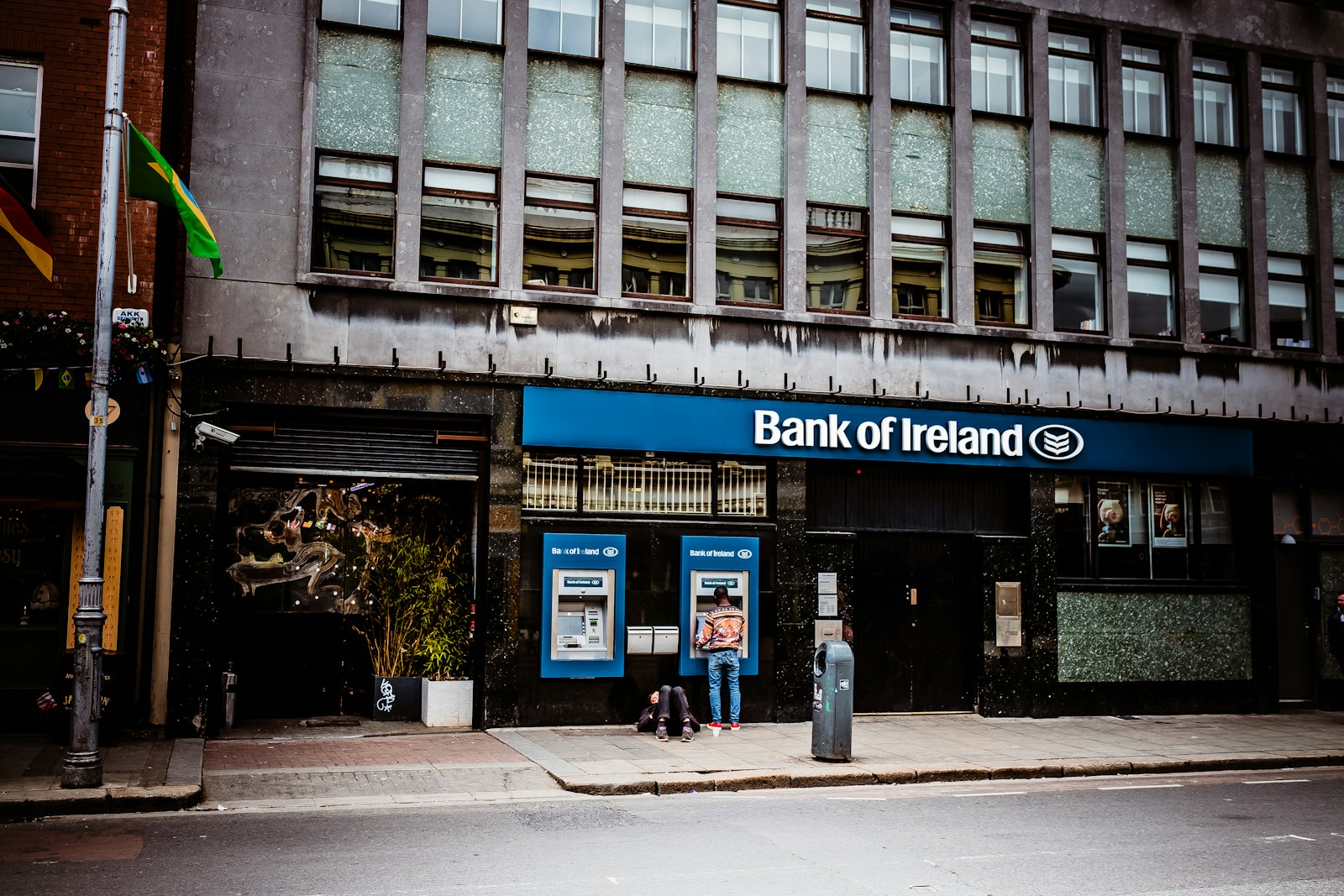
Photo by Cory Woodward on Unsplash
Banking is one of the earliest and most essential tasks when relocating to Ireland. Without a local bank account, you cannot receive your salary, pay bills, or manage your finances effectively. Yet American expats encounter unique challenges: FATCA compliance makes some Irish banks reluctant to accept US citizens, documentation requirements differ from US banking, and the process can feel bureaucratic and slow.
This guide walks you through opening an Irish bank account, understanding your options, and navigating the complications Americans face.
Understanding Irish Banks and Your Options
Major Irish Banks
Bank of Ireland: Largest bank, extensive branch network, long history. Available to Americans but with FATCA requirements.
AIB (Allied Irish Banks): Second-largest, nationwide presence, generally accessible to Americans.
Permanent TSB: Smaller but accessible, competitively priced.
An Post: Ireland’s postal service offers banking services with lower fees than traditional banks.
Digital Banks: Revolut, N26, Wise (formerly TransferWise) offer accounts with minimal documentation and online-only interfaces.
Credit Unions: Community-based and often more welcoming to newcomers, though with limited services.
Most Americans use one of the major banks (Bank of Ireland, AIB) or turn to digital banks if traditional banking proves difficult.
Why Digital Banks Appeal to Americans
Digital banks like Revolut have become extraordinarily popular among expats for good reasons:
Easy account opening: Online application taking 10 minutes
Minimal documentation: Often just passport and address
No FATCA complications: Many digital banks either facilitate FATCA smoothly or simply ignore American requirements (though they shouldn’t)
Low fees: Minimal charges, free transfers to some destinations
Multi-currency support: Revolut allows holding multiple currencies and low-cost exchanges
However, digital banks have limitations: they’re not full-service banks, lack physical branches, and don’t offer mortgages or business accounts.
Most Americans use a digital bank for daily transactions and personal accounts while maintaining a traditional bank account for employment-related needs or investment accounts.
Opening an Account With a Traditional Irish Bank
Required Documentation
When visiting a bank to open an account, bring:
Passport: Your primary identification. Non-EU citizens (you) require passport identification—driver’s licenses aren’t sufficient.
Proof of Irish address: A utility bill, lease agreement, or letter from your landlord confirming your address. The document should be dated within the past 3 months.
Proof of income (if employed): Your employment contract or an offer letter from your employer confirming your salary.
Reference from your previous bank (if available): A letter from your US bank confirming your account history and good standing. This is helpful but not required. You can request this from your US bank before leaving the US or contact them from Ireland.
Tax ID/PPS Number (increasingly required): Your Irish PPS Number (Personal Public Service Number) if you’ve already obtained it. If not yet obtained, the bank will help you apply or you can provide your US Social Security number as a temporary identifier.
The Application Process
Visit a bank branch during business hours (typically 9am-5pm weekdays, limited Saturday hours). Bring your documentation.
Explain you want to open a current account (checking account) and possibly a savings account (savings account).
The bank employee will:
- Verify your identity and address
- Confirm employment and income
- Ask about the purpose of the account
- Request FATCA self-certification (discussed below)
- Open the account on the spot
- Provide your account details and temporary card
The entire process typically takes 20-30 minutes.
Account Type Selection
Current Account: Your primary checking account. Comes with a debit card, checkbook, and online/mobile banking access. Used for salary deposits and bill payments.
Savings Account: Separate account for savings, often with modest interest. Helps organize finances.
Multi-Currency Account: Offered by some banks, allowing you to hold euros, dollars, and other currencies. Useful if managing finances across countries.
Open a current account (essential) and a savings account (helpful for organizing money). Skip multi-currency accounts initially unless you specifically need one.
FATCA and American Citizens
The Foreign Account Tax Compliance Act (FATCA) requires foreign financial institutions to report accounts of US citizens to the IRS. Irish banks comply with FATCA.
When opening an account, you’ll complete a W-9 form (IRS Form W-9 or equivalent) or FATCA self-certification, confirming your US citizenship and Social Security number.
This information is reported to the IRS annually. There’s nothing illegal or problematic about this—it’s standard compliance.
However, some Irish banks have exited American customer relationships due to FATCA compliance costs. If a bank refuses your application citing FATCA, try another bank. Most major banks still accept American accounts.
Opening Timeline and Costs
Processing takes hours to days. You receive your debit card immediately or within a few business days. Your checkbook arrives by mail within 2-3 weeks.
Opening an account is free. Monthly account maintenance is typically free for current accounts (though some banks charge €5-€15 monthly). Savings accounts may earn minimal interest (0.01-0.5% annually).
Digital Bank Account Opening
Revolut (Most Popular)
Download the Revolut app, complete a simple signup:
- Enter email and password
- Verify your identity via passport scan
- Confirm your address
- Provide tax identification
Within minutes, you have a Revolut account with an IBAN and can begin transferring money. You can order a physical card (free) for ATM withdrawals and in-person payments.
Advantages: Extraordinarily easy, nearly instant, multi-currency support, low fees.
Disadvantages: Not a full-service bank, no overdraft facility, customer service entirely digital, limited for salary deposits (some employers won’t recognize it).
Wise
Wise (formerly TransferWise) specializes in international money transfers. You can open an account account holding multiple currencies.
Opening a Wise account: Download the app, verify identity and address, select currencies.
Best for: International transfers and managing money across multiple countries. Less suitable as primary banking.
N26
N26 is a German digital bank available in Ireland, offering checking accounts with debit cards.
Similar signup process to Revolut. Less developed than Revolut but viable for basic banking.
Hybrid Approach: Multiple Accounts
Most savvy American expats use both:
Traditional bank account (Bank of Ireland or AIB): Establishes legitimate Irish banking history, facilitates salary deposits (some employers require traditional bank accounts), enables overdraft facilities and credit products.
Digital bank account (Revolut): Used for daily transactions, international transfers, and multi-currency management. Lower fees and easier access.
This hybrid approach provides security, flexibility, and competitive features.
Managing Your Account
Online and Mobile Banking
All Irish banks offer online banking (via website) and mobile apps. Set up online banking immediately—it’s how you monitor balances, transfer money, and pay bills.
Login to your bank’s website or download their mobile app. Register with your account number and online password. Most banks use two-factor authentication (SMS code or app-based confirmation) for security.
Debit Cards and ATMs
Your debit card works at any ATM marked with your bank’s logo or the Cirrus or Maestro symbols (most European ATMs). Withdrawals from your own bank’s ATMs are free; other banks’ ATMs may charge €1-€2 per transaction.
In-person purchases with your debit card incur no fee unless you use a card outside the EU (which doesn’t apply to your Irish card).
Transfers and Payments
SEPA transfers: Irish bank accounts have IBANs (International Bank Account Numbers). You can receive transfers from abroad and transfer money internationally using SEPA (Single Euro Payments Area) transfers.
Provide your IBAN to your US employer for salary deposits. Format: IE + bank code + branch code + account number (26 characters total). Your bank provides your IBAN.
Bill payments: Set up standing orders (scheduled recurring payments) for rent, utilities, and subscriptions. Your bank’s online portal allows you to create these easily.
Mobile payments: Apple Pay, Google Pay, and Revolut integrate with Irish cards for contactless payments.
Overdraft and Credit
Irish banks offer overdraft facilities (short-term borrowing when your account goes negative). These are optional; you can request overdraft protection or decline it. Overdraft interest is typically 7-10% annually—expensive but available for emergencies.
Building Irish credit history enables future credit products (loans, mortgages). Regular account management and on-time bill payments establish creditworthiness.
Transferring Money From the US
From Your US Bank
You can transfer money from your US bank account to your Irish account using:
Wire transfer: Your US bank sends money directly to your Irish bank account via SWIFT. Takes 2-5 business days. Fees are $20-$50 from your US bank; your Irish bank may add €5-€15.
ACH transfer: Only available if your US bank offers international ACH, which most don’t. Not a practical option for most Americans.
App-based transfer services: Use Wise or OFX to transfer. Fees are typically 1-2% of the amount. Takes 2-3 business days.
Using Wise for Transfers
Wise is particularly valuable for regular US-to-Ireland transfers. You initiate a transfer through their app or website, exchange USD to EUR at real market rates (plus a small fee), and the money arrives in your Irish account.
Cost: 1-2% compared to 3-5% with traditional banks.
Your First Transfer Strategy
Before moving to Ireland, transfer a modest amount (€500-€1,000) to test the process. Confirm that the transfer arrives correctly and that your bank account is properly established.
Once you’re confident in the process, transfer larger amounts.
Special Considerations
Business Accounts
If you’re self-employed or starting a business, ask about business current accounts. These have different requirements and fees than personal accounts but are necessary for separating business and personal finances.
Most Irish banks require sole traders (self-employed individuals) to have a PPS Number and proof of registration with Revenue before opening a business account.
Tax Residency and Banking
If you’re considered Irish tax-resident (you’ve moved to Ireland), your bank may ask about this during account opening. Be honest—tax residency and banking residency are related but separate.
As an Irish resident opening an Irish account, you’ll need to confirm your tax residency status. This is routine and expected.
Troubleshooting Common Issues
“We Don’t Accept American Citizens”
If a bank declines your application citing FATCA, try another bank. Major banks almost universally still accept Americans. Smaller banks or credit unions sometimes refuse due to compliance concerns, but you have options.
If all Irish banks decline you, Revolut or Wise remain viable alternatives for essential banking.
Slow Processing
Irish banking is generally slower than Americans expect. Account opening might take a week. Transfers take several business days. This isn’t malfunction—it’s standard. Plan accordingly and avoid expecting American banking speed.
Overdraft Charges
Accidentally overdrawing your account incurs fees (€5-€15 per overdraft plus interest on the negative balance). Avoid this by monitoring your balance and setting up alerts.
Conclusion: Banking in Ireland is Manageable
Opening an Irish bank account is essential and manageable. Whether you choose a traditional bank (for stability and full services) or a digital bank (for speed and low fees), you’ll quickly establish the banking infrastructure for Irish life.
The key is beginning early—open your account within your first week in Ireland. Have your documentation ready, bring your passport and proof of address, and patiently work through the process. Within a week, you’ll have a functional Irish bank account, and financial operations will proceed smoothly.
Your Irish banking journey starts now.

Author: jonathan
Jonathan is the publisher of Irishtopia.net, Anglotopia.net, and Londontopia.net. He's passionate about travel and learning about other cultures. He's been to Ireland several times, and uses his travel expertise for Irishtopia!