
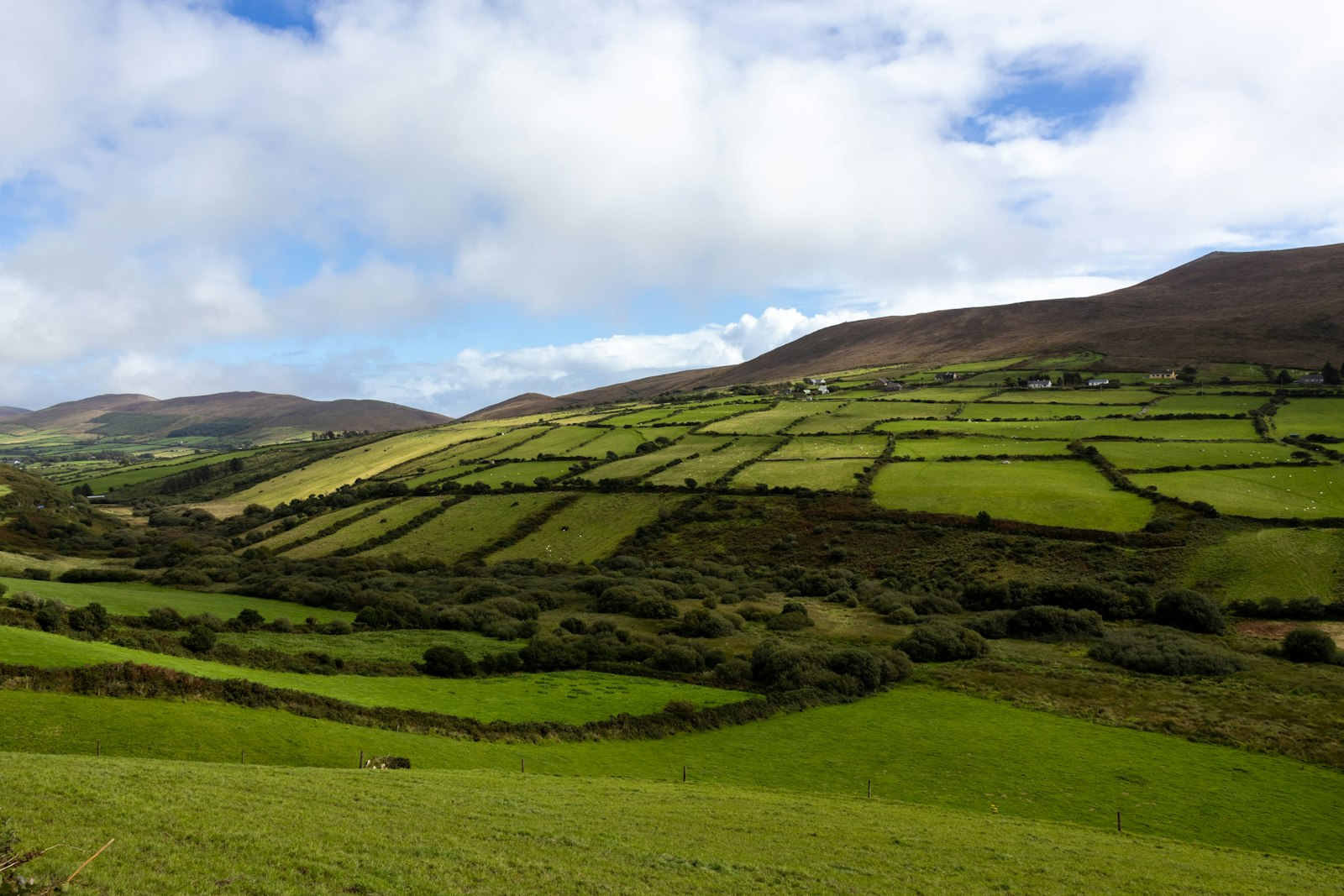
Photo by Stephanie Chriselle on Unsplash
Introduction
Imagine if the United States had been settled not by people seeking religious freedom or economic opportunity, but by government-sponsored colonists whose purpose was explicitly to transform the existing culture, religion, and social structure of the land. That’s essentially what happened in Ireland during the 16th and 17th centuries through a systematic program called the Plantations of Ireland.
For Americans, the Plantations represent a critical and often overlooked aspect of colonial history. While we learn about European settlement of the Americas, we less frequently examine how the same patterns of colonial settlement and settler colonialism were first deployed in Ireland—a neighboring island that the English crown controlled. Ireland’s experience with plantations became a template for English colonialism in the New World.
The Plantations of Ireland weren’t haphazard settlement. They were deliberate government policies aimed at replacing an existing Catholic, Irish, Gaelic-speaking population with English and Scottish Protestant settlers. These plantations transformed Ulster, Munster, and Leinster, creating new social structures, new land ownership patterns, and new religious and cultural divisions that persist in Ireland today.
What Were the Plantations?
A “plantation” in 16th-century terminology didn’t mean a farm. Instead, it referred to a systematic settlement project where land was allocated to settlers under government oversight. The crown granted land to “planters” (settlers) who agreed to build homes, farm the land, and establish English-style settlements. The implicit purpose was to replace the existing Irish population and culture with English ones.
The plantations operated on a fascinating (and troubling) economic model. English investors and nobles would receive grants of Irish land confiscated from Irish lords. These planters would then recruit tenants—sometimes English, increasingly Scottish—to settle on the land. The planters would organize the settlement according to English patterns, building towns and establishing English law and customs. Existing Irish inhabitants would be displaced, pushed off good land, or reduced to subordinate tenant status.
From the English crown’s perspective, plantations solved multiple problems simultaneously. They provided a way to reward loyal nobles and investors with land and prestige. They created English settlements that would serve as anchors for English culture and control in Ireland. They displaced Irish populations that might resist English rule. And they generated wealth for the crown through land grants and taxes.
The First Plantations: Laois and Offaly
The first major plantation attempt began in the 1550s in Laois and Offaly, in the Midlands of Ireland. These regions had been controlled by the O’Moore and O’Connor families, who resisted English authority. The English crown decided to respond by confiscating the lands and planting English settlers there.
The original plan was ambitious. The crown intended to establish a new English shire called “King’s County” (later renamed Offaly) and “Queen’s County” (later Laoise), create new towns, and transplant English settlers who would create a zone of English control in the Irish interior. It was an attractive prospect for English nobles and investors looking to profit from Irish colonization.
The reality proved more complicated. Irish resistance was fierce. The displaced O’Moore and O’Connor families didn’t simply abandon their lands. They engaged in constant warfare against the new settlers, raiding settlements and making life difficult for the planters. The settlers, not expecting this level of resistance, found themselves in a war zone.
Moreover, the new settlements proved difficult to maintain. English settlers were reluctant to relocate to Ireland, which many viewed as wild and dangerous. Recruitment was slow. Those who did come often found the conditions harsh and the local resistance unrelenting. Several planned towns failed to develop or were abandoned.
Despite these difficulties, the Laois-Offaly plantation succeeded in transforming the region over time. English settlements took root. English law gradually extended its reach. Irish culture in these regions was increasingly displaced. The plantation, though chaotic, had achieved its essential purpose of extending English control and English settlement.
The Munster Plantation: Ambitious Dreams
The next major plantation attempt was far more ambitious. In the 1580s, after decades of resistance by the Earl of Desmond in Munster, the English crown decided to transform the entire province through plantation. The Desmond wars had devastated Munster, causing famine and depopulation. The English saw this as an opportunity.
The Munster Plantation attracted significant investment. Major investors and nobles, including the famous English poet Edmund Spenser, received enormous land grants. These investors were expected to bring in settlers and create English-style settlements throughout the province. The scale was impressive—land grants totaling over 500,000 acres were distributed to planters.
The ambitions were also explicitly cultural. The planters weren’t simply seeking profit. Many, including Spenser, believed they were engaged in a civilizing mission, transforming what they viewed as a wild, backward Irish culture into an English one. This wasn’t accidental destruction—it was intentional cultural replacement.
Spenser’s own experience in Munster is illustrative. As an English official and planter, he lived among the Irish and became convinced that the Irish could never be truly civilized or assimilated into English culture. His writings about Ireland reveal a deep contempt for Irish culture and society. He advocated for policies that would essentially eliminate Irish identity—forcibly assimilating those who would convert to Protestantism and English ways, and expelling or subjugating those who wouldn’t.
The Munster Plantation brought settlers, but again faced significant resistance. Irish families displaced from good lands engaged in constant raids and warfare. The settlements were sometimes more like military camps than farming communities, with settlers living in fortified positions for protection.
Like the Laois-Offaly plantation, Munster eventually developed into English-controlled territory. But the process took decades and involved constant conflict. The plantation succeeded in extending English control, but at significant cost and without the rapid transformation of Irish society that planters had hoped for.
The Plantation of Ulster: The Grand Strategy
The Plantation of Ulster, beginning in the early 1600s, represented the culmination of the English crown’s plantation strategy. It was larger, better organized, and more systematic than previous plantations. It would ultimately be more successful in transforming the region.
Ulster had been the center of Irish resistance throughout the 1590s, with Hugh O’Neill and other northern lords fighting the English crown. After the peace in 1603 and the subsequent Flight of the Earls in 1607, Ulster lands fell into English hands. The crown decided to make Ulster the site of the most ambitious plantation yet.
The Ulster Plantation brought settlers from Scotland and England in unprecedented numbers. Scottish settlers, particularly from the southwest of Scotland (only about 20 miles from Ulster across the North Channel), began crossing to Ulster in large numbers. They settled in what would become County Antrim and County Down. English settlers, meanwhile, concentrated more in other parts of Ulster.
The scale was enormous. Over the course of the 17th century, approximately 100,000 settlers came to Ulster—a massive influx that fundamentally transformed the region’s demographics. Within a generation or two, whole areas of Ulster had more Scottish and English settlers than native Irish inhabitants.
The Ulster Plantation succeeded where previous plantations had been only partially successful because of several factors. First, the scale of settlement was much larger—with so many settlers arriving, they created critical mass that couldn’t be easily dislodged. Second, the organization was better. The crown carefully regulated the plantation, dividing land into “proportions” of specific sizes and requiring planters to bring in specific numbers of settlers. Third, the Irish resistance had been weakened by the Flight of the Earls, removing the organized military opposition that had made earlier plantations difficult.
The Life of Planters and Settlers
Who were the people who came to Ireland as settlers in the plantations? They were a diverse group. Some were younger sons of English gentry seeking to establish themselves. Some were English investors seeking profit from land. Some were Scottish farmers and craftsmen seeking better economic opportunities. Some were military men who had served in Ireland and received land as a reward for service.
Most were not seeking religious conversion of the Irish. That came later. Instead, they were seeking land, wealth, and the opportunity to establish themselves in the expanding English/Scottish colonial enterprise. The religious and cultural transformation was partly a means to that end—establishing English law and culture made it easier to rule the Irish and control the wealth generated.
For the settlers themselves, life in the plantations was often difficult. They faced resistance from Irish populations, isolation from home, harsh climate and weather, and the challenge of establishing farms and settlements in an unfamiliar landscape. Many settlers eventually succeeded and became wealthy—but others failed and returned home or died in Ireland.
Over generations, planters and settlers developed a complex relationship with Ireland. They were never fully English or Scottish—they developed their own identity as Protestants and colonists in Ireland. By the 18th century, these settlers and their descendants had become “Anglo-Irish” or “Irish Protestant”—people who saw themselves as Irish but were fundamentally different in culture and religion from the native Catholic Irish.
The Transformation of Society and Land Ownership
The plantations fundamentally transformed Irish land ownership patterns. Before plantations, land was controlled by Irish lords who operated according to Gaelic custom and Celtic inheritance patterns (which differed from English primogeniture). After plantations, land increasingly was held by English settlers according to English law and English inheritance patterns.
This wasn’t simply a matter of different people owning land. It represented a fundamental shift in how land could be used, inherited, and bought/sold. English law allowed for more fluid transfer of land, which enabled wealthier planters and settlers to accumulate vast estates. Gaelic custom had embedded community rights and obligations that didn’t translate easily into English property law.
The consequences for Irish people were severe. They found themselves displaced from lands their families had held for generations, now governed by foreign law and foreign owners. Those who remained on Irish lands as tenants found themselves subject to English landlords operating according to English economic principles rather than the traditional reciprocal obligations between Irish lords and their people.
Over time, the vast majority of Irish land came to be owned by Anglo-Irish Protestants—descendants of planters—while the Irish Catholic population became tenant farmers with limited rights and significant obligations. This pattern of land ownership would define Irish society for the next two centuries and create grinding poverty for the Catholic majority.
Religious and Cultural Transformation
A crucial aspect of the plantations was their role in spreading Protestantism in Ireland. The settlers were typically Protestant (though not always—the Munster Plantation included some Catholic planters). By their presence, they introduced Protestant churches, Protestant education, and Protestant cultural practices.
This wasn’t initially a matter of forcible conversion. Instead, Protestants and Catholic Irish increasingly lived in separate communities. Protestant settlers built their own towns, established their own churches, and maintained their own social institutions. Over time, Protestantism became associated with English authority, land ownership, and wealth, while Catholicism became increasingly associated with the displaced Irish and the poor.
The plantations also accelerated the decline of the Irish language. English settlers spoke English and expected their workers and tenants to speak English to communicate with them. Over generations, the Irish language was relegated to the poor and rural areas. Gaelic culture—music, poetry, learning systems—lost its elite patrons. When the old Irish nobility fled, they took with them the great patrons who had supported Gaelic learning and culture.
By the end of the 17th century, the cultural landscape of Ireland had transformed. Gaelic Ireland was no longer the dominant culture in most regions. English became increasingly the language of power and opportunity. Protestantism had become the religion of the colonizers and controllers. And the old Gaelic aristocracy had been replaced by Anglo-Irish Protestant gentry.
Resistance and Coexistence
The plantations weren’t passively accepted. Irish people resisted displacement, engaged in raids against settlements, and refused to abandon their language and culture despite pressure to do so. The Desmond wars, the Nine Years War, and various other conflicts were partly reactions to plantation attempts and English land seizures.
In some cases, over time, planters and Irish populations found ways to coexist. Intermarriage occurred, particularly across religious lines in the early generations. Some planters learned Irish. Some planters’ descendants adopted aspects of Irish culture. A complex hybrid society emerged in some regions, particularly in the south and west, where planters and Irish populations lived in close proximity.
However, in Ulster, where the plantation was most successful and the influx of settlers was most massive, the separation between the settler community and the native Irish was more pronounced. The settlers established a distinct society with its own institutions, churches, and cultural practices that remained separate from the Irish Catholic population.
The English View: Civilization and Conquest
English officials and planters justified the plantation system through an ideology of civilization and improvement. They portrayed Irish society as backwards, primitive, and in need of English guidance and transformation. Edmund Spenser’s writings are the most famous example of this ideology—his depiction of Irish people as savage and uncivilized justified, in his view, their displacement and forced assimilation.
This ideology justified tremendous violence and displacement. Irish people were portrayed as incapable of governing themselves or owning land properly according to English standards. Therefore, it was supposedly in their own interest to be displaced, subordinated, and taught English ways. This ideology would echo through European colonial projects for centuries—justifying the displacement of indigenous peoples in the Americas, Africa, and Asia.
In reality, the Irish had a sophisticated society with its own laws, culture, and traditions. The English characterization of Ireland as primitive was a colonial ideology designed to justify conquest and extraction of wealth. But the ideology was effective—it convinced English settlers and crown authorities that they were engaged in a civilizing mission, not naked conquest.
Economic Impact and Wealth Extraction
The plantations, from an economic perspective, were designed to enrich the English crown and English planters. Land grants were essentially gifts of valuable property. Planters who succeeded became wealthy, which enriched investors back in England. The wealth that Ireland generated through its agricultural and natural resources increasingly flowed to English and Scottish owners rather than Irish ones.
For the Irish people, the plantations meant economic displacement and impoverishment. Those who remained on Irish lands increasingly became tenant farmers with limited rights, paying rents to English landlords. The system was designed to extract wealth from Ireland and direct it to the English colonizers and the English crown.
This pattern of colonial economic extraction would shape Irish history for centuries. Ireland became a resource colony—a source of wealth for distant English landlords and the English crown. Irish poverty and English wealth became increasingly intertwined with the plantation system that had displaced the native population and created a colonial economy.
The Legacy in Ireland Today
The effects of the Plantations of Ireland can still be seen in Ireland today. The division between Protestant (primarily in Ulster) and Catholic (throughout the rest of Ireland) regions traces directly back to the plantations. The names of towns, the patterns of land ownership, the religious demographics—all reflect the plantation era.
In Northern Ireland particularly, the plantation’s effects remain vivid. The Protestant population concentrated in the northeast traces its ancestry to Scottish and English settlers of the 17th century. The English language, which became dominant during the plantation era, remains the primary language of Ireland (though Irish is experiencing a revival).
The plantations also set the pattern for English colonial expansion in the Americas. Many of the first English colonists in North America had experience in Ireland, either as officials or as settlers. The methods developed in Ireland—establishing English settlements, displacing existing populations, imposing English law and culture—were exported to North America and became the template for English colonization.
Understanding Colonialism Through the Irish Experience
For Americans, understanding the Plantations of Ireland is crucial for understanding colonialism itself. Ireland was Europe’s laboratory for settler colonialism. The methods, justifications, and patterns developed in Ireland were then applied throughout the colonial world.
The Irish experience shows us several important truths about colonialism. First, that colonialism is fundamentally about displacing existing populations and replacing them with settlers loyal to a metropolitan power. Second, that colonialism justifies itself through ideologies of civilization and improvement that mask naked conquest. Third, that colonialism creates lasting divisions and injustices that persist for centuries. Fourth, that the colonized resist, creating conflict and violence that persists even after formal conquest.
Conclusion: Transformation Through Settlement
The Plantations of Ireland represent one of the most significant transformations in European history. They completely restructured Irish society, replacing Gaelic nobility with English planters, transforming land ownership patterns, spreading Protestantism, and subordinating the Irish Catholic population to English colonial rule.
For Americans interested in Irish history and heritage, the plantations explain why Ireland became divided between Catholic and Protestant, Irish-speaking and English-speaking, poor and wealthy. They explain why so many Irish eventually emigrated to America, seeking escape from a society where they were colonized and subordinated. And they explain the patterns of Irish-American experience in the United States.
The plantations also represent an early chapter in European colonialism. The methods, justifications, and effects visible in Ireland would repeat, with variations, throughout the colonial world. Understanding Ireland’s experience helps us understand colonialism itself—its mechanisms, its violence, and its lasting consequences for colonized peoples everywhere.

Author: jonathan
Jonathan is the publisher of Irishtopia.net, Anglotopia.net, and Londontopia.net. He's passionate about travel and learning about other cultures. He's been to Ireland several times, and uses his travel expertise for Irishtopia!