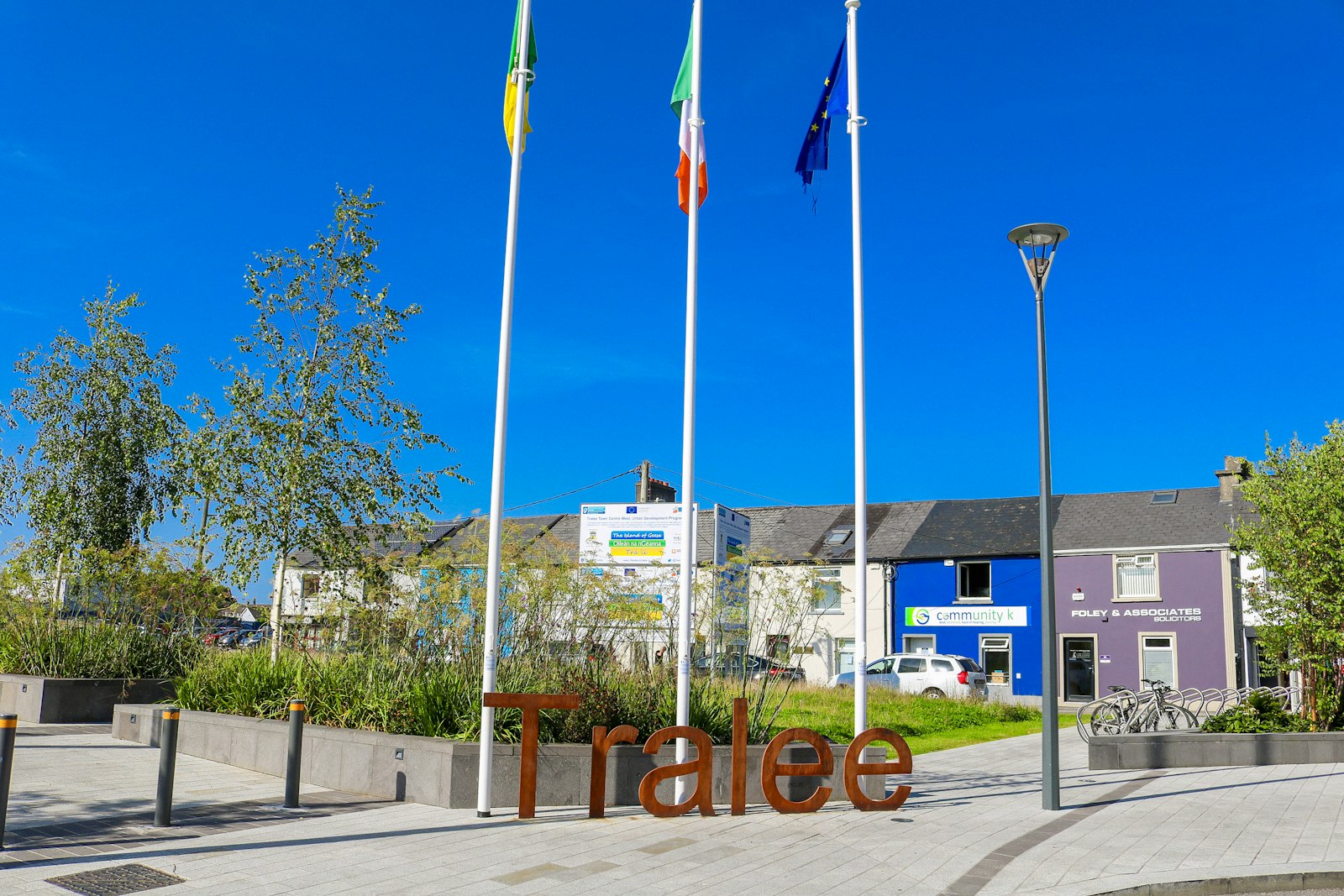
Photo by Dahlia E. Akhaine on Unsplash
One of the first challenges American visitors face when navigating Ireland is pronouncing place names. You’ll see “Dún Laoghaire” on a sign and have no idea how to pronounce it. You’ll hear someone mention “Tuam” and struggle to understand what they’re saying. You’ll encounter “Sligo,” “Letterkenny,” or “Clonmacnoise,” each with pronunciations that seem to bear no relationship to their spellings.
The problem is that Irish place names follow Irish language pronunciation rules, not English ones. Many place names have been Anglicized over centuries of English rule, meaning the English spelling often obscures the Irish pronunciation. Other place names have remained Irish, meaning Irish pronunciation rules apply. Without understanding Irish phonetics, Irish place names can seem impossibly difficult.
However, learning to pronounce Irish place names is entirely possible, and doing so transforms your experience of traveling in Ireland. You’ll move from being a tourist confused by signs and names to someone who can navigate confidently and communicate with locals using place names they’ll actually recognize. Moreover, learning Irish place name pronunciation offers insight into Irish language, Irish history, and how Irish culture names its landscape.
Understanding Irish Phonetics
Before diving into specific place names, understanding basic Irish phonetic principles is essential. Irish spelling follows consistent patterns, but those patterns differ significantly from English spelling patterns.
Vowels in Irish carry different values than in English. Irish has short vowels and long vowels (marked with a fada, or accent mark—á, é, í, ó, ú), and these carry distinct sounds.
- A (short) sounds roughly like “ah” in “cat”
- Á (long) sounds like “aw” in “law”
- E (short) sounds roughly like “eh” in “bed”
- É (long) sounds like “ay” in “say”
- I (short) sounds roughly like “ih” in “bit”
- Í (long) sounds like “ee” in “see”
- O (short) sounds like “aw” in “law”
- Ó (long) sounds like “o” in “go,” but drawn out
- U (short) sounds like “uh” in “but”
- Ú (long) sounds like “oo” in “moon”
Consonants in Irish sometimes sound similar to English, but sometimes quite different, particularly affected by surrounding vowels. A crucial rule: in Irish, consonants are either slender (preceded or followed by e or i) or broad (preceded or followed by a, o, or u), and this dramatically affects their pronunciation.
This slender-broad distinction creates pronunciation patterns that seem random to English speakers but which follow consistent logic in Irish.
Major Cities and Well-Known Places
Let’s begin with place names you’re most likely to encounter.
Dublin is relatively straightforward: “DUB-lin,” with stress on the first syllable. The Irish name “Baile Átha Cliath” (BAH-luh AW-huh CLEE-uh) means “Town of the Ford of Hurdles,” but English speakers and most Irish people simply use the English name.
Cork rhymes with “fork.” The second-largest city presents no pronunciation challenge for English speakers, though the Irish name “Corcaigh” (KOR-kuh) is more complex.
Galway rhymes with “hallway”—straightforward for English speakers. The Irish “Gaillimh” (GAL-iv) is less intuitive but rarely used by English speakers even in Ireland.
Limerick is pronounced “LIM-er-ick”—the third syllable is not “rick” as in “trick” but rather a schwa sound like the “a” in “about.” The city rhymes with itself: limerick, the humorous five-line poem, comes from the city’s name, not vice versa.
Waterford is “WAW-ter-ford”—straightforward English pronunciation. The Irish “Port Láirge” (Port LAWR-guh) appears on bilingual signs.
Derry/Londonderry presents a political pronunciation issue. The city is called “Derry” by Irish nationalists and “Londonderry” by unionists. The pronunciation is “DARE-ee” (Derry) or “Lun-dun-DARE-ee” (Londonderry). If you’re unsure, “Derry” is the increasingly common usage.
Donegal is “DUN-eh-gawl”—three syllables, with stress on the first. The Irish “Dún na nGall” means “Fort of the Foreigners.”
The Tricky Place Names
These places have pronunciations that non-Irish speakers frequently get wrong.
Dún Laoghaire appears frequently on signs in Dublin’s coastal area. The pronunciation is “Doon LEAR-uh” or “Doon LEAR-ee.” The “gh” in Irish is silent or indicates length, not a hard “g” sound. The name means “Leary’s Fort.”
Sligo is “SLIG-oh”—stress on the first syllable. It sounds almost like “slick-o” if pronounced quickly. It derives from “Sligeach,” meaning “the shelly place.”
Tuam is “TOO-um” or “TOO-am”—one syllable that sounds almost like “toom.” Americans often mispronounce it as “TWAM” or “TOO-wam,” neither of which is correct.
Cavan is “CAV-un”—two syllables, not the three syllables “Cav-an-un” that some Americans use. The stress is on the first syllable.
Louth is “LOWTH” (rhymes with “south” or “mouth”), not “LUWTH” or “LOOTH.” This small county’s name trips up many visitors.
Wicklow is “WIK-low”—straightforward, but worth confirming because many Americans instinctively want to add an extra syllable.
Antrim is “AN-trim”—stress on the first syllable, two syllables total.
Armagh is “ar-MAH”—two syllables, with stress on the second. The Irish “Ard Mhacha” means “The Height of Macha,” a pre-Christian goddess.
County Names and Regional Places
Each county has a name, and these vary significantly in difficulty.
Mayo rhymes with “play-oh.” It’s short for “County Mayo,” derived from “Maigh Eo” (MAY-oh).
Meath rhymes with “sheath” or “death,” not “meeth.” It’s “METH” in one syllable.
Laois is notoriously difficult: “LEESH.” The spelling provides almost no clue to pronunciation. It’s the one Irish place name that makes non-Irish speakers despair. The Irish name “Laighs” actually doesn’t clarify much either.
Offaly is “OFF-ah-lee”—three syllables, stress on the first. The Irish “Uachtar Ard” never appears in English contexts.
Tipperary is “Tip-PER-ar-ee”—four syllables with stress on the second. Americans often want to say “Tip-per-ARI” (putting stress on the third syllable), which is incorrect.
Kilkenny is “Kil-KEN-ee”—three syllables, stress on the second. Americans sometimes mispronounce it “Kill-KANE-ee,” which is wrong.
Longford is “LONG-ford,” straightforward for English speakers.
Westmeath is “West-METH,” with “meth” rhyming with “death.”
Roscommon is “ROSS-COM-un”—three syllables, stress on the first.
Monaghan is “MUN-a-hun”—three syllables, stress on the first. Americans often mispronounce it “MON-a-gun” or worse, “MON-a-ham.”
Irish-Language Place Names
Many Irish places have names that remain primarily Irish, particularly in the Gaeltacht and in more rural areas. Learning these names and their pronunciations offers valuable insight into Irish language.
Connemara (An Chonnemara) is “Con-eh-MAHR-uh”—four syllables, stress on the third. It’s a region in Galway, famous for its beauty and Irish-language culture.
Inishowen (Inis Eoghain) is “IN-ish-OH-wun”—three to four syllables. It’s a peninsula in Donegal known for Irish language and culture.
Achill (Acaill) is “AH-kul” or “AH-kil”—two syllables, stress on the first. It’s an island off County Mayo.
Aran (Arainn) is “AHR-un”—two syllables, stress on the first. The Aran Islands off Galway are famous for traditional Irish culture.
Glenveagh (Gleann Bheatha) is “Glen-VAH”—two syllables, stress on the first. It’s a national park in Donegal.
Dunfanaghy (Dún Fionnachaidh) is “Dun-FAN-a-hee”—four syllables, stress on the second. It’s a village in Donegal.
Carlingford (Cairlinn) is “Car-ling-FORD”—straightforward enough, but worth noting that the Irish name is rarely used.
Glendalough (Gleann dá Loch) is “Glen-DAH-lock” or “Glen-DAH-loch”—three syllables, stress on the first. It’s a valley in Wicklow famous for monastic ruins.
The Historical Names: Anglicizations
Many Irish place names have been Anglicized—the Irish names have been altered to fit English pronunciation patterns or have been completely replaced by English names. Understanding the original Irish can help you understand the Anglicized version.
Anglicized Irish place names often follow patterns:
Completely replaced names are more challenging. “Dublin” comes from Irish “Dubh Linn” (Black Pool), but the English name bears little resemblance to Irish. “Cork” comes from Irish “Corcaigh” (swamp), but the connection is not immediately obvious. These require historical knowledge to understand.
Using Irish Place Names
Interestingly, many native Irish speakers use English place names in everyday conversation, even for places that have Irish names. “Dublin” is used far more commonly than “Baile Átha Cliath,” even by Irish speakers. “Cork” is used more than “Corcaigh.” This isn’t because of English cultural dominance but rather because English versions are shorter and simpler.
However, some place names are more commonly used in Irish form, particularly in the Gaeltacht and in culturally conscious contexts. Place names like “Glenveagh” (Gleann Bheatha) or “Glendalough” (Gleann dá Loch) are equally common in their English and Irish forms.
When visiting Ireland, using English place name pronunciations is perfectly acceptable and expected. Irish people won’t judge you for saying “Dublin” rather than “Baile Átha Cliath.” However, making an effort to pronounce place names correctly shows respect for Irish culture and helps locals understand where you’re trying to go.
Practical Tips for Learning Irish Place Names
Develop a pronunciation guide for places you plan to visit before your trip. Write out phonetic pronunciations next to place names so you can practice. Listen to how Irish people pronounce places—ask locals, watch Irish tourism videos, listen to Irish radio.
Remember that Irish pronunciation is consistent once you understand the rules. A place name that seems random initially becomes logical once you grasp Irish phonetic principles. The reward for learning these principles is the ability to pronounce not just individual place names but to apply the rules to new place names you encounter.
Record yourself pronouncing place names and listen back. Compare your pronunciation to Irish speakers’ pronunciation. Don’t be shy about asking locals how to pronounce places—most Irish people are delighted that you’re making the effort.
Understand that some regional variation exists. A place might be pronounced slightly differently in different areas, particularly if it’s in an area where Irish is still spoken. These variations are typically minor, and either version will be understood.
Conclusion: Place Names as Cultural Entry Point
Learning to pronounce Irish place names correctly is more than a practical skill; it’s an entry point to Irish language, Irish culture, and Irish history. Every place name carries meaning—often describing the landscape, commemorating historical events, or honoring legendary figures. Understanding place name pronunciation helps you understand Ireland itself.
When you can pronounce “Dún Laoghaire” confidently, you’re not just demonstrating linguistic skill; you’re showing respect for Irish culture and claiming a small bit of Irish knowledge. When you correctly say “Tuam” or “Cavan,” you’re engaging with Irish language and Irish cultural tradition.
For American visitors, taking time to learn Irish place name pronunciation transforms the travel experience. You move from being a person confused by incomprehensible signs to someone who can navigate confidently and communicate clearly with locals. That transformation, however small, opens doors to more authentic Irish experience. It signals that you respect Irish culture enough to make the effort, and Irish people respond to that effort with warmth and deeper engagement.
The next time you encounter an Irish place name, take a moment to learn how it’s pronounced. Your appreciation of Irish culture will deepen, and your ability to navigate and communicate in Ireland will improve immeasurably.

Author: jonathan
Jonathan is the publisher of Irishtopia.net, Anglotopia.net, and Londontopia.net. He's passionate about travel and learning about other cultures. He's been to Ireland several times, and uses his travel expertise for Irishtopia!