
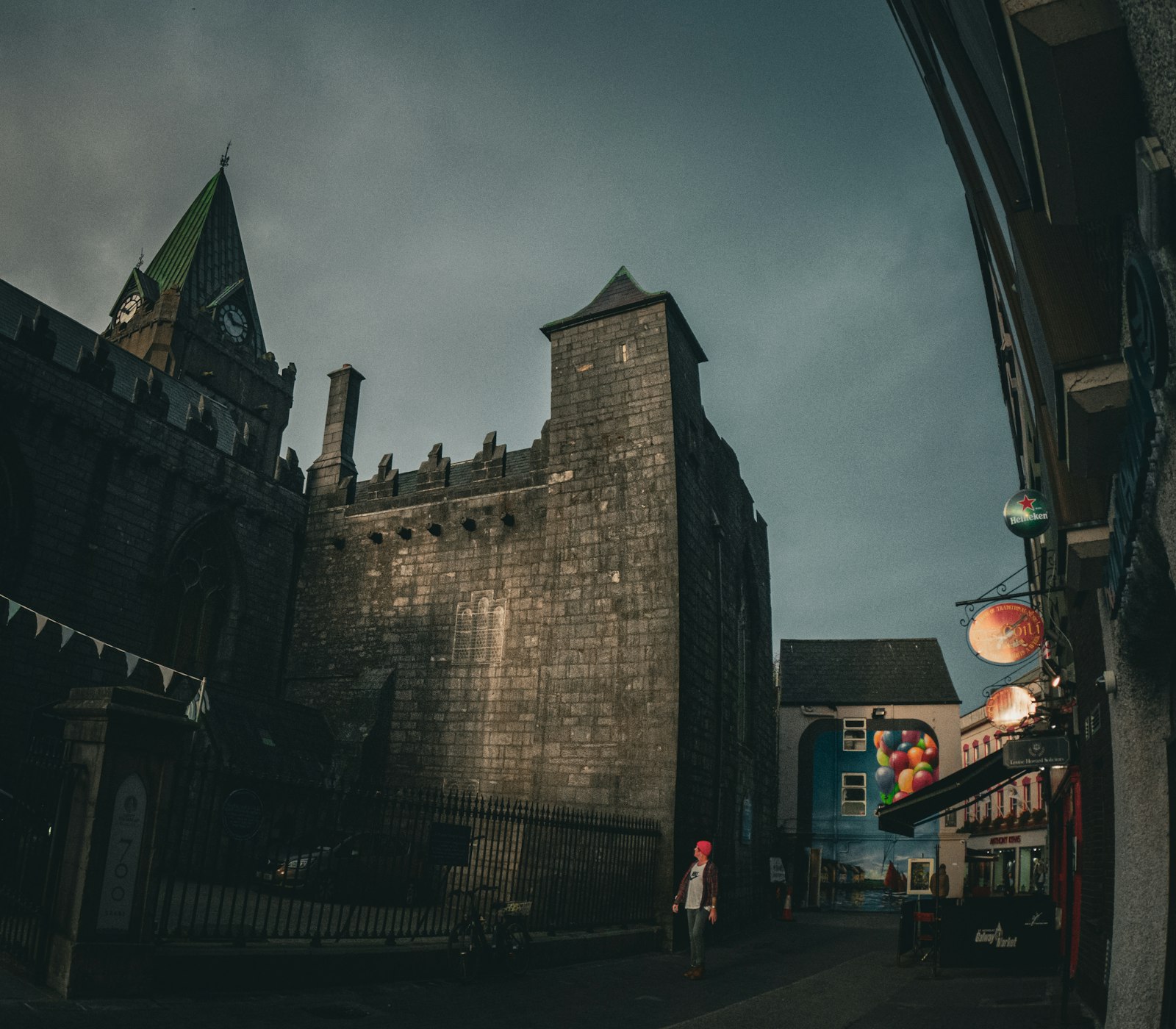
Photo by Thomas Werneken on Unsplash
Every October 31st, millions of Americans carve jack-o’-lanterns, distribute candy to costumed children, and engage in rituals that feel quintessentially American. Yet beneath these familiar traditions lies something far older and more mysterious: the ancient Celtic festival of Samhain, one of the four great cross-quarter days of the pagan year. To understand Halloween is to understand how cultural traditions migrate, transform, and persist across centuries and continents. It’s to trace a thread that connects modern American suburban trick-or-treating back to ancient fires on Irish hillsides where the boundaries between the living and the dead grew dangerously thin.
The story of how Samhain became Halloween is not a simple tale of cultural transplantation. It’s a complex narrative of religious suppression, cultural adaptation, immigration, commercialization, and ultimately, the resilience of ancient traditions that refuse to be forgotten. For Americans interested in Irish heritage, understanding this transformation offers profound insight into how cultures survive and evolve, and how a holiday that originated thousands of years ago in a small island nation has become a defining feature of American autumn.
The Ancient Festival: Samhain and the Celtic Calendar
To understand Samhain, you must first understand how Celtic peoples experienced time. Unlike the modern calendar divided into twelve solar months, the ancient Celtic calendar was organized around four major festivals that marked crucial transitions in the agricultural and pastoral year. These four festivals—Samhain, Imbolc, Beltane, and Lughnasadh—didn’t simply mark the seasons; they were believed to be times when the normal boundaries of the physical world became permeable, when spiritual forces were particularly active, and when the relationship between the human and divine worlds shifted fundamentally.
Samhain, celebrated on November 1st (though festivities began the evening before), marked the end of the harvest season and the beginning of the Celtic new year. In the agricultural cycles of Ireland and Celtic Britain, this timing makes perfect sense: by late October, the vast majority of the crop had been gathered in, animals had been selected for slaughter or winter survival, and the community was about to settle into the darkness and inward focus of winter. Samhain was the liminal moment between these two states—the last breath of the productive season and the first breath of the dormant one.
But Samhain was far more than a practical marker of seasonal change. It was understood to be a spiritual threshold. The word “Samhain” itself may derive from the Old Irish “Samh Fuin,” meaning “summer’s end,” but the festival’s spiritual significance far exceeded its calendrical function. According to Celtic belief, Samhain was the one night of the year when the barrier separating the living from the dead grew thin enough to become penetrable. The dead could walk among the living. Spirits and supernatural beings could interact with humans. The normal rules governing reality were temporarily suspended.
This wasn’t merely frightening; it was necessary and sacred. The Celts believed that maintaining a relationship with ancestors and with the divine world was essential for the community’s wellbeing. Samhain was the official occasion for this communion. It was a time to honor the dead, to acknowledge that death was part of life’s cycle, and to recognize that the boundary between living and dead was not absolute but permeable and negotiable.
Samhain Practices: How the Ancient Festival Was Celebrated
Our knowledge of exactly how Samhain was celebrated comes from a combination of sources: Christian texts written by monks describing pagan practices they were trying to suppress, fragmentary references in Irish mythology, archaeological evidence, and the practices that survived in transformed versions through the centuries. While we don’t have complete records, a consistent picture emerges of how this festival functioned.
Samhain was primarily a fire festival. Bonfires were lit on hillsides, with these fires serving both practical and spiritual purposes. Practically, as winter approached and animals were slaughtered, the bonfires provided heat and the opportunity to cook meat for preservation. Spiritually, the fires were believed to have protective and purifying qualities. People and livestock would pass between or near the fires, believing that the flames could cleanse them of illness and misfortune. The fires were also signals—visible across the landscape, they announced the arrival of this sacred time to all who could see them.
Samhain was a communal event. People would gather at these ritual fires, often at sites that held special spiritual significance—hilltops, ancient ritual sites, liminal spaces like the borders between territories. They would wear costumes made of animal hides and heads, disguising their appearance. These costumes served multiple purposes: they honored the animals being consumed in winter, they were believed to offer protection against malevolent spirits by making humans unrecognizable, and they may have represented spiritual or archetypal roles (perhaps shamanic or priestly figures communicating with the otherworld).
Food was central to Samhain celebrations. Feasts were held featuring the meat of recently slaughtered animals. These weren’t just practical; they were ceremonial, celebrating the successful harvest and acknowledging the deaths that would sustain the community through winter. There was also a particular food association with Samhain: barm brack, a fruit bread, and colcannon, a potato and cabbage dish, both traditionally served at Samhain. Particularly significant was the practice of setting aside food for the dead, an offering that acknowledged their continued presence and relationship to the living community.
Another crucial element of Samhain was divination. This was a night when the barrier to spiritual knowledge was understood to be thin. People would perform divinations attempting to learn about their futures—who they would marry, what would happen in the coming year, whether they would survive the winter. These weren’t superstitious games but spiritual practices undertaken with serious intent. Some divinations specifically involved fire: women would throw nuts into the flames, and the way the nuts burned would predict their romantic futures.
The Christian Transformation: Samhain Meets All Saints’ Day
The great transformation of Samhain began with Christianity’s arrival in Ireland in the 5th century. When Irish monks and scholars encountered the pagan festival of Samhain and the deep spiritual significance it held for the people they were trying to convert, they faced a challenge that the Church had encountered before: how to eradicate pagan practices while also respecting their hold on people’s hearts and maintaining the possibility of conversion.
The Church’s solution was brilliant and pragmatic: they didn’t eliminate Samhain; they absorbed and reinterpreted it. The Church had already established a feast day of All Saints on May 13th, commemorating Christian saints and martyrs. But in 609 CE, Pope Boniface IV moved All Saints’ Day to November 1st—the exact date that Samhain began. This was almost certainly not coincidental. By moving All Saints’ Day to align with Samhain, the Church created a direct substitution: instead of communing with pagan spirits and ancestors, Christians would honor Christian saints.
The movement of All Saints’ Day to November 1st meant that the evening before—Samhain’s traditional celebration night of October 31st—became “All Hallows’ Eve,” literally “the evening before the Day of All Saints.” “Hallows” comes from the Middle English term for “holy ones” (hallowed), so the night became associated with holy purposes. The Church was carefully repackaging Samhain’s spiritual significance into a Christian framework.
But here’s what’s crucial to understand: this wasn’t a clean replacement. The people of Ireland didn’t simply abandon their Samhain practices and adopt Christian ones. Instead, they blended them, creating a hybrid celebration that was partly Christian and partly pagan, with the pagan elements increasingly hidden beneath Christian language and practice. The bonfires continued but were now said to honor saints rather than protective spirits. The costumes persisted but were reinterpreted through Christian symbolism. The communion with the dead survived but was reframed as praying for the souls of the deceased rather than being visited by them.
The term “All Hallows’ Eve” gradually became shortened to “Hallowe’en” and eventually “Halloween,” and with each iteration, the Christian and secular meanings became more blended. The pagan festival of Samhain and the Christian feast of All Saints were becoming one holiday, even if no one was entirely conscious of it.
Medieval and Early Modern Transformations
During the medieval period, Samhain/Halloween traditions continued to evolve, shaped by local practices, regional variations, and changing religious interpretations. The connection between this night and the supernatural world intensified rather than diminished. While the Church tried to frame Halloween as a time to honor saints, the folk traditions throughout Ireland and Scotland continued to emphasize the night’s connection to death, the dead, and supernatural beings.
Medieval texts and folklore from Ireland and Scotland describe an increasingly elaborate supernatural landscape attached to Halloween. It was believed that witches gathered on this night. That fairies were particularly active and dangerous. That those with second sight could see spirits and otherworldly beings. That the dead literally walked among the living. Rather than diminishing with Christianity, these beliefs seemed to evolve and intensify, incorporating new elements (witches became particularly associated with Halloween) while maintaining the ancient core belief that this night was fundamentally different from all others.
By the medieval period, a set of practices associated with Halloween had crystallized. Bonfires continued to burn, though now they were sometimes called “bone fires” (suggesting they were lit with the bones of slaughtered animals, though this etymology is disputed). Costumes were worn, now sometimes described as “disguises” to avoid being recognized by dangerous supernatural beings. Games of divination continued, particularly games predicting marriage or death. Certain foods became associated with the night, particularly apples (which became part of divination games like “bobbing for apples”) and nuts, which were burned in fires.
Throughout the medieval period and into the early modern era, the actual practice of Halloween in Ireland became increasingly disconnected from the religious context the Church had tried to impose. In people’s understanding and practice, Halloween remained primarily a night when the supernatural was active and the boundaries between worlds grew thin, not particularly a night about honoring Christian saints. The Church’s attempt to Christianize Samhain had succeeded in language and official doctrine, but in practice, the people of Ireland continued a tradition that was fundamentally more pagan than Christian.
Immigration and the Atlantic Journey
The great transformation of Halloween from Irish tradition to American holiday began in the 19th century, with Irish immigration to the United States. Between the 1840s and 1920s, millions of Irish people immigrated to America, fleeing famine, poverty, and persecution. They brought their traditions with them, including their understanding of and practices around Halloween.
In 19th-century Ireland, Halloween remained a night of bonfires, costumes, divination, and folk games. It was one of the most important holidays in the Irish calendar. For Irish immigrants to America, maintaining these traditions became a way of keeping their cultural identity alive in a new country. They gathered to light bonfires (when local ordinances allowed), wore costumes, played games, shared food, and told stories about spirits and supernatural encounters.
Interestingly, the Irish immigrants who brought Halloween to America were often looked upon with some suspicion by the broader American culture. Many Americans in the 19th century viewed Irish Catholics as culturally foreign and religiously threatening. The Halloween celebrations these immigrants maintained seemed strange and superstitious to mainstream American culture, which by this point was largely Protestant and increasingly secular and scientific in orientation.
But something remarkable happened over time: American culture didn’t reject Halloween so much as it adopted and transformed it. The supernatural and spiritual elements that were central to Irish Halloween were gradually stripped away or made into entertainment rather than belief. The religious elements (however nominal) were similarly secularized. What remained was the dressing up, the trick-or-treating, the jack-o’-lanterns—the elements that could be fun and festive without requiring belief in an actual realm of spirits and the dead.
From Samhain to American Halloween: The Transformation
The evolution from Irish Halloween to modern American Halloween happened gradually and through multiple mechanisms. By the early 20th century, Halloween was becoming an American holiday, even among those without Irish ancestry. The trend accelerated rapidly.
One key transformation involved the meaning of costumes. In Irish tradition, costumes were worn partly for protective purposes (to hide from malevolent spirits) and partly for spiritual purposes (to embody otherworldly beings). In America, costumes became primarily about entertainment and pretend. You wore a costume to be scary or silly, not because you believed it would protect you from supernatural danger.
The jack-o’-lantern provides a specific example of this transformation. In Ireland, turnips were hollowed out and carved with grotesque faces, sometimes with candles inside. These were displayed on Halloween, and various folklore explanations exist for the practice—some suggest they were meant to ward off evil spirits, others claim they represent “Stingy Jack,” a figure from Irish folklore who was condemned to wander the earth carrying a lantern. When Irish immigrants arrived in America, they found that pumpkins—which were larger, more abundant, and easier to carve than turnips—worked even better. The jack-o’-lantern became specifically American, and over time, its meaning shifted from a supernatural warning device to a decorative symbol of the fall season and Halloween fun.
Trick-or-treating, perhaps the most iconic American Halloween tradition, likely has Irish roots, but its evolution into the familiar practice of children going door-to-door for candy is distinctly American. The practice may derive from medieval “souling,” in which poor people would go door-to-door offering to pray for the dead in exchange for food. Some Irish Halloween traditions involved young people going from house to house. But the modern American practice of children in costumes demanding candy is a uniquely 20th-century American invention, enabled by cheap candy manufacturing, suburban neighborhoods where children felt safe moving between houses, and increasingly commercial promotion of Halloween as a holiday specifically for children.
The commercialization of Halloween is perhaps the most significant transformation from its original form. What began as a spiritual celebration connected to death, the dead, and the boundary between worlds became, by the mid-20th century, a commercial holiday focused on consumer goods—costumes, decorations, candy. By the 21st century, Halloween has become one of the largest commercial holidays in America, second only to Christmas in spending.
Samhain Revived: The Modern Pagan Movement
Interestingly, as Halloween became increasingly secularized and commercialized in mainstream American culture, a countervailing movement began in the late 20th century. Modern pagans and Wiccans, seeking to reconstruct or reimagine ancient religious practices, adopted Samhain as one of their eight major sabbats (festivals). Contemporary paganism has revived Samhain as a specifically religious observance, celebrating it much as practitioners imagine ancient Celtic peoples did.
Modern Samhain celebrations by pagans and Wiccans often include elements that draw directly from historical practices and folklore: bonfires, seasonal foods, divination, and rituals honoring the dead. These celebrations are explicitly about acknowledging death as part of life’s cycle and maintaining connection with ancestors. In this sense, modern pagans have reclaimed Samhain from the commercial secularization that Halloween underwent, retrieving its deeper spiritual meaning.
This modern pagan Samhain movement is actually quite small in the broader context of American culture. The vast majority of Americans who observe Halloween in any form are not religious practitioners. But the existence of this modern Samhain revival is important because it shows that the original meaning and power of this ancient festival hasn’t been completely lost or forgotten. It persists, underground, ready to be reclaimed by those who seek it.
The Irish Connection Today
In Ireland today, Halloween remains a much bigger deal than it is for most Americans. While it’s increasingly influenced by American traditions and commercial culture, Halloween in Ireland maintains connections to older traditions that American Halloween has largely lost. Bonfires are still lit in many communities, particularly in rural areas. The holiday retains a somewhat more serious quality, a connection to death and the changing of seasons that feels less child-focused and commercial than American Halloween.
In Irish pubs around the world, Halloween is often celebrated with a self-consciousness about its Irish heritage. Americans interested in Irish culture often seek out Irish pubs specifically to celebrate Halloween with a sense of “authenticity” or connection to the tradition’s origins. While this can sometimes feel commercialized (the “authentic Irish Halloween experience” offered by bars capitalizing on American interest), it also keeps alive the understanding that Halloween has specific cultural and historical roots.
The relationship between modern Ireland and Halloween is complex. Irish people are generally aware that this is “their” holiday, something their ancestors created and that emigrated with them to America. At the same time, contemporary Ireland has been heavily influenced by American commercial culture, so the Halloween celebrated in Dublin today is not entirely different from the Halloween celebrated in New York. The globalization and Americanization of culture means that Ireland is reimporting a modified version of a tradition that originated there centuries ago.
The Cycle Completes: Halloween’s Journey Home
What makes the story of Samhain to Halloween so fascinating is that it demonstrates cultural transmission in all its complexity. A practice that originated in pre-Christian Celtic Ireland was absorbed and reinterpreted by Christianity, preserved in modified form through centuries, carried across an ocean by immigrants, transformed almost beyond recognition by a new culture, commercialized and secularized, and ultimately either abandoned (by mainstream culture that forgot its origins) or reclaimed (by a small but dedicated community of modern pagans seeking to revive ancient practices).
Today, when an American child in a store-bought costume goes trick-or-treating in a suburban neighborhood, and when a modern pagan lights a bonfire to honor ancestors on Samhain, and when an Irish person lights a bonfire in a rural village on November 1st, and when Americans crowd into Irish pubs seeking an “authentic Irish Halloween experience”—all of these are part of the same cultural story. Each iteration has transformed the original practice, sometimes losing elements and sometimes adding new ones, but all remain connected to that ancient threshold where the living and the dead were believed to meet.
Conclusion: Understanding Our Traditions
The journey from Samhain to Halloween teaches us something important about cultural traditions: they’re not static objects to be preserved unchanged, but living practices that evolve as they move through time and space. The Halloween celebrated in modern America is completely different from the Samhain of ancient Ireland, yet it’s also the same tradition, transformed but recognizable.
For Americans with Irish heritage, understanding this connection can deepen Halloween celebrations by adding layers of meaning. You’re not just participating in commercial fun; you’re participating in something that connects you to ancient Celtic spirituality, to Irish immigrants, to your own ancestry. You’re part of a chain of people stretching back centuries, all marked by this one particular night.
And perhaps most importantly, the story of Samhain to Halloween reminds us that even when traditions are diluted, commercialized, or transformed beyond recognition, something essential can survive. Deep human needs—to mark seasonal transitions, to acknowledge death and the dead, to gather communally, to contemplate the boundary between the known and the mysterious—these persist beneath the surface changes. Every time we gather on October 31st, regardless of whether we’re thinking about ancient Celtic spirituality or just enjoying the fun, we’re participating in something that stretches back thousands of years. That’s a kind of magic worth remembering.

Author: jonathan
Jonathan is the publisher of Irishtopia.net, Anglotopia.net, and Londontopia.net. He's passionate about travel and learning about other cultures. He's been to Ireland several times, and uses his travel expertise for Irishtopia!