
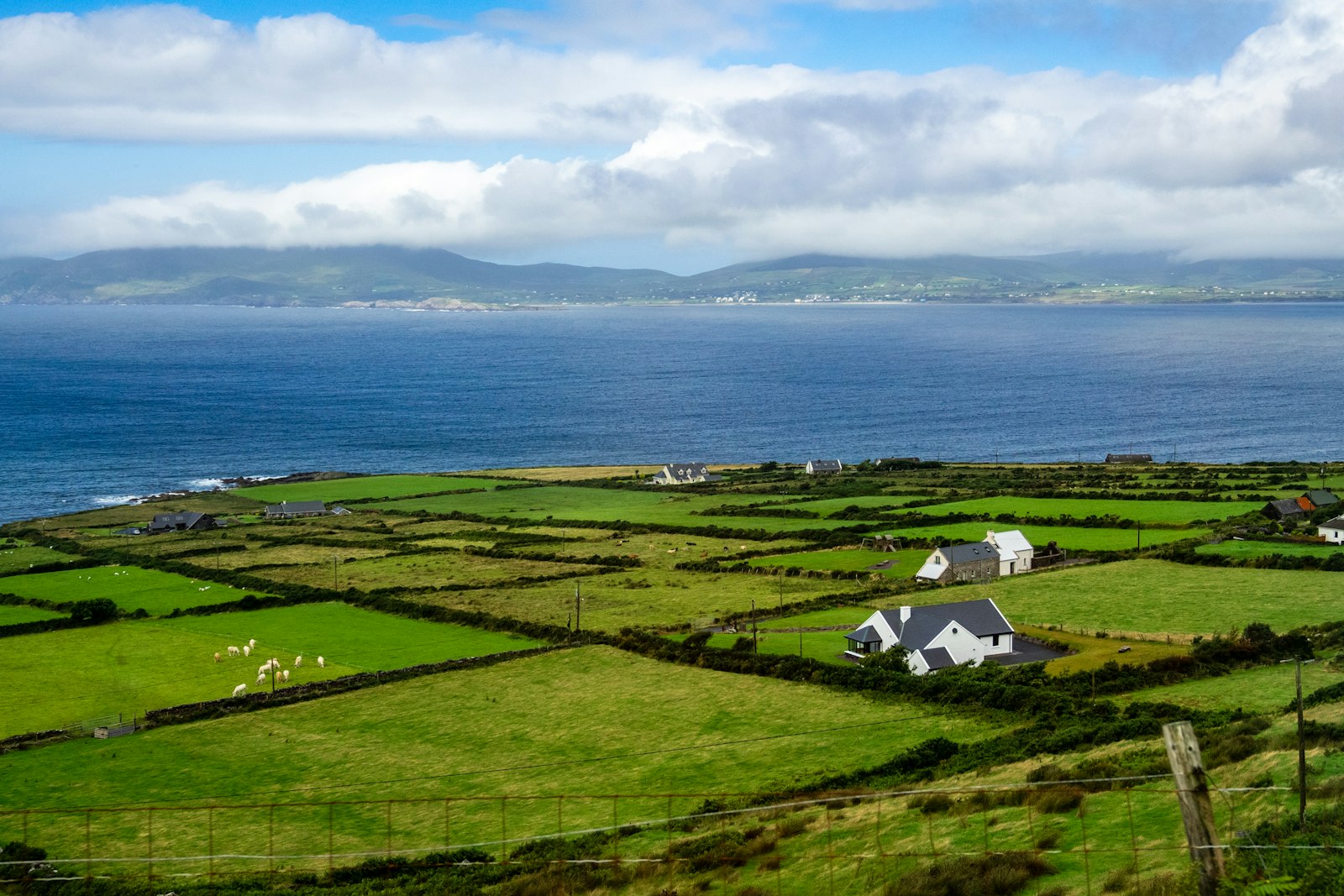
Photo by Andre Ouellet on Unsplash
Seamus Heaney (1939-2013) stands as perhaps the most important and celebrated Irish poet of the late 20th century. His work demonstrates extraordinary technical mastery, profound engagement with Irish history and mythology, and the ability to transform personal experience and specific Irish contexts into poetry of universal significance. Heaney’s achievement was recognized internationally through numerous awards, most notably the Nobel Prize in Literature in 1995, making him Ireland’s fourth Nobel laureate in literature. Yet Heaney’s significance extends beyond prizes and recognition. His work redefined Irish poetry for contemporary readers and demonstrated the continued vitality of Irish literary tradition.
Heaney’s poetry is rooted in his Irish experience, particularly his upbringing in rural County Derry in Northern Ireland. Yet his work transcends local or regional significance to address universal human concerns. His technical brilliance—his mastery of meter, rhyme, imagery, and metaphor—makes his work a model for contemporary poetry. His intellectual engagement with literature, history, and tradition creates poetry of genuine depth and substance.
Early Life and Formation
Seamus Heaney was born in 1939 in Mossbawn, a rural townland in County Derry. His family were small farmers working land in the Irish countryside. This rural upbringing, surrounded by agricultural work, Irish landscape, and Irish language and culture, profoundly shaped Heaney’s imagination and provided the raw material for much of his greatest poetry.
Heaney’s education moved him from the countryside into the world of letters and intellectual culture. He attended St. Columb’s College, a boarding school, and then Queen’s University Belfast. At Queen’s, he studied English literature, read the great traditions of English poetry, and began writing seriously. He was influenced by the Movement poets of 1950s England, particularly Philip Larkin, whose clear, accessible style and provincial subjects appealed to Heaney.
Yet even as Heaney was learning from English literary tradition, he was developing interest in Irish language, Irish mythology, and Irish literary tradition. He studied Old English and Irish literature, becoming aware of the complexity of Irish linguistic and cultural heritage. This combination of English literary influence and Irish cultural interest shaped his development as a poet.
His first collection, “Death of a Naturalist” (1966), established many of the themes that would define his career. Poems about rural childhood, about Irish landscape and agricultural work, about language and naming, demonstrated his ability to transform personal experience and Irish contexts into powerful poetry. The title poem describes the speaker’s gradual disillusionment with nature as he matures, creating a metaphorical parallel to growing awareness of the world’s darkness and complexity.
The Political Context: The Troubles
Heaney’s career as a major poet coincided with the most intense period of the conflict in Northern Ireland known as “the Troubles.” Beginning in 1969 with the civil rights movement and escalating through the 1970s and 1980s, the Troubles involved violence between Irish nationalists, British security forces, and unionist paramilitaries. Thousands died, and the conflict created deep divisions in Irish society.
Heaney, as an Irish Catholic poet, was inevitably implicated in the political context. Nationalists wanted Heaney to use his poetry to support Irish nationalism and resistance to British rule. Some critics argued that Heaney’s focus on personal experience and literary technique represented a failure to use his art for political purposes.
Yet Heaney maintained that poetry should not serve political purposes, that the poet’s first duty was to artistic truth rather than political service. This position was controversial among some Irish nationalists who felt that Heaney was evading his political responsibility. Yet Heaney’s commitment to artistic integrity and his resistance to political instrumentalization of his work ultimately enhanced rather than diminished his achievement.
That said, Heaney’s work is deeply aware of political contexts, particularly in his middle period. Poems like “The Grauballe Man” and others in his collection “North” engage explicitly with the Troubles and with historical violence in Ireland. These poems use bog bodies and historical examples to explore violence and political struggle, creating implicit connections to contemporary violence in Northern Ireland.
Major Collections and Aesthetic Development
Heaney’s collections mark the development of his poetic vision and technique. “Death of a Naturalist” (1966) and “Door into the Dark” (1969) established his fundamental aesthetic—rural imagery, technical mastery, personal voice. These early collections confirmed Heaney as an important new poet and demonstrated his ability to render Irish rural experience in language of power and clarity.
“North” (1975) represented a significant development. In this collection, Heaney engaged more explicitly with Irish history and with contemporary political conflict. Poems using Irish and Old English archaeology and mythology created implicit commentary on the Troubles. The collection’s title suggested Heaney’s turn northward, toward the violent history of northern Europe and the violence of the Irish and British conflict.
“Field Work” (1979) marked another development, with more personal and elegiac tones. Heaney moved toward more open forms and more emotional directness. The collection contains some of his most moving poems, including the sonnet sequence “Glanmore Sonnets” and the long elegy “The Grindstone of Damasc.”
“Station Island” (1984) continued Heaney’s exploration of Irish religious and cultural tradition. The title refers to an island in County Donegal associated with pilgrimage. The collection’s long title poem imagines conversations with literary and historical figures, creating a meditation on literary tradition and artistic identity.
Heaney’s later collections—”The Haw Lantern” (1987), “Seeing Things” (1991), “The Spirit Level” (1996), and others—continued to develop his aesthetic. These collections often included translations and adaptations of classical texts, demonstrating Heaney’s engagement with literary tradition beyond Irish writing. His translation of Beowulf, published in 1999, became a major achievement, introducing thousands of readers to the Anglo-Saxon epic and demonstrating Heaney’s mastery of translation.
Technique and Craft
Heaney’s technical brilliance is evident in all his work. He mastered traditional forms—sonnets, quatrains, tercets—while also creating original poetic structures. His use of rhyme is sophisticated and often surprising. His meter serves the meaning of the poem rather than constraining it. His imagery is precise and vivid, emerging from careful observation of natural world and rural experience.
Heaney’s ear for language is extraordinary. He understood how sounds function in poetry, how rhythm and meter create meaning, how words resonate with associations and historical weight. His vocabulary ranges from Anglo-Saxon monosyllables to Latinate polysyllables, creating textures appropriate to his subject matter.
One distinctive feature of Heaney’s technique involves his use of what he called “muddy etymology.” He was fascinated by the history of English words, their origins in different languages (Anglo-Saxon, Latin, Irish), the ways their meanings had changed across time. Poems like “Broagh” play with Irish pronunciation and English spelling, creating collisions between Irish and English linguistic traditions.
This linguistic attention reflects Heaney’s deep awareness of language as the site of colonial struggle. As an Irish writer writing in English, Heaney was navigating the colonial legacy of language itself. His technical attention to language acknowledged this complexity while also demonstrating mastery of English as an Irish poet writing in colonizer’s language.
Major Themes and Images
Several themes recur throughout Heaney’s work. The Irish landscape, particularly the bog, provides a central image. Heaney was fascinated by bog bodies preserved in peat, by the archaeological record of Irish history preserved in the bog. These bog poems became metaphors for memory, for the preservation of the past within the present, for the weight of history.
Family and childhood memory provided another important theme. Many of Heaney’s finest poems depict scenes from childhood—his father at work, his mother, aunts and uncles, the farm and its animals. These domestic memories are rendered with extraordinary tenderness and precision. Yet they are also metaphorical, suggesting larger truths about human life, about mortality, about the passage of time.
Literary tradition and the anxiety of influence form another theme. Heaney was acutely aware of writing within a major literary tradition. His work engages constantly with previous literature—English Romantic poets, Irish literary tradition, classical literature. This creates productive tension between individual voice and literary inheritance.
The Irish language and Irish linguistic tradition provide another recurring concern. Though Heaney wrote primarily in English, he was aware of Irish as an alternative linguistic tradition. His engagement with Irish history and mythology sometimes involves awareness of what is lost when Irish people speak English rather than Irish.
The Nobel Prize and International Recognition
In 1995, Seamus Heaney was awarded the Nobel Prize in Literature “for works of lyrical beauty and ethical depth, which exalt everyday miracles and our buried past.” The prize represented recognition of Heaney’s achievements and also validated Irish literature as worthy of the highest international honors. Heaney became the fourth Irish person to win the Nobel Prize in Literature, joining William Butler Yeats, George Bernard Shaw, and Samuel Beckett.
The Nobel Prize recognition transformed Heaney’s position in world literature. He was now officially acknowledged as one of the greatest living poets. The prize brought his work to wider audiences and generated renewed scholarly interest in his work. His poetry was translated into numerous languages, and he was invited to major universities and literary festivals worldwide.
Yet Heaney remained grounded despite international fame. He continued to publish new work, to give readings, and to teach at universities. He maintained connections to Irish literary culture while also engaging with international literary communities. He used his platform as a Nobel laureate to support younger writers and to speak about literature, language, and Irish culture.
Later Work and Legacy
Heaney’s final collections, published after the Nobel Prize, continued the development of his poetic vision. “The Spirit Level” (1996) engaged with classical literature and with contemporary politics, offering meditations on justice and ethical life. Later collections like “Electric Light” (2001) and “Human Chain” (2010) continued to demonstrate Heaney’s technical mastery and spiritual depth.
Throughout his career, Heaney remained a teacher and mentor to younger writers. His positions at universities in Ireland and America, his willingness to encourage and support younger poets, his essays and critical writing about literature and poetry, made him not just a great poet but an important figure in literary culture more broadly.
Heaney died in August 2013 at the age of 74. His death was widely mourned, with tributes acknowledging his extraordinary achievement and his significance to Irish culture and to English-language poetry. His grave in Bellaghy, County Derry, was marked with the inscription “and his loved ones,” taken from his poem “The Grindstone of Damascus,” a fitting epitaph for a poet whose work transformed personal experience and Irish landscape into poetry of universal significance.
Influence and Continuing Significance
Heaney’s influence on contemporary poetry is profound. Poets working after Heaney must engage with his achievement. His demonstration that technical mastery and personal voice could combine, that Irish experience could be the subject of major poetry, that engaged attention to language and craft could produce work of universal significance—these lessons continue to shape poetry.
For Irish writers and Irish-American writers, Heaney demonstrated the possibilities of Irish literary tradition. He showed that Irish poets could achieve international recognition without abandoning Irish identity or Irish concerns. His work validated Irish experience as worthy of serious literary attention.
Heaney also influenced the way Irish literature is understood. Before Heaney, Irish literary tradition was often understood in terms of major figures like Yeats, Joyce, and Beckett. Heaney’s emergence as a major poet in his own right expanded and complexified understanding of Irish literary achievement. He demonstrated that Irish literature remained vital and productive in the late 20th century.
Conclusion: The Achievement and Meaning
Seamus Heaney’s achievement as a poet is monumental. His technical mastery, his capacity for transformation of experience into memorable language, his ethical seriousness, and his engagement with Irish history and culture combine to create work of the highest order. His poetry addresses universal human concerns—mortality, love, memory, time—while remaining rooted in specific Irish experience and landscape.
For Americans interested in Irish culture, Heaney’s work offers access to Irish sensibility and Irish concerns. Reading Heaney, one encounters Irish history, Irish landscape, Irish language and linguistic tradition, Irish family life. Yet through Heaney’s artistry, these specifically Irish matters become universally significant. The particular becomes the universal through the transformative power of poetry.
Heaney’s achievement also demonstrates the continuing vitality of Irish literary tradition. In the 20th century, many wondered if Irish literature could produce work to match the achievements of the Literary Renaissance. Heaney answered that question definitively. His work confirmed that Irish literature remained capable of the highest artistic achievement and international significance.

Author: jonathan
Jonathan is the publisher of Irishtopia.net, Anglotopia.net, and Londontopia.net. He's passionate about travel and learning about other cultures. He's been to Ireland several times, and uses his travel expertise for Irishtopia!