
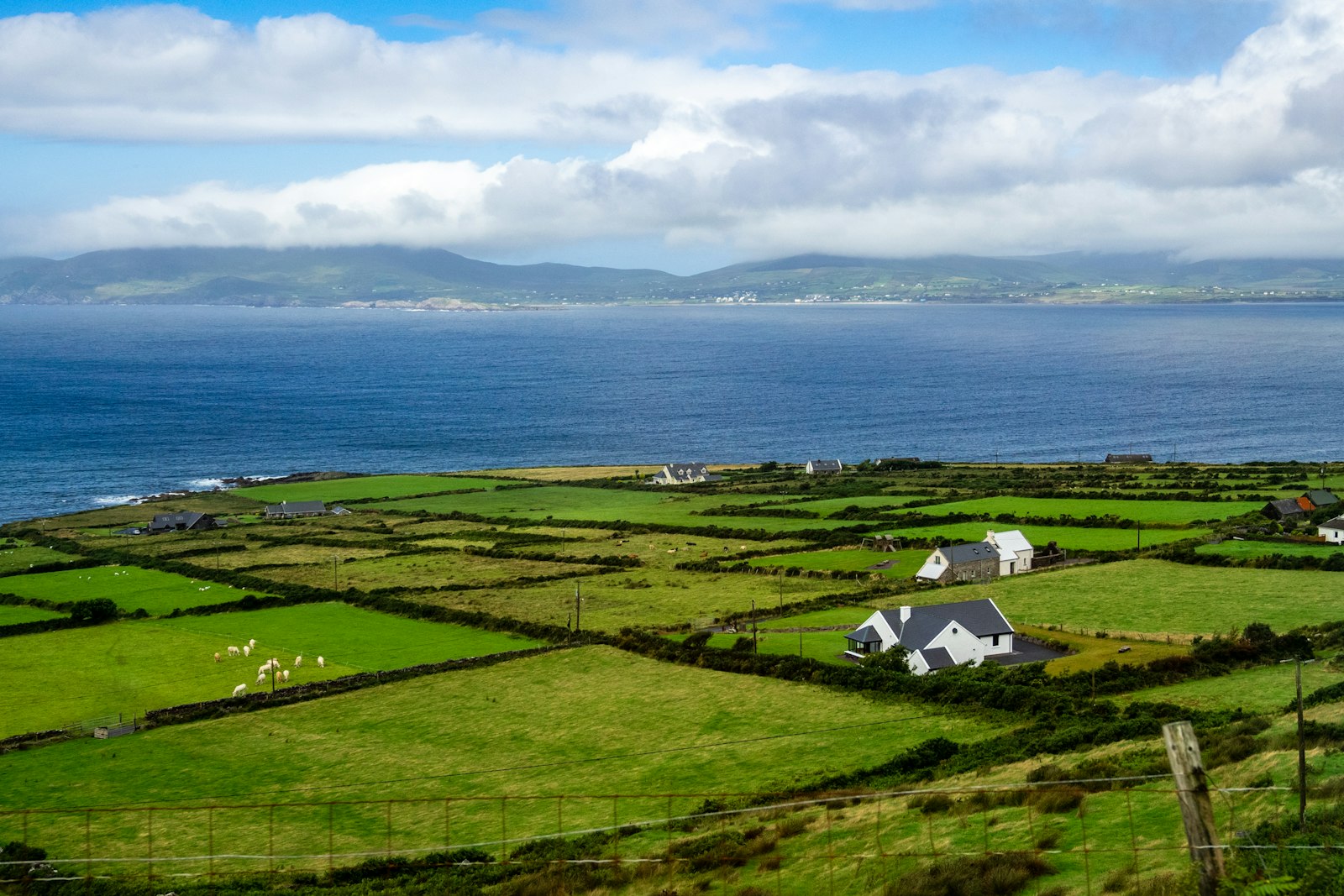
Photo by Andre Ouellet on Unsplash
Introduction
Seamus Heaney (1939-2013) was Ireland’s greatest poet of the late twentieth century and one of the greatest poets writing in English in that era. His 1995 Nobel Prize in Literature recognized him as major world literary figure. His work demonstrates how poetry rooted in specific place and language could achieve international significance and universal resonance.
Heaney’s poetry is marked by linguistic sophistication, engagement with Irish history and mythology, attention to ordinary language and experience, and profound moral seriousness. His work demonstrates that Irish poetry could achieve the highest artistic levels while remaining rooted in Irish experience and Irish linguistic traditions.
For Americans interested in Irish literature, Heaney represents Irish poetry at its finest. His work shows how engagement with specific cultural heritage—Irish language, Irish landscape, Irish history—can generate poetry of universal significance. His achievement as major world poet who remained rooted in Irish identity demonstrates the possibility of combining cultural specificity with international literary standing.
Early Life in Rural Ireland
Seamus Heaney was born in 1939 in County Derry in Northern Ireland, to farming family. His childhood in rural Northern Ireland exposed him to agricultural life, to landscape, to Irish language and culture. His early experiences—digging potatoes, observing rural work, absorbing Irish traditions—became material for his later poetry.
Growing up in rural Northern Ireland in post-independence era meant experiencing Ireland as divided place. He was raised Catholic in predominantly Protestant north. This positioning—neither fully in majority tradition nor in simple minority position—may have contributed to his perspective on Irish identity and history.
His education took him from rural background into more formal intellectual contexts. He attended school and later university in Belfast and Dublin. His education prepared him for intellectual and literary life while maintaining connection to rural roots.
Early Poetry and Recognition
Heaney’s early poems demonstrated remarkable talent. Collections like “Death of a Naturalist” (1966) showcased his ability to depict rural Irish experience with vivid language and emotional authenticity. Poems addressed childhood memories, agricultural work, Irish landscape—material drawn from his early life.
What distinguished his early work was its linguistic precision and its capacity to make ordinary Irish experience significant and moving. He elevated vernacular experience into art, showing that peasant and agricultural life had dignity and value worthy of serious literary treatment.
His early recognition was substantial. He was recognized as major new Irish poet. His work was published, studied, and celebrated. By the 1970s, he was established as important figure in Irish and English poetry.
Major Collections and Artistic Development
Throughout his career, Heaney published multiple collections of poetry, each representing development and evolution of his artistic vision. Collections like “North” (1975) engaged explicitly with Irish history and violence. “Field Work” (1979) explored personal and historical trauma. Later collections continued this engagement with Irish experience at deeper levels.
“North,” his most explicitly political collection, addressed Irish violence and English colonization of Ireland. The collection used imagery and language to explore historical trauma and contemporary violence in Northern Ireland. It demonstrated that Heaney could address political and historical concerns with artistic seriousness.
His later work sometimes shifted focus—exploring translation, engaging with classical literature, addressing personal and family experiences. Yet his fundamental commitment to language, to Irish experience, and to poetic excellence remained constant.
Translation and Engagement with Tradition
Heaney was significant translator, particularly of classical works. His translation of Beowulf—the Anglo-Saxon epic—became widely read and celebrated. His translation demonstrates how engagement with literary tradition, even ancient tradition, can generate contemporary artistic work.
His translations were not merely linguistic exercises but serious artistic works. His translation of Beowulf is work of art in itself, creating English poetry from ancient English poem. The translation demonstrates Heaney’s respect for tradition alongside his commitment to contemporary artistic expression.
His engagement with translation shows his belief that literary tradition remains alive, that great works from past can speak to present, and that poets’ role includes dialogue with literary tradition.
Language and Linguistic Sophistication
Heaney’s poetry demonstrates remarkable mastery of English language and deep engagement with Irish language traditions. He was philologist as well as poet—interested in etymology, in how words carry historical meaning, in how language embodies culture and history.
His engagement with language enriches his poetry. Words carry multiple meanings and historical resonances. His poems reward close attention to language—to how specific words were chosen, to implications of particular linguistic choices. His linguistic sophistication creates density and richness that rewards repeated reading.
Irish History and Politics
While not as overtly political as some Irish poets, Heaney engaged seriously with Irish history and contemporary Irish politics. His poetry addressed Irish historical trauma, English colonization, Irish violence, and questions of Irish identity.
Heaney’s approach to these political concerns was poetic rather than didactic. He didn’t write propaganda or slogans. Instead, he explored political and historical themes through poetry’s resources—through imagery, through language, through engagement with human experience. This approach allowed him to address serious political concerns with artistic integrity.
Family, Personal Experience, and Mortality
A significant dimension of Heaney’s later work involved exploration of family relationships and mortality. He wrote moving poems about his parents, his marriage, his children. He addressed aging, loss, and human mortality with profound insight.
This personal dimension humanized his work for many readers. His ability to find universal significance in personal experience demonstrated poetry’s power to communicate across differences. Readers encountering his exploration of family loss or aging found their own experiences validated and illuminated.
The Nobel Prize and International Recognition
In 1995, the Swedish Academy awarded Heaney the Nobel Prize in Literature, recognizing him as major world literary figure. The prize was extraordinary honor and acknowledged Heaney’s achievement as greatest poet of his generation writing in English.
The Nobel Prize transformed Heaney’s international prominence. While he was already celebrated in literary circles, the prize brought him broader public recognition. It established him as not merely important Irish poet but as world-class literary figure.
Teaching and Influence on Other Writers
Throughout his career, Heaney taught literature and writing. He held positions at various universities and influenced generations of students. His teaching demonstrated his commitment to literary tradition and to helping younger writers develop their craft.
His influence on Irish and English poetry has been substantial. Younger poets learned from his example—his commitment to linguistic precision, his engagement with tradition, his ability to make Irish material significant to international audiences.
Later Years and Legacy
Heaney continued writing and teaching into later life. His later collections demonstrated continued artistic development. He remained engaged with literary and intellectual life until his death in 2013.
His legacy as major poet, Nobel laureate, and influential teacher is secure. His work continues being read, studied, and celebrated. New generations of readers encounter his poetry and find it meaningful. His influence on subsequent poetry remains substantial.
Conclusion: The Poet of Place and Language
Seamus Heaney stands as one of twentieth-century poetry’s greatest figures. His work demonstrates poetry’s power to transform ordinary experience into art, to engage with history and politics while maintaining artistic integrity, and to communicate across cultural boundaries through language’s power.
For Americans interested in Irish literature and culture, Heaney represents Irish poetry at its finest. His work shows how rootedness in specific place and culture can generate poetry of universal significance. His achievement as major world poet who remained engaged with Irish experience demonstrates that cultural specificity and international standing need not be contradictory.
Understanding Heaney means engaging with his linguistic sophistication, his engagement with tradition, his exploration of Irish history and identity, and his capacity to find universal human significance in particular Irish experience. His work endures because it achieves the highest artistic levels while remaining emotionally immediate and humanly relevant.
Listen to Seamus Heaney, and you encounter one of language’s great masters, a poet whose work illuminates both Irish experience and universal human concerns. His legacy continues inspiring readers and writers, demonstrating poetry’s enduring power and significance.
Keywords: Seamus Heaney, Nobel Prize, Irish poetry, contemporary poet, English literature, linguistic mastery, Irish history, translation, Beowulf, Irish identity, literary tradition

Author: jonathan
Jonathan is the publisher of Irishtopia.net, Anglotopia.net, and Londontopia.net. He's passionate about travel and learning about other cultures. He's been to Ireland several times, and uses his travel expertise for Irishtopia!