
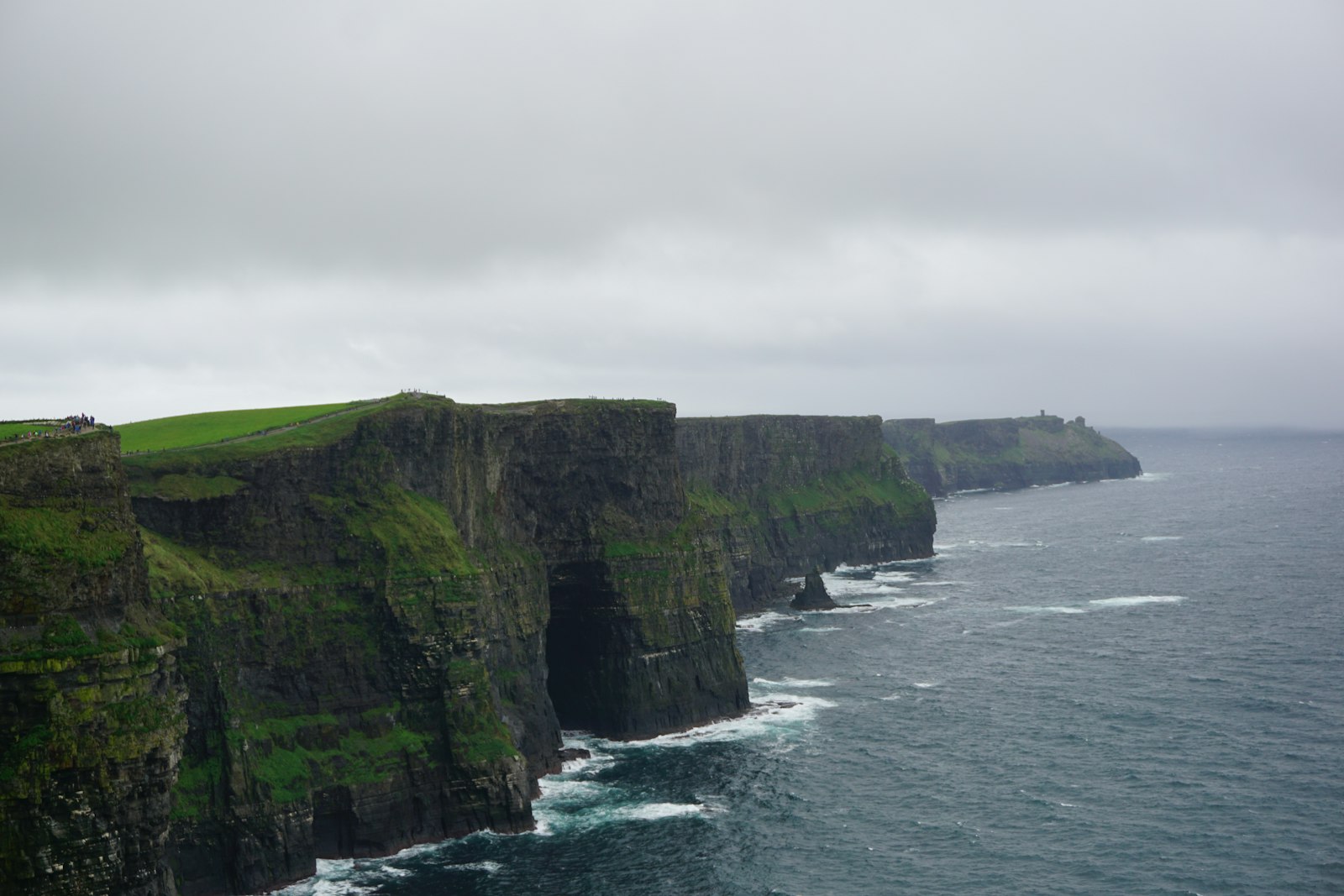
Photo by Meredith Isabelle on Unsplash
Introduction
In 1170, a Norman knight named Richard de Clare, known as Strongbow, landed in Ireland at the invitation of Dermot MacMurrough, an Irish king seeking to reassert control over his kingdom. Strongbow brought with him a band of Norman knights and soldiers. Few could have imagined that this relatively small force would unleash a process that would transform Ireland forever.
Within a few years, Strongbow and other Norman adventurers had conquered large portions of Ireland and established themselves as a new ruling class. Within a century, the Normans had transformed Irish society, replacing Gaelic lords with Norman barons, introducing new forms of feudalism, and integrating Ireland into an Anglo-Norman political system. The Norman conquest of Ireland represents a turning point in Irish history as significant as any event before or since.
For Americans, understanding Strongbow and the Norman invasion is essential to understanding why Ireland became subordinate to English rule. The Norman conquest set the stage for centuries of English expansion and ultimately for English colonization of Ireland. It demonstrates how external military power, combined with internal political division, can transform a society fundamentally.
Ireland Before Strongbow: A Kingdom Divided
To understand why Strongbow’s invasion succeeded, we must understand the state of Ireland in 1170. The island was not unified under a single ruler. Instead, it was divided among numerous kingdoms and powerful families competing for dominance. The High King title existed, but it represented acknowledged supremacy rather than absolute rule.
In the 1160s, one of the most powerful Irish kings was Dermot MacMurrough, King of Leinster. Dermot was ambitious and aggressive, seeking to expand his power and influence across Ireland. But he had enemies. Other powerful families resented his ambitions and sought to contain him.
In 1166, one of Dermot’s enemies, the King of Connacht, allied with other Irish kings to oppose Dermot. Dermot was defeated militarily and driven out of Leinster. He was forced into exile, a humiliating defeat for a powerful king who had sought to expand his power.
From exile, Dermot faced a choice. He could accept defeat and his reduced status. Or he could seek external allies to help him regain his power. Dermot chose the latter course. He decided to seek support from Norman magnates in England and Wales who were known for their military effectiveness.
Dermot’s Invitation: The Fateful Decision
Dermot traveled to England and made contact with Richard de Clare, known as Strongbow. Strongbow was a Norman baron from Wales with a reputation as a skilled military commander. Strongbow had been involved in various military adventures in Wales and had experience with military conquest.
Dermot offered Strongbow and his followers land and treasure in exchange for military support. He also offered his daughter’s hand in marriage to Strongbow, along with the succession to Leinster after Dermot’s death. For Strongbow, it was an extraordinary opportunity—a chance to conquer and rule new territory far beyond what he might achieve in Wales or England.
Strongbow agreed. He began gathering men and resources for an invasion of Ireland. In May 1170, a small force of Norman knights and soldiers crossed from Wales to Ireland and landed at Waterford.
This invasion was not an isolated English or Norman conquest. It was invited by an Irish king seeking to restore his power against rival Irish kings. Dermot and Strongbow saw themselves as allies, not as conqueror and conquered. Yet the consequences of their alliance would ultimately lead to English rule and the subordination of Irish society.
The Norman Conquest: Military Superiority
When Strongbow arrived in Ireland with his Norman knights, he brought not just men but a military technology and organization that was superior to what Irish forces possessed. The Normans were trained cavalry warriors, equipped with armor, trained in coordinated tactics, and experienced in siege warfare.
Irish warfare at this time was primarily conducted by foot soldiers with relatively simple weapons. Irish military leaders had experience and were tactically skilled, but they lacked the organized cavalry forces and the siege expertise of the Normans. This gave the Normans a significant military advantage.
In the first campaign, Strongbow’s forces defeated Irish armies at several battles. The most famous was the Battle of Waterford, where Strongbow’s cavalry defeated Irish forces. The Norman cavalry, charging in coordination, broke Irish infantry formations. The Normans’ military advantages proved decisive in direct combat.
With military victories, Strongbow was able to capture territory and establish control over Leinster and parts of Munster. Other Norman adventurers, encouraged by Strongbow’s success, came to Ireland seeking land and fortune. Within a few years, a significant Norman settlement had been established in Ireland.
Henry II and Formal Conquest
The Norman settlement in Ireland caught the attention of King Henry II of England. Henry II had not authorized the invasion and was concerned about Strongbow establishing an independent kingdom in Ireland beyond English control. In 1171, Henry II decided to travel to Ireland himself to assert control.
Henry II arrived with a substantial army. He wasn’t coming to support Strongbow or to conquer Ireland in the sense of driving out the Normans. Instead, he was coming to assert English royal authority over the Norman settlement and to extend English rule over Ireland.
Henry’s strategy was to accept the Norman conquest (Strongbow and other Norman barons were his subjects, after all) while asserting that they conquered Ireland on behalf of the English crown, not on their own account. This established the principle that Ireland was under English royal authority.
Henry II negotiated with Irish kings, some of whom submitted to English authority. He distributed territories and titles to Norman barons and loyal Irish kings who accepted his authority. He established English royal officials in Ireland to oversee governance.
By the time Henry II left Ireland in 1172, English royal authority had been established. Ireland would no longer be ruled by Irish kings alone. Instead, it would be divided between English and Norman barons (who held land from the English crown) and Irish kings (who were increasingly subordinated to English authority).
The Transformation of Irish Society
The Norman conquest initiated a profound transformation of Irish society. The Normans established feudalism in areas they controlled—the system where land was held from a lord in exchange for service and loyalty. This was different from the Gaelic system of land tenure and obligation that had characterized Irish society.
The Normans also introduced their own culture. Norman French became the language of the Anglo-Irish nobility (though Irish and English were also spoken). Norman customs and practices replaced some Gaelic ones. Norman names became common among the nobility.
The Normans built castles throughout the territories they controlled. These castles served as military strongholds and as symbols of Norman authority. The introduction of castle-based fortification changed how defense was organized in Ireland.
Over time, some Norman barons became more Irish than Norman. They intermarried with Irish families, adopted some Irish customs, and developed a hybrid Anglo-Irish culture. But this assimilation was gradual and never complete. The division between the Norman-Irish and the Gaelic Irish persisted and shaped Irish society for centuries.
The Limit of Norman Expansion
While the Normans conquered substantial portions of Ireland, they did not conquer all of it. In the west and north, Irish kings maintained independence. Connacht and Ulster remained primarily under Irish control. The Normans were successful in Leinster, Munster, and parts of the Midlands, but they never established complete control over the island.
This created a divided Ireland. The eastern and southern portions, which the Normans controlled (called the Pale), were increasingly English in culture and governance. The western and northern portions, controlled by Irish kings, remained Gaelic in culture and organization. This division between the Pale and the Gaelic territories would persist for centuries.
The frontier between Norman-controlled and Gaelic-controlled territories was often violent. Border raids, ambushes, and small wars were constant. The two societies—Norman-Irish and Gaelic—existed in tension and conflict.
The Integration of Ireland into Anglo-Norman Politics
One crucial consequence of the Norman conquest was that Ireland became integrated into Anglo-Norman political systems. This meant that Irish affairs became entangled with English politics. When kings died, succession disputes, civil wars, and political changes in England had immediate consequences in Ireland.
For example, when King John lost control of Normandy and faced baronial rebellion in England, Irish territories he ruled were affected. When civil war broke out between Stephen and Matilda over the English throne, Irish Normans took sides. Later, when the English barons forced King John to grant the Magna Carta, these same barons had interests in Ireland that were affected.
Ireland, as a conquered territory, was now ruled by English kings through representatives. Governors were appointed from England. Laws were made in England and applied in Ireland. Irish affairs were decided by English authorities. This subordination of Irish governance to English authority would intensify over the following centuries.
Strongbow’s Legacy
Strongbow himself did not live long after the conquest. He died in 1176, just six years after landing in Ireland. Despite his short life in Ireland, his legacy was enormous. Strongbow was the man who opened Ireland to Norman conquest and English rule. His military success demonstrated that Irish forces could be defeated by better-organized and better-armed enemies.
Strongbow’s legacy also included his immediate descendants. His son-in-law and other family members inherited his Irish lands. The de Clare family became one of the most powerful Anglo-Irish families, controlling vast territories and wielding significant influence in Irish affairs.
Strongbow became a legendary figure in Anglo-Irish history—celebrated as the man who conquered Ireland and established English rule. In Irish nationalist tradition, Strongbow became the symbol of English conquest and the beginning of English domination. His name became synonymous with the Norman invasion and the transformation of Ireland.
Economic and Social Consequences
The Norman conquest had significant economic and social consequences. The Normans introduced new economic practices, including feudal agriculture, manorial systems, and new forms of taxation. They promoted urban development and trade. Norman towns and settlements became centers of commerce and English culture.
For the Irish population, the consequences were more mixed. In the areas controlled by Normans, the Irish gradually lost ownership of land and became tenant farmers. The wealth generated from Irish lands flowed to Norman and English barons rather than to Irish lords. Over time, the Irish were increasingly subordinated within Norman-dominated society.
The social hierarchy became more rigid. Norman barons were the elite. Below them were Anglo-Irish gentry who owned smaller estates. Below them were Irish chieftains who had submitted to Norman rule. Below all of them was the Irish peasantry—the vast majority of the population, who became tenants on lands owned by their conquerors.
The Question of Inevitability
Historians sometimes debate whether the Norman conquest of Ireland was inevitable. Some argue that Ireland’s division and lack of unified resistance made conquest likely. The Normans possessed military advantages and organizational structures superior to Irish kingdoms. Conquest seems almost inevitable.
Others argue that the conquest was contingent on specific events. Dermot MacMurrough’s decision to invite Norman aid was crucial. If he hadn’t been defeated or if he hadn’t decided to seek external allies, the Norman conquest might not have occurred. The fact that specific individuals made specific choices that led to conquest suggests that it was not inevitable.
What seems clear is that the Norman conquest was possible because of Ireland’s political division and lack of unified resistance. Had the Irish kingdoms been more unified and stronger, the Norman conquest might have been much more difficult or impossible.
Lasting Legacy in Irish History
The Norman conquest of 1170 initiated a process that would culminate in complete English domination of Ireland. While the Normans did not immediately control all of Ireland, and while some Irish kingdoms remained independent, the Norman invasion established the principle that Ireland could be conquered by external military power and that English authority could be asserted over Ireland.
The centuries that followed the Norman conquest saw increasing English expansion and decreasing Irish independence. English kings sought to extend control over the territories the Normans had conquered. English settlers arrived and established themselves. English law replaced Irish law. English culture gradually spread.
By the 16th century, English rule over Ireland was nearly complete. By the 17th century, English colonization through plantations had fundamentally transformed Irish society. The process that Strongbow began in 1170 culminated in the complete subordination of Ireland to English rule.
Strongbow and American Connections
While Strongbow himself never came to America, his legacy is connected to American history. The patterns of conquest and colonization that the Normans pioneered in Ireland were applied in America. The methods of displacing indigenous populations, establishing English settlements, and extending English authority were first developed in Ireland and then exported to America.
Many of the early English colonists in America had experience in Ireland. Some had served in the English military in Ireland. Some came from families involved in the Irish conquest. The colonial attitudes toward native populations that shaped American colonization were informed by English experience in Ireland.
Conclusion: The Invasion That Changed Everything
Strongbow’s invasion in 1170 was a small military expedition. Strongbow himself brought perhaps a few hundred knights and soldiers. Yet it had enormous consequences. The invasion initiated a process that transformed Ireland from an independent island of independent kingdoms into an English colony.
The Norman invasion was not achieved through a monolithic plan of English conquest. It arose from the ambitions of an Irish king seeking to restore his power and a Norman knight seeking to expand his territory and wealth. Yet the consequences of their alliance reshaped Irish history.
For Americans interested in Irish history, understanding Strongbow and the Norman invasion is crucial. It explains how Ireland became subordinated to English rule. It demonstrates how military superiority, combined with political division, can lead to conquest and transformation. And it marks the beginning of the long process of English colonization that would define Ireland for the next 800 years.
Strongbow is the symbolic figure of the moment Ireland’s independence ended and English rule began. His invasion inaugurated centuries of struggle between Irish resistance and English authority—a struggle that would ultimately drive Irish emigration to America and shape Irish-American identity and culture.

Author: jonathan
Jonathan is the publisher of Irishtopia.net, Anglotopia.net, and Londontopia.net. He's passionate about travel and learning about other cultures. He's been to Ireland several times, and uses his travel expertise for Irishtopia!