
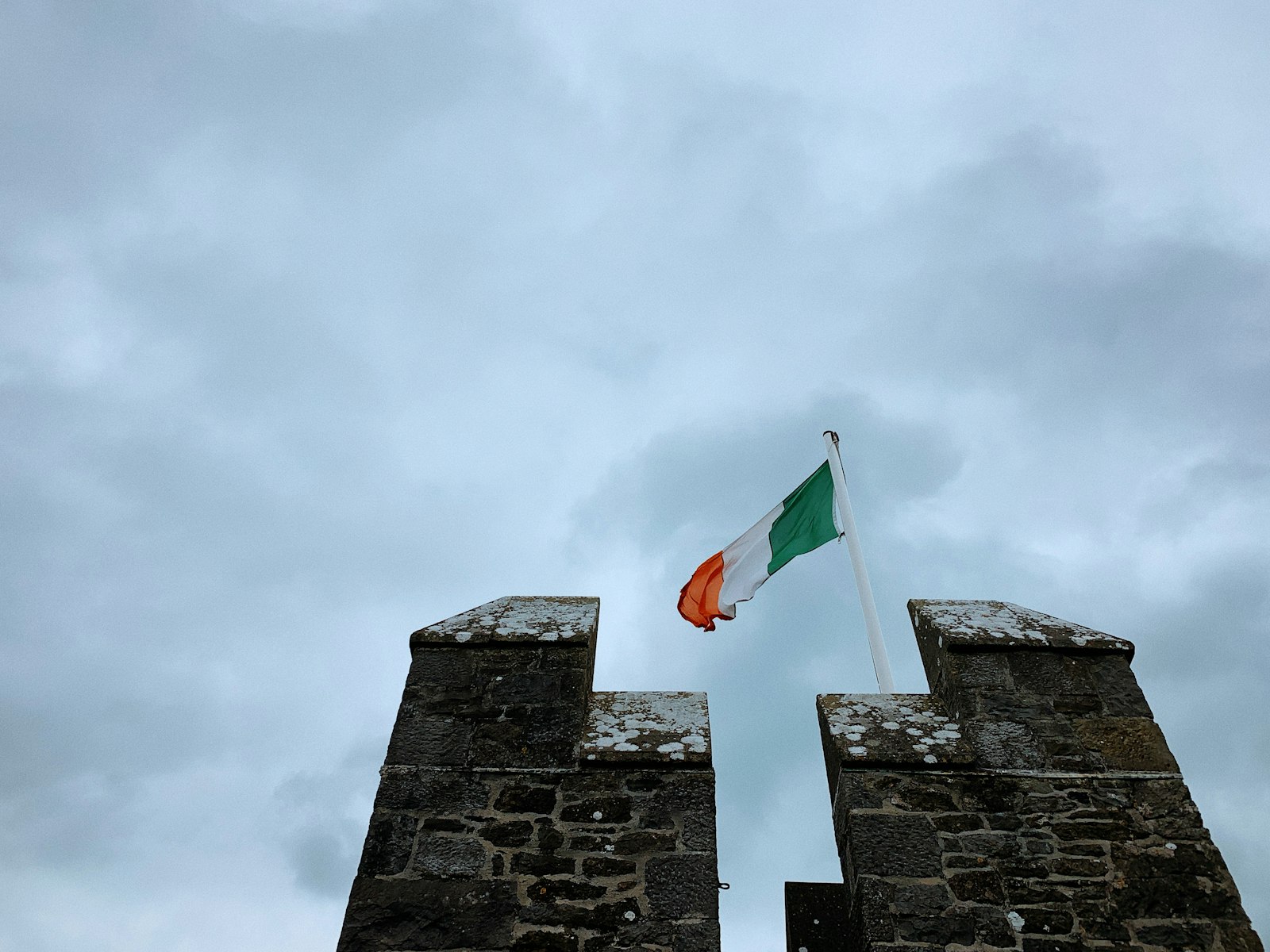
Photo by Tommy Bond on Unsplash
Introduction
On January 1, 1801, the Kingdom of Ireland ceased to exist as an independent political entity. It was absorbed into the United Kingdom, its parliament dissolved, and its direct representation in Westminster became the primary way Irish affairs were governed. This was the Act of Union of 1800, one of the most significant political events in Irish history—a moment when Irish political independence was formally surrendered, and Ireland became fully integrated into the British state.
For Americans, the Act of Union might seem like an obscure bit of parliamentary history. Yet it’s anything but. The Union represents the moment when Ireland’s fate became inextricably linked to British policy, when Irish affairs were decided by British majorities in Westminster, and when the conditions were set for the disasters that would follow—culminating in the Irish Famine decades later.
The Act of Union is also a fascinating study in political manipulation and coercion. It wasn’t achieved through democratic consent of the Irish people. It was achieved through bribery, intimidation, manipulation of the Irish parliament, and promises that would never be fulfilled. Understanding how the Union came about reveals how power actually operates in politics, and how the interests of the colonized can be overridden by the interests of the colonizers.
The Context: Ireland’s Protestant Parliament
To understand the Act of Union, we must first understand what it destroyed—the Irish Parliament. Since the Norman invasion, Ireland had possessed its own parliament separate from the English parliament. For centuries, this Irish parliament had been dominated by English settlers and their descendants (the Anglo-Irish), and it operated under English control. But it was nonetheless an Irish institution, and it provided at least some vehicle for the expression of Irish interests.
By the 18th century, the Irish Parliament had become increasingly assertive. It sought to protect Irish interests against English commercial policies that favored English industries at the expense of Irish ones. It sought to maintain Irish control over Irish taxation. And, particularly after the American Revolution, it began to assert Irish independence and question the subordination of Ireland to English interests.
The Irish Parliament was exclusively Protestant. Catholics, who formed the majority of the Irish population, were barred from sitting as members of parliament. The voting franchise was extremely limited—only property-holding Protestants could vote. This meant that the Irish Parliament represented only the Protestant Anglo-Irish minority, not the Irish people as a whole.
Yet even this Protestant parliament began to cause English anxiety. An Irish parliament that pursued Irish commercial and political interests was precisely what English policy makers wanted to avoid. They feared that Irish nationalism might develop—that the Protestant Parliament might evolve into an obstacle to English control.
The Rebellion of 1798 and the Fear of French Invasion
The immediate crisis that pushed the Act of Union forward was the Rebellion of 1798. Though not as famous as the Easter Rising of 1916, the 1798 Rebellion was a serious uprising that threatened English control of Ireland. It was led by the United Irishmen, a radical group inspired by French revolutionary ideals, and it involved tens of thousands of rebels across the island.
The rebellion was ultimately suppressed with significant bloodshed. But it frightened English authorities and the Anglo-Irish elite. It demonstrated that Irish nationalism was a real force, that it could mobilize significant numbers of people, and that it could threaten English control. The threat was especially acute because the French, who had invaded Egypt and might look toward invading Britain, had shown interest in supporting Irish rebellion.
For English authorities, the rebellion revealed a fundamental problem with the existing constitutional arrangement. Ireland had its own parliament, which was increasingly assertive about Irish interests. If Irish parliament members sympathized with Irish nationalism or rebellion, they might use their parliamentary position to promote rebellion or prevent English suppression of it. The existence of an Irish parliament was therefore an obstacle to firm English control.
The solution that William Pitt the Younger (the Prime Minister) and other English authorities concluded was clear: Ireland needed to be more fully integrated into the British state, with a Westminster parliament dominantly controlled by English interests, not by an Irish parliament that might develop nationalist sympathies.
The Campaign for Union: Bribes and Promises
The Act of Union wasn’t inevitable. It had to be passed by the Irish Parliament itself—and that parliament had to be persuaded or coerced into voting for its own dissolution. This required a massive campaign of persuasion, bribery, and intimidation.
The English government essentially purchased support for the Union through a combination of inducements. Supporters of the Union were offered titles, positions, patronage, and cash. Abbey lands were promised to supporters. Sinecure positions (offices that provided income with minimal work) were distributed to members who would support the measure. It was, in essence, a massive bribe of the Irish political elite.
The government also made promises about what would follow Union. Irish representation in Westminster would be guaranteed. Irish commercial interests would be protected. Catholic emancipation (giving Catholics voting rights and representation) would follow shortly. These promises were crucial to winning over some fence-sitters in the Irish Parliament.
There was also intimidation. Members of parliament who opposed the Union faced pressure from the English crown and its representatives. There were suggestions that those who refused to support the Union might face investigations into corruption or misuse of office. The message was clear: support the Union or face consequences.
The Debate: Arguments For and Against
Despite the bribes and intimidation, the Union faced serious opposition in the Irish Parliament. Some members opposed it on principle, believing that Irish interests could never be adequately represented in Westminster. Others had practical concerns—that Irish commercial interests would be sacrificed to English interests. Still others worried about the effect on the Irish population and society.
The arguments in favor of the Union were primarily practical and imperial. Supporters argued that a unified British state would be stronger and more efficient. They argued that Ireland would benefit from access to imperial trade and imperial military power. They argued that the Union would eliminate the potential for Irish parliament members to sympathize with Irish nationalism.
The arguments against the Union were more varied. Some opponents feared that Irish parliament members would be a small minority in Westminster and would be unable to protect Irish interests. Others argued that the Union would lead to the extraction of Irish resources to benefit England. Some feared for Ireland’s distinct institutions, including its legal system and the Church of Ireland.
What’s notable is that there was almost no discussion of the Irish people themselves—the Catholic majority who would be most affected by the Union. The debate was entirely within the Anglo-Irish Protestant elite. The Irish Catholic population had no voice in the decision that would determine their political future.
The Vote and Passage
The voting in the Irish Parliament was extremely close. The first attempt to pass the Act of Union actually failed. The government had to conduct a second campaign, distributing more rewards and promises, before it could secure a majority.
Eventually, on June 16, 1800, the Irish Parliament voted for its own dissolution by a narrow margin. It was a bitter victory for the Union’s supporters. The narrowness of the vote revealed that the Union was not broadly popular even among the Anglo-Irish elite, and that it had been achieved through extraordinarily heavy-handed government manipulation.
The most dramatic moment came when one member of parliament, arguing against the Union, predicted that in a hundred years the Irish would rise in rebellion—a prophecy that proved remarkably prescient given the Easter Rising of 1916.
The Promises That Were Broken
The English government had made significant promises to secure the Union. Chief among these was the promise of Catholic emancipation—that within a few years of the Union, Catholics would be granted voting rights and the ability to sit in parliament. This was crucial to winning over some Catholic supporters and removing their opposition to the measure.
Yet Catholic emancipation did not come quickly. It took nearly 30 years, until 1829, for Catholic emancipation to be finally granted. And even then, it came with restrictions—Catholics could vote and sit in parliament, but only under conditions that favored property holders and excluded the poorest Catholics.
From the perspective of those who supported the Union hoping for Catholic emancipation, this was betrayal. The government had promised quick action and had failed to deliver. The delay meant that the benefits that many hoped would flow from Union—a more representative political system—were postponed for a generation.
The Immediate Consequences
The Act of Union fundamentally changed how Ireland was governed. The Irish Parliament disappeared. Irish affairs were now decided by Westminster, where English and Scottish members vastly outnumbered Irish members. Even when Irish issues came before Westminster, they were decided by English and Scottish majorities pursuing English and Scottish interests.
The effect was to make Ireland subordinate to English policy in an unprecedented way. Previously, an Irish Parliament (however limited in its representation) could at least attempt to assert Irish interests. Now, Irish interests could be overridden by a Westminster parliament dominated by English members with no connection to Ireland or stake in Irish welfare.
The commercial consequences became immediately apparent. Irish industries that had flourished under protection of an independent parliament began to decline as Irish tariff policies were now set by Westminster pursuing English commercial interests. Irish manufacturing, particularly in textiles, suffered as English producers gained access to Irish markets without comparable Irish access to English markets.
The Question of Legitimacy
A crucial question surrounds the Act of Union: was it legitimate? Did the Irish Parliament truly represent the Irish people when it voted for the Union? The answer is almost certainly no. The parliament that voted for the Union was:
- Exclusively Protestant, while the Irish population was predominantly Catholic
- Elected only by property holders, while the vast majority of Irish people had no vote
- Directly bribed by the English government to vote against Irish independence
- Under intimidation from the English crown
- Making a decision that fundamentally affected the Irish people without consulting them
By any modern standard of democratic legitimacy, the Act of Union would be considered a travesty. Yet it succeeded because power, not legitimacy, determined outcomes. The English government had more power than the Irish parliament, and it used that power to achieve its desired result.
This raises a question that echoes through Irish history: if the Union was achieved illegitimately, through bribery and coercion, did it ever have legitimacy? Irish nationalists would argue, quite reasonably, that it did not. If the Union was never legitimate, then efforts to overturn it were not rebellion against legitimate authority but resistance to illegitimate colonial rule.
The Effect on Irish Society
The immediate social effect of the Union was less dramatic than the political effect. Ireland remained a distinct place with its own laws, its own legal system, and its own social institutions. But now those institutions operated within a Westminster-dominated system that could override them.
Over the following decades, the effect of subordination to Westminster became clearer. English policies that might have been resisted by an Irish parliament were implemented without effective Irish resistance. Landlords’ interests were protected by Westminster even when they harmed Irish tenants. Irish economic interests were sacrificed to English interests. Irish education was increasingly conducted in English rather than Irish, accelerating the decline of the Irish language.
The Union also meant that Irish issues were decided by people with little knowledge of or interest in Ireland. English members of parliament might legislate about Irish land policy without understanding the conditions of Irish agricultural life. They might pursue economic policies that devastated Ireland because those policies favored English interests. The result was a growing sense among the Irish that their interests were not represented and that they were being sacrificed for English benefit.
The Road to Irish Independence
The Act of Union did not bring the stability that English authorities hoped for. Instead, it intensified Irish nationalism. Over the following century, Irish nationalists came to see the Union as the fundamental problem—the mechanism through which Ireland was exploited and the Irish subordinated.
The struggle to overturn the Union dominated Irish politics for the next hundred years. O’Connell’s Catholic emancipation movement, the Young Ireland movement, the Fenians, the Land League, Home Rule campaigns—all were aimed at either reforming the Union or overthrowing it entirely.
Eventually, the Union was effectively dismantled through Irish independence movements and British exhaustion after World War I. Most of Ireland achieved independence in 1922, leaving only Northern Ireland within the United Kingdom—the one region where Protestant descendants of planters remained a demographic majority.
Unionism in Ireland
It’s important to note that not all Irish opposed the Union. A significant minority of Anglo-Irish Protestants, particularly in Ulster, came to embrace the Union as beneficial to their interests. As Irish independence movements grew stronger, these Irish Unionists increasingly allied with English Unionists in defense of the Union.
This created a profound irony: in Ireland, “Unionism” came to mean something quite different than it did in the rest of the United Kingdom. In England, Unionists were conservatives defending the status quo. In Ireland, Unionists were defenders of Protestant and English interests against Irish nationalism.
This divergence would have profound consequences for Irish history. When Irish independence came, it came in a way that split Ireland—leaving those who identified as Unionists (primarily Protestants) in Northern Ireland within the United Kingdom, while creating an independent Irish state that encompassed the rest of the island. The Union thus paradoxically created the conditions for its own partial dismantling.
The Union and the Famine
The relationship between the Act of Union and the Irish Famine of 1845-1852 is complex but significant. Under the Union, Irish food production was strictly controlled by Westminster policy. Ireland continued to export grain, cattle, and other foodstuffs even during the Famine, because English authorities insisted on the free market and refused to restrict exports from a starving country.
The Famine that devastated Ireland killed approximately one million people and drove another million to emigrate. It would not have occurred in precisely the same way, many historians argue, if Ireland had retained its own parliament capable of setting its own food and relief policies. An Irish parliament would likely have restricted grain exports and implemented relief measures far more aggressively than Westminster did.
The Famine thus represents the ultimate consequence of the Act of Union—the subordination of Irish interests to English policy, resulting in catastrophic death and suffering for the Irish people.
Conclusion: The Union and Irish History
The Act of Union of 1800 was a turning point in Irish history—not because it changed Ireland dramatically, but because it consolidated English control in a way that made Ireland’s subordination complete and irreversible. Ireland became not just a colony but an integral part of the British state, yet one whose interests were perpetually overridden by English majorities.
For Americans interested in Irish history and heritage, the Act of Union explains much that follows. It explains why Irish nationalism became so powerful—because the Union made clear that Irish interests would never be protected within a Westminster-dominated system. It explains why so many Irish emigrated—because the Union subordinated Ireland to English policy regardless of the consequences for Irish people.
The Act of Union is also a cautionary tale about the dangers of concentrated political power. When one group can make decisions affecting millions without consulting them or considering their interests, injustice and disaster often follow. The Irish experience with the Union demonstrates how illegitimately achieved political arrangements can create lasting grievances and instability.
Understanding the Act of Union is therefore essential to understanding not just Irish history, but the broader patterns of how power operates in politics and how the interests of the subordinated can be overridden by those with greater power.

Author: jonathan
Jonathan is the publisher of Irishtopia.net, Anglotopia.net, and Londontopia.net. He's passionate about travel and learning about other cultures. He's been to Ireland several times, and uses his travel expertise for Irishtopia!