
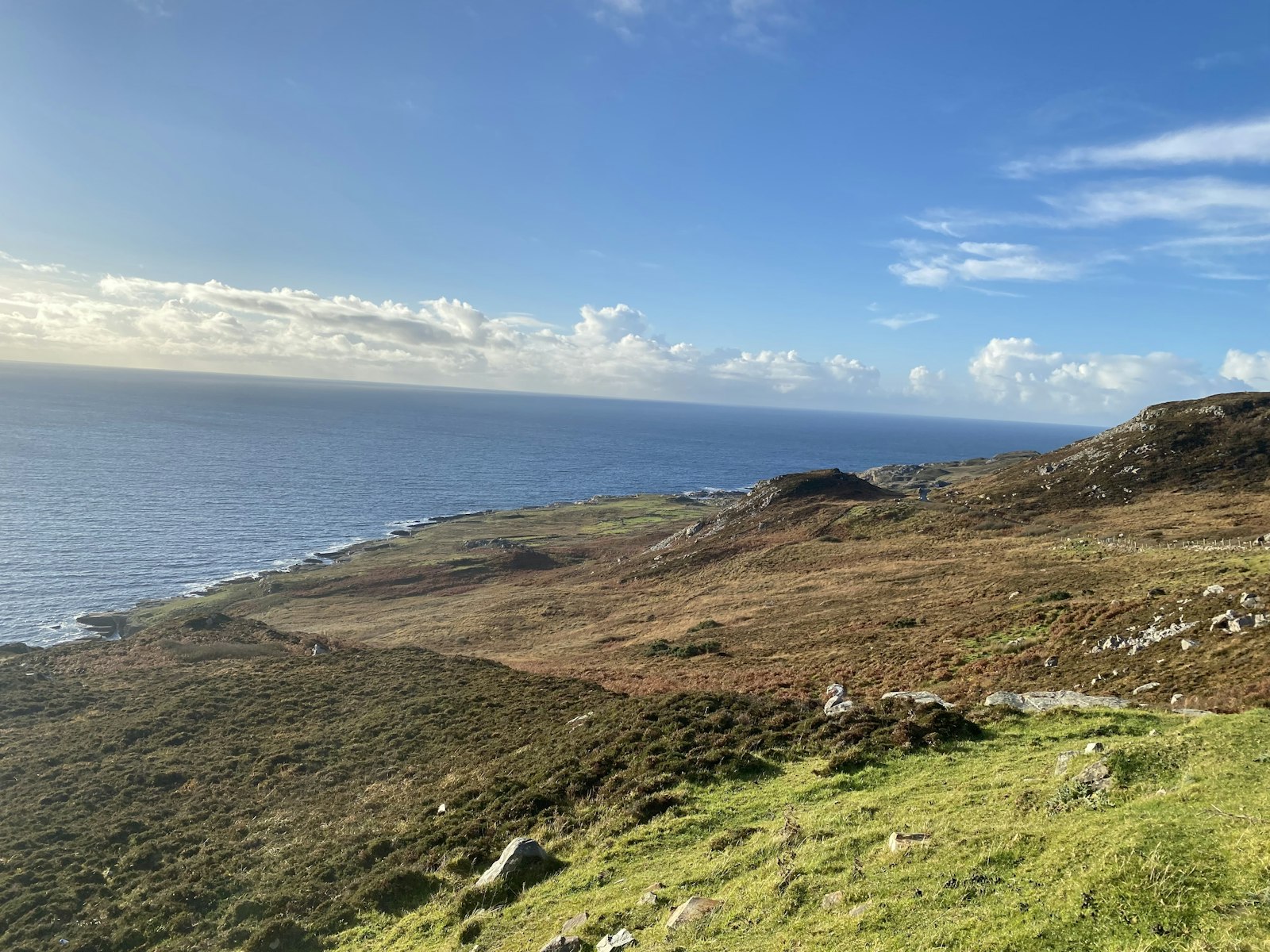
Photo by Jim Petkiewicz on Unsplash
The Aran Islands, positioned approximately 12 kilometers offshore from Galway city in Galway Bay, occupy a unique position in Irish culture and imagination. Comprising three islands—Inishmore, Inishmaan, and Inisheer—the Aran Islands represent Ireland at its most isolated, culturally distinct, and profoundly traditional. For American visitors seeking authentic Irish experiences in landscapes that feel genuinely removed from modern tourism routines, the Aran Islands deliver rewards exceeding typical Irish tourism expectations.
The islands embody paradoxes central to their appeal. They’re easily accessible from mainland Ireland—ferries operate multiple times daily in favorable weather—yet the crossing creates psychological transitions to island mentality. They attract substantial tourism yet maintain cultural authenticity and local character resistant to commercialization. They’re among Ireland’s most famous cultural destinations, yet remain genuinely quiet and contemplative compared to heavily touristed continental locations. These contradictions create experiences that intrigue and captivate visitors repeatedly.
Understanding the Aran Islands’ Geography and Cultural Significance
The Aran Islands occupy exposed positions in Atlantic waters entering Galway Bay. Their position creates dramatic exposure to Atlantic weather systems, ocean swells, and wind creating landscape character fundamentally shaped by marine conditions. The islands’ geology reflects limestone bedrock—the same Burren limestone forming County Clare’s distinctive plateau extends underwater and emerges to form these islands.
The islands’ population totals approximately 1,200 people, concentrated primarily on Inishmore, with smaller populations on Inishmaan and Inisheer. This modest population, combined with geographic isolation, created conditions enabling cultural preservation. The Irish language, despite pressures toward English throughout Ireland historically, remained the community language on the islands. Traditional occupations—fishing, small-scale farming, and textile production—persisted longer here than elsewhere in Ireland.
This linguistic and cultural distinctiveness created the islands’ international reputation. Early 20th-century writers and intellectuals recognized the islands as repositories of “authentic” Irish culture, leading to increased cultural tourism and international attention. This attention, paradoxically, created dynamics threatening the very culture being valorized—external focus pressuring internal evolution.
Contemporary Aran Islands maintain this cultural tension. Residents work to preserve language, traditional crafts, and cultural practices while participating in modern economic systems requiring international engagement. Tourism provides essential income, yet tourism’s scale threatens cultural authenticity. These tensions create lived reality on the islands—community members balance cultural preservation against economic necessity and global connectivity.
Ferry Access and Practical Island Movement
Ferry access represents the primary connection between islands and mainland. Multiple operators run ferries between Galway, Connemara coastal villages, and the Aran Islands. Ferry schedules vary seasonally, with more frequent service during summer months when weather permits reliable crossings.
The crossing from Galway to Inishmore typically requires 40-60 minutes depending on sea conditions. The journey provides initial immersion in island experiences—observation of ocean conditions, exposure to Atlantic winds, and psychological transition from mainland to island thinking. Arriving at Inishmore’s primary harbor after this crossing creates tangible sense of arrival at somewhere distinctly separate.
Inter-island ferries connect the three islands, though service remains limited and weather-dependent. Most visitors concentrate on Inishmore, the largest and most accessible island. Reaching Inishmaan and Inisheer requires additional ferry connections and planning, limiting visitation and maintaining genuine quietness on smaller islands.
Ferries operate year-round but less frequently during winter months. Rough Atlantic conditions occasionally cancel sailings—weather flexibility becomes essential for island visits. This unpredictability, while creating logistical challenges, reinforces the islands’ genuine isolation and environmental exposure.
Inishmore: The Accessible Aran Island
Inishmore, the largest island at approximately 14 square kilometers, receives the vast majority of Aran Islands visitors. The island supports sufficient accommodation, restaurants, and services to accommodate daily visitor arrivals totaling sometimes exceeding resident population. Despite substantial tourism, Inishmore maintains strong cultural character and genuine community life.
Dún Aengus: Iconic Fort on Dramatic Cliffs
Dún Aengus, the islands’ most famous feature, sits dramatically positioned on 100-meter cliffs overlooking the Atlantic. This prehistoric fortification, constructed at an unknown date using undated technology and unknown purpose, dominates Aran Islands consciousness. The fort’s name references the possibly mythological Aengus, though its actual history remains mysterious.
Walking to Dún Aengus from the ferry harbor requires navigating island roads, initially paved but progressively narrowing and deteriorating. This journey, while short in distance (approximately 3 kilometers), creates sense of traveling into the island’s interior. Reaching the fort requires climbing a final steep section from cliff base.
The fort itself comprises three concentric walls constructed without mortar, built directly on limestone bedrock. The walls’ height and construction quality demonstrate sophisticated prehistoric engineering. The fort’s position creates vertigo-inducing perspectives—standing within the innermost enclosure with Atlantic visibility below creates profound awe.
The fort’s function remains debated. Military defensibility seems questionable given the cliff location—enemies couldn’t effectively approach from the seaward side, and the wall construction seems insufficient for substantial military force resistance. Archaeological evidence suggests residential or ceremonial purposes. Visiting the fort, without definitive historical information, requires accepting mystery—the fort’s appeal partly stems from its historical unknowability.
The area surrounding Dún Aengus teems with tourists during peak hours. Visiting immediately after ferry arrival, before organized tours reach the site, or during shoulder seasons provides experiences less crowded. The view toward the Connemara Mountains across Galway Bay provides perspective on the islands’ position—seemingly remote yet visually connected to mainland.
Dún Eochla and Dún Oghil: Lesser-Known Forts
Inishmore contains additional prehistoric forts—Dún Eochla and Dún Oghil—receiving substantially fewer visitors than Dún Aengus. These forts, while less dramatically positioned than Dún Aengus, offer experiences combining archaeological interest with genuinely peaceful exploration.
Dún Eochla, positioned in Inishmore’s central region, appears as low stone walls defining what was once a formidable fortress. Walking to this site involves navigating farm roads and field paths, creating experiences more genuine than organized tourism routes. The fort’s modest visible remains contrast with its historical significance, requiring imagination to visualize original form.
Dún Oghil, another fort in the island’s interior, presents similar experiences of archaeological exploration without tourist infrastructure. Finding these forts requires consulting maps and frequently asking for local directions—the process itself creates authentic exploration and local interactions.
The Monastic Sites and Early Christian Heritage
The Aran Islands contain numerous Early Christian ecclesiastical sites representing the islands’ religious significance. Saint Enda supposedly founded a monastery on Inishmore during the 5th century, making it one of Ireland’s oldest monastic settlements.
The Monastic Enclosure, containing remains of several church structures, sits in island interior. The site, while less dramatically positioned than Dún Aengus, communicates the spiritual communities’ choices—they selected locations balancing isolation with practical accessibility to water and pastoral land.
Walking among monastic ruins creates different emotional responses than visiting dramatic forts. The modest scale, the integration with surrounding landscape, and the sense of communal spiritual aspiration create contemplative atmospheres where the landscape’s spiritual qualities become apparent.
Village Life on Inishmore
Despite substantial tourism, Inishmore’s villages—Kilronan (the primary village) and smaller settlements—maintain functioning community character. The harbor area in Kilronan bustles with ferry arrivals and departures, but moving into village streets reveals working community—locals conducting business, children walking to school, families managing daily life.
Visiting village pubs, particularly in early evening or off-season, provides opportunities to experience community gathering spaces. Sessions of traditional music occur regularly, with musicians gathering to play together. These sessions, while sometimes interrupted by tourists, maintain genuine character—musicians prioritize music-making over performance presentation.
Restaurants and cafes throughout the village offer quality food emphasizing fresh seafood and traditional Irish cooking. Accommodation options range from hostels to guesthouses to hotel facilities. Booking accommodation in advance, particularly during peak season, is essential.
Inishmaan: The Middle Island Experience
Inishmaan, the middle island of the three Arans, represents something between Inishmore’s tourism and Inisheer’s remoteness. Ferry service remains regular but less frequent than Inishmore, limiting daily visitor volumes. This differential access creates an island that, while welcoming visitors, maintains stronger local character than Inishmore.
The island, approximately 5 kilometers long and 2.5 kilometers wide, contains sufficient size for meaningful exploration while remaining intimate enough for detailed knowledge acquisition. Walking the island’s roads and field paths, you encounter primarily locals, occasional visitors, and landscape unfolding gradually.
Dún Conor, Inishmaan’s primary prehistoric fort, occupies a hilltop position overlooking the island and bay beyond. While less dramatically positioned than Dún Aengus, the fort commands excellent perspectives and receives minimal visitor attention. Walking to the fort, you move through agricultural landscape where locals work, creating sense of exploring inhabited, working island rather than tourism artifact.
The island’s beaches, on the sheltered southern coast, provide swimming and beach exploration opportunities. The water, while cold, remains refreshing during summer months. Local families use these beaches, creating authentic beach experiences rather than tourism infrastructure.
Guesthouses and small hotels provide accommodation, though options remain limited compared to Inishmore. Advance booking is essential. The limited accommodation actually benefits visitors—it prevents over-tourism while ensuring that visitors present represent committed interest rather than casual tour passengers.
The island’s quiet character, combined with its genuine accessibility, makes Inishmaan appealing to visitors seeking island experiences without the tourist crowds of Inishmore, yet without the logistical challenges of Inisheer’s greater remoteness.
Inisheer: The Quiet Third Island
Inisheer, the smallest and most remote island, attracts fewer visitors and maintains strongest resistance to tourism transformation. Ferry service remains limited, with connections sometimes requiring inter-island ferries or specific departure timing from the mainland.
The island’s small size and sparse facilities mean that visiting Inisheer constitutes genuine commitment—you’re traveling to an island with limited accommodation, restaurants, and services. This limitation creates self-selection where most visitors are genuinely interested in island exploration rather than casual tourism.
Dún Formhór, Inisheer’s fort, shares design similarities with other island forts while maintaining distinctive character. The site receives minimal visitor traffic, allowing peaceful exploration. The island’s isolation makes solitary visits entirely feasible—you might walk field paths encountering only residents and birds.
O’Brien’s Castle, the island’s most recognized structure, sits on elevated terrain commanding views across Galway Bay toward the mainland. The castle, built in the 14th century and subsequently modified, represents medieval architectural interest combined with strategic positioning.
The island’s beaches—both public and more sheltered coves—provide peaceful water access. Swimming, beachcombing, and simple observation of natural processes occupy visitor time more than structured attractions.
Accommodation on Inisheer remains limited but adequate. Several guesthouses and bed-and-breakfasts provide comfortable overnight options. Advance booking becomes even more essential on Inisheer than other islands given limited facility capacity.
Traditional Crafts and Cultural Preservation
The Aran Islands maintain reputation as centers of Irish craft production, particularly traditional textile work. The famous Aran sweaters, characterized by distinctive cable patterns supposedly originating in specific island families, remain produced on the islands though increasingly by industrial operations.
Visiting craft studios throughout the islands, you encounter artisans maintaining traditional practices. While some locations cater explicitly to tourists, others operate primarily for community use, with tourism representing secondary consideration. Purchasing crafts directly from makers supports island economy while acquiring items with genuine cultural authenticity.
The islands support cultural organizations promoting Irish language, traditional music, traditional dance, and other cultural practices. Visitors interested in cultural immersion can inquire regarding workshops, classes, or cultural programs occurring during their visits.
Practical Information for Aran Islands Exploration
Ferry Access and Scheduling: Multiple ferry companies operate between mainland and islands. Scheduling varies seasonally. Checking current schedules before travel is essential. Weather significantly impacts ferry operations—rough conditions occasionally cancel sailings. Flexibility regarding travel dates minimizes disruption.
Cost: Ferry tickets typically cost €15-20 per person round-trip. Additional costs include accommodation, meals, and any organized activities or attractions.
Accommodation Booking: Accommodations should be booked well in advance, particularly for July-August visits. Email or phone directly to island guesthouses—internet booking options remain limited.
Language: English serves as the primary language for visitor communication. However, Irish remains the community language on all three islands. Learning basic Irish phrases demonstrates respect and often improves local interactions.
Transportation on Islands: The islands support minimal vehicle infrastructure. Most visitors walk, cycle (rental bikes available), or take minibus tours. Walking provides most intimate island experiences.
Weather Considerations: Atlantic position creates variable weather. Plan for sudden condition changes. Waterproof clothing is essential. Wind remains constant, particularly on exposed areas.
Timing: May through September provides optimal weather and maximum facility availability. April-May and September-October offer shoulder season advantages. Winter visits involve reduced facility availability and frequent weather disruptions.
Activities and Experiences
Hiking and Walking: Island roads and field paths provide walking opportunities of varying difficulty. Walking remains the primary activity for most visitors.
Archaeological Exploration: Beyond major forts, numerous smaller archaeological sites reward exploration. Consulting maps and asking locals creates genuine discovery opportunities.
Traditional Music: Pub sessions occur regularly, particularly during evenings. Timing remains variable—visiting pubs and inquiring regarding session schedules provides best information.
Swimming and Beach Activities: Summer swimming in island waters remains possible for hardy swimmers. Beaches provide peaceful contemplation spaces.
Photography: The islands’ dramatic coastlines, colorful cottages, archaeological sites, and weather patterns reward extensive photographic attention.
Cultural Observation: Spending time observing community life—shopping at local stores, having coffee in village cafes, attending mass or cultural events—creates genuine cultural immersion.
Overnight Island Experiences
The difference between day-trip visits and overnight island stays cannot be overstated. Day visitors experience the islands as tourism destinations. Overnight visitors experience them as functioning communities. After tourist boats depart in late afternoon, the islands transform—locals reclaim spaces, social life intensifies, and psychological separation from mainland becomes profound.
Those granting the islands multiple nights experience psychological transitions where island existence begins feeling normal rather than novelty. Traditional music sessions, community gatherings, and social life become integrated experiences rather than observed spectacles.
Conclusion: The Aran Islands’ Timeless Appeal
The Aran Islands represent rare destinations where substantial tourism coexists with genuine cultural authenticity. The islands’ geographic isolation, combined with community commitment to cultural preservation, creates environments where traditional Irish culture persists as lived reality rather than curated heritage.
American visitors seeking “authentic Ireland” often discover its most pure expression on the Aran Islands—not because tourism marketing claims authenticity, but because the islands’ practical realities force authentic cultural engagement. Language remains necessary for certain transactions. Seasonal service patterns create genuine integration with natural cycles. Weather influences daily life meaningfully.
The islands reward extended stays enabling tourists to experience island existence rather than simply visiting island attractions. Those committing to multiple nights, participating in community rhythms, and accepting weather and schedule unpredictability find that the Aran Islands offer Irish experiences matching romantic imaginings of island life. The forts, the archaeological sites, and the dramatic scenery constitute the visible attractions. The genuine appeal emerges from participation in island community life—the conversations, the music, the shared meals, and the profound sense of reaching somewhere genuinely separate from ordinary continental existence.

Author: jonathan
Jonathan is the publisher of Irishtopia.net, Anglotopia.net, and Londontopia.net. He's passionate about travel and learning about other cultures. He's been to Ireland several times, and uses his travel expertise for Irishtopia!