
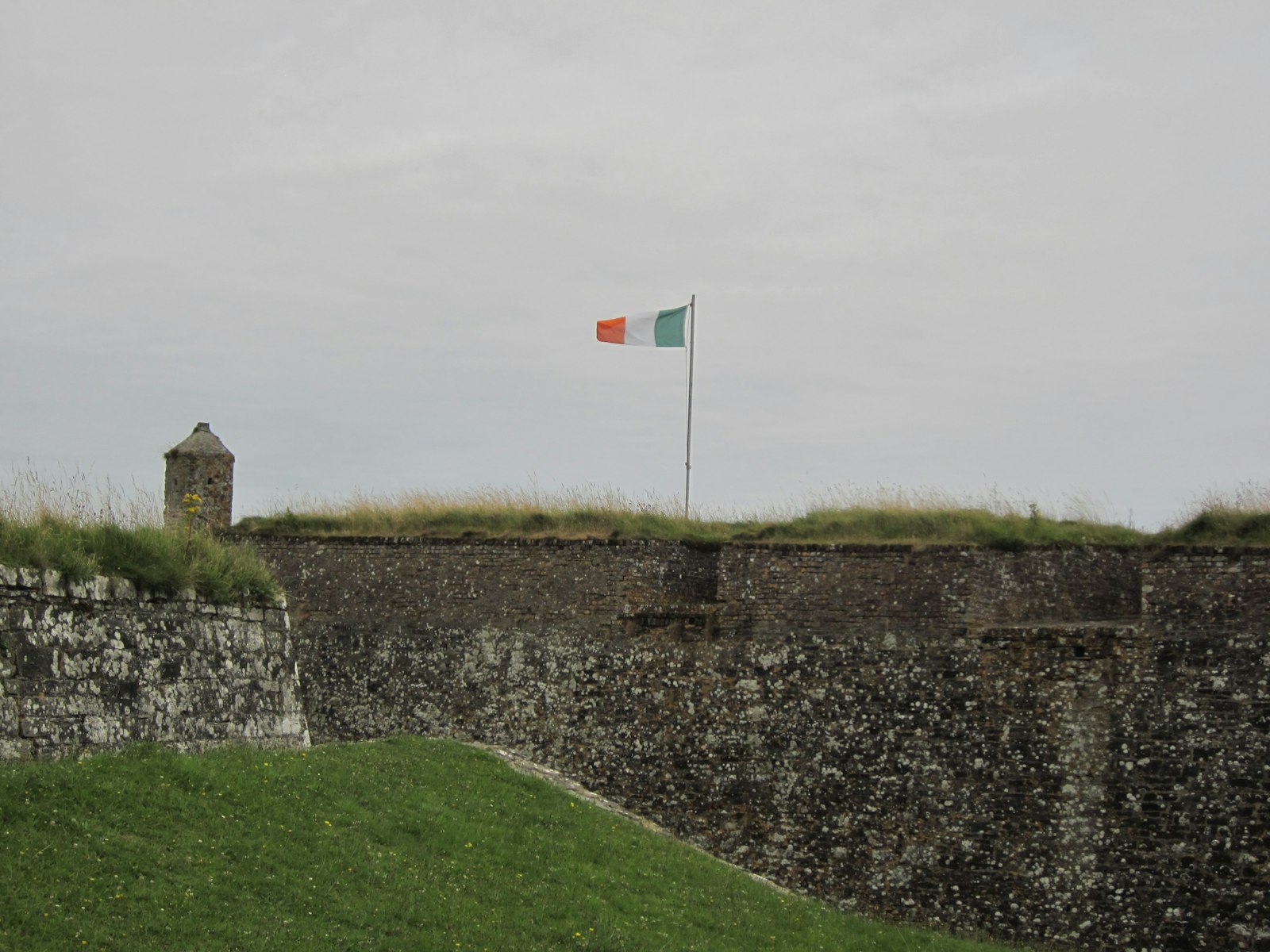
Photo by Lindy Murphy on Unsplash
On Good Friday, April 23, 1014, a battle was fought on the plains of Clontarf near Dublin that would echo through Irish history and legend for centuries. In popular memory, the Battle of Clontarf represents Ireland’s greatest military victory—the moment when the Irish defeated a coalition of enemies including Viking invaders, secured their independence, and ushered in a golden age of Irish civilization. Yet the historical reality of Clontarf is considerably more complex and ambiguous than the legend suggests. Examining what actually happened at Clontarf, what forces were genuinely involved, what the battle’s immediate results actually were, and how it came to be remembered reveals much about how historical events become transformed into national myths.
The Road to Clontarf: Brian Boru’s Rise to Power
The Battle of Clontarf cannot be understood without understanding the rise of Brian Boru, the man most closely associated with it. Brian emerged from the Dál Cais dynasty, a royal family of Munster whose power had grown substantially in the 10th century. Through military skill and political maneuvering, Brian accumulated power over an unprecedented broad area of Ireland.
Brian’s early life and military campaigns are recorded in sources written later, making some details uncertain. However, it’s clear that by the year 1000, Brian had established himself as the most powerful king in Ireland. He had defeated rival kings in Munster, extended his authority into Leinster, and forced the powerful Uí Néill dynasty of northern Ireland to acknowledge his supremacy. By the opening of the 11th century, Brian was recognized as the High King of Ireland—the most powerful monarch on the island.
Brian built his power through a combination of military victories, political marriages, and the careful cultivation of alliances. He also maintained a fleet, controlled trade routes, and had sufficient resources to maintain a standing military force. This military and economic power formed the foundation of his unprecedented dominance over Irish politics.
However, Brian’s authority was never secure. He constantly faced challenges from rival kings who resented his supremacy and desired to establish their own power. The major rival powers included the King of Leinster, who controlled Dublin and the wealthy east coast; the King of Connacht in the west; and the Northern Uí Néill in the north. In the year 1012, a coalition of these rivals had defeated Brian in a battle and wounded him, demonstrating that his power could be challenged.
The Assembly of Forces
The forces that came together to fight at Clontarf were not simply “Irish” versus “Vikings,” as legend often suggests. Instead, they represented competing factions within Irish political structure, with various kings and their supporters taking different sides in the conflict. Brian had called upon his allies to support him, and his rivals had called upon their allies in opposition.
Brian’s forces included his sons and supporters from Munster, along with various other Irish kings who had allied with him or who depended on him for their power. It also included some contingents from Norse Dublin, the Viking settlement that controlled Dublin and its surrounding region. The King of Leinster, technically one of Brian’s rivals, appears to have made some contribution to Brian’s forces, though the extent of his actual participation is debated by historians.
The forces opposed to Brian were assembled primarily by his chief Irish rivals. The King of Leinster and his supporters formed the core of the opposition, along with contingents from Connacht and other Irish kingdoms opposed to Brian’s dominance. Importantly, they were also supported by a Norse contingent from Dublin, suggesting that the Vikings were divided and that different factions of Norse Dublin leadership supported different Irish powers.
This is a crucial point often missed in the legend of Clontarf: the Vikings were not unified in opposition to the Irish. Instead, the Norse residents of Dublin were divided internally, with different leaders supporting different Irish powers. Some sources suggest that the Norse leader Brodir, who led a Norwegian fleet that had arrived in Ireland, supported the anti-Brian coalition. Other Norse leaders may have been divided in their loyalties or have maintained neutrality.
The Battle
The battle itself was fought on the plains of Clontarf, which are now suburban Dublin. Contemporary accounts, written by monks who may or may not have been eyewitnesses, describe a massive engagement involving thousands of warriors. The specific details of the battle—the tactics employed, the positioning of forces, the key moments in the fighting—are difficult to determine with precision from the sources.
What seems clear is that the battle lasted a full day and involved intense fighting. Brian’s forces, despite his age (he was in his 70s at the time), appear to have fought effectively and may have had superior numbers or more effective organization than their opponents. The sources describe heavy casualties on both sides, with contemporary accounts claiming that five thousand men or more were killed, though this figure is probably an exaggeration.
The crucial moment of the battle, and the moment most emphasized in later legends, was when Brian’s forces defeated the opposing army decisively. The forces opposed to Brian retreated from the field, and Brian’s supporters were left in control of the battlefield, suggesting a military victory.
The Complications and Ambiguities
However, the battle’s aftermath revealed the complication embedded within this victory. Brian himself was killed during or immediately after the battle. Whether he was killed in direct combat by opposing forces or whether he was killed in the chaos of the battle’s aftermath is unclear from the sources. An alternative account suggests that a captured enemy leader, Brodir, escaped from captivity, encountered the elderly Brian who was away from the main fighting, and killed him. Regardless of the exact circumstances, Brian’s death on the day of his military victory was a moment of profound irony.
Brian’s death immediately threw the succession into confusion. His sons had survived the battle and were well-positioned to inherit his power, but the coherent political system that Brian had constructed began to fragment. Within a few years of Clontarf, Brian’s successors had lost much of the widespread authority that Brian had established. The major kingdoms of Ireland reasserted their independence, and no subsequent ruler achieved comparable power over the entire island.
Furthermore, the claim that Clontarf represented a final defeat of Viking power in Ireland is questionable. While the specific Norse contingent that supported the anti-Brian coalition was defeated at Clontarf, Norse settlements in Ireland, particularly Dublin, continued to exist and maintain power for many decades after 1014. The Norse Dublin didn’t fall to Irish control until 1170, over 150 years later, and that fall was accomplished by Norman invaders rather than by Irish forces.
The Legend of Clontarf
Despite these complicating historical realities, the Battle of Clontarf became embedded in Irish national memory as a triumphant moment. Brian Boru was remembered as a great king who united Ireland and defeated the Vikings. The battle was celebrated as the moment when Irish independence was secured and foreign invaders were driven from the island. Centuries later, Irish nationalists invoked Clontarf as an example of Irish military capacity and national unity.
The legend of Clontarf served important functions in Irish identity, particularly in the context of the English occupation that characterized Irish history from the 12th century onward. The memory of a moment when an Irish king had held supreme power over the entire island and had defeated foreign enemies provided a kind of historical anchor point—evidence that Ireland had once possessed power and dignity, and therefore could do so again.
The legend was perpetuated and embellished in later Irish literary tradition. In the 12th-century work “The War of the Irish Against the Foreigners,” the account of Clontarf is highly elaborated, with miraculous elements added to the story. Brian is presented as a wise and powerful king, the victory is presented as more complete and significant than the historical evidence suggests, and the defeat of foreign invaders is emphasized as the main point of the battle.
Modern Historical Assessment
Modern historians approach Clontarf with more skepticism than the legendary tradition. They recognize it as a significant battle—Brian’s last great victory and an important moment in Irish medieval history. However, they are cautious about the claims that Clontarf represented the defeat of Viking power in Ireland or that it secured Irish independence in any comprehensive sense.
Some historians argue that Clontarf was primarily a battle between rival Irish powers, with the Irish forces aligned on both sides and the Norse element being secondary to the main conflict. From this perspective, what the battle primarily represented was the triumph of Brian Boru and his allies over rival Irish kings who opposed his dominance. The involvement of Norse Dublin forces on both sides complicates the simple narrative of Irish versus Viking.
Other historians maintain that there was a genuine anti-Viking element to the battle and that it did represent a check on Viking power, even if it didn’t eliminate Viking presence in Ireland entirely. Clontarf may have weakened Norse Dublin’s power and made it more difficult for them to project power across Ireland, even if they maintained control of Dublin itself for many more decades.
Clontarf and Irish Identity
Regardless of the precise historical reality, Clontarf’s significance in Irish cultural memory is undeniable. The battle became a touchstone in Irish national consciousness, representing an era when Irish leadership was powerful and unified and could defeat external enemies. This symbolic significance was particularly important in the centuries after the Norman invasion, when Irish independence became a historical memory rather than a present reality.
For Irish Americans, the Battle of Clontarf represents an ancestral moment of glory and military victory. The memory of Brian Boru as a great Irish king who united the island and defeated invaders provides a sense of cultural pride and connection to Irish history. The battle has been frequently commemorated in Irish American cultural contexts, and Brian Boru has become an iconic figure in Irish American historical imagination.
The Complexity of Historical Memory
The Battle of Clontarf illustrates how historical events become transformed through retelling and how national memories often emphasize certain aspects of history while downplaying others. The historical battle of Clontarf—a battle between rival Irish powers with some Norse involvement—became, in memory, a battle of all Ireland against foreign invaders. A battle that failed to consolidate lasting political unity became, in memory, a triumph that secured Irish independence.
This transformation wasn’t dishonest or merely propagandistic. Rather, it reflects how communities extract meaning from history, emphasizing themes and events that serve contemporary needs and aspirations. The memory of Clontarf served Irish people well, particularly under foreign occupation, by providing a historical precedent for Irish power and independence.
Understanding the difference between the historical Clontarf and the legendary Clontarf allows us to appreciate both. It allows us to understand what actually happened at Clontarf and why it mattered in its own time. But it also allows us to understand the power of historical memory and legend—how the past speaks to the needs and aspirations of the present, and how great events become transformed through retelling into myths that define collective identity.

Author: jonathan
Jonathan is the publisher of Irishtopia.net, Anglotopia.net, and Londontopia.net. He's passionate about travel and learning about other cultures. He's been to Ireland several times, and uses his travel expertise for Irishtopia!