
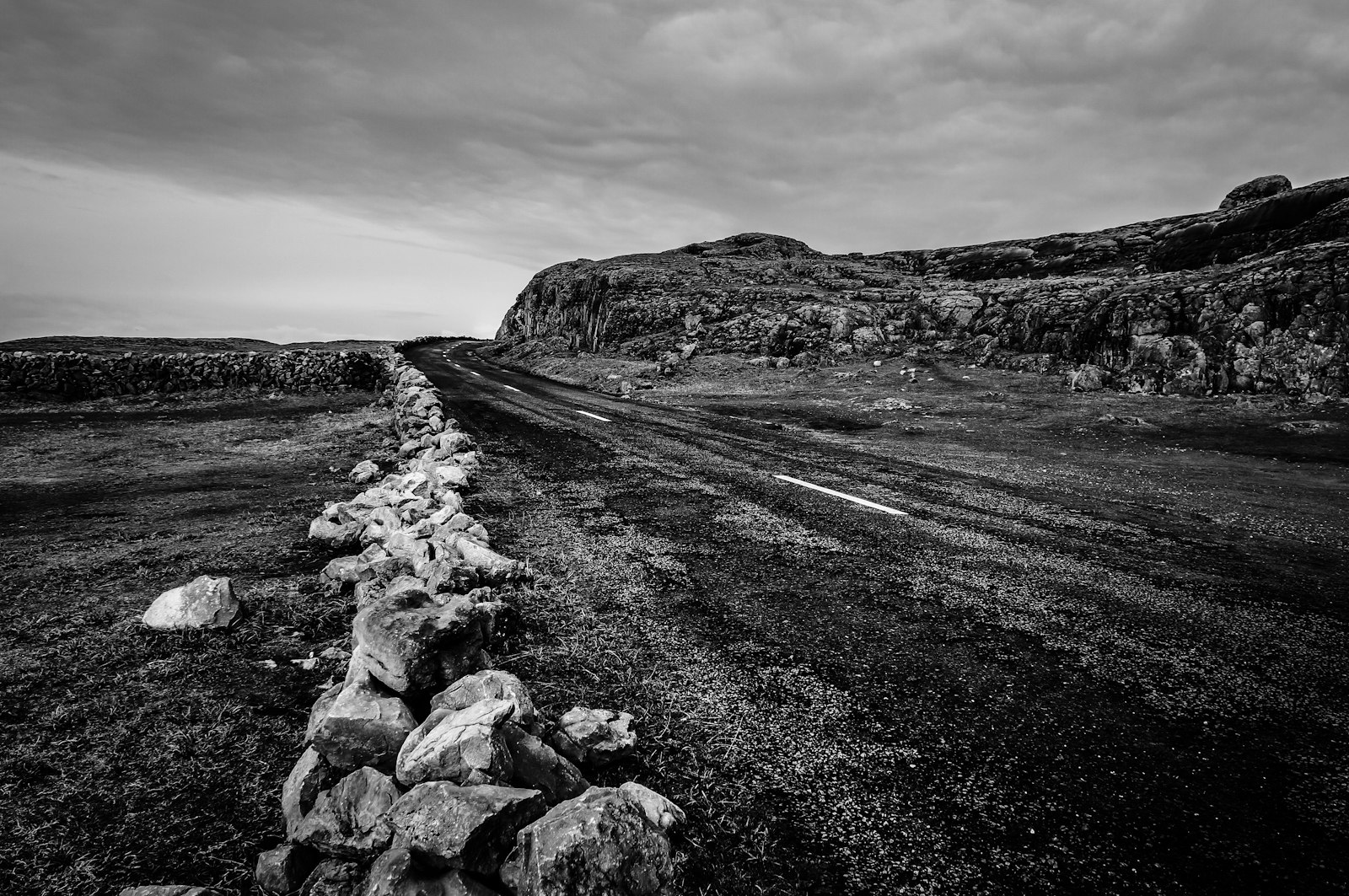
Photo by Peter Mitchell on Unsplash
The Burren represents one of Europe’s most distinctive and otherworldly landscapes. This 260-square-kilometer limestone plateau in County Clare presents terrain so unusual that visitors initially struggle to categorize what they’re observing. The landscape isn’t mountainous—the highest point barely exceeds 300 meters. It isn’t desert, though vast sections appear devoid of vegetation. Rather, the Burren occupies a unique geological and ecological niche that has fascinated scientists, attracted artists, and captivated travelers for centuries.
For American visitors interested in geology, rare flora, or simply landscapes fundamentally different from familiar terrain, the Burren offers extraordinary educational and aesthetic experiences. The landscape’s apparent barrenness conceals remarkable biodiversity, with plants typically associated with alpine regions, Mediterranean climates, and Arctic conditions growing together in unexpected harmony. Walking the Burren, you traverse landscape that genuinely feels removed from ordinary earth—it’s otherworldly in ways deserving the intense devotion it inspires in those who experience it.
Understanding the Burren’s Geology and Formation
The Burren’s distinctive character stems entirely from geology. The plateau consists of Carboniferous limestone, deposited approximately 320 million years ago when this region lay beneath warm tropical seas. As these limestone layers accumulated and subsequently emerged from water through geological processes, the rock became exposed to weathering.
What makes the Burren geologically remarkable is its lack of significant soil cover. Unlike most landscapes, where soil development gradually softens geology into rounded hills and gentle slopes, the Burren’s limestone remains largely exposed, creating the distinctive “limestone pavement” (locally called “clints and grykes”) that defines the landscape. The clints are the raised limestone platforms themselves, while grykes are the deep fissures between them.
This weathering pattern—where weak carbonic acid in rainwater slowly dissolves limestone—created the characteristic terrain. Over millennia, this process carved fissures of varying depths throughout the plateau. In some locations, these fissures remain shallow; in others, they reach depths of several meters. The resulting terrain resembles an enormous stone maze, with pathways running between raised platforms and sudden drops creating topographic complexity invisible from distance.
The limestone’s porosity created another unique geological feature—the Burren contains virtually no surface water. Rainfall drains immediately through permeable limestone into underground cave systems. This hydrological peculiarity meant that human settlement required positioning near springs that tap into underground water supplies, fundamentally shaping historical settlement patterns.
The Burren’s Unique Ecology and Flora
The Burren’s apparent barrenness masks remarkable ecological richness. The landscape supports approximately 75% of Ireland’s plant species despite comprising only 0.1% of the country’s land area. More remarkably, plants typically associated with completely different climatic zones grow together in the Burren, creating ecological communities found nowhere else on Earth.
Alpine plants, typically found in mountain regions above tree line, thrive in the Burren at sea level. These plants, including mountain avens (Geum montanum) and spring gentian (Gentiana verna), settled in the Burren during the last ice age when the plateau’s exposed limestone terrain resembled alpine environments. As climate warmed and lowland areas developed forests, these alpine plants persisted on the Burren because the exposed limestone prevented forest development.
Mediterranean plants, normally requiring warm southern climates, also flourish in the Burren. The limestone’s unique properties—retaining daytime heat and protecting plants from wind within the deep grykes—create microclimates approximating Mediterranean conditions. Rock rose, Mediterranean heather, and other southern species find the Burren congenial.
Orchid diversity represents another ecological wonder. Approximately 25 orchid species inhabit the Burren—more than any comparable European region. Species including the Early Purple Orchid, Pyramidal Orchid, and Greater Butterfly Orchid bloom in succession from spring through summer, creating floral displays that reward patience and observation.
Walking the Burren during late spring and early summer (May through July) reveals these botanical treasures most clearly. Patient observers, moving slowly and carefully examining the ground, discover rare plants hidden within grykes, sheltered on stone ledges, or clustered in locations where accumulated soil supports rooted plants.
Exploring the Burren: Accessible Routes and Hidden Paths
Despite its geological complexity, the Burren offers numerous routes for visitor exploration, ranging from short walks to substantial hiking excursions.
The Burren Way
The Burren Way provides a structured long-distance hiking route, though hikers typically tackle sections rather than completing the full 40-kilometer circuit. The trail begins near Ballyvaughan and circles through central Burren landscape, passing through villages, archaeological sites, and wildly varied terrain.
The central Burren sections of this trail offer most dramatic landscape experiences. Walking through terrain entirely composed of exposed limestone, with vegetation restricted to gryke bottoms and occasional soil pockets, creates unique outdoor experiences. These sections feel genuinely otherworldly—the austere beauty, the peculiar ecology, and the geological majesty combine to create emotional responses that exceed expectations.
Poulnabrone Dolmen and Surrounding Landscape
Poulnabrone Dolmen, located in central Burren landscape, represents one of Ireland’s most photographed archaeological monuments. This megalithic portal tomb, constructed approximately 5,000 years ago, sits in isolation on the limestone plateau, seeming almost impossible—how could people transport massive stones to this location without modern machinery?
The dolmen’s location, combined with the surrounding Burren landscape, creates powerful photographic and emotional experiences. The monument’s age—older than Egyptian pyramids—combined with the landscape’s otherworldly character, produces perspective-shifting realizations regarding human history and persistence.
Walking to Poulnabrone requires navigating limestone terrain—the path is well-marked but requires careful foot placement. The walk, approximately 2 kilometers from the parking area, traverses representative Burren landscape, allowing visitors to experience the geological and botanical uniqueness directly.
The archaeological site itself remains modest—dolmens lack the grand scale of larger monuments—but the context overwhelms. Standing at this location where humans gathered 5,000 years ago, on landscape that hasn’t fundamentally changed since, creates connections to ancient human activity that more developed archaeological sites sometimes lack.
Mullaghmore Mountain
Mullaghmore, at 383 meters, represents the Burren’s highest point. The ascent, though moderate in elevation, involves navigating limestone terrain requiring careful foot placement. The reward consists of panoramic views encompassing the entire Burren, Galway Bay, the Aran Islands, and the Connemara Mountains.
The walk to Mullaghmore’s summit traverses representative Burren terrain—exposed limestone, gryke systems, scattered plants adapted to harsh conditions, and occasional archaeological features. The ascent, taking approximately 45 minutes from accessible parking, provides accessible mountaineering experience.
Reaching the summit on clear days produces disproportionate satisfaction—the panoramic views, the sense of elevation, and the perspective on the Burren’s full landscape create memorable experiences. Even on misty days, when visibility reduces substantially, the walking remains worthwhile for the geological and botanical experiences.
Gleninagh Mountain
Gleninagh Mountain, on the Burren’s eastern margins, offers alternative summit experiences. The climb is slightly more strenuous than Mullaghmore but remains accessible to hikers with moderate experience. Gleninagh provides views toward Galway Bay and across the Atlantic.
The ascent passes through the remains of Gleninagh Castle, a tower house built in the 16th century. The castle’s location on this exposed mountain location speaks to historical defensive significance—the castle controlled territory from an elevated position, and its ruins remain visible from considerable distances.
Archaeological Sites and Historical Complexity
The Burren contains extraordinary concentrations of archaeological sites—portal tombs, ring forts, stone circles, and settlements spanning from prehistoric times through medieval periods. These monuments, scattered across the landscape without modern context facilities, create genuine archaeological exploration opportunities.
Stone Circles and Megalithic Monuments
Aillwee Stone Circle, on the Burren’s northern region, represents one of approximately 10 stone circles within the plateau. These monuments, erected around 4,000 years ago, remain enigmatic—their exact ceremonial purposes remain debated by archaeologists, adding mystique to these ancient structures.
Walking to stone circles requires navigating limestone terrain and sometimes consulting local directions, as markers remain sparse. This difficulty to access creates an archaeology experience where discovery remains genuine rather than being passive tourism.
The Burren Stone Circle, located south of the main tourist areas, offers similar experiences. These monuments in their austere landscape, without interpretive facilities or crowds, communicate ancient human presence directly.
Hill Forts and Settlements
The Burren contains approximately 400 hill forts—more per square kilometer than virtually any other Irish region. These Iron Age fortifications, marked by stone walls following hilltop contours, demonstrate intensive settlement during pre-Christian periods. Some of these forts encompassed substantial settlements; others served defensive or ceremonial purposes.
Exploring these forts requires consulting maps and often local knowledge, but the effort rewards with unique perspectives on ancient settlement patterns and Burren landscape interaction.
Aillwee Cave and Underground Worlds
The Burren’s porous limestone contains extensive cave systems, including Ireland’s largest publicly accessible cave. Aillwee Cave, near Ballyvaughan, operates as a commercial attraction but merits inclusion despite its developed nature.
Descending into the cave reveals another dimension of Burren geology. The cavern system extends approximately 700 meters into the mountain, with underground rivers visible in lower passages. The cave’s formations—stalactites, stalagmites, and flowstone—demonstrate limestone’s dissolution and reprecipitation processes.
Visiting the cave during shoulder seasons (when crowds remain minimal) combines education with genuine underground exploration. The cave’s cool temperatures and enclosed environment create sensations distinct from surface Burren experiences.
The Burren’s Human History and Settlement
Despite its apparent harshness, the Burren supported human settlement for millennia. Early inhabitants, relying on hunting and gathering, left evidence of their presence in the form of archaeological sites. Neolithic peoples developed agriculture on Burren lands, as evidenced by megalithic monuments and settlement sites.
Medieval periods saw the rise of powerful families controlling Burren territory, particularly the O’Loughlen and O’Brien families. These families built castles and fortified houses, controlling territory and extracting resources from Burren lands. The remains of these structures—castles, tower houses, and fortifications—dot the landscape, speaking to centuries of contested power and human ambition.
Understanding this settlement history transforms Burren walking. What initially appears as empty, human-free landscape reveals itself as deeply inhabited territory—humans continuously modified this landscape, extracting resources, establishing settlements, and organizing territory through political and military systems.
Practical Information for Burren Exploration
Getting There: The Burren’s primary towns—Ballyvaughan, Liscannor, and Doolin—sit at the plateau’s edges. Cork is approximately 90 kilometers distant, Galway approximately 70 kilometers. Limerick provides another access point. Public transportation connects major towns, but exploring the Burren fully requires a rental car.
Accommodation: Ballyvaughan, positioned on the Burren’s northern edge, offers the widest accommodation selection. Liscannor and Doolin provide alternatives. Smaller villages contain guesthouses and bed-and-breakfasts. Peak season (July-August) requires advance booking.
Maps and Navigation: Detailed maps remain essential for Burren exploration. GPS devices assist but can mislead given the landscape’s complexity and numerous similar-appearing terrain sections. Consulting with locals regarding routes provides invaluable guidance.
Walking Preparation: Navigating limestone terrain requires sturdy footwear. Water is essential—the landscape’s porosity means surface water is virtually absent. Early starts allow completion of walks before weather deteriorates.
Weather: Atlantic proximity creates variable weather. Mist frequently obscures landscape, particularly on elevated areas. Wind can be substantial on exposed terrain. Waterproof clothing and flexibility regarding plans based on weather conditions remains wise.
Timing: May through August provides optimal walking conditions and maximum wildflower displays. April-May and September-October offer shoulder season advantages—fewer crowds, pleasant weather, and lower prices.
Costs: Exploring the Burren independently costs minimally—walking remains free, and accommodation and dining remain reasonably priced. Aillwee Cave charges admission; Poulnabrone has no formal entrance fee.
Photography and Artistic Inspiration
The Burren’s landscape has inspired painters, photographers, and writers for centuries. The geological majesty, botanical diversity, and timeless quality create visual subjects rewarding extended photographic and artistic attention.
Early morning light, when mist partially obscures landscape and golden illumination bathes stone in warm colors, creates exceptional photographic conditions. Evening light produces similar effects with different color qualities. Even overcast conditions and mist create atmospheric opportunities—the Burren’s beauty transcends weather conditions.
Walking slowly, stopping frequently to observe botanical details and photograph interesting geological features, requires an entire day’s commitment. This tempo provides fullest engagement with the landscape and produces richer experiences than rapid touring.
Conclusion: The Burren’s Enduring Magic
The Burren represents geology and ecology in conversation—one of Earth’s most distinctive landscapes, ecologically rich, historically complex, and aesthetically extraordinary. The plateau challenges preconceptions regarding what landscapes should look like, how plants should grow, and what “barren” actually means.
American visitors accustomed to landscapes defined by dramatic elevation changes, abundant vegetation, or distinctive water features often initially struggle to appreciate the Burren’s appeal. Slowly, as observation deepens and perspective shifts, the landscape’s majesty becomes apparent. The Burren teaches appreciation for subtlety, geological time, ecological adaptation, and the profound beauty of understated landscapes.
Experiencing the Burren fully requires slowness—moving carefully across limestone terrain, stopping frequently to observe geological and botanical details, and allowing time for perspective shifts. Those who grant the landscape this temporal investment discover why the Burren has captivated visitors for centuries. This otherworldly plateau offers experiences genuinely available nowhere else on Earth, making it an essential Irish destination for travelers interested in geology, rare flora, or landscapes that fundamentally challenge perception and inspire awe.

Author: jonathan
Jonathan is the publisher of Irishtopia.net, Anglotopia.net, and Londontopia.net. He's passionate about travel and learning about other cultures. He's been to Ireland several times, and uses his travel expertise for Irishtopia!