
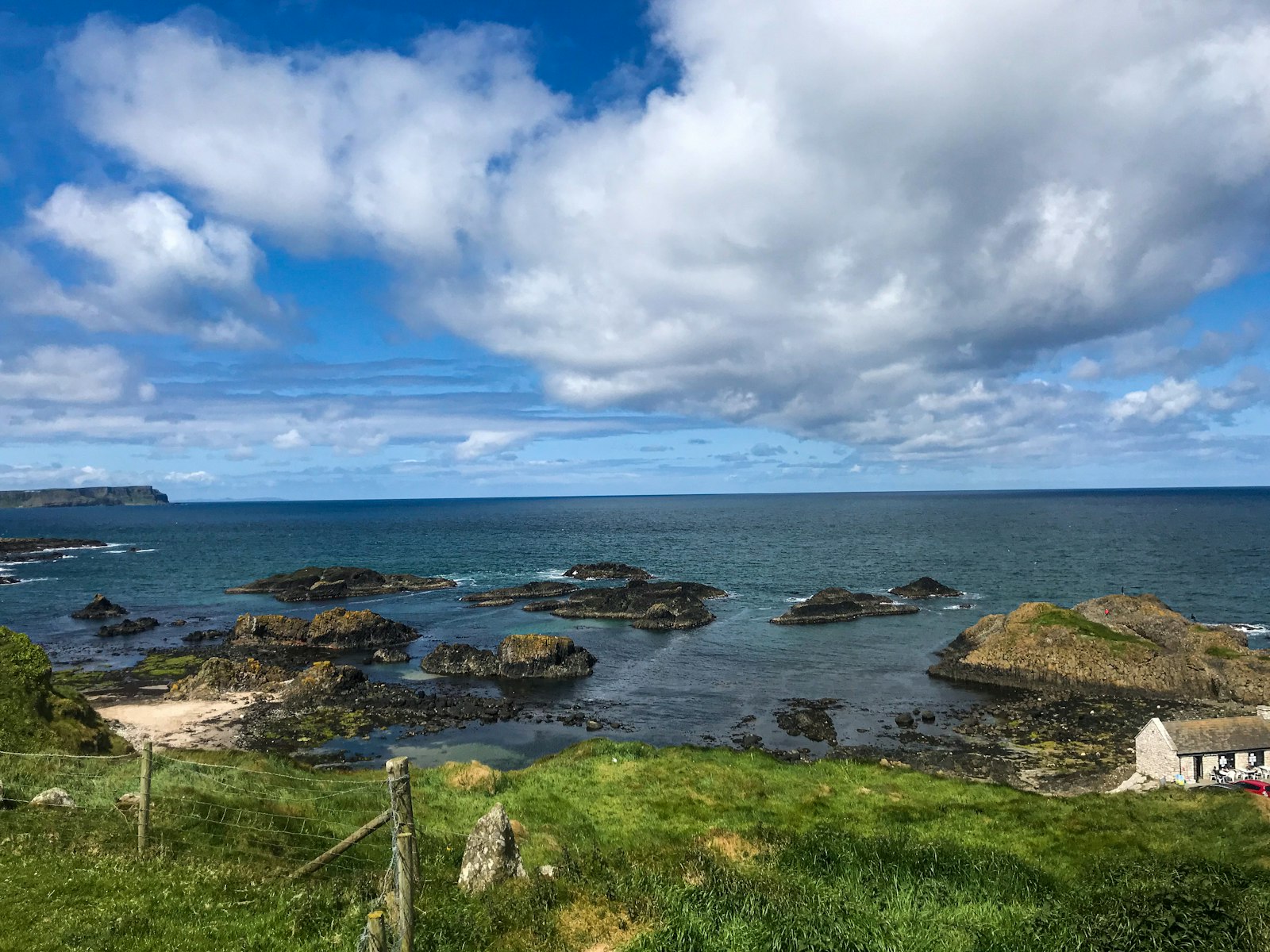
Photo by Lindsay Thompson on Unsplash
The Causeway Coast, stretching approximately 15 kilometers along County Antrim’s northern shores, encompasses some of Ireland’s most geologically significant and visually dramatic landscapes. The region centers around the Giant’s Causeway, a UNESCO World Heritage Site of extraordinary geological interest and legendary cultural significance. For American visitors interested in geology, dramatic coastlines, or simply landscapes that inspire awe through their sheer visual drama, the Causeway Coast represents an essential Irish destination.
What makes the Causeway Coast particularly compelling is the integration of geological and cultural narratives. The landscape’s distinctive columnar basalt formations result from precise geological processes—lava cooling under specific conditions created regular hexagonal columns of extraordinary geometric precision. Simultaneously, Irish mythology explains these formations as the creation of the giant Finn mac Cumhaill constructing a causeway to reach Scotland. Both narratives—scientific and mythological—enhance appreciation of landscape’s remarkable character.
Understanding the Causeway Coast’s Geological Formation
The Giant’s Causeway represents a basalt plateau created approximately 60 million years ago during the Paleocene epoch. During this period, extensive volcanic activity covered portions of what is now Northern Ireland with basaltic lava flows. As these lava flows cooled, the geological processes created an extraordinary phenomenon—the formation of regular hexagonal columns.
The cooling process explains the hexagonal structure. As basaltic lava cools, it contracts. Cooling from the surface downward and from pre-existing cracks creates internal stress patterns. These stresses resolve themselves through formation of cracks propagating at approximately 120-degree angles to each other—the geometric pattern that produces hexagonal columns. The resulting formations demonstrate geometry at geological scale, creating landscapes where natural processes produce precision typically associated with human design.
The Giant’s Causeway contains approximately 40,000 basalt columns, with individual columns varying in height from a few meters to as much as 12 meters. The columns’ remarkable regularity, combined with their scale and number, creates visual experiences that challenge comprehension. Standing among the columns, visitors encounter landscape that seems simultaneously natural and artificial—the human mind struggles to reconcile the scale and geometric precision with natural geological processes.
The formations weren’t created as a single unified event. Rather, multiple lava flows deposited successive layers of basalt. The columnar formations occur at various levels within the plateau, creating complex stratigraphic relationships visible in cliff faces and exposed geology. This complexity—multiple cooling events, varying column heights, different internal structures—adds geological depth to the landscape’s visual drama.
The Causeway Coast wasn’t limited to the Giant’s Causeway. The nearby Organ Pipes and other geological formations represent variations on the same columnar basalt phenomena. Each formation, while sharing the underlying geological processes, displays distinct characteristics creating varied landscape experiences across limited distances.
Giant’s Causeway: The Primary Attraction
The Giant’s Causeway visitor center, situated above the causeway formations, provides geological context and cultural interpretation. The center presents the landscape’s formation processes through interactive exhibits, videos, and interpretive materials. For visitors unfamiliar with geology, this orientation proves invaluable—understanding the formation processes enhances landscape appreciation.
Descending from the visitor center to the causeway formations, you encounter the formations directly. Walking among the hexagonal columns, touching individual stones, and observing the precise geometry up close creates experiences exceeding photographic documentation. The scale becomes apparent only in person—the columns’ heights, the formations’ extent, and the landscape’s dramatic positioning on coastal cliffs create emotional responses transcending intellectual understanding.
The causeway’s position on the Atlantic coast creates additional drama. The ocean’s constant presence—visible beyond the formations, audible through wave impact, tangible through salt spray on windy days—integrates marine environment with geological features. The causeway’s precarious position on cliff edges, with ocean visible hundreds of meters below, emphasizes the formations’ dramatic positioning.
Walking patterns across the causeway vary. Some visitors navigate the formations directly, scrambling over columns and walking through geometric landscapes. Others prefer maintaining distance, viewing the formations from established paths and viewpoints. Both approaches offer legitimate experiences—intimate engagement with individual columns versus panoramic perspective on the formations’ full extent.
The Chimney Stacks and Wishing Well
At the causeway’s northern edge, distinctive formations called the Chimney Stacks rise prominently from surrounding columns. These taller formations, resembling—as their name suggests—industrial chimney structures, become focal points for photography and observation. The Chimney Stacks’ distinctive character makes them instantly recognizable landmarks.
The Wishing Well, a natural pool formed among the columns, has become a tourist tradition—visitors throw coins into the water and make wishes. The practice, while commercialized by tourism, represents common human behavior—seeking tangible expression of hope through ritual gesture. Whether or not wishing fulfillment follows, the practice creates participatory engagement with place.
Dunluce Castle: Medieval Fortress Overlooking Dramatic Cliffs
Dunluce Castle, positioned a few kilometers east of the Giant’s Causeway, represents medieval Irish architecture positioned dramatically on coastal cliffs. The castle, constructed initially in the 13th century and subsequently developed over centuries, combines historical significance with spectacular positioning.
The castle’s dramatic location—perched on cliffs with the Atlantic visible below—creates visual drama exceeding that of castles positioned in pastoral countryside. The castle appears almost fantastical from certain perspectives—the combination of medieval architecture with extreme coastal positioning creates aesthetic impact.
Exploring the castle’s ruins reveals the architectural sophistication of medieval fortification. The towers, walls, and courtyard arrangements communicate defensive design and residential function. The castle’s partial ruin status permits visitors to observe architectural elements and understand spatial organization directly.
The castle’s history includes dramatic events reflecting medieval political turbulence. The castle fell into disrepair following the Earl of Antrim’s departure in the 17th century. Subsequently, portions of the castle’s kitchen fell into the sea during a violent storm—a dramatic reminder of coastal erosion processes continuing to shape this landscape.
The Organ Pipes: Columnar Variation
The Organ Pipes, located east of the Giant’s Causeway, represent another expression of columnar basalt formations. These columns, rising steeply from beach level, resemble massive organ pipes—hence their name. The formation creates a landscape distinctly different from the Giant’s Causeway yet representing the same geological processes.
The Organ Pipes’ position within a small cove, accessible via a coastal path from the Giant’s Causeway, creates discovery experiences. The walk, spanning approximately 1.5 kilometers, navigates coastal terrain offering varied perspectives on the columnar formations.
The formation’s appearance transforms dramatically with tidal conditions. At low tide, you can approach the columns directly, walking among them and observing their full height. At high tide, the columns become partially submerged, creating altered visual impressions and restricted access.
Coastal Walks and Landscape Integration
While the Giant’s Causeway and Organ Pipes represent primary attractions, the broader Causeway Coast supports excellent walking opportunities integrating geological features with landscape exploration.
The Causeway Coast Path provides established routes of varying length and difficulty. The path between the Giant’s Causeway and Dunluce Castle spans approximately 5 kilometers and offers graduated perspectives on columnar formations combined with views toward Dunluce Castle and broader coastal scenery.
More ambitious walks extend further along the coast, passing through various geological formations and revealing landscape complexity. The path’s coastal positioning provides constant ocean views and the opportunity to observe marine erosion processes actively reshaping the landscape.
Early morning walks, before peak tourist traffic arrives, provide particular advantages. The light quality creates exceptional photographic conditions, and the minimal human presence allows contemplation without distraction.
Portballintrae and Port na Spaniagh: Historical Layers
The small village of Portballintrae, positioned at the coast between the Giant’s Causeway and Dunluce Castle, combines contemporary village functions with historical significance. The village’s name references a Spanish galleon that wrecked on nearby rocks in 1588—one of ships from the Spanish Armada that attempted invasion of England.
Port na Spaniagh (Port of the Spanish), the harbor area, gained historical significance from this wreck. The archaeological remains of the ship, discovered underwater in recent decades, provide tangible connection to historical events. The harbor, while small and unassuming, evokes maritime history spanning centuries.
Practical Information for Causeway Coast Exploration
Getting There: The Giant’s Causeway visitor center is approximately 80 kilometers northeast of Belfast, accessible via the A2 road. The town of Bushmills, approximately 5 kilometers south of the causeway, provides services including accommodation and dining.
Accommodation: Bushmills offers the most convenient base with hotels, guesthouses, and bed-and-breakfasts. The village of Ballycastle, approximately 20 kilometers east, provides alternatives. Booking peak season accommodations (July-August) requires advance reservations.
Visitor Center and Attractions: The Giant’s Causeway Visitor Centre provides parking, facilities, and interpretive materials. Admission fees apply—typically €10-12 for basic access, though combined packages with guided experiences cost more. The facility operates year-round with seasonal hour adjustments.
Accessibility: The visitor center accommodates disabled visitors with accessible parking and facilities. However, the causeway formations themselves involve uneven terrain—visitors with mobility challenges should plan accordingly.
Timing and Weather: Atlantic coastal location creates variable weather. Wind and rain require preparation—waterproof clothing is essential. Visibility conditions affect photography and viewing—clear days permit maximum distance vision while misty conditions create atmospheric landscapes with reduced visibility.
Visiting Patterns: Peak tourist traffic occurs mid-summer (July-August). Spring (April-May) and autumn (September-October) offer advantages of fewer crowds combined with pleasant weather. Winter visits involve reduced daylight hours and frequent challenging weather.
Activities and Experiences
Geological Exploration: Beyond simple viewing, engaging with the formations directly—walking among columns, examining stone details, observing geological stratification—creates deeper landscape appreciation.
Photography: The causeway offers exceptional photographic opportunities at virtually any time. Different light angles, weather conditions, and tidal states create varying visual presentations rewarding multiple photographic visits.
Hiking and Walking: The Causeway Coast Path and associated routes provide walking of various difficulty levels. The coastal positioning creates constant ocean views and opportunities to observe marine processes.
Coastal Observation: Observing marine life, bird species, and coastal processes directly contributes to understanding this dynamic environment.
Historical Engagement: Visiting Dunluce Castle, learning about the Spanish Armada wreck, and understanding the human history layered upon the geological landscape enriches place appreciation.
Mythology and Cultural Narrative
The Giant’s Causeway embodies multiple narrative layers simultaneously. The scientific explanation—detailed geological processes creating columnar formations—exists alongside the mythological narrative where the giant Finn mac Cumhaill constructed the causeway to reach his love in Scotland.
Whether visitors privilege scientific or mythological narratives, or appreciate both simultaneously, the landscape’s cultural richness enhances appreciation. The formations inspired creative human response across centuries—both mythological explanation and contemporary artistic engagement.
Conclusion: The Causeway Coast’s Universal Appeal
The Causeway Coast represents a destination where geology creates landscape so visually dramatic that it compels awe regardless of visitor background or interest. Whether approaching from scientific geology perspective, cultural heritage angle, or simply seeking dramatic landscape experiences, the Causeway Coast delivers profoundly.
The Giant’s Causeway’s geometric perfection, created through natural processes over geological timescales, challenges human comprehension. Standing among 40,000 hexagonal columns demonstrates that nature operates at scales and with precision exceeding easy human understanding. This perspective—recognizing human insignificance within deep geological time and vast natural processes—creates emotional impacts transcending typical tourism.
For American visitors, the Causeway Coast represents a destination combining educational interest (geological formation processes), cultural heritage (mythology and historical narrative), spectacular landscape, and dramatic positioning. Few destinations deliver across these multiple dimensions with equal effectiveness. The result is a destination meriting strong attention within any Northern Ireland itinerary.

Author: jonathan
Jonathan is the publisher of Irishtopia.net, Anglotopia.net, and Londontopia.net. He's passionate about travel and learning about other cultures. He's been to Ireland several times, and uses his travel expertise for Irishtopia!