
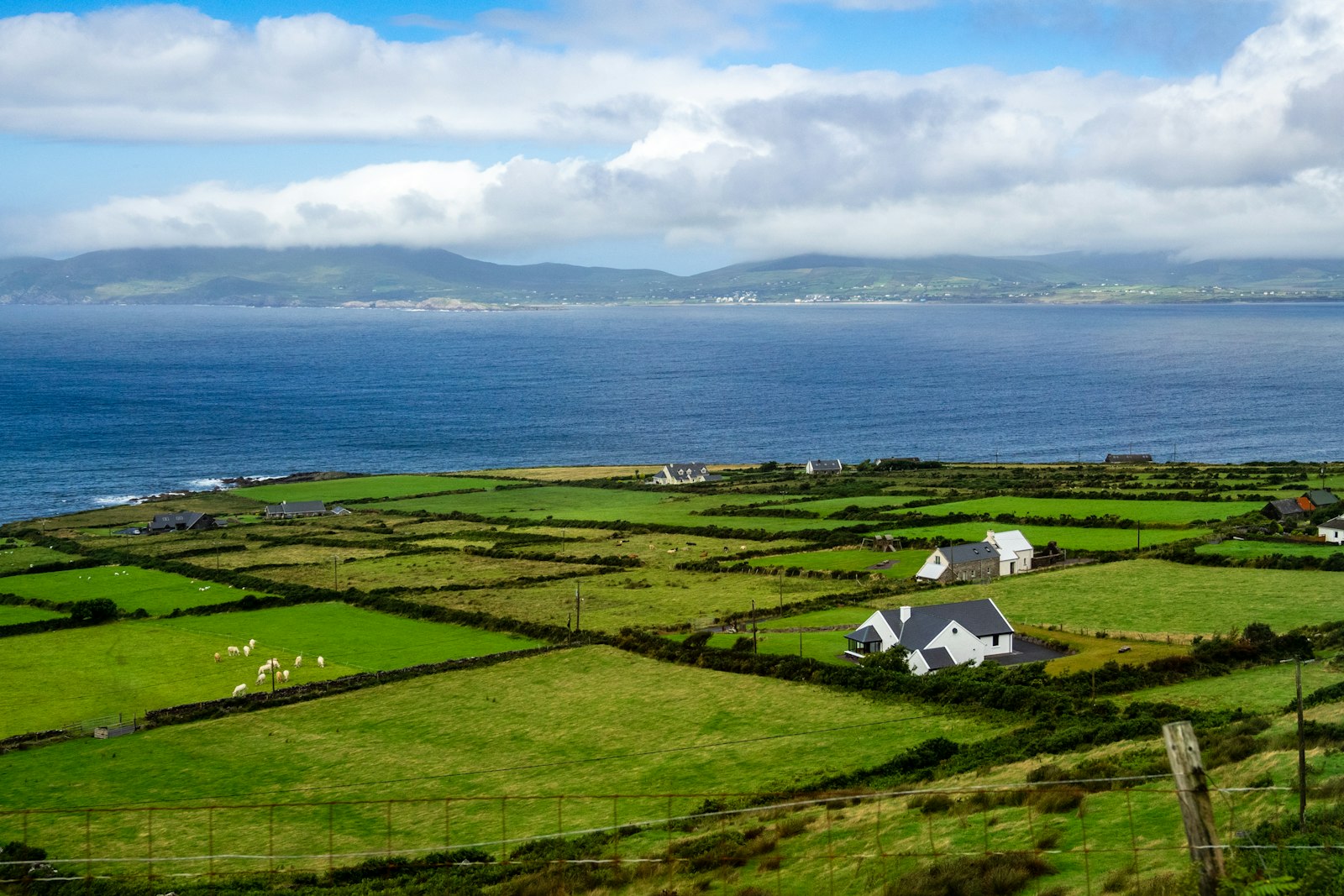
Photo by Andre Ouellet on Unsplash
There’s a particular kind of magic that happens when strangers become dancers in an Irish céilí. The music starts, hands join, and what was moments before a room of individual people transforms into a living, breathing organism moving as one. If you’ve never experienced a céilí—pronounced “KAY-lee”—you’ve missed one of Ireland’s most profound expressions of community, joy, and cultural identity. This isn’t the virtuosic solo Irish dancing you might have seen on stage. This is something more fundamental, more democratic, and far more contagious.
For centuries, the céilí has been the heartbeat of Irish social life, the space where neighbors connected, courtships began, and communities reinforced their bonds. In an era when the world often feels fragmented and isolated, the céilí offers something increasingly rare: genuine, unguarded collective joy. For Americans drawn to Irish culture, understanding the céilí means understanding how an entire people have maintained their connection to each other and to their heritage through movement, music, and shared purpose.
The Origins: When Dance Was Community Resistance
The history of the céilí reveals something profound about Irish culture: it emerged partly as a form of resistance. Céilís as organized gatherings became most prominent in the late 19th and early 20th centuries, though informal social dancing had always been part of Irish life. What makes this particularly interesting is that céilís were deliberately promoted by the Gaelic Revival movement—a conscious effort by Irish nationalists to preserve and celebrate Irish culture at a time when British colonial rule was attempting to erase it.
The name “céilí” comes from the Irish word “céilidh,” meaning a social gathering or visit. But in the context of dance, it evolved to mean something more specific: a structured social dance event where groups of people danced together in coordinated formations. This was revolutionary in its own way. Unlike the highly individual, athletic solo Irish dancing that requires years of formal training, céilís were accessible to everyone. They didn’t require a teacher, a special stage, or even particular musical talent. You just needed to show up, willing to move and connect with those around you.
During Ireland’s fight for independence and throughout the 20th century, céilís became powerful symbols of Irish identity. The Irish government officially recognized and promoted them, and they became fixtures at social clubs, schools, and community gatherings throughout the island. But their real power lay in something simpler than politics: they worked. They brought people together in a way that felt effortless and joyful.
The Structure: How a Céilí Actually Works
Unlike solo Irish dancing with its rigid upper-body form and lightning-fast footwork, céilís are refreshingly informal in their approach. Dancers form sets—typically groups of four, six, or eight people arranged in squares or circles. The most common céilí dances accommodate four people in a square formation, with dancers standing opposite each other or beside each other depending on the particular dance.
The beauty of this structure is its inclusivity. You don’t need to be fit, young, or particularly coordinated. You just need to follow basic directional movements: forward, back, to the side, and through the center. The caller—someone who announces the movements over the music—guides everyone through the steps. This is entirely different from a square dance caller in American country dancing, where the caller controls the pace and the movements are more unpredictable. In a céilí, the pattern is generally known; the caller simply reminds dancers of the sequence.
The most famous céilí dances have evocative names that hint at their character: “The Walls of Limerick,” “The Siege of Ennis,” “The Haymaker’s Jig,” “The Dunmore Hornpipe.” Each has its own personality, its own rhythm, its own way of making you move through space and interact with your fellow dancers. Some are fast and energetic; others are more stately and measured. But all of them share a common DNA: they’re designed to make you feel connected to the people around you.
A typical céilí dance lasts about three to five minutes per set. The music plays—usually traditional Irish reels, jigs, hornpipes, or polkas—and the caller guides the dancers through the movements. You might be swinging your partner, circling with all eight dancers in your set, weaving through the center, or executing a complicated figure that requires everyone to move in concert. For those three minutes, there’s no thinking, no self-consciousness, no room for worry. There’s only the music, the movement, and the people next to you.
The Social Magic: Why Céilís Work
There’s something about the structure of a céilí that bypasses the usual social barriers. You arrive at a community hall or hotel ballroom as a stranger, perhaps nervous about whether you’ll “do it right.” You’re introduced to three or seven other people who are equally nervous. The music starts. The caller gives the first instruction. And suddenly, you’re moving together.
This sounds simple, but the psychological and social effects are profound. The céilí removes the need for small talk to begin conversation. It removes the pressure of being judged on your appearance or status. Everyone is equal in the dance; everyone is following the same instructions; everyone has the same goal of making the dance work. In that egalitarian space, something shifts. People relax. Barriers come down.
Americans often speak of “getting to know someone” as something that requires sitting across from them over coffee, discussing their background and beliefs. But Irish culture has long understood that you can know someone through shared activity, through laughter during a missed step, through the grip of their hand as you swing together, through the collective effort to nail a complicated figure. A céilí teaches you someone’s spirit in ways that conversation cannot.
This is why céilís remain central to Irish social life today. They’re still the primary way that communities gather at weddings, at community halls on Friday and Saturday nights, at festivals and celebrations. They’re where teenagers get to know each other. They’re where elderly people stay connected. They’re where visitors are welcomed in. A céilí doesn’t ask “Are you from here?” or “Do we have anything in common?” It just asks: “Can you dance?”
The Music: The Heartbeat of the Dance
No céilí works without musicians. Traditionally, the music has been provided by a small ensemble of traditional Irish musicians—a fiddler, a bodhrán player, a squeeze-box player (accordion or concertina), perhaps a tin whistle or flute player. These musicians understand that their job is different in a céilí than it would be in a concert setting.
In a concert, musicians play for the audience. In a céilí, they play for the dancers. The musicians watch the dancers, feeling the energy in the room, adjusting the tempo and the energy of the music to match what’s happening on the floor. A good céilí band can see when the dancers are tiring and lift the energy with a faster reel. They can feel when a complicated figure is being executed and steady their rhythm to help the dancers maintain their timing. The relationship between musicians and dancers is collaborative and intuitive.
The music itself is almost always from the traditional Irish repertoire—reels, jigs, polkas, hornpipes, and slow airs. These are the musical forms that have been passed down through generations in Ireland, often without being written down, learned instead by ear and repetition. The beauty of this music is its momentum. A reel has a driving quality that naturally propels the dancers forward. A jig has a bouncy, lilting quality that makes you want to move lightly through space.
For American listeners, traditional Irish music might sound repetitive when heard in a concert setting—the same tune played over and over, with variations. But in a céilí, this repetition is essential. The dancers need to know the music, to anticipate it, to be able to focus on their movements rather than on what the music will do next. The repetition becomes meditative rather than monotonous.
The Different Styles: Regional and Contemporary Variations
Not all céilís are the same. There are significant regional variations in how they’re danced across Ireland. In the west of Ireland, particularly in Connacht, céilís often have a more relaxed, flowing quality. In the north, they tend to be more energetic and sharp. In the south, there are distinctive variations in how certain dances are executed. These regional styles reflect broader patterns of cultural variation across Ireland—different dialects, different music styles, different ways of being.
In the mid-20th century, the Irish government standardized many céilí dances, creating official versions that were taught in schools and promoted nationally. This standardization was well-intentioned—it helped preserve the tradition and made it easier to teach and learn. But it also flattened some of the regional diversity. Today, if you attend a céilí in Galway and then another in Cork, you’ll notice differences, but they’re subtle compared to the variations that existed a century ago.
Contemporary céilí culture has also evolved. Today, you’ll find céilís at traditional Irish music festivals, at weddings, at Irish community centers in cities around the world, and increasingly, at bars and nightclubs. Some contemporary céilís are more casual, with dancers working with whatever group happens to be nearby rather than carefully selecting partners. Others maintain more traditional structure. Some venues use recorded music; traditionalists insist on live musicians. These variations don’t diminish the céilí’s essential magic—the coming together of people to dance collectively and feel that connection.
The American Connection: Céilís in Irish-America
Irish-Americans have maintained the céilí tradition, and it’s becoming increasingly popular among Americans interested in Irish culture. Major cities with significant Irish populations—Boston, New York, Chicago, San Francisco—have regular céilí nights at Irish cultural centers, pubs, and community halls. These aren’t performances; they’re the real thing, complete with experienced dancers who know the formations and callers who guide everyone through the steps.
What’s interesting about American céilís is how they’ve become more egalitarian than they sometimes are in Ireland. In Ireland, because everyone grows up with céilís, there’s a range of skill and knowledge. In America, everyone is usually coming to a céilí as an adult learner, which levels the playing field considerably. The experienced dancers share knowledge freely, newer dancers ask questions without embarrassment, and the focus becomes less on executing the dance perfectly and more on the joy of doing it together.
For Americans who’ve experienced céilís, they often report a kind of revelation. In a culture that often emphasizes individual achievement and standing out from the crowd, the céilí offers something countercultural: the pleasure of moving in unison with others, the satisfaction of being part of something larger than yourself, the joy of connecting with strangers through shared movement. Many American visitors to Ireland make attending a céilí a priority, and many who’ve attended once seek out opportunities to dance again.
Learning to Céilí: It’s Easier Than You Think
One of the most reassuring aspects of céilís is that they’re genuinely accessible to beginners. You don’t need prior dancing experience. You don’t need to be in particular physical condition. You just need a willingness to learn and the ability to follow instructions. The movements are relatively simple: walking forward and back, circling to the left and right, executing figures like “grand right and left” (where dancers weave through each other in an alternating pattern) or “sides” (where groups within the set move together).
Most céilí events include an element of teaching. The musicians warm up, people mill around greeting friends and partners, and then as dancers arrive, someone—either a dedicated caller or an experienced dancer—will call the first dance and teach it to newcomers as it goes. After you’ve danced “The Walls of Limerick” or “The Siege of Ennis” a few times, you know it for life. The patterns become muscle memory, and you can enjoy the dance without conscious thought.
The key to learning is finding an actual céilí—ideally with experienced dancers who are comfortable helping newcomers. A video tutorial can teach you the steps, but the real learning happens in the moment, with people guiding you gently back on track when you lose the formation. The community aspect of the teaching is part of the tradition’s strength. No one is frustrated with beginners; everyone was a beginner once, and part of the céilí’s purpose is bringing new people into the tradition.
Modern Céilís: Tradition Meets Contemporary Life
Today’s céilís navigate an interesting space between preservation and evolution. On one hand, traditionalists want to maintain the authentic forms, the original music, the proper structures. On the other hand, contemporary céilís need to work for modern life—people have busier schedules, less community ties, different expectations about entertainment.
Some innovative céilí organizers have found ways to bridge this gap. They host céilís with high-energy DJs alongside traditional musicians, creating a hybrid experience that appeals to younger dancers. They create themed céilís—céilís in breweries, céilís with particular musical styles, céilís designed specifically for tourists. They’ve made céilís more accessible to people with disabilities by eliminating certain movement requirements while maintaining the essential structure.
Wedding céilís have become increasingly popular, even among Irish people and Irish-Americans who didn’t grow up with them. Couples who want to include dancing in their receptions often hire a céilí caller and teach their guests the dances during the reception. The result is often magical—the entire wedding party, including elderly relatives and people who’ve never danced before, moving together, laughing at mistakes, feeling the joy of collective celebration. For guests, it’s often the most memorable part of the wedding, the moment when the gathering truly becomes a community celebration.
The Deeper Meaning: Community and Identity
Understanding the céilí’s importance to Irish culture requires understanding what community means in Ireland. Historically, Irish society was organized around tight-knit groups—families, parishes, townlands. These groups were interdependent; survival required knowing and trusting your neighbors. The céilí emerged as a natural expression of this communal orientation.
But more than that, the céilí represents a particular kind of identity: one that is more group-oriented than individualistic. In American culture, we celebrate people who “stand out” or are “one of a kind.” Irish culture, particularly in the céilí, celebrates people who can “fit in,” who can move with others, who subordinate their individual expression to the collective good. This isn’t about conformity or suppressing individuality; it’s about recognizing that there’s a particular kind of joy and meaning available only through being part of something larger than yourself.
For Irish people, the céilí is also a connection to ancestors. Many Irish-Americans can trace their family heritage to villages where céilís were the primary social gathering. When they attend a céilí, they’re participating in something their great-grandparents participated in, using the same movements, to the same music, for the same purpose. It’s a direct line to their heritage, more tangible than a photograph or a story.
Attending a Céilí: Practical Tips for Americans
If you’re interested in experiencing a céilí, the best place to start is to find one actually happening rather than trying to learn from videos or books. In Ireland, céilís happen regularly at community halls, pubs, and hotels. In America, Irish cultural centers in major cities host them, often at specific times like Friday or Saturday nights.
When you attend, arrive on time or slightly early. Introduce yourself to whoever is running the céilí and mention that you’re new or inexperienced—they’ll be delighted and will make sure you’re partnered with experienced dancers. Wear comfortable clothes and shoes that allow movement. Don’t worry about your appearance or whether you’ll “mess up”; everyone around you will be supportive and encouraging.
Watch a dance or two before joining in if you want to, but don’t wait too long. The best way to learn is to dance. The caller will explain the movements as you go, and the people around you will gently guide you. You’ll make mistakes; everyone does. The atmosphere at a céilí is joyful and forgiving. Within minutes of starting to dance, you’ll feel the magic that has kept this tradition alive for generations.
Conclusion: The Céilí and the Human Need to Connect
In a world of increasing isolation and digital connection, the céilí offers something profoundly human: the experience of moving together, of creating something beautiful through collective effort, of belonging to a group that has no requirements other than willingness to show up and participate. This is why the céilí hasn’t disappeared despite massive social changes over the past century. Every generation of Irish people rediscovers it, because something deep in human nature responds to it.
For Americans drawn to Irish culture, the céilí offers more than entertainment or historical interest. It offers a different way of being in community, a different model of celebration and connection. It’s a reminder that joy doesn’t have to be individual or competitive. It can be collective, egalitarian, and available to anyone willing to dance.
The next time you have an opportunity to attend a céilí, take it. Stand in that circle or square with strangers who will become, for those few minutes, your collaborators in creating something magical. Feel the music, follow the caller’s voice, grip the hands of the people beside you, and move together. You’ll understand then why this tradition has survived centuries of change. You’ll feel why it matters. And you’ll be part of a dance that connects you not just to the people in that room, but to generations of Irish people who have gathered to do exactly this: to become one through movement, to find joy in unity, to remind themselves that they belong to each other.
That’s the magic of the céilí. It’s waiting for you whenever you’re ready to dance.

Author: jonathan
Jonathan is the publisher of Irishtopia.net, Anglotopia.net, and Londontopia.net. He's passionate about travel and learning about other cultures. He's been to Ireland several times, and uses his travel expertise for Irishtopia!