
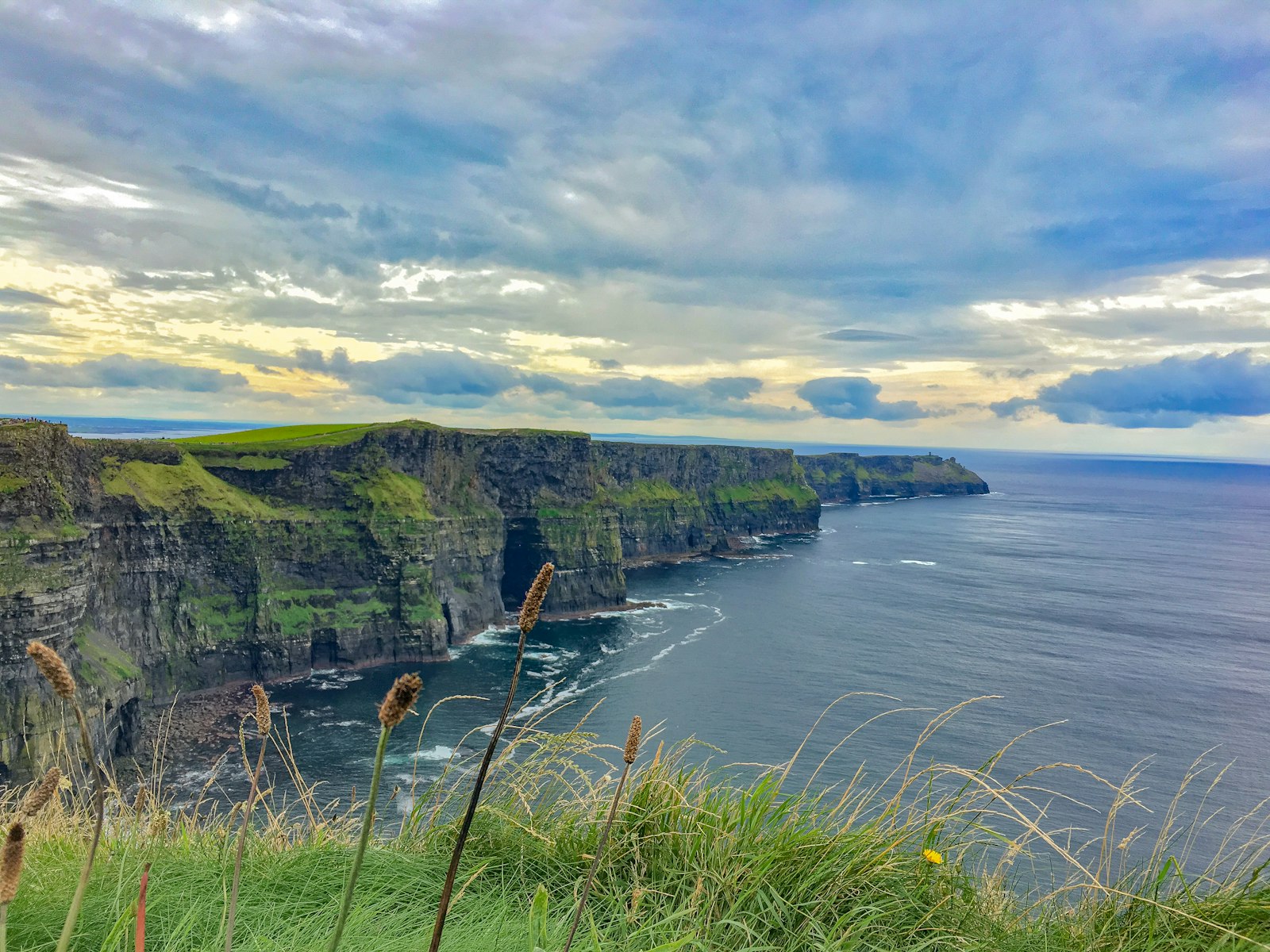
Photo by Leighton Smith on Unsplash
The Dagda stands as one of the most important and complex figures in Irish mythology. Known as “the Good God” or “the Father of All,” the Dagda represents the highest order of divine power in the Irish pantheon. Yet despite his supreme importance, the Dagda’s character is ambiguous and sometimes comical, combining serious divinity with earthy, physical, and even crude elements. He is simultaneously a god of fertility and abundance, a warrior god, a god of magic and knowledge, and a father figure to other gods. Understanding the Dagda provides insight into how ancient Irish people understood divinity and how they imagined the divine-human relationship.
The Dagda appears prominently in the Mythological Cycle, the body of Irish mythology dealing with the gods and their conflicts. He plays central roles in the battles between the Tuatha Dé Danann and the Fomorians, demonstrates supernatural powers, and participates in the governance of the divine realm. The Dagda’s presence in Irish mythology reveals important truths about pre-Christian Irish religion and about how Irish people understood sacred power.
The Name and Nature of the Dagda
The word “Dagda” likely derives from Irish words meaning something like “the good god” or possibly “the god of skill/craft.” In Irish texts, he is referred to as “the Dagda” (with the definite article), suggesting he is a unique and singular figure—the supreme god rather than one god among many.
The Dagda is frequently referred to as “father” or “all-father,” roles suggesting his position at the head of the divine hierarchy. He is sometimes called “the Dagda Mór,” the Great Dagda, emphasizing his supreme power and importance. Yet alongside these titles and this apparent position of authority, the Dagda is sometimes depicted with humor and crude physicality, suggesting that Irish understandings of divinity encompassed dimensions beyond purely spiritual or transcendent power.
The Dagda is depicted as physically impressive, often described as large and powerful. He carries magical weapons and possesses extraordinary abilities. Yet he is also often depicted eating, drinking, and engaging in sexual activity with enthusiasm. This combination of supreme divine power with physical appetites and humor creates a distinctive characterization unique among Indo-European gods.
The Dagda’s Magical Objects and Powers
The Dagda is associated with several magical objects that embody his divine powers. He possesses a magical cauldron that never empties and is said to contain all knowledge and abundance. This cauldron represents the Dagda’s connection to fertility, abundance, and sustenance. Those who eat from the cauldron cannot hunger or die.
The Dagda also wields a magical club or cudgel that can kill on one end and resurrect the dead on the other. This weapon represents the Dagda’s power over life and death. He can destroy or restore life at will. The weapon also makes him a formidable warrior god capable of defeating enemies through supernatural force.
In addition to his cauldron and club, the Dagda is associated with a magical harp that controls the seasons and the passage of time. By playing his harp, the Dagda can move from spring to summer to autumn to winter and back again. This power over seasonal cycles connects him to the agricultural fertility and renewal that are central to Irish mythology.
These magical objects demonstrate that the Dagda’s power is not merely physical but rather magical and supernatural. He operates through objects of power and through knowledge of sacred mysteries rather than through ordinary force.
The Dagda as Father of the Gods
The Dagda’s role as father of the gods is central to his identity. He is described as the father of numerous divine and semi-divine beings. His children inherit divine power and participate in the affairs of gods and humans. This role as father parallels roles of all-fathers in other Indo-European mythologies—figures like Zeus or Odin who father numerous progeny and maintain authority over divine realm.
The Dagda’s role as father involves both care and governance. He guides and supports his children. Yet he also maintains authority and control. The family relationships among the gods, with the Dagda as patriarch, reflect human family structures and values.
The Dagda’s most famous child is Brigid, the goddess of healing, poetry, and smithcraft. Brigid is described as the daughter of the Dagda, and she inherits many of her father’s associations with magic, creativity, and divine power. The relationship between father and daughter demonstrates the continuity of power within the divine family.
The Dagda in Battle
The Dagda appears prominently in narratives of warfare between the Tuatha Dé Danann and the Fomorians. Despite his role as god of abundance and fertility, he is also a warrior god capable of fighting and defeating enemies. His magical club makes him formidable in combat. His knowledge and wisdom also serve him in strategic and tactical matters.
In the Second Battle of Mag Tuired, the Dagda fights alongside other Tuatha Dé against the Fomorians. He demonstrates his supernatural strength and magical abilities. His presence contributes to the eventual victory of the Tuatha Dé and the establishment of their rule.
The Dagda’s participation in warfare complicates his characterization as purely a god of peace and fertility. He embodies the full range of divine power, including the destructive and violent dimensions. He is a god of creation and abundance but also a god capable of warfare and destruction when circumstances demand.
The Dagda’s Sexual Relationships
The Dagda is notable among gods in Irish mythology for his explicit and frequent sexual relationships. He fathers numerous children through unions with various goddesses and divine women. He pursues sexual encounters with enthusiasm and is not constrained by the monogamy or fidelity expected of human partners.
Most famously, the Dagda has a sexual encounter with the Morrigan, the goddess of war and fate. This union is depicted without romance—it is a passionate but fierce encounter involving the god and goddess at a sacred site. The encounter, while violent and raw, produces offspring who become important figures in Irish mythology.
The Dagda’s sexual encounters are sometimes depicted with crude humor and explicit detail. Unlike many mythological traditions that veil divine sexuality in metaphor or distant narrative, Irish mythology sometimes depicts the Dagda’s sexuality with earthy directness. This frankness suggests that ancient Irish people were comfortable with sexualityundefined as part of divine nature and power.
The Dagda and Kingship
The Dagda is associated with kingship and governance. He represents the sacred authority that underlies legitimate rule. Kings who rule justly have the blessing and support of the Dagda. The Dagda’s role in ensuring fertility and abundance extends to human communities through the agency of their kings.
This association between the Dagda and kingship reflects the belief that divine and human authority are interconnected. The king must maintain proper relationship with the gods to ensure prosperity and fertility. The Dagda, as supreme god, must approve and support legitimate rulers.
The Dagda and Seasonal Cycles
Through his control of his magical harp, the Dagda governs the seasons and the passage of time. Autumn, winter, spring, and summer exist at his command. This power over seasons connects the Dagda directly to the agricultural cycles upon which ancient Irish society depended.
The Dagda’s governance of seasons means that he controls the fertility and abundance of the land. When he causes the seasons to pass, the earth produces or rests according to his will. Humans dependent on agricultural production must respect and honor the Dagda to ensure his blessing upon their fields and animals.
The Dagda’s role as governor of time itself suggests supreme cosmic power. He is not merely a powerful individual god but rather a cosmic principle governing fundamental aspects of existence.
The Dagda in Later Tradition
As Christianity spread through Ireland and Christian monks recorded Irish mythology, the Dagda was integrated into Christian frameworks and reinterpreted. The monks who preserved Dagda mythology were not themselves worshippers of the pagan gods, but they recognized the cultural and literary value of the mythology and preserved it.
In some Christian reinterpretations, the Dagda was understood as a demon or fallen angel reflecting his earlier divine status. Yet in many texts, the Dagda is simply presented as a pagan god, described without explicit Christian moral condemnation. This relative neutrality in presentation suggests that the monks recognized value in the mythology beyond purely religious concerns.
Modern Interpretations and Contemporary Worship
In contemporary times, particularly among modern pagan and Celtic spirituality practitioners, the Dagda has experienced renewed interest. Some modern practitioners understand him as a god worthy of veneration and worship. The Dagda is invoked in modern pagan rituals and spiritual practices.
Modern interpretations of the Dagda often emphasize his roles as provider, father figure, and god of abundance. Some emphasize his magical knowledge and connection to the earth. Others focus on his warrior aspects and power.
These modern reclamations of the Dagda represent efforts to revive and reinterpret pre-Christian Irish religion for contemporary contexts. They demonstrate that the mythology continues to resonate and speak to people seeking spiritual connection and understanding.
The Dagda and Irish Identity
The Dagda remains an important symbol of Irish cultural identity and heritage. He represents the pre-Christian Irish religious tradition and the sophistication of ancient Irish religion. The Dagda embodies Irish values—abundance, fertility, magic, wisdom, and the integration of multiple dimensions of divine power.
For Irish and Irish-Americans interested in ancestral heritage and cultural roots, the Dagda represents connection to ancient tradition. Understanding the Dagda means understanding how ancient Irish people understood the sacred and the divine.
Conclusion: The Complex Divinity
The Dagda stands as one of the great gods of world mythology, comparable in importance to Zeus, Odin, or other supreme gods in Indo-European traditions. Yet the Dagda is distinctive in his combination of supreme cosmic power with earthly physicality, appetite, and humor. He is simultaneously the most powerful divine figure and a character capable of appearing ridiculous or crude.
This combination makes the Dagda distinctive among gods and suggests important truths about how ancient Irish people understood divinity. The sacred was not separated from the physical or the ordinary. Divine power could manifest in crude jokes and physical appetites as well as in cosmic governance and magical knowledge.
For Americans interested in Irish culture, mythology, and spiritual tradition, the Dagda offers rich material for understanding pre-Christian Irish religion and how Irish people imagined the divine. The Dagda’s mythology demonstrates the sophistication and complexity of ancient Irish religious thought and the way that mythology can encompass multiple dimensions of human experience and concern.
Understanding the Dagda helps us appreciate the full range and complexity of Irish mythology and the ways that ancient Irish people created divine figures that embodied the full spectrum of existence—cosmic power and crude physicality, warfare and fertility, wisdom and humor. The Dagda remains, thousands of years after his worship ended, a compelling and powerful figure in world mythology.

Author: jonathan
Jonathan is the publisher of Irishtopia.net, Anglotopia.net, and Londontopia.net. He's passionate about travel and learning about other cultures. He's been to Ireland several times, and uses his travel expertise for Irishtopia!