
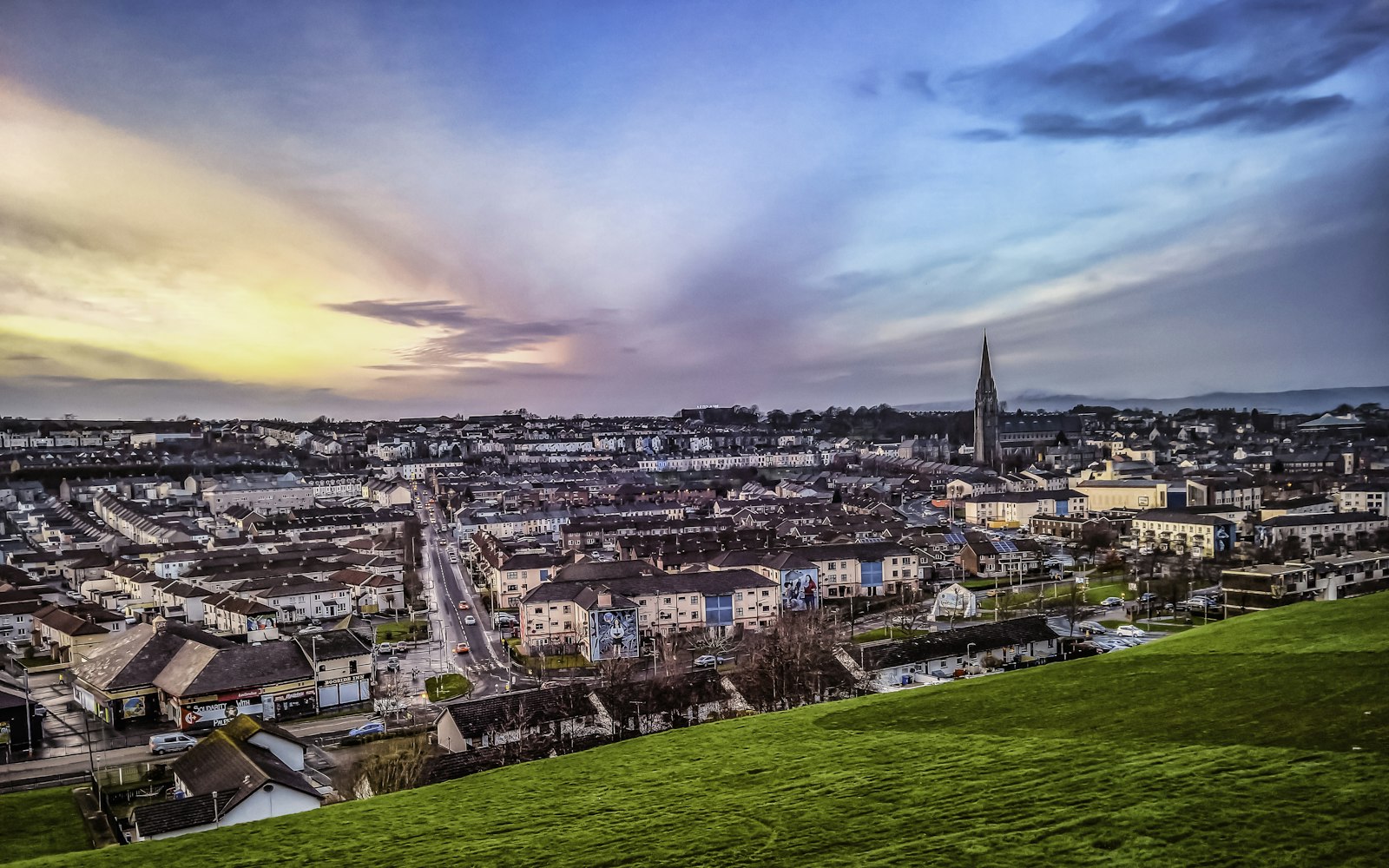
Photo by K. Mitch Hodge on Unsplash
Introduction
The Derry Walls encircle the city of Derry (also called Londonderry), creating a complete 1.5-kilometer circuit of medieval fortification that is unique in the British Isles. Built between 1613 and 1619, these walls are the only completely intact medieval city walls in Britain and Ireland—an extraordinary testament to engineering, military strategy, and historical preservation.
For American visitors, the Derry Walls represent an opportunity to literally walk in the footsteps of history, moving along the same pathways that have protected and defined the city for over 400 years. The walls create a complete perimeter that can be traversed in approximately one hour, offering constantly changing perspectives on the city interior, the surrounding landscape, and the broader context of Irish history.
The walls are more than architectural artifacts. They represent a turning point in Irish history—the plantation of Ulster and the beginning of English colonial settlement. Walking the walls allows you to experience this history directly, to understand the city’s layout and geography, and to appreciate the remarkable completeness of this medieval survival.
Historical Context: Why the Walls Were Built
Derry’s history before the walls was turbulent. The city, originally called Doire (meaning oak grove), had religious significance as a monastic site founded by Saint Columba. Over centuries, the monastery developed into a settlement, but the location remained contested between various Irish and English powers.
By the early 17th century, control of Ulster had become crucial in English colonial strategy. The English crown aimed to establish control over Ireland’s northern province through settlement of English and Scottish colonists—the “Plantation of Ulster.” Derry, strategically located on the River Foyle, was designated as the center of English settlement in the northwest.
The city was renamed Londonderry (the “London” deriving from the Merchant’s Guild of London who financed much of the development). The new English Protestant settlers arrived in 1610. Walls were immediately planned to protect the new colonial settlement from the surrounding Irish population, who understandably resented being displaced from their lands.
The walls were built rapidly—completed in only six years—indicating the urgency of establishing secure settlement. The construction was expensive and labor-intensive, suggesting the importance the English crown placed on this colonial foothold.
The Walls in Detail: Structure and Design
The Derry Walls form an almost perfect diamond or rhombus shape, completely encircling the city center. The total circumference is approximately 1.5 kilometers. The walls average about 6 meters high and 9 meters thick—impressive fortifications designed to withstand both artillery bombardment and assault.
Seven gates provide entry points through the walls: Bishop’s Gate, Ferryquay Gate, Butcher’s Gate, Shipquay Gate, Strand Gate, New Gate, and Double Bastion Gate. These gates control access and provide defensive positions. Bastions—projecting structures—allow defenders to cover all sections of the wall with gunfire, eliminating blind spots that could allow attackers to approach undetected.
The walls are built from stone, carefully dressed and fitted together. Walking along the wall, you notice the quality of construction—stones are precisely cut and fitted, creating a structure that has endured over 400 years with minimal structural damage. The engineering represents sophisticated understanding of materials, construction techniques, and defensive strategy.
The interior edge of the walls featured buildings, barracks, and fortifications. Many of these structures remain, though modified and adapted over centuries. The exterior edge looks out over the surrounding landscape, which slopes away from the walls, creating advantages for defenders—attackers approaching the walls would be visible and exposed.
Walking the Walls: A Complete Circuit
The entire wall circumference is walkable. The walk is relatively flat—while there are stairs at gates and some elevation changes, the walk is accessible to most fitness levels. A complete circuit takes approximately 45 minutes to one hour at a leisurely pace, or less if you simply walk without stopping.
Starting at Bishop’s Gate and proceeding clockwise (or beginning anywhere and proceeding in either direction), you encounter different perspectives and attractions:
The Northern Section
Beginning at Bishop’s Gate, the northern section offers views across the Foyle River toward the Donegal hills. The landscape to the north is open, rural, and relatively undeveloped. The river provides strategic perspective—this was the transportation route that made Derry strategically important.
The Eastern Section
The eastern wall overlooks the older sections of the city and provides vantage points for observing Derry’s layout. From this vantage, you can see how the walls encompassed the entire original colonial settlement, protecting the grid-patterned streets that characterize the diamond-shaped interior.
The Southern Section
The southern wall overlooks the Foyle River and the landscape beyond. This section offers some of the most spectacular views, particularly at sunset when the river reflects the sky’s colors.
The Western Section
The western wall provides views toward the broader Derry landscape and the mountains beyond. This section is closest to the original settlement areas and provides context for understanding how the walls protected colonial development.
Four Centuries of History Embedded in Stone
The walls have witnessed extraordinary historical events. Less than 100 years after their construction, the city was besieged during the 1688-1689 Williamite War. The 105-day Siege of Derry became legendary in Protestant history—a small garrison holding out against apparently overwhelming odds, resupplied by water when supplies became desperately short.
The siege left scars visible in the walls—bullet holes and damage from cannon fire remain visible today. Walking the walls, you notice these impacts, physical evidence of the violence that surrounded this city.
The walls also witnessed less dramatic but perhaps more significant changes. Over centuries, the city within the walls grew, developed, and changed character. The medieval fortification transformed into the walls of a prosperous commercial city. Markets developed, businesses flourished, and the walls that once defined military security became defining architectural features of urban landscape.
Inside and Outside the Walls: Two Different Cities
Standing on the walls, you experience the distinction between inside and outside—a division maintained for over 400 years. The interior of the walls contains the historic city center—dense urban development with narrow streets, traditional buildings, and commercial activity. The layout is distinctly colonial—a planned grid of streets that provided efficient organization for the English settlers.
Outside the walls, the landscape is dramatically different. Modern suburbs, parking lots, and development spreading away from the walls indicates the city’s growth beyond the medieval boundary. The contrast illustrates how walls that once enclosed the entire city now enclose only the historic heart.
This distinction has created an unusual urban situation—Derry has expanded dramatically while maintaining intact medieval walls. Other medieval cities demolished or substantially altered walls as they grew. Derry’s walls remained, becoming more historically significant as they aged.
Cultural and Political Significance
The walls carry symbolic weight beyond their physical structure. In sectarian history of Northern Ireland, the walls have represented Protestant/English security and Catholic/Irish exclusion. The walls literally separated the colonial population from the surrounding Irish population.
This history creates contemporary context for visiting. The walls aren’t simple historical artifacts but symbols loaded with meaning for local communities. Understanding this context enriches understanding of what you’re seeing.
Modern Derry has worked toward reconciliation and moved beyond purely sectarian divisions. The walls, rather than primarily representing division, increasingly represent shared cultural heritage—a remarkable medieval structure that belongs to all residents regardless of religion or ethnicity.
Practical Visiting Information
Getting to Derry
Derry is located in Northern Ireland, approximately 100 kilometers north of the border with the Republic of Ireland. The city is accessible by car from Dublin (approximately 3 hours), Belfast (approximately 2 hours), or other Irish cities.
Regular bus service connects Derry to other towns and cities. The city has an airport with connections to European destinations.
The city is well-signposted, and parking is available (paid parking in the city center, free parking in outer areas).
Accessing the Walls
The walls are public space, free to access. You can begin walking at any of the gates or numerous points along the wall. The walk is entirely outdoors, so weather appropriate clothing is essential.
Most visitors begin at Bishop’s Gate, which has parking nearby and obvious wall access. The walk from there clockwise makes a logical circuit.
Visitor Center
The Tower Museum, located near Bishop’s Gate, provides historical context and interpretation of the walls and the city’s history. The museum is well-done and worth visiting, though not essential for understanding the walls themselves.
Entry is approximately €4-6. The museum includes exhibitions about the siege, medieval history, and contemporary city development.
Safety and Practical Considerations
The walls are safe to walk, maintained, and clearly defined. The surface is stone and can be slippery when wet. Appropriate footwear is important.
The walls are exposed—there’s no protection from sun, wind, or rain. Weather protection and sun protection are essential. The walk is fully exposed; there are no sheltered sections.
When to Visit
The walls are accessible year-round. The best weather typically occurs from May through September, though autumn offers beautiful light and fewer crowds. Winter is cold and can be wet.
Early morning or late afternoon provides the best light for photography and the quietest experience. Midday sun can be intense, and the walls can be quite crowded during peak summer tourist season.
Broader Derry Attractions
While the walls are Derry’s primary attraction, the city has additional significance.
The Guildhall
The Guildhall, located just inside the walls near Shipquay Gate, is a restored Victorian gothic building that hosts cultural programming and events. The building overlooks the Foyle River and provides historical and cultural context for understanding Derry.
The Peace Bridge
Built in 2011, this contemporary bridge across the Foyle River symbolizes peace and reconciliation. The bridge connects the historic city center with newer development on the west bank. Walking the bridge provides alternative perspective on the city and river.
Museums and Cultural Sites
Several museums in Derry interpret the city’s history, sectarian conflict, and contemporary culture. The city has several galleries hosting visual art exhibitions.
The Foyle River
The river provides recreational opportunities—walking trails along the river, boat tours, and simply sitting overlooking the water. The river landscape is attractive and provides perspective on how the city’s location on the river shaped its development.
Understanding the Walls in Context
The Derry Walls are remarkable for their completeness and preservation. However, they also represent colonialism, conflict, and the displacement of indigenous populations. Understanding the walls fully requires engaging with this complexity.
The walls protected English settlers establishing themselves on land previously inhabited by Irish people. The walls physically separated colonial space from Irish space. This reality is uncomfortable but historically accurate. Modern Derry has moved beyond simple sectarian interpretation, recognizing the walls as complex historical artifacts worthy of protection and study.
Integration into Broader Itineraries
Northern Ireland City Visit
Derry can be combined with Belfast as a two-city Northern Ireland exploration. Each city offers distinct experiences and perspectives on Irish and Northern Irish history.
Border and Island Exploration
Derry’s location near the border with the Republic of Ireland allows easy access to crossing the international boundary. You can visit the Republic and return to Northern Ireland, experiencing the contemporary (though largely invisible) border.
Donegal Peninsula Exploration
Derry serves as a gateway to Donegal Peninsula. The city can be combined with exploration of Inishowen, the Irish coastal landscape, and the scenic wonders of northwestern Ireland.
Irish History Tour
The walls fit into broader exploration of Irish history. Combine Derry with monastic sites, medieval castles, and other historical sites throughout Ireland.
Sectarian History and Reconciliation Tour
Focus specifically on understanding the history of Irish/English conflict, the plantation of Ulster, and contemporary reconciliation efforts. Derry provides important context for this thematic exploration.
Practical Itinerary for Derry
One-Day Visit
Morning: Arrive in Derry, park, and begin walking the walls. Complete a full circuit, stopping to view key bastions and gates.
Afternoon: Visit the Tower Museum for historical context. Explore the streets within the walls.
Evening: Dinner in a local restaurant, walk along the Foyle River at sunset.
Overnight Stay (Full 24 Hours)
Day 1: Walk the walls completely. Explore the city center. Dine locally.
Day 2: Revisit sections of walls of particular interest. Visit museums or galleries. Explore the Foyle River area. Depart.
Multi-Day Integration
Combine Derry with other destinations—Belfast (2 hours), Donegal Peninsula exploration, or Irish history/heritage tour incorporating multiple sites across the island.
Conclusion: Why the Derry Walls Matter
The Derry Walls represent a unique historical artifact—the only completely intact medieval city walls in Britain and Ireland. But beyond this distinction, the walls offer something deeper: direct physical access to history, the opportunity to understand urban development and medieval engineering, and a space for contemplating the complex intersection of English colonialism, Irish history, and contemporary reconciliation.
Walking the walls, you traverse a path that has been walked for over 400 years. The views from the walls haven’t changed dramatically—the river still flows, the surrounding landscape persists, and the stone continues to weather the weather. What has changed is the meaning and understanding of the walls themselves.
For American visitors, the walls offer an unusual experience—you can walk the entire medieval fortification in under an hour, seeing how the city has developed around and within the protection the walls provided. The walls provide both historical education and immediate physical experience of medieval engineering and strategy.
The walk is essential for anyone visiting Derry and highly recommended for anyone interested in Irish history, medieval architecture, or understanding how cities develop. The walls aren’t simply a tourist attraction but a window into how humans have organized space, established security, and created settlements that endure across centuries. For that reason alone, they deserve your time and attention.

Author: jonathan
Jonathan is the publisher of Irishtopia.net, Anglotopia.net, and Londontopia.net. He's passionate about travel and learning about other cultures. He's been to Ireland several times, and uses his travel expertise for Irishtopia!