
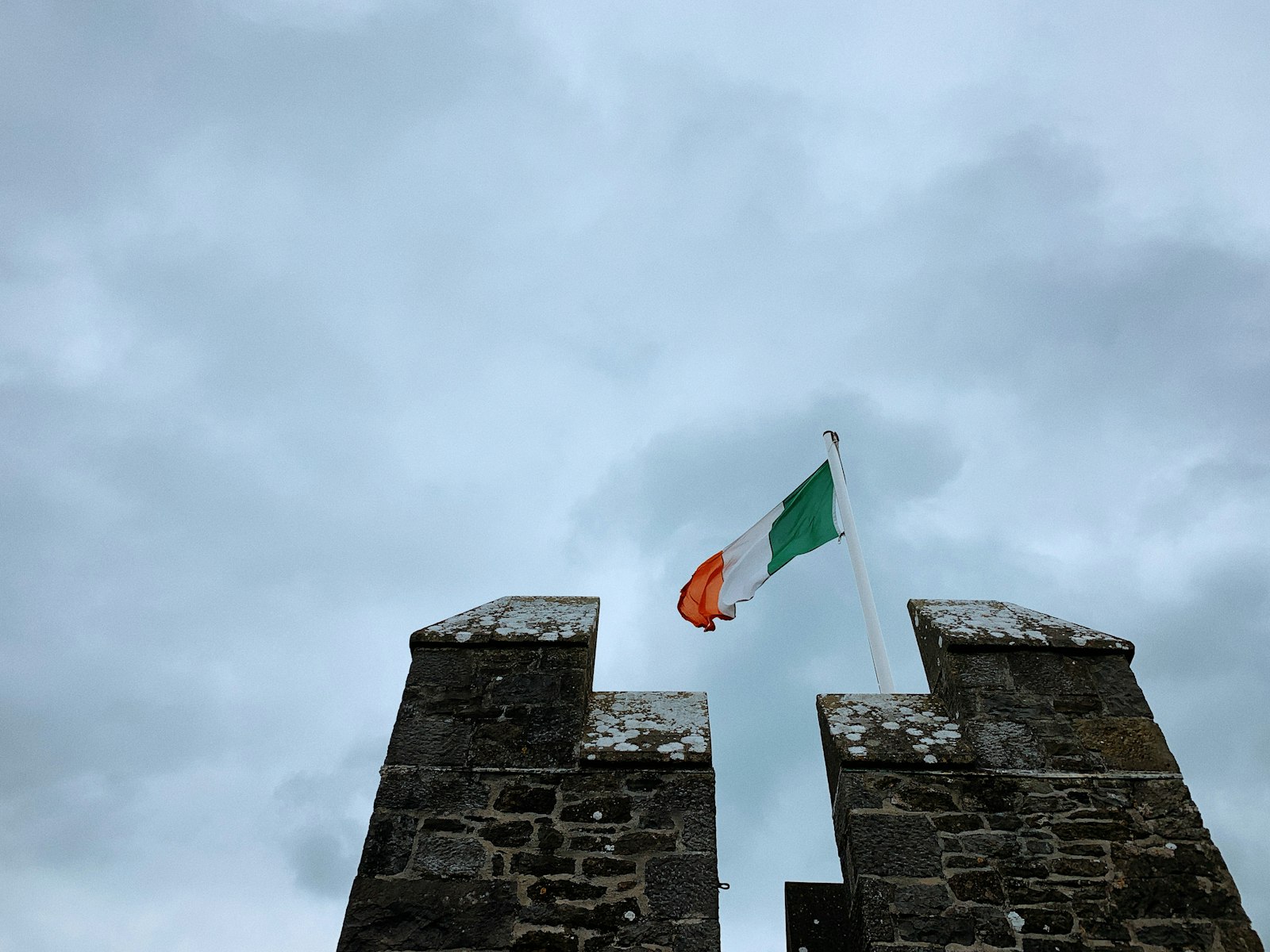
Photo by Tommy Bond on Unsplash
Introduction
In the week of April 24-30, 1916, a small group of Irish rebels occupied the General Post Office in Dublin and other key buildings around the city. They issued a proclamation declaring an Irish republic and calling on the Irish people to join them in throwing off British rule. For six days, they held their positions against the British Army. When they finally surrendered, over 60 civilians and soldiers lay dead, much of Dublin’s city center was burned and destroyed, and the rebels faced execution.
Yet from the ashes of that failed military uprising came something remarkable. The rebels who had been viewed with indifference or hostility by much of the Dublin population before the rising became martyrs and heroes in death. Their execution transformed Irish public opinion. Within months, the Easter Rising had evolved from a failed rebellion into a symbolic moment that reignited Irish nationalism. Within six years, the Irish War of Independence had secured Irish independence.
For Americans, the Easter Rising represents the dramatic moment when Irish nationalism shifted from constitutional politics to armed rebellion, when a small group of idealists decided to stake their lives on their vision of Irish freedom. Understanding the Easter Rising is essential to understanding how Irish independence was ultimately achieved.
Ireland in 1916: The Context of Rising
To understand why the rising occurred in 1916, we must understand the Irish political situation at that moment. Before the rising, Irish nationalism had been pursuing independence primarily through constitutional means. The Irish Parliamentary Party, led by John Redmond, had fought for Home Rule—a measure that would give Ireland its own parliament and control over domestic affairs while remaining within the British Empire.
Home Rule had come tantalizingly close to reality. In 1914, a Home Rule bill had been passed by the British Parliament. However, its implementation was suspended due to World War I. The war created an unexpected crisis for Irish nationalism. Britain was fighting for its survival against Germany. Irish Home Rule was shelved until after the war.
For some Irish nationalists, the suspension of Home Rule was a betrayal. Redmond and the Parliamentary Party had compromised, had worked within the system, and had been promised Home Rule, yet the promise was deferred. For more radical nationalists, Home Rule was never enough—they wanted full independence, not just domestic self-government within the Empire.
Moreover, the war itself created conditions for rebellion. Britain was stretched thin militarily, fighting on the continent. The Irish garrison was reduced. British resources were focused on the Western Front. To some radicals, it appeared that an Irish uprising during the war might succeed.
The Rebels and Their Vision
The Easter Rising was organized by a radical faction of Irish republicanism that had roots in the earlier Fenian tradition. The military organization was the Irish Republican Army (successor organization to the Irish Republican Brotherhood). The intellectual leadership came from figures like Patrick Pearse, a schoolteacher and poet; James Connolly, a socialist labor organizer; and others who believed that armed rebellion was necessary to secure Irish independence.
These men weren’t terrorists in the modern sense, though they were willing to use violence. They were idealists who believed they were serving a higher cause. Many had sacrificed personal comfort and safety for their cause. Pearse, for instance, was a respected schoolteacher and writer who abandoned those positions for revolutionary work.
What unified the rebels was a common belief that Home Rule was insufficient and that armed rebellion was necessary. They also shared a commitment to establishing a republic—not just Irish independence, but specifically a democratic republic. The proclamation they issued called for Irish independence and a democratic republic with universal suffrage, which was actually quite radical for 1916.
The Plan and the Rising Itself
The rebels planned to seize key positions in Dublin, declare a republic, and hope that the seizure would trigger a broader uprising across Ireland. Dublin was chosen because it was the capital and largest city, and because successful rebellion there would be symbolically powerful. The rebels were relatively few in number—perhaps 1,600 actual combatants—but they believed that once they seized the city and called for uprising, the Irish people would join them.
The rising began on Monday, April 24, 1916, when rebel forces occupied the General Post Office in the center of Dublin and several other key buildings. The rebels were well-armed with rifles and had access to some heavier weapons. They quickly took control of strategic parts of Dublin.
However, the hoped-for popular uprising never materialized. Dubliners initially reacted with indifference or hostility to the rising. The rebels were seen as bringing violence and chaos to the city. Looting occurred as law and order broke down. Civilians were caught in the fighting and suffered casualties. The general population didn’t rise up to support the rebels.
The Fighting and the Destruction
The British response was swift. Military forces were mobilized and moved into Dublin. Artillery was brought in and used to bombard the rebel positions, causing immense destruction to buildings around the rebel-held areas. By the third day of the rising, the rebels were in desperate straits. They had expected military support that never came. They had expected popular support that never manifested. They had expected more military resources and training than they actually possessed.
The worst fighting centered around the General Post Office, where rebel leaders Patrick Pearse and James Connolly maintained their headquarters. The building was subjected to intense bombardment. Fires broke out and spread through the rebel-held areas. By the end of the week, much of the city center was burning.
The casualties mounted. Approximately 60 civilians were killed and several hundred wounded. Many died from the artillery bombardment. Others were caught in crossfire or trapped in burning buildings. The violence transformed public opinion against the rising. This wasn’t the heroic rebellion that might inspire the people—it was destruction and chaos that brought suffering to Dublin civilians.
The Surrender and the Executions
By Saturday, April 29, the situation was hopeless. The rebels were surrounded, running out of ammunition, and losing their positions. Military reinforcements continued to arrive. Patrick Pearse issued an order to surrender, seeking to prevent further civilian casualties.
The rebels surrendered and were taken into custody. They faced military courts martial. The trial process was swift and the outcome predetermined. Courts martial are military tribunals with limited procedural protections. The rebels were convicted and sentenced to death.
Then came the most crucial moment for the Easter Rising’s historical significance—the executions. Between May 3 and May 12, fifteen of the rising’s leaders were executed by firing squad. These included Patrick Pearse, James Connolly, Tom Clarke, and others. The executions were conducted within the prison (Kilmainham Gaol), away from public view, but word spread.
The Transformation: Defeat into Legend
Here is where the remarkable transformation occurred. Before the rising, the rebels had been seen as disruptive idealists. After the executions, they became martyrs. Public opinion shifted. The execution of men who were seen (sometimes correctly) as idealists fighting for Irish independence created sympathy and respect for their cause.
The British made a crucial mistake in executing the rebels. It would have been far better politically to imprison them, allow them to be forgotten, and let the rising fade from memory as a failed episode. Instead, the executions transformed the rebels into heroes and created lasting resentment. The executions radicalized Irish public opinion and moved many who had been moderates toward support for full independence rather than compromise.
Pearse particularly became a legend. He was a gifted writer and speaker. His final statement before execution (“I have nothing to say except that I die for the cause of Ireland”) captured a spirit of sacrificial idealism that resonated with Irish nationalism. His poetry and writings, published after his death, were widely read. He became the symbol of the rising—a man who died for his beliefs and his country.
Immediate Aftermath and British Response
The British, having failed to prevent the rising, now sought to prevent future ones. They conducted mass arrests of suspected republicans and nationalists. Many people with no direct involvement in the rising were arrested and imprisoned. This further radicalized Irish opinion. The British response to the rising—the executions and the mass arrests—did more to spread Irish nationalist sentiment than anything the rebels themselves could have done.
By 1917, Irish political opinion had shifted dramatically. The moderate Home Rule movement was displaced by more radical republicanism. Republican politicians began winning elections. The promise of Home Rule, which had once seemed like a major victory, now seemed like insufficient compromise.
The transformation was rapid. In the 1918 general election, Irish voters overwhelmingly elected Sinn Féin, the political party that represented the radical republicans who supported the Easter Rising. The elected Sinn Féin members refused to go to Westminster as Home Rule provided. Instead, they declared themselves the parliament of the Irish republic and set up what became the government during the Irish War of Independence.
The War of Independence: From Rebellion to Victory
The Easter Rising had failed militarily, but it had sparked a movement that would ultimately succeed. Over the next few years, Irish republicans organized for another conflict. The Irish War of Independence (1919-1921) saw Irish forces engage in guerrilla warfare against British forces and the Royal Irish Constabulary.
The war was conducted very differently from the rising. Instead of open rebellion in the capital city, it was a guerrilla campaign spread across the country. The rebel forces were led by Michael Collins, a survivor of the Easter Rising who had learned from the rising’s failures. Collins understood that the old style of open rebellion couldn’t succeed against a larger, better-armed enemy. Instead, he organized small flying columns and engaged in hit-and-run attacks against British forces.
The War of Independence was brutal and difficult. But it ultimately succeeded in a way the Easter Rising hadn’t. By 1921, Britain was exhausted by the conflict and ready to negotiate. The Treaty of 1921 granted most of Ireland independence, with only Northern Ireland remaining in the United Kingdom.
The Legacy of Sacrifice
The Easter Rising established a tradition in Irish nationalism that sacrifice and martyrdom were valid responses to oppression. This tradition would echo through Irish history. Later rebel leaders would invoke the rising and its martyrs as inspiration. The concept of dying for Ireland, of making the supreme sacrifice, became central to Irish nationalist ideology.
This legacy was both positive and negative. On one hand, it demonstrated the willingness of some Irish people to sacrifice everything for their cause. On the other hand, it valorized violence and sacrifice in ways that could justify continued violence even after Irish independence was achieved. The tradition of martyrdom would contribute to the Irish Civil War that followed independence, and to periodic violence in Irish history.
American Perspectives and Support
Americans watched the Easter Rising and its aftermath with significant interest, particularly Irish-Americans. Many Irish-Americans saw in the rising a noble struggle for freedom against imperial oppression. The execution of the rebels brought strong condemnation of British actions in Irish-American circles.
American public opinion was divided. Some Americans sympathized with Irish nationalism. Others viewed the rising as terrorism and Irish rebels as illegitimate. American governments, anxious not to offend Britain (their future ally in World War I), tried to avoid taking sides. But Irish-American pressure meant that American opinion was increasingly favorable to Irish independence.
The rising and its aftermath strengthened Irish-American commitment to Irish independence. Money was raised for Irish causes. American newspapers covered Irish events closely, particularly those of interest to Irish-American readers. The rising demonstrated that Irish nationalism was a living force, not something consigned to the past.
The Symbolism and Meaning
The Easter Rising became freighted with symbolic meaning that transcended its military reality. To Irish nationalists, it represented the moment when Irish nationalism shifted from constitutional compromise to armed rebellion for full independence. It represented the sacrifice of Irish martyrs willing to die for their nation. It represented a moment of truth when Irish people chose to take control of their own destiny rather than waiting for British permission.
To the British, the rising was a dangerous rebellion that had to be suppressed. British authorities believed they had dealt decisively with the rising by executing the leaders. What they didn’t understand was how that very action would be perceived as martyrdom, transforming military failure into political success.
The rising also represented a moment of idealism that few armed conflicts capture. The rebels genuinely believed they were fighting for something noble—Irish freedom and an Irish republic. They weren’t motivated purely by desire for power or revenge, though those elements existed. They were motivated by a vision of what Ireland could become.
The Question of Military Necessity
One question that historians debate about the Easter Rising is whether it was militarily necessary. The rebels didn’t need to rebel in 1916. Home Rule was promised (even if suspended due to the war). If they had waited, the war would eventually end and Home Rule could have been implemented. The rising was a risk that might have failed, which is exactly what happened.
However, the rebels questioned whether Home Rule was actually going to be implemented, or whether it would be shelved indefinitely. They also questioned whether Home Rule was sufficient—they wanted full independence, not just domestic self-government within the Empire. From their perspective, armed rebellion was necessary to secure genuine independence rather than compromise.
Whether the rising was strategically wise is debatable. What’s clear is that the rebels’ willingness to take that risk, and the way that risk was received, ultimately proved transformative for Irish politics.
Conclusion: From Rebellion to Independence
The Easter Rising of 1916 was a military failure. The rebels were outnumbered, lacked sufficient weaponry, couldn’t hold their positions against British military force, and were forced to surrender. By every military standard, it was a defeat.
Yet it was also one of the most significant transformations of failure into political success in history. The executions that followed transformed the rebels into martyrs. Public opinion, which had been skeptical of the rising, shifted toward support for the rising’s ideals. The transformation of public opinion created the political conditions for the Irish War of Independence and ultimately for Irish independence.
For Americans interested in Irish history, the Easter Rising represents the moment when Irish nationalism transformed from constitutional politics to armed rebellion, and when that transformation proved successful. It shows how idealism, sacrifice, and willingness to risk everything can reshape political reality. And it demonstrates how the response of authority (in this case, Britain’s execution of the rebels) can inadvertently create the conditions for the very outcome it sought to prevent.
The Easter Rising remains the foundational moment in modern Irish history—the moment when contemporary Ireland was born through rebellion, sacrifice, and transformation of defeat into legend.

Author: jonathan
Jonathan is the publisher of Irishtopia.net, Anglotopia.net, and Londontopia.net. He's passionate about travel and learning about other cultures. He's been to Ireland several times, and uses his travel expertise for Irishtopia!