
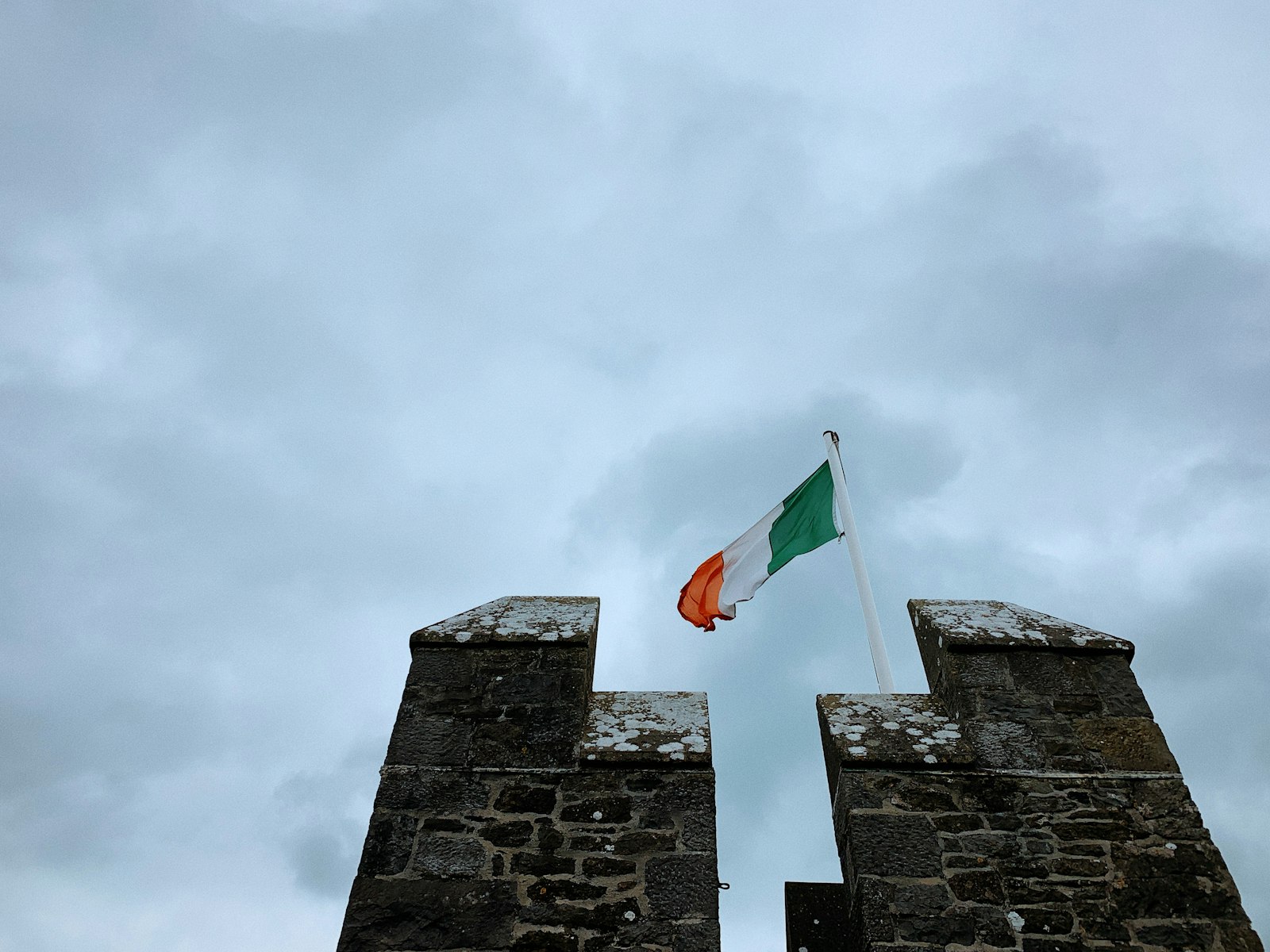
Photo by Tommy Bond on Unsplash
Introduction
In the aftermath of the Irish Famine, when millions of Irish refugees were establishing themselves in American cities, a shadowy organization was forming that would reshape Irish resistance to British rule. The Fenian Brotherhood was a secret revolutionary society dedicated to Irish independence through armed rebellion. With membership stretching across Ireland, America, and the British Empire, the Fenians represented a new kind of Irish nationalism—one born in exile, sustained by Irish-Americans, and committed to violence as a path to freedom.
For Americans, the Fenians are a particularly important part of Irish history because the movement was largely based in America, particularly in Irish-American communities. The Fenians demonstrate how Irish and American history intertwined in the 19th century, and how Irish-Americans maintained connection to Irish struggles for independence.
The Fenian Brotherhood ultimately failed in its central goal—achieving Irish independence through armed rebellion. Yet the movement had enormous significance. It inspired later successful independence movements. It created networks and traditions of Irish resistance. And it demonstrated that Irish exile communities could sustain political movements and maintain commitment to Irish independence across continents.
Origins: Irish Famine and American Opportunity
To understand the Fenians, we must understand the context of Irish-American life in the 1850s and early 1860s. The Irish Famine had driven millions to America, where they settled primarily in industrial cities. These Irish-Americans were not entirely integrated into American society. They faced discrimination in the job market, in housing, and in social life. There was violent nativism—American nativists viewed Irish Catholics as un-American and dangerous.
Yet Irish-Americans also built vibrant communities with their own churches, newspapers, political organizations, and social networks. And importantly, they maintained strong connections to Ireland. They received letters from relatives still in Ireland. They sent money home to support families. They followed Irish political developments with intense interest.
The Famine and emigration created psychological conditions favorable to revolutionary nationalism. The experience of losing family members to starvation, of fleeing Ireland in desperate circumstances, of settling in America as poor and discriminated-against outsiders—all of this created resentment toward Britain and commitment to Irish independence. If Ireland’s independence could be secured, perhaps the next generation of Irish immigrants wouldn’t have to flee starvation. Perhaps Ireland could develop into a prosperous nation that wouldn’t force its people to emigrate.
James Stephens and the Irish Republican Brotherhood
The Fenian Brotherhood emerged from the Irish Republican Brotherhood (IRB), a secret organization founded in Dublin in 1858 by James Stephens. Stephens was a radical nationalist who believed that armed rebellion was the only path to Irish independence. He had participated in the Young Ireland movement of the 1840s and had been radicalized by the failure of the 1848 rebellion.
Stephens created a secret military organization modeled on revolutionary secret societies in continental Europe. Members were organized into small cells to maintain security against British informants. The structure emphasized military discipline and preparedness for armed rebellion. The vision was that when the time was right, these cells could be mobilized into an armed force capable of taking on the British.
The IRB remained small and primarily Irish-based until emigration brought Irish nationalists to America. As James Stephens and other IRB leaders fled Ireland or visited America, they began organizing Irish-American chapters. In America, the organization became known as the Fenian Brotherhood (taking the name from the Fianna, the legendary warriors of Irish mythology).
The American Fenians: Organization and Growth
Irish-American Fenians began organizing in earnest in the early 1860s. The Civil War in America provided opportunity—many Irish-Americans served in the Union Army, gaining military experience that might later benefit Irish independence. When the Civil War ended in 1865, many of these Irish-American veterans became involved with the Fenians.
By the mid-1860s, the Fenian Brotherhood had tens of thousands of members in America. They organized through newspapers, through meetings, through fundraising. They created a military structure and planned for armed rebellion in Ireland. The Fenians saw themselves as the heirs of the tradition of Irish rebellion, the legitimate voice of Irish nationalism.
The American Fenians were also democratic in organization—they held conventions, elected officers, and debated policy. This was quite different from the more strictly hierarchical IRB in Ireland. American democratic traditions shaped American Fenian organization. The Brotherhood also became involved in American politics, with some Fenians running for political office and attempting to influence American foreign policy toward Britain.
The Vision: Armed Rebellion and Irish Independence
The Fenians envisioned a comprehensive rebellion against British rule. They believed that if a strong enough force could be created, armed with modern weapons, trained in military tactics, and prepared to act suddenly, they could liberate Ireland. The model they drew on was the recent Italian and German unifications, where nationalist uprisings had successfully created independent nation-states.
The Fenians understood that Britain had overwhelming military power. They couldn’t hope to directly defeat the British Army in conventional battle. Instead, they planned to provoke a general uprising in Ireland, where the population would join the fight for independence. If the Irish people rose in rebellion and the Fenians could provide military leadership, organization, and arms, perhaps Ireland could break free.
This vision attracted significant support among Irish-Americans. Here was an organization that took Irish independence seriously, that was willing to do more than just talk about it, that had a plan and resources to pursue it. The Fenians presented themselves as the true representatives of Irish nationalism, the guardians of the tradition of Irish rebels.
The Failed Invasion of Canada
The Fenian Brotherhood’s first major military action was, ironically, not against Britain but against Canada. In 1866, American Fenians invaded Canada across the U.S.-Canadian border, seeking to create leverage that might be traded for Irish independence. The theory was that if the Fenians could damage the British Empire by attacking Canada, Britain might be forced to negotiate on Irish independence.
The invasion was a disaster. The Fenians were repulsed by Canadian militia. The American government, not wanting to be dragged into conflict with Britain, stopped reinforcement of the Fenian forces. The invasion ended in humiliation for the Fenians. The episode demonstrated that military adventurism without secure base in Ireland was difficult to sustain.
The Canadian invasion also alienated some American supporters. American opinion was mixed on the Fenians. Many Irish-Americans supported them, but American non-Irish opinion was divided. Some Americans viewed the Fenians as a potential threat (they occupied American territory for a time). Others sympathized with them as freedom fighters against imperialism.
The Irish Rising of 1867
The Fenians’ main effort was in Ireland itself. In March 1867, the IRB launched the Fenian Rising—an armed rebellion aimed at overthrowing British rule. The rising was coordinated with American Fenian activities, with leaders like O’Mahony and John O’Neill directing operations from America.
The 1867 rising was a failure. The British government had infiltrated Fenian organizations and had advance warning of the plans. British authorities arrested key leaders before the rising began. The coordinated rebellion never materialized. When scattered Fenian groups attempted rebellion without the full force they had planned, they were quickly defeated by British troops.
The failure was devastating. Key Fenian leaders were arrested and tried. Some were executed, creating martyrs for the nationalist cause. The Fenian Brotherhood, which had grown to tens of thousands strong, was damaged and demoralized. The dream of armed rebellion achieving Irish independence seemed to have died with the failed rising of 1867.
Adapting and Persisting
Yet the Fenian Brotherhood survived the failure of 1867. It adapted its approach. Rather than immediately planning new armed rebellions, the organization attempted to influence Irish political developments. Some Fenians moved toward political activism, particularly through support for the Home Rule movement, which sought Irish self-government within the British Empire (short of full independence).
The division between those Fenians who remained committed to armed rebellion and those willing to work within political systems created tension and splits. But the Fenian Brotherhood continued to exist as an organization, continuing to recruit members, raising funds, and maintaining networks of Irish nationalists across America and Ireland.
In America, the Fenians engaged in political organizing, influenced Irish-American communities, and maintained connections to Irish nationalist movements. In Ireland, the IRB (the Irish branch of the organization) continued to exist underground, recruiting members and planning for future possibilities.
Individual Actions and the Tradition of Rebellion
After the failure of the 1867 rising, Fenian activities shifted toward individual actions rather than coordinated large-scale rebellion. Individual Fenians engaged in various campaigns—some attempted attacks on British targets in Ireland, some on British interests in America or the colonial territories.
Some of these individual actions achieved notoriety. In 1881, members of the Irish National Invincibles, a Fenian splinter group, assassinated the British Lord Lieutenant of Ireland in Phoenix Park in Dublin. While the Fenians as an organization didn’t directly plan this action, it demonstrated the persistence of the tradition of violent resistance to British rule.
These individual actions were often counterproductive from a political perspective—they alienated moderate Irish opinion and gave the British government justification for harsh repression. Yet they demonstrated that the commitment to Irish independence and the willingness to use violence persisted, even when organized rebellion seemed impossible.
The Fenian Diaspora and Transnational Networks
One of the most significant legacies of the Fenian Brotherhood was the creation of transnational networks connecting Irish nationalists across the Atlantic. The Fenians maintained connections between Irish-America and Irish activism in Ireland. They kept alive the tradition of armed rebellion and revolutionary nationalism even when the tradition couldn’t be pursued effectively.
These networks would prove important for later Irish independence movements. When the Easter Rising occurred in 1916, the rebels drew on traditions of Fenian resistance. Later, when the Irish War of Independence occurred in 1921, elements of Fenian organization and ideology influenced the rebel forces.
The Fenians also created a tradition in which Irish-American communities maintained strong connection to Irish nationalist causes. This tradition would persist into the 20th century and beyond, with Irish-Americans organizing support for Irish independence movements, raising funds, and maintaining political pressure on the American government to support Irish interests against Britain.
The Fenians and American Politics
The Fenians were skilled at American politics. Through Irish-American communities, they had significant political influence. Politicians courted Irish-American voters and sometimes promised support for Irish nationalist causes. The Fenian movement gave Irish-Americans a vehicle for expressing their political preferences and attempting to influence foreign policy.
This created an interesting dynamic in American politics. Irish-Americans were a growing and increasingly powerful electoral constituency. Their support for candidates and parties could be influenced by issues related to Ireland. The Fenians exploited this, making Irish independence a political issue in American elections and policy debates.
The result was that American foreign policy toward Ireland and Britain was occasionally shaped by Irish-American political pressure. American politicians had to consider the Irish-American vote when dealing with Ireland and British issues. The Fenians helped ensure that Irish interests were voiced in American political discourse, even if American governments didn’t always prioritize them.
The Evolution Toward Irish Independence
While the Fenian Brotherhood itself was never successful in achieving Irish independence through armed rebellion, the organization played an important role in the eventual success of Irish independence movements. The Fenians kept alive the tradition of armed rebellion. They maintained the network of activists across America and Ireland that could be mobilized. They influenced public opinion toward more radical nationalism.
When the Home Rule movement faltered in the early 1900s, Irish nationalists turned back toward more radical approaches. The Fenian tradition of armed rebellion was revived. In 1916, the Easter Rising drew directly on Fenian tradition and networks. The leaders of the Easter Rising included men influenced by Fenian ideology.
After the Easter Rising, when the Irish War of Independence broke out in 1919-1921, it drew again on Fenian traditions and networks. While not directly organized by the Fenians, the rebel forces included men trained in Fenian traditions and organized through networks that the Fenians had helped create.
Legacy in Irish-American Culture
The Fenian Brotherhood left a profound legacy in Irish-American culture. The organization demonstrated that Irish-Americans could maintain commitment to Irish independence while building successful lives in America. The Fenians created a tradition in which Irish-American political and social organizations prioritized Irish independence as a core concern.
This legacy persisted long after the Fenian Brotherhood itself faded. Irish-American communities continued to follow Irish politics closely. They continued to raise funds for Irish causes. They continued to believe that Irish independence was important and worthy of support. When Irish independence movements succeeded in the 1920s, Irish-Americans were among the strongest supporters.
The Fenians also created a tradition of Irish-American activism that would extend beyond Irish independence. Irish-Americans became politically engaged in American politics more broadly, helping to create powerful Irish-American political machines in cities like Boston and New York. The skills and networks developed in Fenian political organizing were adapted to American political contexts.
The Question of Violence and Legitimacy
The Fenians remain controversial because of their commitment to violent rebellion. In modern contexts, we struggle with how to evaluate violent resistance to colonial rule. Were the Fenians legitimate freedom fighters, resisting imperialist oppression? Or were they terrorists, using violence to pursue their goals regardless of civilian casualties?
The question admits of no easy answer. By modern standards, the targeting of civilians would be condemned. Yet the Fenians saw themselves as fighting against an imperial power that had dispossessed the Irish, subordinated them, and caused massive suffering. From their perspective, violence was justified as resistance to unjust imperial rule.
What’s clear is that the Fenians believed in their cause and were willing to sacrifice for it. Fenian leaders accepted arrest, trial, and execution. Fenian supporters gave money, risked legal prosecution, and sustained the organization through difficult periods. The Fenians demonstrate that powerful commitment to cause and willingness to sacrifice can sustain movements even when success seems impossible.
Conclusion: A Bridge Between Eras
The Fenian Brotherhood represents a bridge between the Irish past and the Irish-American future. Born in the aftermath of the Famine, organized in Irish-American communities, yet maintaining connection to nationalist movements in Ireland, the Fenians demonstrate how Irish and Irish-American history intertwined.
The Fenians also represent a crucial moment when Irish nationalism became associated with armed rebellion and revolutionary transformation rather than constitutional reform. While they failed to achieve independence through rebellion, they influenced future movements that would eventually succeed.
For Americans interested in Irish history and heritage, the Fenians demonstrate how Irish-Americans maintained powerful connection to Irish causes, and how Irish nationalism evolved in America. The Fenian Brotherhood shows that Irish-Americans were not simply assimilating into America and abandoning Irish identity—instead, many maintained passionate commitment to Irish independence and were willing to work and sacrifice to advance it.
The Fenian legacy persists in Irish-American culture, in the tradition of Irish-American activism, and in the networks of Irish nationalist organizations that persist to this day. Understanding the Fenians is essential to understanding how Irish history became an American story, and how Irish-Americans became a powerful force in both American politics and Irish history.

Author: jonathan
Jonathan is the publisher of Irishtopia.net, Anglotopia.net, and Londontopia.net. He's passionate about travel and learning about other cultures. He's been to Ireland several times, and uses his travel expertise for Irishtopia!