
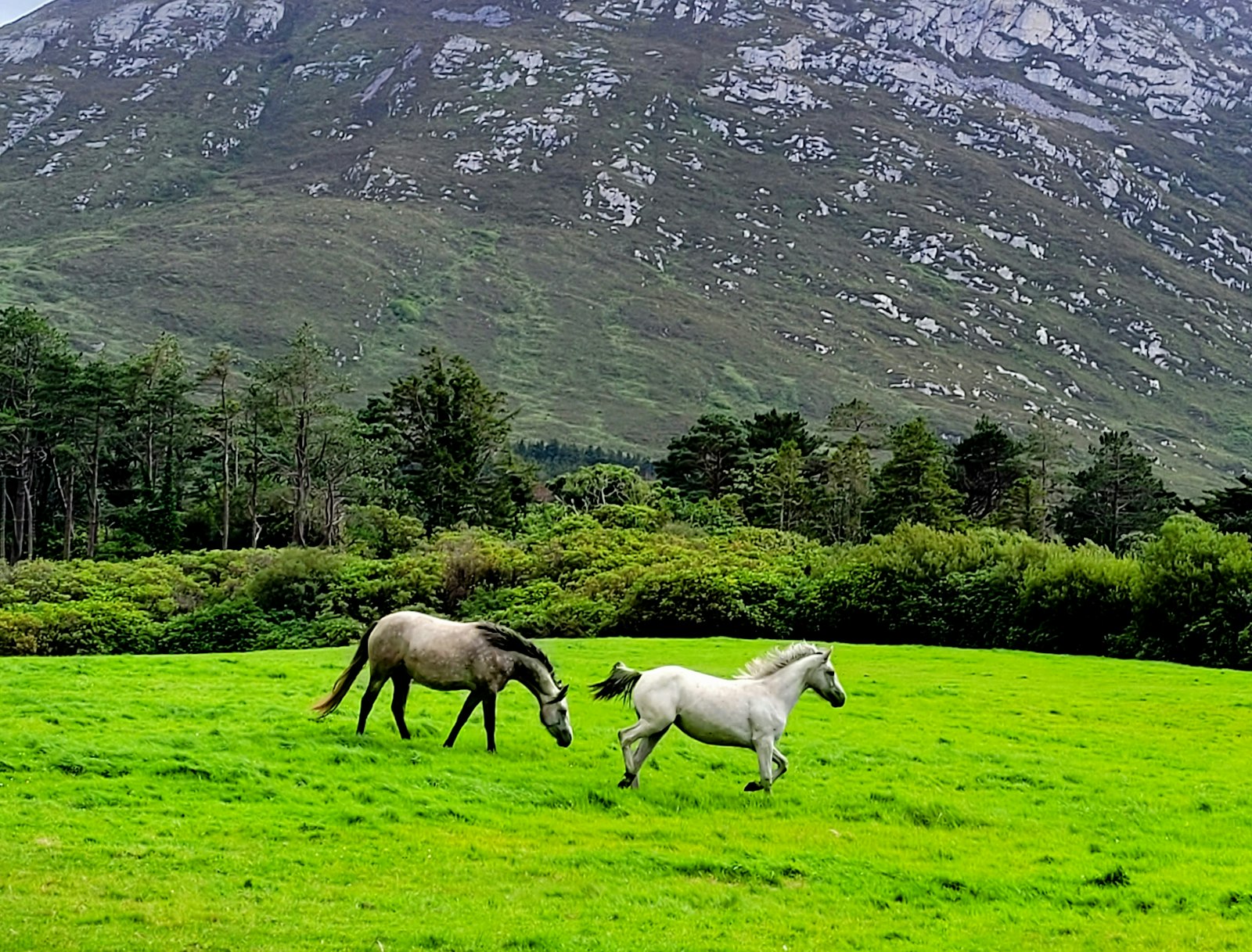
Photo by Melissa De Yoe on Unsplash
In the shadowy prehistory of Irish mythology, before the arrival of the Tuatha Dé Danann and the Milesians, the Fomorians held dominion over Ireland. These primordial beings—often described as giants, demons, or chaos forces—represent something ancient and terrible in Irish mythological imagination. The Fomorians embody darkness, chaos, and the wild forces of nature that must be overcome for civilization to flourish. Their stories reveal how ancient Irish people understood the beginning of the world, the forces of nature, and the struggle between order and chaos that defines existence.
The Fomorians appear throughout Irish mythology, sometimes as enemies to be defeated, sometimes as beings capable of intermarriage and alliance with other divine and heroic races. Their nature is ambiguous—they are not purely evil but rather represent forces and values at odds with the civilized world. Understanding the Fomorians provides insight into how ancient Irish people understood the world and the sources of human civilization.
The Origins of the Fomorians
The Fomorians appear in Irish mythology as ancient beings who inhabited Ireland before the arrival of later divine and human populations. Their origins are shrouded in mystery and mythological symbolism. Some accounts describe them as born from chaos, emerging directly from primordial waters or darkness. Others suggest they came from lands beyond Ireland, arriving from the sea or from the underworld.
The name “Fomorian” likely derives from Irish words meaning “under sea” or “from under the sea,” suggesting their association with maritime and undersea realms. This connection to the sea and to waters marks them as beings of the boundary between the ordered world and chaotic natural forces. The sea, vast and uncontrollable, becomes a metaphor for the wild forces the Fomorians represent.
In Irish mythology, the Fomorians populated Ireland in an ancient age before recorded history. They built settlements, developed culture and civilization of sorts, and established themselves as the dominant power. Yet their rule was characterized by oppression and disorder. They were often depicted as antagonistic to the later arrivals—the Tuatha Dé Danann and eventually the Milesians—who would displace them and establish the world known to historical Irish people.
The Nature of Fomorian Beings
Describing Fomorian physical form is difficult because Irish mythology portrays them inconsistently. Some Fomorians are depicted as giants of enormous size and strength. Others are described as having monstrous or demonic characteristics—misshapen bodies, multiple heads, grotesque features. Still others are described more ambiguously, as powerful beings whose exact nature is mysterious.
This inconsistency in depiction reflects the Fomorians’ fundamental nature: they represent forces and powers that don’t fit neatly into the categories of divine or human, civilized or wild. They are beings from the margins, from the boundaries between the known and unknown, between order and chaos.
The Fomorians’ appearance often emphasizes their otherness and their opposition to the Tuatha Dé Danann and later humans. Where the Tuatha Dé are described in beautiful, civilized, ordered terms, the Fomorians are depicted as wild, uncontrolled, and fundamentally alien. Yet this distinction is not absolute—some Fomorians are depicted as beautiful or wise, suggesting that the boundary between Fomorian and other beings is permeable.
Major Fomorian Figures
While the Fomorians are often depicted collectively, individual Fomorian characters stand out in Irish mythology. Balor of the Evil Eye is one of the most famous Fomorian figures. Balor possessed an eye of devastating power—whoever gazed upon it was killed. Balor protected his beautiful daughter in a crystal tower to prevent her from bearing children, as a prophecy foretold that her son would kill him.
Balor’s story demonstrates important themes in Fomorian mythology. Balor seeks to control and prevent the future, but prophecy proves inescapable. His daughter becomes pregnant (in some versions by supernatural means), and her son Lugh grows to manhood and defeats Balor, fulfilling the prophecy. Balor’s power, though great, cannot prevent the fate determined by powers beyond even his control.
Indech mac Dé Dé, another important Fomorian king, appears in conflicts with the Tuatha Dé Danann. Indech represents Fomorian power and resistance, yet he too is ultimately defeated by the Tuatha Dé, suggesting the inevitable displacement of Fomorian rule.
Elathan, described as “the fair Fomorian,” represents the ambiguous nature of the Fomorians. Despite being Fomorian, Elathan is described as beautiful and wise. He fathers children with non-Fomorian women, creating hybrid beings. Elathan’s character suggests that the boundary between Fomorian and other races is permeable and that not all Fomorians are purely destructive or evil.
The Second Battle of Mag Tuired
One of the most important mythological narratives involving the Fomorians is the Second Battle of Mag Tuired, a cosmic conflict between the Tuatha Dé Danann and the Fomorians. This battle, fought on a plain in County Galway, represents a pivotal moment in Irish mythological history when the Tuatha Dé defeated the Fomorian rulers and established their own dominion.
The battle is depicted with epic grandeur, with magical powers, with gods and divine beings clashing. The Tuatha Dé, possessing superior magical and cultural knowledge, overcome the Fomorians through cleverness and divine power rather than through mere physical strength. The victory establishes the Tuatha Dé as the rightful rulers of Ireland and begins the process of replacing Fomorian chaos with Tuatha Dé order.
Yet the Second Battle is not presented as a simple triumph of good over evil. The narrative complicates this reading. Some Fomorians fight alongside the Tuatha Dé against other Fomorians. Relationships and alliances cross the supposed boundary between the races. The battle is portrayed as tragic as well as triumphant—great warriors on both sides fall, including important Tuatha Dé figures.
Intermarriage and Cultural Exchange
An important feature of Fomorian mythology is the frequency of intermarriage and cultural exchange between Fomorians and other races, particularly the Tuatha Dé Danann. These unions produce offspring who are neither purely Fomorian nor purely Tuatha Dé, but hybrid beings combining both lineages.
These intermarriages suggest that despite their fundamental opposition, Fomorians and Tuatha Dé were not absolutely alien to each other. They could relate, reproduce, and create bonds of kinship and alliance. This intermixing complicates the narrative of conflict and displacement that dominates the mythological record.
Lugh, the greatest of the Tuatha Dé, has Fomorian ancestry through his grandfather Balor. Lugh’s partially Fomorian identity suggests that the Tuatha Dé themselves contain Fomorian elements. This internal hybridity indicates that the opposition between Fomorian and Tuatha Dé is not absolute but rather a matter of degree and perspective.
Fomorians and Natural Forces
Beyond their roles as opponents in mythological battles, the Fomorians represent natural forces and cosmic powers. They are associated with darkness, the sea, storms, and chaos. They represent the wild forces of nature that exist beyond human control or civilization’s ordering.
This association with natural forces means that Fomorians can be understood as personifications of natural phenomena. Storms and rough seas can be understood as Fomorian activity. Darkness and danger in wild places are Fomorian domains. The Fomorians represent the sublime terror and power of nature.
This understanding connects the Fomorians to broader mythological themes about the relationship between civilization and nature. Civilization requires the overcoming or controlling of wild natural forces. The Fomorians’ defeat represents the establishment of human and divine civilization in a landscape that was previously dominated by wild, chaotic natural powers.
The Legacy of Fomorian Mythology
Fomorian mythology influenced later Irish literature and folklore. Even after the mythological age when Fomorians were displaced by the Tuatha Dé and later humans, Fomorians continue to appear in Irish stories and folklore. They don’t simply disappear from Ireland but become integrated into the landscape and cultural memory.
Medieval Irish monks who recorded the mythological texts maintained Fomorian stories while also Christianizing them. Fomorians are sometimes reinterpreted as demons or evil spirits in Christian terms. Yet the original mythological complexity—the ambiguous nature of the Fomorians, their intermarriage with other races, their representation of natural forces—persists alongside Christian reinterpretation.
In modern times, Irish writers and artists have drawn on Fomorian mythology. W.B. Yeats incorporated Fomorian themes into his poetry. Contemporary Irish fantasy and science fiction sometimes employs Fomorian imagery and mythology. The Fomorians continue to resonate as symbols of chaos, wildness, and the forces opposed to civilization.
Psychological and Symbolic Interpretations
Some modern interpreters understand Fomorian mythology psychologically or symbolically. The Fomorians might represent the shadow side of consciousness—the chaotic, instinctual, wild aspects of the psyche that civilization and consciousness attempt to control. The defeat of the Fomorians would then represent the establishment of ego and conscious order over unconscious chaos.
From this perspective, Fomorian mythology explores the eternal tension between civilization and the wild, between consciousness and the unconscious, between order and chaos. This tension is never finally resolved—the Fomorians don’t disappear but rather persist in the landscape and in the depths of Irish consciousness.
Alternatively, some interpret Fomorian mythology as representing earlier populations of Ireland who were displaced by later arrivals. The Fomorians would then represent indigenous Irish populations, their cultures, and their resistances to colonization by successive waves of newcomers. This reading connects ancient mythology to Ireland’s historical experiences of colonization and cultural change.
Conclusion: The Eternal Opposition
The Fomorians remain one of Irish mythology’s most compelling and mysterious figures. They represent primordial chaos, wild natural forces, and the powers that civilization must overcome and manage. Yet they are not purely evil or opposed to all good—they intermarry, they possess wisdom and beauty, they are complex beings rather than simple antagonists.
For Americans interested in Irish mythology, the Fomorians offer insight into how ancient Irish people understood the world, the struggle between order and chaos, and the complex relationship between civilization and wild nature. The Fomorian stories continue to speak to contemporary concerns about environmental destruction, the costs of civilization, and the value of forces and perspectives opposed to pure rational order.
The Fomorians remain in Irish consciousness and culture, not defeated and forgotten but integrated into landscape and memory. Understanding the Fomorians helps us understand not just ancient Irish mythology but the ways that cultural memory preserves and incorporates stories that complicate simple narratives of progress and civilization.

Author: jonathan
Jonathan is the publisher of Irishtopia.net, Anglotopia.net, and Londontopia.net. He's passionate about travel and learning about other cultures. He's been to Ireland several times, and uses his travel expertise for Irishtopia!