
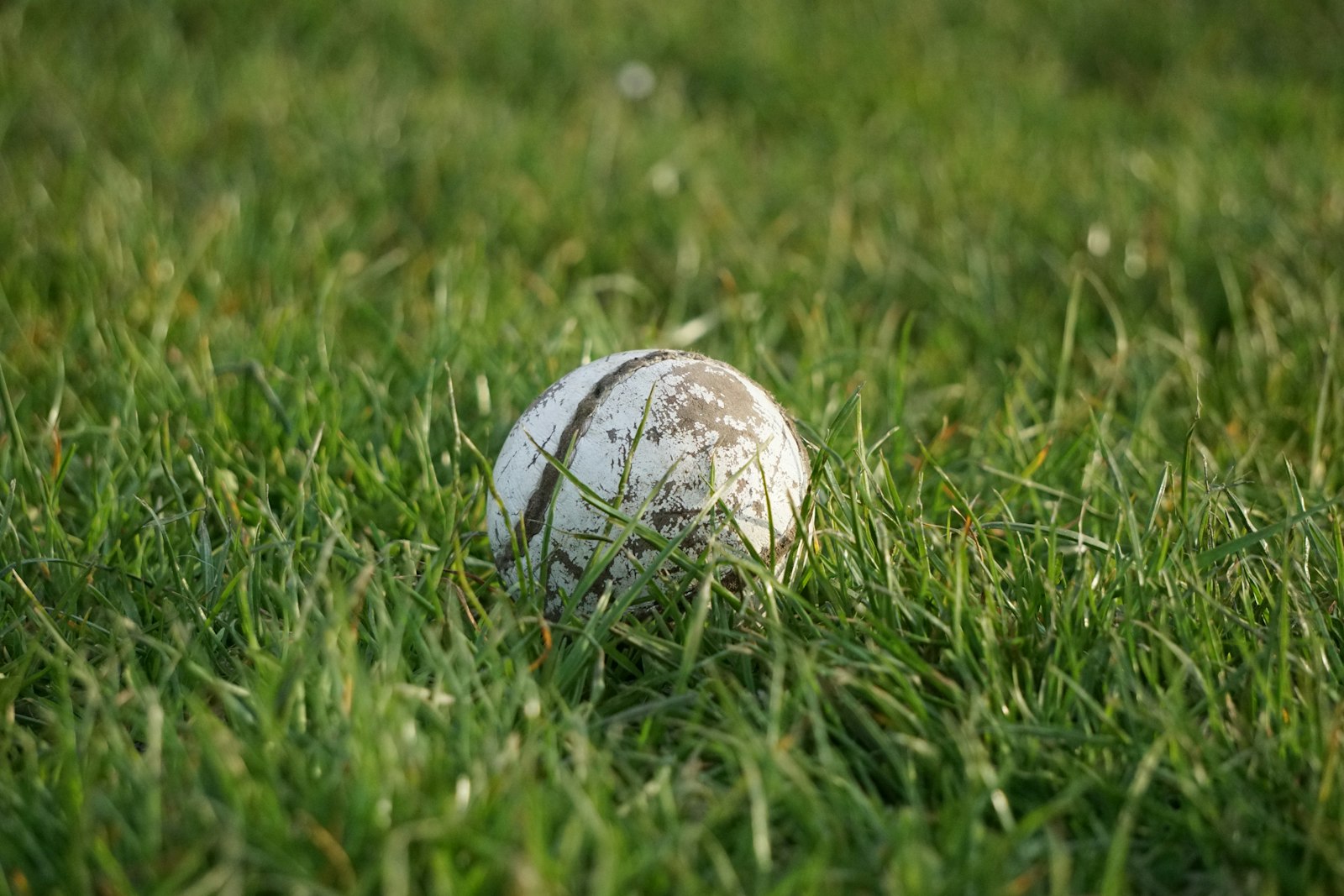
Photo by Adrian Payne on Unsplash
When you ask an Irish person what defines their culture, somewhere in that conversation you’ll hear about the GAA. The Gaelic Athletic Association isn’t simply an organization that runs sports—it’s woven into the very fabric of Irish life, a living symbol of national pride that touches nearly every community across the island. For American readers curious about Ireland, understanding the GAA is essential to understanding what makes Irish culture tick.
The GAA is more than just an athletic institution. It’s a keeper of tradition, a force for community development, and arguably the most significant cultural organization in Ireland. With over one million members and thousands of clubs spread across urban centers and rural villages alike, the GAA represents something uniquely Irish: a grassroots movement that has resisted commercialization and professionalism while maintaining the highest standards of athletic excellence. This paradox is what makes it fascinating to outsiders and sacred to those who participate.
The Origins of a National Institution
The story of the GAA begins in 1884, during a period when Irish identity was under threat. Ireland was still under British rule, and the dominant sports were cricket, rugby, and athletics—all quintessentially British pursuits. A group of Irish nationalists and sportspeople recognized that Irish traditional games were disappearing, replaced by English imports. They decided to act.
On November 1, 1884, in Hayes’ Hotel in Thurles, County Tipperary, a small group of men gathered to establish the Gaelic Athletic Association. Their mission was revolutionary: to preserve Irish games and culture through organized athletics. The founders included Michael Cusack, Maurice Davin, and Paddy O’Ryan, men who understood that sports could be a vehicle for cultural preservation and national identity.
The timing was politically significant. The GAA emerged during a period of intense Irish nationalism, and it quickly became associated with the independence movement. It provided a way for Irish people to assert their cultural identity through sport while subtly advancing political objectives. The organization explicitly banned foreign games and foreign players from competing under GAA auspices, making it a symbol of Irish self-determination.
What began as a radical idea took hold with remarkable speed. Within ten years, the GAA had organized county competitions and established rules for standardized play. Within twenty years, it had become a mass movement, with clubs in nearly every parish. This grassroots expansion wasn’t orchestrated from above—it grew organically because the GAA filled a genuine need in Irish communities for local organization, identity, and entertainment.
The Two Sacred Games: Hurling and Gaelic Football
The GAA governs two primary sports: hurling and Gaelic football. Together, these games form the twin pillars of the organization and represent the pinnacle of Irish athletic achievement.
Hurling: The Ancient Art
Hurling is often called the fastest sport on earth, and anyone who’s witnessed a match would struggle to argue otherwise. Played with a wooden stick called a hurley and a small ball called a sliotar, hurling has roots stretching back centuries into pre-Christian Ireland. Medieval Irish literature contains references to hurling, suggesting the game has been part of Irish culture since ancient times.
The sport is characterized by extraordinary skill, lightning-fast reflexes, and an almost balletic grace. Players can catch the sliotar in their hand and carry it for up to four steps, or balance it on the blade of their hurley. The ball can reach speeds of 100 mph, and matches see scores in the 60-80 range, with each point scored either by hitting the ball between the posts for a goal (worth three points) or over the crossbar (worth one point).
Hurling demands a combination of hand-eye coordination, spatial awareness, and raw courage. Players take collisions at high speed and are regularly knocked to the ground, yet the game flows with remarkable continuity. There’s an elegance to hurling that transcends simple athleticism—it’s art and combat rolled together, which explains why Irish people describe it with almost poetic reverence.
Gaelic Football: Uniquely Irish
Gaelic football is harder for outsiders to categorize. If you asked an American, they might say it looks like a hybrid of American football and soccer, and they wouldn’t be entirely wrong. But that description undersells what makes the sport distinctive.
Played with a round ball on a rectangular pitch, Gaelic football allows players to catch the ball and carry it for up to four steps, then they must bounce it or solo it (a distinctive move where the player bounces the ball on the ground and catches it). Scoring is similar to hurling: goals (three points) and points (one point). The sport demands running, kicking, hand-passing, and tactical thinking.
What makes Gaelic football compelling is its flow and unpredictability. A team can go from defending to attacking in seconds, and the game’s emphasis on hand-passing creates a constantly shifting dynamic. There’s more direct contact than soccer but less structured blocking than American football. It’s a sport that rewards versatility—you need to be able to kick, catch, pass, and tackle in the space of a single movement.
The GAA as Community Backbone
In America, sports clubs are often recreational appendages to towns and cities. In Ireland, the GAA club is frequently the social and organizational heart of the community.
In a small Irish village of 300 people, the GAA club might have 200 members across various age groups. The club meets weekly for training. It organizes social events, fundraisers, and community activities. The clubhouse serves as a gathering space for locals, a place where news is shared, friendships are formed, and community problems are discussed. When the local GAA team plays, the entire village mobilizes—families attend matches, children play in the fields before games, and afterwards, the clubhouse fills with supporters.
This community-centric model has deep roots in Irish culture. The GAA explicitly avoided the professionalization that characterized English sports. There are no transfer fees, no multi-million-euro contracts, no commercial exploitation of player likenesses. GAA players are amateurs, balancing their sporting commitments with jobs or studies. They play for their county or club, not for a franchise or corporate entity.
This commitment to amateurism has both strengths and challenges. The strength is that the GAA remains genuinely democratic and accessible. A talented young person from any background can work their way up to represent their club and county. The challenge is that top players often forgo significant earning potential and must dedicate enormous time to training while supporting themselves through other means.
The Championship Structure: Drama and Tradition
The GAA championship is organized on provincial and national levels, with distinct structures for hurling and football. The system is designed to maximize competitive balance while ensuring that every county gets multiple opportunities to compete.
The championship season typically runs from spring through autumn. Counties compete in the Leinster, Munster, Ulster, and Connacht championships, with provincial winners advancing to the All-Ireland Championship. The All-Ireland final is traditionally held on the first Sunday of September at Croke Park, the GAA’s headquarters in Dublin, and is one of Ireland’s most important sporting events.
What makes the championship system fascinating is how it handles the tension between ensuring competitive balance and determining a true champion. A team that loses early might still win the championship through a complex system of repechage rounds. This ensures that weaker teams aren’t eliminated too early, but it also means that the All-Ireland final is a genuine test of who the best team is.
The championship system also creates powerful narratives. When a team hasn’t won an All-Ireland in decades, their championship run becomes a story of redemption. When a dominant team seeks a three-in-a-row (winning three consecutive championships), the entire island watches to see if they can achieve it. These narratives, repeated across generations, create a rich tapestry of sporting tradition.
Croke Park: Irish Sporting Cathedral
Croke Park, located in north Dublin, is the headquarters of the GAA and one of the world’s great sporting venues. With a capacity of 82,500, it’s Ireland’s largest stadium and the third-largest stadium in Europe by capacity.
The stadium is more than just a venue—it’s hallowed ground in Irish sporting culture. The original ground opened in 1913, though the modern stadium evolved significantly during the 20th century. Every major GAA championship final, international rugby match, and important Irish soccer match is played there. For Irish people, Croke Park represents national identity and sporting tradition.
The stadium has historical significance beyond athletics. During the Irish War of Independence in 1920, British forces opened fire on a crowd watching a Gaelic football match at Croke Park, killing 14 spectators and one player. This incident, known as “Bloody Sunday,” became a turning point in Irish public opinion and helped galvanize support for independence. Today, a memorial stands at the stadium commemorating those who died.
In recent decades, Croke Park underwent major renovation, becoming a modern facility while maintaining its historical character. The stadium now has excellent facilities, clear sightlines, and the atmosphere remains electric when major competitions are held there.
The International Dimension
While the GAA is distinctly Irish, its reach extends internationally. Irish emigrants brought GAA sports with them, and clubs now exist in the United States, Australia, Europe, and other parts of the world. The World Games, held every four years, features Gaelic football and hurling, allowing teams from different countries to compete.
The existence of international GAA competition reflects a broader reality: many people with Irish heritage want to maintain connection to their cultural roots through sport. Irish-American communities, particularly in cities like Boston and New York, have maintained GAA clubs for generations.
However, the international dimension is limited compared to traditional sports. The GAA championships are primarily Irish affairs, and the national teams that compete internationally aren’t quite as dominant as the provincial and club teams that drive the Irish season.
Women in the GAA: A Modern Evolution
For most of its history, the GAA was exclusively male. Women’s involvement in Gaelic sports was limited until the 1980s, when the GAA established women’s hurling and football competitions.
This evolution happened slowly and sometimes reluctantly. Sexism in Irish sports culture—as in many cultures—meant that women’s sports were often marginalized. However, in recent decades, particularly the last decade, women’s GAA has transformed into a genuine competitive force.
Today, women’s hurling and football championships are heavily attended, and the quality of play matches that of men’s competitions in terms of skill and intensity. The Ireland women’s rugby team and women’s soccer team have also become sources of national pride, though they compete under non-GAA auspices.
The integration of women into GAA leadership and decision-making has been slower, but momentum is building. The organization is increasingly recognizing that its future depends on providing equal opportunities and representation across gender lines.
The Global Influence of Irish Sports Culture
American readers should understand that the GAA’s influence extends beyond sports. It shapes Irish identity, politics, and culture in ways that don’t have direct American equivalents.
There’s nothing quite like the GAA in the United States. American sports are either professional (NFL, NBA, MLB) or amateur college sports, but there isn’t really a community-based amateur sports movement that serves as the social backbone of towns and cities. The closest comparison might be high school football in some communities, but even that has become increasingly professionalized and commercialized.
The GAA’s model—community-based, amateur, organized by region, deeply connected to local identity—represents a different approach to sports. It prioritizes community development and cultural preservation over financial profit. This approach has both advantages (genuine accessibility, strong community bonds, cultural continuity) and disadvantages (lower funding for player development, limited career opportunities for athletes).
The Business of GAA: Balancing Tradition and Modernization
In recent years, the GAA has faced pressure to modernize its business practices. Broadcasting rights have become more valuable, sponsorships have increased, and there’s constant discussion about whether players should be paid or receive compensation for their time and talent.
The organization has navigated this tension by allowing some commercialization while maintaining its core amateur structure. GAA players can be sponsored (individual endorsement deals), and the organization receives television revenues, but there are no team franchises selling for millions or players commanding annual salaries.
This balance is increasingly difficult to maintain. Top GAA players spend as much time training as professional athletes but earn nothing from their sport. Some argue this is unfair and unsustainable; others contend that professionalism would fundamentally change what makes the GAA special.
Modern Challenges and the Future
The GAA faces several challenges heading into the future. Demographic changes are affecting participation in rural areas, as young people move to cities seeking employment opportunities. The professionalization of other sports and the appeal of international athletics compete for attention and participants.
Additionally, there’s constant debate about whether the amateur-only model is sustainable. Young athletes in other sports can earn substantial incomes; GAA players cannot. Some have left the GAA to pursue professional opportunities in rugby or soccer where compensation is available.
Climate change is also beginning to affect the GAA’s pastoral character. Flooding, extreme weather, and facility pressures challenge traditional club structures, particularly in rural areas.
Yet the GAA remains robust. Participation numbers remain strong, particularly among young people. The 2023 All-Ireland finals drew over 180,000 spectators, with millions more watching on television. The organization continues to evolve, introducing new competitions, expanding women’s participation, and adapting to modern realities while maintaining its core values.
Conclusion: Understanding Irish Culture Through Sport
For American readers seeking to understand Ireland, the GAA is essential. It represents something distinctive about Irish culture: a commitment to community, a respect for tradition, a celebration of athletic skill, and a determination to maintain Irish identity in the face of global cultural forces.
The GAA isn’t just about hurling and football. It’s about how a small nation preserved its culture through sport, how communities organize themselves around shared athletic endeavors, and how tradition can coexist with modernity. It’s about the roar of 82,000 people at Croke Park, the dedication of amateur athletes training multiple nights per week, the pride of a small village when their team advances in the championship.
Understanding the GAA gives you insight into what makes Ireland distinct. It explains why Irish people are so passionate about sport, why they see athletics as connected to national identity, and why a local club match can draw an entire community. In a globalized world where cultural differences are often flattened, the GAA stands as a powerful reminder that tradition, community, and local identity still matter. That’s the real story of Gaelic games—not just the sport, but what the sport represents about Irish life and values.

Author: jonathan
Jonathan is the publisher of Irishtopia.net, Anglotopia.net, and Londontopia.net. He's passionate about travel and learning about other cultures. He's been to Ireland several times, and uses his travel expertise for Irishtopia!