
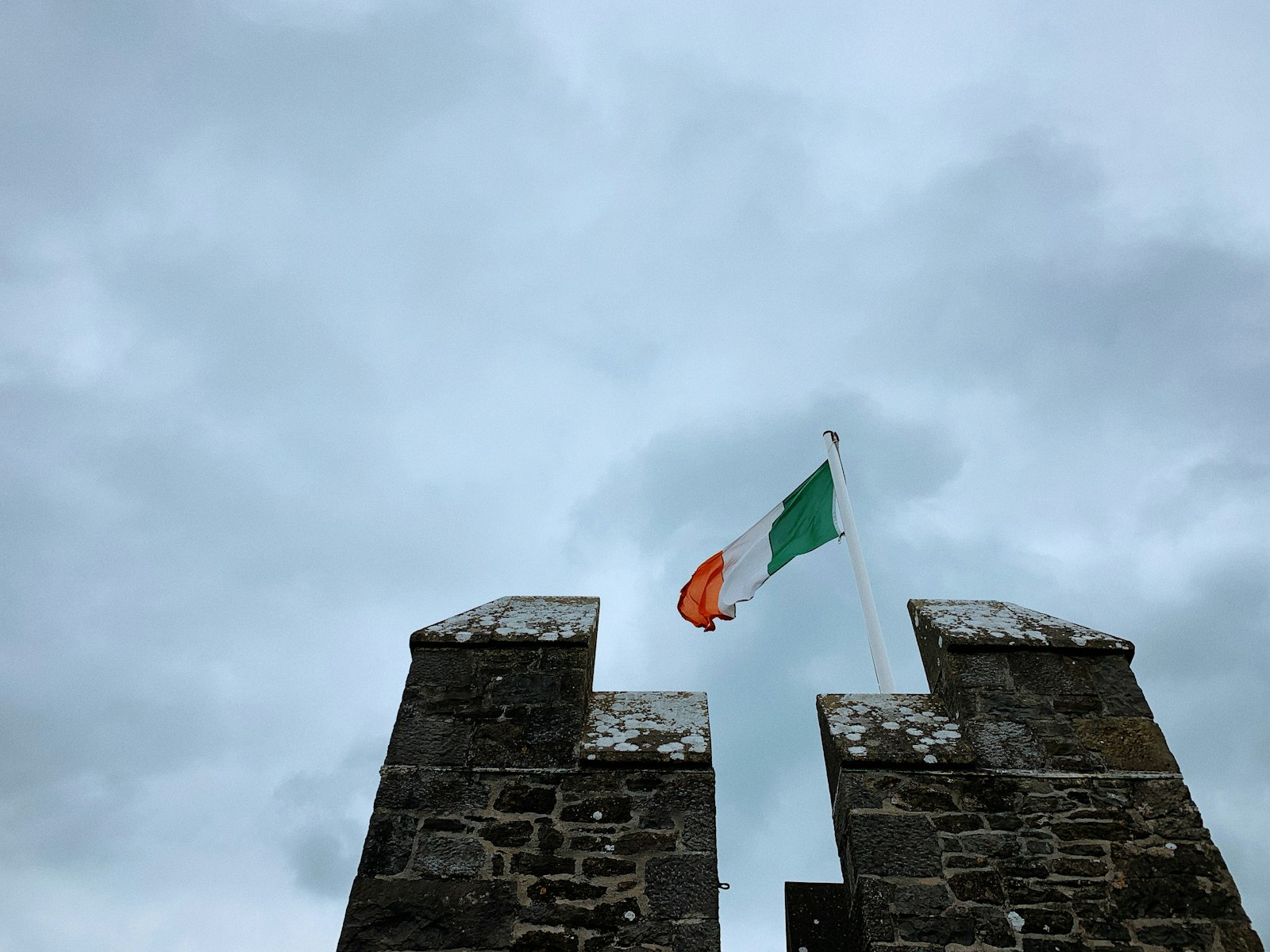
Photo by Tommy Bond on Unsplash
The concept of the High King of Ireland—a single supreme ruler governing the entire island—captures the imagination of people fascinated by Irish history. The title conjures images of powerful monarchs presiding over a unified kingdom, adjudicating disputes between lesser kings, and wielding absolute authority. Yet the historical reality of Irish kingship, particularly the question of whether a true “High King” ever actually ruled all of Ireland, is far more complicated than legend suggests. The gap between the mythology of the High Kings and the messy reality of Irish political organization tells us much about how societies create narratives about their past and how those narratives shape identity and meaning.
The Legendary High Kings
In medieval Irish tradition, a succession of High Kings is said to have ruled Ireland, beginning with prehistoric and legendary figures and continuing through the medieval period. The legendary tales present these rulers as commanding respect across the island, settling disputes between provincial kings, and representing Irish sovereignty on an international scale. Legendary figures like Conn of the Hundred Battles, Cormac mac Airt, and Art mac Morna occupy prominent places in Irish mythology, celebrated for wisdom, valor, and the might they wielded.
The most famous legendary High King in Irish tradition is arguably Conchobar mac Nessa, though scholars debate whether he was actually thought of as a “High King” in the strictest sense or simply as the most powerful king of his era. Conchobar is presented in the Ulster Cycle of mythology as a great ruler who presided during a legendary golden age of Irish civilization. The tales associated with him—particularly the Cattle Raid of Cooley—portray a world of heroic achievement and magnificent courts, where the king represents not just military power but also justice, wisdom, and cultural refinement.
Later in the legendary tradition, Brian Boru emerges as perhaps the most celebrated High King figure, a ruler of the 10th-11th centuries who is presented as having united the Irish kingdoms and defeated the Vikings at the Battle of Clontarf. Brian Boru’s story occupied a special place in Irish imagination, representing the possibility of unified Irish strength and the triumph over foreign invaders. His legend proved enduring partly because, unlike purely mythological figures, Brian Boru was at least a historical person whose deeds could be grounded in a specific time and place.
What the Medieval Sources Tell Us
Our knowledge of early Irish kingship comes primarily from texts compiled by medieval Irish Christian monks who were writing centuries after the events they described. These texts include the Lebor Gabála Érenn (Book of Invasions), which presents a pseudo-historical account of Ireland’s settlement by successive peoples, and various king lists and chronicles that attempt to present a chronological succession of rulers. These sources must be read with great care, as they served purposes beyond pure historical documentation—they legitimized particular dynasties, supported theological arguments, and promoted Christian views of Irish history.
The Chronicles of Ireland (compiled from earlier sources) provide king lists with regnal dates and occasional notices of events. These sources suggest that certain kings achieved greater power and prestige than others, and that some figures did attempt to exercise authority across multiple kingdoms. However, the exact nature and extent of this authority remains unclear. Did a “High King” actually govern all of Ireland, making binding decisions over other kings? Or was the title more honorific, accorded to the most powerful king of a given era while other kings retained substantial autonomy?
Medieval sources referring to a “High King of Ireland” (Ard Rí Érenn) become more common in texts from the 10th-11th centuries onward, particularly in the chronicles that record the achievements of figures like Brian Boru. The fact that the title appears more frequently in later sources has led some historians to conclude that the formal concept of a High King may have been a later development, not accurately projected back onto earlier periods in which it didn’t actually exist.
The Historical Reality of Early Irish Kingship
Archaeological and historical evidence suggests that early medieval Ireland was organized into a complex hierarchy of kingdoms and territories. At the bottom of the hierarchy were local kings who ruled relatively small territories, called tuatha in Irish law. Above them were provincial or regional kings who exercised authority over multiple tuatha and smaller kings. At the top, the most powerful kings might claim authority over entire provinces or regions.
The organization of kingship appears to have varied significantly by region and evolved over time. Some areas had more centralized authority structures; others were more fragmented. The relationships between different levels of kings were partly defined by law (as set out in legal tracts), but they were also practical relationships based on power, military might, and political maneuvering.
The concept of a single “High King” ruling all of Ireland appears to have been more aspirational than actual. Certain powerful kings—particularly those of the Uí Néill dynasty and, later, the Dál Cais dynasty—achieved sufficient power and prestige that they could claim the title of High King and exercise influence across much of the island. However, their authority was never total, and their power was constantly challenged by rival kings and ambitious subordinates. A High King’s authority was ultimately based on military strength, and could be maintained only through constant vigilance and occasionally through military action against rebellious subordinates.
The Uí Néill Dynasty and Early High Kings
The Uí Néill, a dynasty descended from Niall of the Nine Hostages (a possibly legendary figure of the 4th-5th century), dominated Irish politics for centuries. Members of this dynasty established themselves as the most powerful kings across much of Ireland, particularly in the northern and central regions. The Uí Néill dynasty split into the Northern Uí Néill (based in what is now County Tyrone and surrounding areas) and the Southern Uí Néill (based in the Midlands), with the two branches often competing for supremacy.
From roughly the 6th to the 9th centuries, the Uí Néill were the dominant dynasty, and their kings frequently held the title of High King. However, even at their height of power, their authority was never absolute. Rival kingdoms, particularly in Munster, Leinster, and Connacht, maintained significant independence and frequently challenged Uí Néill dominance. The frequency with which medieval chronicles record battles, raids, and conflicts suggests that the peace imposed by a High King was never stable or permanent.
The presence of Norse raiders and later settlers from the 9th century onward further complicated Irish political dynamics. Viking attacks created new challenges for all Irish kings and sometimes forced temporary alliances between groups that were normally rivals. The impact of the Vikings on Irish political organization was significant and helped reshape the balance of power among Irish kingdoms.
Brian Boru and the High Kingship at Its Height
The story of Brian Boru (941-1014) represents perhaps the closest approximation to a genuine, functional High Kingship in Irish history. Brian emerged from the Dál Cais dynasty in Munster and through a combination of military skill, political acumen, and strategic marriages, managed to accumulate unprecedented power. He defeated rival Munster kings, extended his authority over Leinster, and eventually forced the Uí Néill to acknowledge his supremacy. By the early 11th century, Brian was widely recognized as the most powerful king in Ireland.
What made Brian different from previous High Kings was not just his power but his apparent success in creating a more organized system of subordinate kingships and in maintaining that system through a combination of military force and political relationship. Contemporary sources suggest that Brian exercised genuine authority over a broad range of Irish territories and that he implemented policies affecting much of the island. He patronized the church, established laws, and presented himself as the defender of Ireland against Norse threats.
The famous Battle of Clontarf in 1014, where Brian defeated a coalition of his enemies including Viking forces, is presented in legend as the moment when Irish independence was secured and the Norse threat defeated. However, the historical reality of Clontarf is more ambiguous. While Brian’s forces did win a significant military victory, it’s unclear whether the battle actually represented the decisive defeat of Viking power that legend suggests. More importantly, the battle also resulted in Brian’s death, which threw the succession into confusion and ultimately led to the fragmentation of any unified High Kingship that he had created.
The Decline of the High Kingship
After Brian Boru’s death, no subsequent High King achieved comparable power or prestige. The title persisted and was claimed by various powerful kings throughout the 11th and 12th centuries, but no one managed to recreate the widespread authority that Brian had briefly exercised. The period from the 11th century onward saw increasing fragmentation of Irish politics, with power dispersed among rival dynasties competing for regional dominance.
The Norman invasion of 1170 brought a new force into Irish politics. The arrival of Norman knights and adventurers, initially invited by Diarmait Mac Murchada of Leinster to help him in a succession dispute, gradually transformed Irish political organization. As Normans established themselves and claimed territories, they introduced feudal concepts of land tenure and obligation that were foreign to Irish political traditions. The old system of Irish kingship gradually gave way to a hybrid system that combined remaining Irish principalities with areas controlled by Norman settlers and eventually English forces.
Kingship as Ritual and Ideology
Beyond the question of actual political power, the concept of the High King served important ideological and ritual functions in Irish society. The person who held the title or was recognized as the most powerful king gained prestige and legitimacy beyond what military strength alone might confer. The High King was often the patron of the church, the keeper of law and justice, and the embodiment of the nation’s sovereignty and prosperity.
Medieval Irish legal texts and other documents contain descriptions of the High King’s duties and the proper rituals of kingship. These sources describe the High King as responsible for maintaining order, ensuring fertility of the land, and protecting against supernatural threats. The king was ritually married to the land he ruled, and his fitness to rule was believed to be reflected in physical and moral qualities. If the king became blemished or flawed, the land itself might suffer. These beliefs show how kingship in Irish society had dimensions beyond practical political control—it was a sacred and ritualistic office laden with symbolic meaning.
Separating Legend from History
The gap between the legendary image of the High Kings and historical reality is significant. The legends present a succession of powerful rulers exercising firm control over Ireland and representing a unified Irish nation. The historical evidence suggests something quite different: a succession of powerful kings who achieved regional or temporary dominance but never complete or lasting control over the entire island. The concept of an all-Ireland High King was real enough as an aspiration and a title, but as a practical reality it was achieved only intermittently and never in a fully stable form.
This discrepancy reflects a broader truth about how societies create narratives about their past. The High Kings became important figures in Irish national identity, representing an idealized unified Ireland that stood against foreign domination. This political and cultural investment in the High King mythology contributed to how these figures were remembered and celebrated, often at the expense of historical accuracy. Later writers elaborated on and embellished the stories of great kings, creating more coherent and compelling narratives than the historical evidence actually supports.
The Legacy of the High Kings
The concept of the High Kings remains important in Irish cultural memory and identity, even if the historical reality was more complex and less glorious than legend. The stories of Brian Boru and other High Kings represent ideals about leadership, unity, and national strength that continue to resonate. These stories have been retold and reimagined countless times, adapted to serve various historical and political purposes.
For modern Ireland, the High Kings represent a distant past of relative independence and strength before the Norman invasion initiated centuries of foreign rule. The mythology of the High Kings thus serves as a kind of historical anchor point, a reminder that Ireland once had its own powerful rulers and systems of governance.
Understanding the difference between the legendary High Kings and the historical reality enriches our appreciation of both. It shows how history is always a blend of what actually happened and how people choose to remember and interpret what happened. It demonstrates that even figures of genuine historical significance become transformed through legend and cultural memory. And it illustrates how powerful narrative and mythology can be in shaping national identity and how the past continues to speak to the concerns and aspirations of the present.

Author: jonathan
Jonathan is the publisher of Irishtopia.net, Anglotopia.net, and Londontopia.net. He's passionate about travel and learning about other cultures. He's been to Ireland several times, and uses his travel expertise for Irishtopia!