
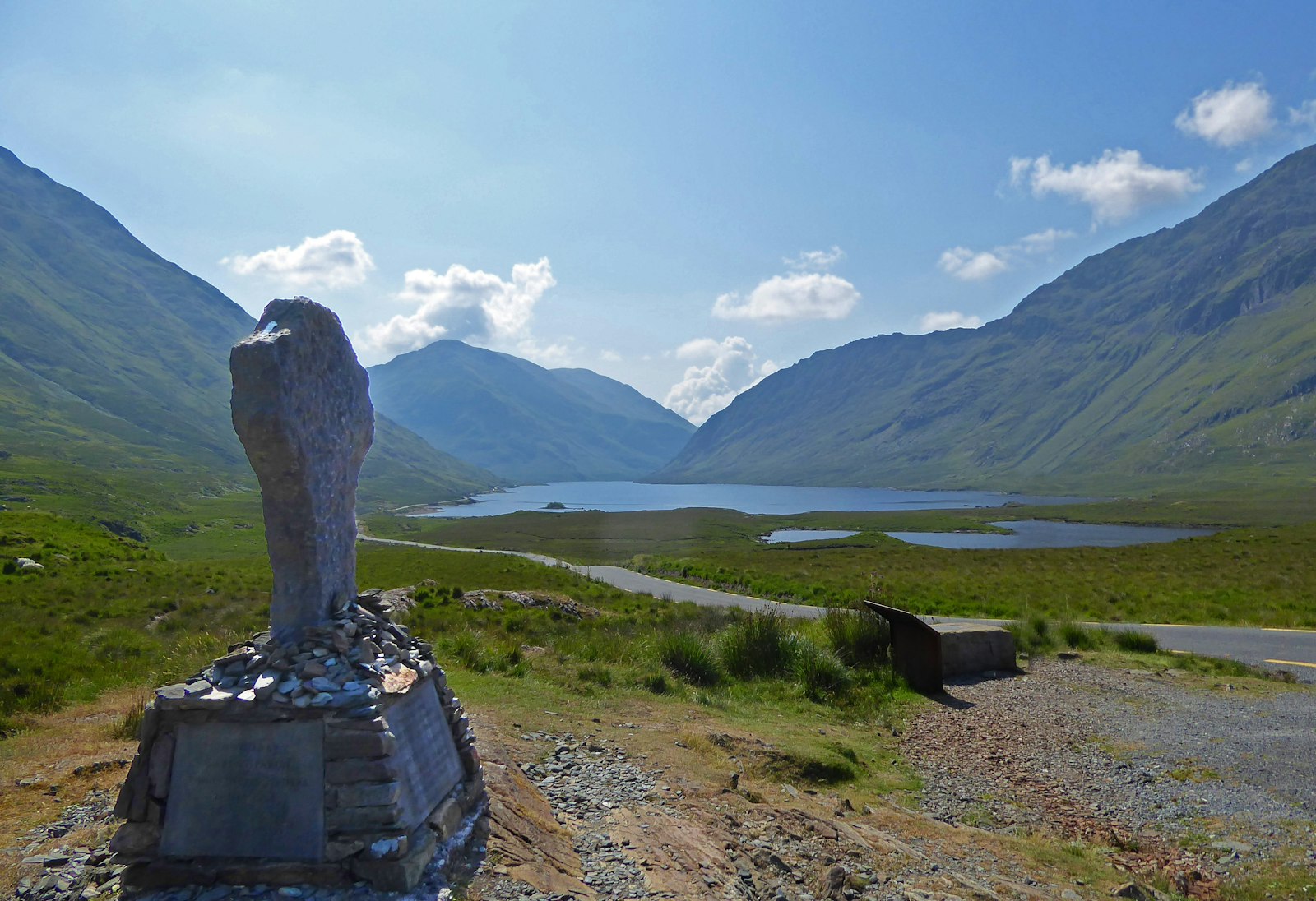
Photo by Colin C Murphy on Unsplash
Introduction
The words “Irish Famine” evoke images of starvation, death, and mass emigration. Between 1845 and 1852, approximately one million people died in Ireland from hunger and disease, while another million emigrated, primarily to the United States. The trauma of this catastrophe permanently altered Irish society, shaped Irish-American communities, and became central to Irish historical consciousness.
Yet calling it a “famine” in the traditional sense—a natural disaster caused by crop failure—misses a crucial truth. While the immediate cause was a blight on potato crops, the catastrophic death toll and mass suffering were not inevitable. Ireland in the 1840s produced enough food to feed its population. The tragedy wasn’t that food didn’t exist, but that the food that existed was exported while people starved. The Famine was a human catastrophe, not a natural one.
For Americans with Irish heritage, the Famine represents the moment of rupture that drove their ancestors across the Atlantic. For all of us interested in Irish history, the Famine represents a crucial lesson about how political systems, economic policies, and ideological beliefs can transform a harvest failure into a mass catastrophe.
The Potato Economy: Why One Crop Mattered So Much
To understand why the potato blight became a famine, we must first understand the central role the potato played in Irish agriculture and Irish society. By the 1840s, the vast majority of the Irish rural population depended almost entirely on the potato for food. An Irish family might own or rent a small plot of land—just enough to grow potatoes to feed themselves. Most Irish peasants and small farmers ate potatoes for nearly every meal.
This extreme dependence on a single crop was the result of centuries of displacement, land confiscation, and poverty. English and Scottish landlords controlled most of Ireland’s good land, using it for cattle ranching and grain production for export to England. The Irish population, displaced from good lands and living as tenants of English landlords, were left with tiny plots on poor land. The potato was the only crop that could feed a family from such small, poor plots.
The potato had been introduced to Ireland centuries earlier and gradually became more central to Irish diet over time. By the 18th century, it was the staple of the poor. By the 1840s, it had become essentially the only food source for millions of Irish peasants.
This wasn’t poverty—it was absolute destitution. The Irish peasant who grew enough potatoes to feed his family but nothing else couldn’t buy clothes, tools, or pay rent with anything but potatoes. They were trapped in a system that depended on a single crop succeeding every year.
The Blight Arrives
In 1845, a fungal disease called Phytophthora infestans arrived in Ireland, probably carried by infected potatoes from North America. This was the disease that caused potato blight. When the fungus infected potato plants, it would blacken and rot the leaves and destroy the tubers in the ground. A field of healthy-looking potato plants could become a blackened ruin within days.
The blight hit Ireland in September 1845, and estimates suggest it destroyed approximately one-third of the potato crop. For those dependent on potatoes, this was a disaster. But it wasn’t catastrophic—at one-third crop failure, a prudent government and responsible landlords might have been able to prevent mass starvation through relief, by restricting grain exports to keep food in Ireland, or by reducing rent demands.
But 1845 was just the beginning. The blight returned in 1846, even more devastating. That year, approximately 75 percent of the potato crop failed. In 1847, the remaining potatoes that people tried to plant to grow seed stock were infected, making 1848 impossible to plant. The blight returned again in 1848 and 1849.
What had seemed like a temporary crisis transformed into a cascade of consecutive crop failures that meant, for millions of Irish peasants, that there was simply no food. They had no potatoes to eat and no money to buy other food.
The Response: Ideology Over Humanity
How Britain responded to the crisis reveals much about 19th-century thinking and about the relationship between Ireland and Britain. The response was shaped by two powerful ideologies: free trade capitalism and Protestant moralism about poverty and relief.
British political authorities, influenced by the philosophy of free market capitalism, believed that interfering with food markets was a mistake. If grain exports from Ireland were restricted or prevented, this would disrupt markets and set a bad precedent. It might make grain prices rise in England, creating political difficulty. Better to let the market work—let those who could afford food buy it, and let the unfortunate suffer the consequences.
This thinking seems bizarre and cruel to modern ears. But it made sense within the ideological framework of early 19th-century British liberalism. The market was sacred. Artificial interference with markets would create worse problems later. And, implicit in this reasoning, if some people died from starvation, that was unfortunate but the consequence of larger economic laws that no government could or should override.
There was also a racialized and religious dimension to the response. Many British observers and politicians viewed the Irish as a degraded race, prone to laziness and vice. The Famine was sometimes portrayed as a natural consequence of Irish moral failings. In this view, providing extensive relief would be rewarding vice and creating moral hazard—encouraging laziness by making it possible to survive without working.
The Export Scandal
One of the most striking facts about the Irish Famine is that Ireland exported food throughout it. While people starved, Irish grain, cattle, butter, and eggs were shipped to England. Ireland remained a net exporter of food during the worst years of the Famine.
This wasn’t coincidence. Irish landlords, many of them English absentees who never set foot in Ireland, were determined to extract maximum rent and profit from their Irish estates even while the population starved. Tenants who couldn’t pay rent were evicted. Their crops, grown by British investment and British land, were harvested and exported. The landlords’ wealth took priority over the peasants’ survival.
British authorities could have restricted food exports from Ireland during the Famine. This would have kept food available in Ireland and prevented starvation. But they refused to do so, partly from free market ideology, partly from indifference to Irish suffering, and partly from the view that restricting trade would be economically harmful.
The contrast between starving Ireland and well-fed England was stark. While Irish peasants died from hunger, British grain markets were well-supplied with Irish grain. While Irish children went without, Irish butter and eggs were sold in English markets. The Famine was as much a product of economic policy and ideological choice as it was of agricultural disaster.
The Limited Relief Effort
British authorities did eventually implement some relief programs, but they were inadequate and grudging. The Poor Law Amendment Act of 1834 had established workhouses as the primary mechanism of relief in Britain and was extended to Ireland. Irish workhouses became places of disease and death, where conditions were so terrible that many Irish people died within them.
Food relief programs were implemented, but they were designed to be so miserable and humiliating that they would discourage people from seeking them. Workers could receive food in exchange for labor on public works projects, but only at subsistence rates—barely enough to survive. The work itself was often useless (breaking rocks, building useless roads) designed to test the moral character and willingness to work of those seeking relief.
The government provided some free food in the worst years, but not enough and not soon enough. By the time significant relief came, the worst deaths had already occurred. An estimated 1 million people had already died of hunger and disease.
The Human Cost
The human cost of the Famine was staggering. The deaths came through various mechanisms. Some people literally starved—their bodies couldn’t maintain themselves without food. Others developed typhus, dysentery, and other diseases of malnutrition and poor sanitation. The weakened and starving population was vulnerable to any disease. Typhus fever alone killed tens of thousands.
The social fabric of Ireland was torn apart. Families were separated as members emigrated in search of food. Parents made unbearable choices about which children could be fed and which couldn’t. Communities watched neighbors die without the ability to help. The trauma was profound and lasting.
The memories of the Famine lived on in survivors and their descendants. Stories were told and retold of starving neighbors, of evictions during the crisis, of coffin ships carrying the desperate to America. These memories shaped Irish understanding of their relationship with Britain—as a people who had been left to starve while their food was taken to feed others.
Emigration: The Desperate Escape
As the Famine deepened and starvation loomed, millions of Irish people attempted to escape by emigrating. The primary destination was the United States, which beckoned as a land of opportunity and safety.
But emigration itself was a tragedy. Many of those fleeing Ireland boarded ships (called “coffin ships” because so many died during the voyage) without adequate food or sanitation. Disease spread rapidly in the crowded holds. It’s estimated that roughly 10 percent of those who boarded ship for America died during the voyage.
Those who survived faced the challenges of arriving in America weak, diseased, and without resources. Yet still they came, because the alternative—remaining in Ireland—seemed like certain death. Between 1845 and 1855, approximately 2 million Irish emigrated. The majority went to the United States, settling in cities on the East Coast, particularly in New York, Boston, and Philadelphia.
The Irish-American communities that formed in these cities were shaped by the trauma of the Famine. Many Irish-Americans came with intense resentment toward Britain and toward the policies that had turned a crop failure into mass death. This resentment would persist for generations and would shape Irish-American politics and identity.
The British Response: Incompetence or Malice?
A question that haunts the history of the Famine is whether British policy was shaped by incompetence or by actual malice—by indifference to Irish suffering or by deliberate effort to harm the Irish.
Many Irish people and historians argue that it was at least partially deliberate. The policies that kept food exports going, that made relief difficult to obtain, that preferred ideology to pragmatic response—these weren’t mistakes but choices. When British authorities chose free trade principle over feeding starving people, they were choosing their ideology over Irish lives.
British defenders argue that the authorities did the best they could with the information and tools available. That conditions in Ireland were genuinely difficult to understand from London. That the scale of the disaster exceeded anything anyone had expected. That they did implement relief programs, even if inadequate.
What’s clear is that the British response was shaped by indifference to Irish suffering. Even if deliberate malice didn’t drive policy, profound indifference certainly did. British policymakers cared more about their economic principles and about English interests than about Irish lives. The Famine happened in the context of that indifference, and in a context where Irish lives were consistently devalued relative to English interests and English principles.
The Long-Term Consequences
The Irish Famine’s consequences extended far beyond the immediate deaths and emigration. Ireland’s population collapsed. Before the Famine, Ireland had approximately 8 million people. The deaths and emigration reduced the population to around 6 million. Ireland never recovered to pre-Famine population levels. Today, the island has fewer people than it did in 1845.
The Famine also accelerated economic decline. The loss of population meant less labor available for work. The trauma and emigration meant the loss of many capable, energetic people. The landlord class, already absentee and exploitative, became even more dominant. Irish manufacturing and industry, already in decline, collapsed further.
The Famine also transformed Irish consciousness. It became the central traumatic memory of Irish history. It shaped Irish identity, Irish nationalism, and Irish-American identity. The Famine was proof, for Irish people, that they were subordinated and expendable in the eyes of the British state.
The Irish Famine in Memory
The Irish Famine became a foundational narrative in Irish consciousness. It was taught in schools, discussed in churches, passed down in families. It became central to Irish nationalism—proof of the need for Irish independence, since Irish interests would never be protected as long as Britain controlled Irish affairs.
In the United States, the Famine became central to Irish-American identity. Irish-Americans carried memories of ancestors who died or who escaped to America. This created a particular kind of Irish-American consciousness—one shaped by loss, by survival against odds, and by gratitude for America while harboring resentment toward Britain.
The Famine also became a touchstone for understanding colonialism and power. How a natural disaster (the blight) could be transformed into a human catastrophe (the Famine) through the interaction of ideology, power, and economic systems. How the choices of the powerful could determine who lived and died. How the poor could be sacrificed to principles that protected the wealth of the wealthy.
Understanding the Famine Today
Modern historians have engaged in extensive scholarship on the Irish Famine, exploring its causes, extent, and consequences. Some emphasis is placed on the role of the potato monoculture and Irish rural overpopulation. Some historians explore the role of disease beyond mere starvation. Some debate the extent of deliberate British policy as opposed to ideological blindness.
What’s clear is that the Famine wasn’t inevitable from the blight alone. It resulted from:
- The structure of Irish agriculture, which made most people dependent on potatoes
- The landlord system, which prioritized rent extraction over tenant welfare
- Free trade ideology, which prevented restriction of food exports
- British indifference to Irish suffering
- The limitations of relief efforts
- The virulence of disease in malnourished populations
Change any of these factors, and the Famine would have been different—less deadly, less catastrophic. An Irish parliament that prioritized Irish welfare might have restricted exports or implemented more aggressive relief. Different economic policies might have allowed more resources for relief. Different values—more concern for human life, less commitment to abstract economic principles—might have changed the outcome.
Conclusion: A Preventable Tragedy
The Irish Famine was ultimately a preventable tragedy. The blight was a natural disaster that could not have been prevented. But the transformation of that disaster into mass death and emigration was preventable. Ireland had the resources to feed its population. The problem was not scarcity but distribution—food was exported to generate profit for landlords rather than kept in Ireland to feed the starving.
For Americans interested in Irish history and heritage, the Famine represents a crucial moment in Irish history and in the formation of Irish-America. It explains the depth of Irish-American communities, created by ancestors who fled starvation. It explains Irish-American attitudes toward Britain, shaped by memories of abandonment during the crisis. And it raises questions that remain relevant today about how political systems, economic policies, and the values of the powerful shape the survival and welfare of the poor.
The Irish Famine reminds us that the difference between a harvest failure and a catastrophe is not just nature but human choice. When we look at modern famines and ask why they happen, the answer often involves politics, economics, and the indifference or cruelty of those with power—just as it did in Ireland in the 1840s.

Author: jonathan
Jonathan is the publisher of Irishtopia.net, Anglotopia.net, and Londontopia.net. He's passionate about travel and learning about other cultures. He's been to Ireland several times, and uses his travel expertise for Irishtopia!