
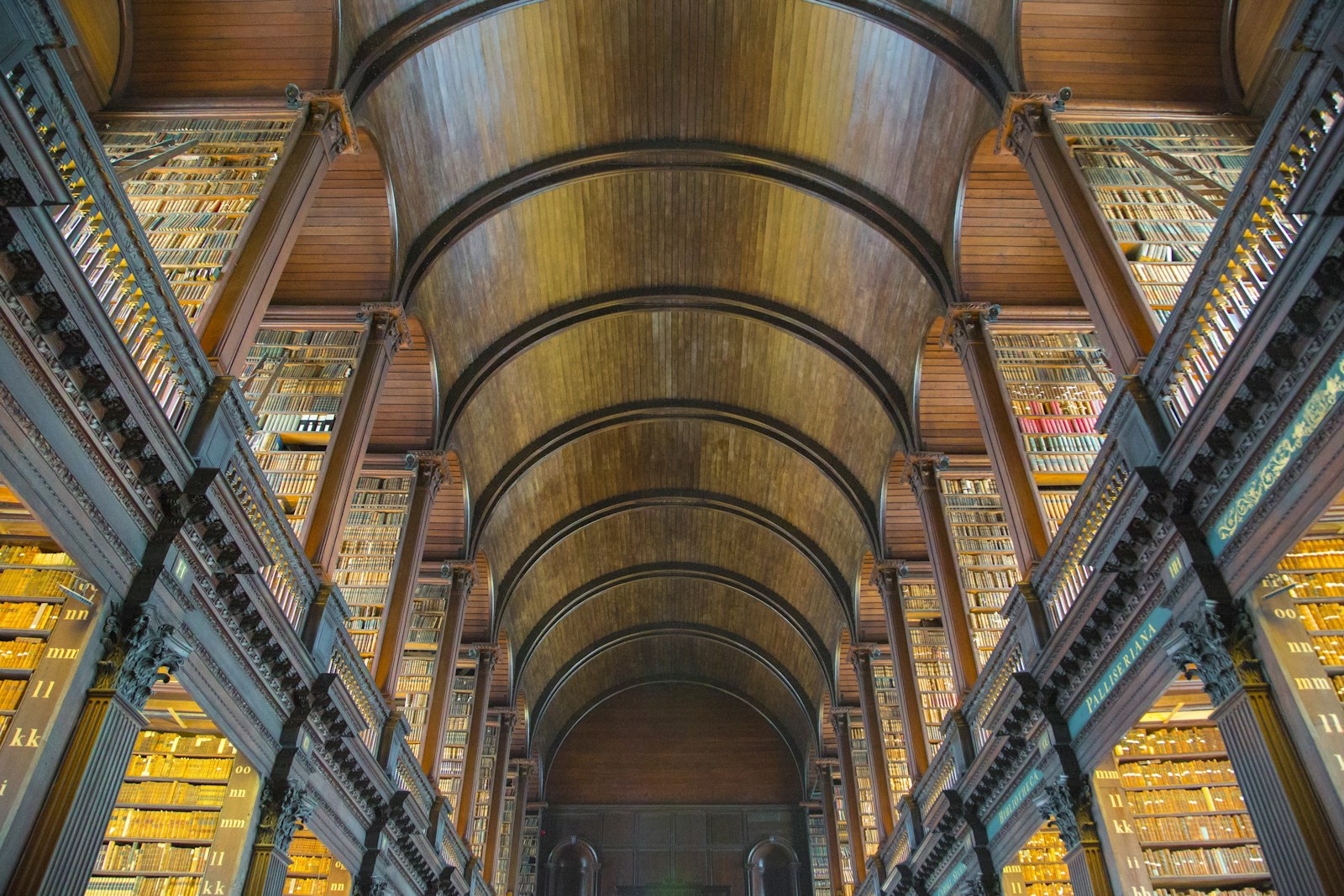
Photo by Van Williams on Unsplash
From ancient Celtic mythology to contemporary horror fiction, Irish writers have had a peculiar talent for exploring the supernatural and the horrifying. Ireland’s landscape, history, and cultural traditions provided rich material for gothic and supernatural literature. Irish writers like Sheridan Le Fanu, Bram Stoker, and later writers created works that not only entertained but revolutionized the horror and gothic fiction genres. The Irish gothic tradition demonstrates how writers from a peripheral culture transformed European gothic conventions into something distinctly Irish while achieving international significance.
The gothic tradition emphasizes atmosphere, psychological terror, and the intrusion of the supernatural into ordinary reality. Irish writers brought to this tradition elements of Irish mythology, history, and landscape that created distinctive gothic works. The Irish gothic isn’t simply European gothic transplanted to Ireland; rather, Irish writers reimagined gothic tradition through Irish sensibility and Irish experience.
The European Gothic Context
To understand the Irish gothic, we must first understand the broader gothic tradition in European literature. The gothic emerged in the late 18th century as a reaction against Enlightenment rationalism. It emphasized emotion, darkness, fear, and the mysterious. The gothic was suspicious of reason and science, finding terror and mystery in the dark places that enlightened rationality claimed to illuminate.
Early gothic works like Horace Walpole’s “The Castle of Otranto” and Ann Radcliffe’s novels established conventions that would define gothic literature: mysterious castles, supernatural phenomena, psychological terror, and young women threatened by dark forces. These works were enormously popular, suggesting that educated readers found gothic fiction compelling and meaningful.
By the late 19th century, when Irish writers came to dominance in the gothic tradition, the form had evolved significantly. Victorian gothic retained the genre’s emphasis on supernatural horror and psychological terror but added psychological sophistication and scientific rationalism that produced distinctive tensions within the works.
Sheridan Le Fanu: The Progenitor of Irish Gothic
Sheridan Le Fanu (1814-1873) stands as perhaps the most important figure in establishing the Irish gothic tradition. Born in Dublin and living most of his life in Ireland, Le Fanu created gothic works that drew on Irish setting, Irish history, and Irish sensibility while achieving international success.
Le Fanu’s stories often featured Irish settings and Irish characters. His work “The Purcell Papers” and other collections drew on Irish folklore and legend. Stories like “Green Tea” and “Schalken the Painter” demonstrated his mastery of psychological horror and atmospheric dread. These stories didn’t rely primarily on explicit supernatural phenomena but rather on psychological terror and the intrusion of the inexplicable into ordinary life.
Le Fanu’s masterpiece was “Carmilla,” a novella featuring a female vampire who seduces and feeds on the protagonist. Published in 1872, before Bram Stoker’s “Dracula,” “Carmilla” established many conventions of vampire fiction. The work is remarkable for its psychological sophistication, its exploration of desire and seduction, and its atmospheric gothic mastery. “Carmilla” influenced Bram Stoker directly and continues to be regarded as one of the greatest vampire stories ever written.
Le Fanu’s work demonstrates how Irish gothic could be simultaneously thoroughly rooted in Irish contexts while also achieving universal appeal and influence. His stories explore specifically Irish concerns and sensibilities but address universal human fears and psychological territories.
Bram Stoker and “Dracula”
While Sheridan Le Fanu established Irish gothic tradition, Bram Stoker achieved international dominance in the horror genre through “Dracula” (1897). Stoker was born in Dublin in 1847 and, like Le Fanu, was Irish-born and Irish-educated, though he spent much of his career in England as a theater manager.
“Dracula” is one of the most influential horror novels ever written. It tells the story of Count Dracula, an ancient vampire from Eastern Europe, who comes to England seeking fresh victims and new territories. The novel is constructed as a series of letters, diary entries, and newspaper clippings that create a fragmentary narrative suggesting the chaos and confusion of the protagonists facing supernatural horror.
The novel draws on Gothic tradition but transforms it through Victorian scientific rationalism and psychological sophistication. The protagonists—a solicitor, a young woman, her fiancée, an American adventurer, and an aging professor—deploy scientific methods, modern technology (including phonograph recordings), and medical knowledge against an ancient supernatural evil. This tension between modern rationality and ancient supernatural power creates much of the novel’s psychological tension.
Stoker’s characterization of Dracula and Mina creates psychological depth alongside supernatural horror. The novel’s exploration of desire, especially the homoerotic dimensions of Dracula’s seduction, gives it psychological complexity beyond simple horror. The female vampire Lucy, who becomes one of the undead, represents transgressive female desire and sexuality in ways that horrified Victorian readers.
The novel’s influence is difficult to overstate. “Dracula” established the literary vampire as a major figure in literature and culture. It influenced generations of horror writers and continues to be adapted, rewritten, and reimagined. Film and television adaptations of “Dracula,” beginning with early silent films and continuing to contemporary versions, demonstrate the enduring power and flexibility of Stoker’s narrative.
The Irish Landscape and the Supernatural
A distinctive feature of Irish gothic is the use of Irish landscape and Irish settings to create supernatural atmosphere. The Irish landscape, with its dramatic natural features, its connection to ancient history and mythology, and its association with fairies, spirits, and supernatural presences, provided rich material for gothic writers.
Irish gothic frequently emphasized the haunting nature of Irish history. The landscape itself seemed haunted by past events—Viking raids, Norman invasions, English conquest, sectarian conflicts, famine, and emigration. Writers drew on this sense of history embedded in landscape to create gothic atmospheres. Ruins of castles, old graveyards, remote regions, and isolated places became settings for supernatural horror.
The connection between Irish landscape and fairies and supernatural beings from Irish mythology provided another source for Irish gothic. Rather than purely inventing gothic horrors, Irish writers could draw on traditional folklore and mythological creatures. Banshees, fairies, ghosts of murdered ancestors, and other creatures from Irish tradition became characters in gothic fiction.
Oscar Wilde and the Psychological Gothic
While Oscar Wilde is not typically classified as a gothic writer, his work demonstrates important characteristics of the psychological gothic tradition. Works like “The Picture of Dorian Gray” use supernatural elements to explore psychological and moral themes. The portrait that ages while Dorian Gray remains eternally young isn’t simply a gothic gimmick but a vehicle for exploring vanity, corruption, and moral decay.
Wilde’s work demonstrates how gothic traditions could be refined and used for psychological and philosophical purposes. The supernatural element becomes a metaphor for psychological and spiritual states. This psychologization of the gothic influenced subsequent gothic and horror fiction.
The Legacy in Later Irish Writers
The Irish gothic tradition continued to influence Irish writers throughout the 20th and 21st centuries. Writers like Flann O’Brien used gothic and supernatural elements in their work, though often in comic or ironic ways. Contemporary Irish writers like Colm Tóibín and others draw on the gothic tradition in their work.
The gothic tradition also influenced Irish dramatists. Samuel Beckett’s plays, while not overtly gothic, share the gothic concern with psychological terror, the unknowable, and the uncanny. The sparse, mysterious worlds of Beckett’s plays have distinctly gothic character even when they lack explicit supernatural elements.
Irish Gothic and Gender
An important dimension of Irish gothic literature involves the treatment of gender and sexuality. Le Fanu’s “Carmilla” and Stoker’s “Dracula” both feature powerful female sexual presences that threaten patriarchal order. The female vampire, seductive and dangerous, represents transgressive female sexuality and power.
This concern with female sexuality and the threat it represents reflects broader Victorian anxieties about women, gender roles, and sexuality. The gothic became a vehicle for exploring these anxieties. Irish gothic writers, while not necessarily progressive on gender issues by contemporary standards, created complex female characters whose power and agency disturbed conventional patriarchal arrangements.
Gothic and Irish Colonialism
An intriguing dimension of Irish gothic involves its relationship to the colonial experience and British imperialism. Some scholars have interpreted Irish gothic as representing anxiety about colonial domination and the intrusion of foreign power (represented by supernatural invasion) into Irish space. Dracula’s invasion of England might be read as a version of colonial anxiety—an outsider threatening to contaminate and dominate an established society.
Others interpret Irish gothic as expressing anxieties about Irish identity and Irish cultural traditions in the face of English cultural dominance. The gothic emphasis on the past, on tradition, on mysterious forces beyond rationality, might be read as expressing Irish cultural values against English Enlightenment rationalism and materialism.
These interpretations suggest that Irish gothic had political and cultural dimensions beyond simple horror entertainment. It expressed concerns about identity, power, and cultural survival in the colonial context.
The Science and the Supernatural
A distinctive feature of Irish gothic, particularly in Stoker, involves the tension between modern science and ancient supernatural forces. The gothic had always been suspicious of reason and science, but Victorian Irish gothic particularly emphasized this tension. Modern scientific methods, rational investigation, and technological innovation meet ancient supernatural evil that seems immune to rational explanation.
This tension reflects Victorian anxieties about the relationship between scientific progress and traditional beliefs. It also reflects anxieties about colonialism and modernization—whether modern technology and rationalism could truly overcome traditional forces and older ways of understanding the world.
Conclusion: The Distinctive Achievement of Irish Gothic
The Irish gothic tradition represents a distinctive contribution to horror and gothic literature. Irish writers didn’t simply adopt European gothic conventions but rather transformed them through Irish sensibility, Irish landscape, Irish history, and Irish cultural traditions. From Le Fanu’s psychological horror to Stoker’s vampire epic, Irish gothic achieved both critical respect and popular success.
The tradition demonstrates how writers from Ireland, a colonized and culturally marginalized nation, could dominate international literary genres. Irish gothic writers proved that distinctive voice and perspective emerging from particular place and culture could achieve universal significance. Their works continue to influence horror and gothic literature, continue to be read and reinterpreted, and continue to fascinate readers with their psychological depth, atmospheric mastery, and exploration of the unknown.
For Americans interested in Irish culture and literature, the Irish gothic tradition offers a rich and rewarding field for exploration. It demonstrates the creativity and sophistication of Irish writers and the ways Irish literary traditions have profoundly influenced world literature and culture.

Author: jonathan
Jonathan is the publisher of Irishtopia.net, Anglotopia.net, and Londontopia.net. He's passionate about travel and learning about other cultures. He's been to Ireland several times, and uses his travel expertise for Irishtopia!