
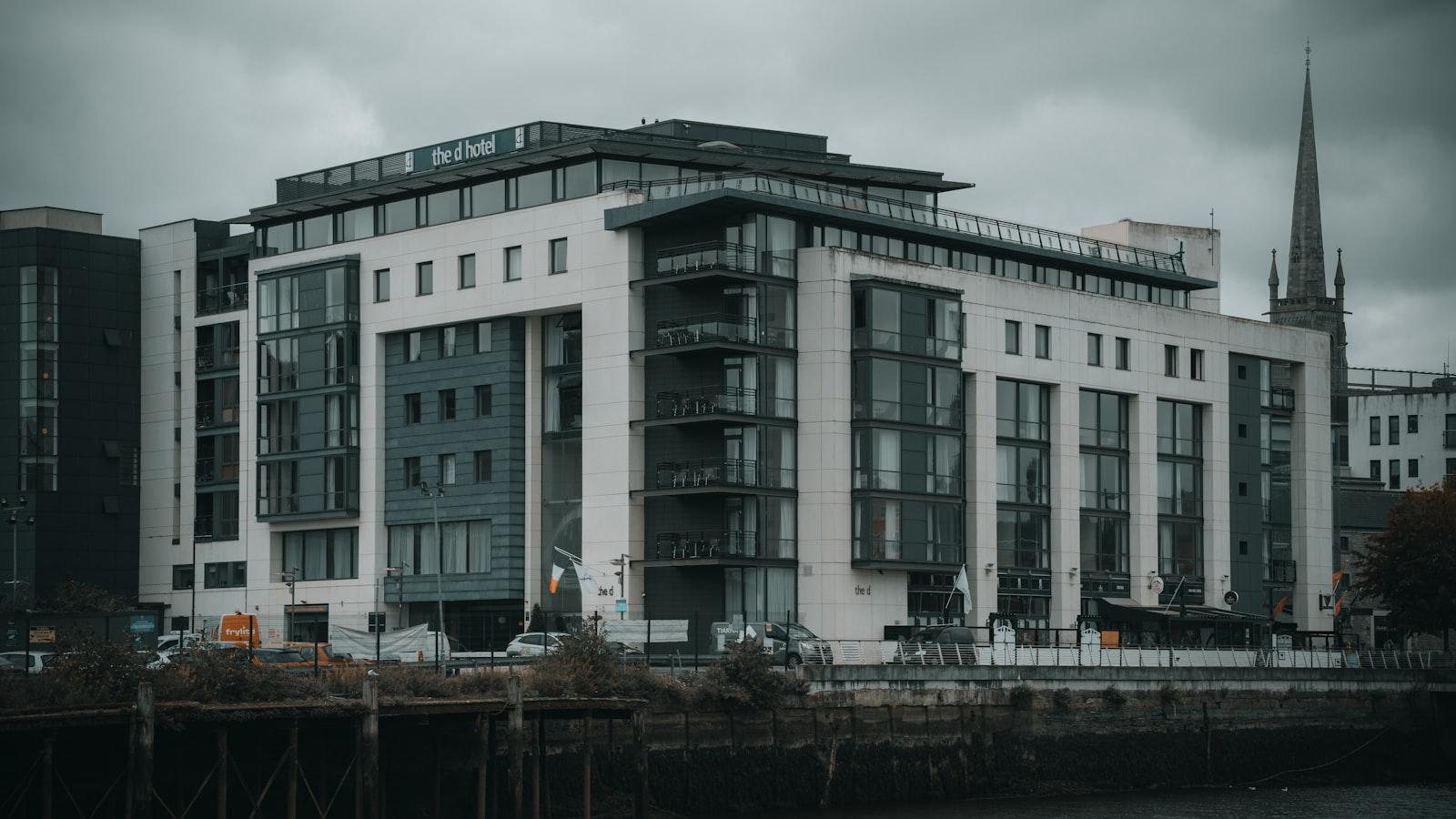
When Sarah O’Connor returned to Dublin after a decade working in Boston, she was shocked to discover her family couldn’t afford a home in the city where they’d grown up. With her husband’s dual income, they were still months away from saving a down payment for a modest two-bedroom apartment listed at €520,000. Their story is no longer exceptional—it’s the norm in modern Ireland, where the housing crisis has become the defining economic and social challenge of the nation.
The Irish housing shortage represents far more than a real estate problem. It’s a crisis that affects employment decisions, family planning, emigration rates, and the fundamental quality of life for millions of Irish citizens. From Dublin’s exploding rental costs to the shortage of homes in rural villages, the inability to secure affordable housing has reshaped contemporary Irish society and has become a pressing concern for policymakers, economists, and families alike.
Understanding the Crisis: By the Numbers
The scale of Ireland’s housing problem is staggering. According to recent data, Ireland needs between 25,000 to 30,000 new homes annually just to meet basic demand, yet the country has consistently delivered far fewer. In recent years, construction has averaged between 15,000 to 20,000 units annually, leaving a persistent supply deficit that widens each year.
In Dublin, median house prices have surged past €600,000, representing more than ten times the average annual salary. For a first-time buyer earning €45,000 per year—close to the Irish average—purchasing a home requires financing nearly 14 times their annual income. In the United States, this ratio typically ranges from 3 to 5 times annual earnings, making Irish housing far less accessible to ordinary workers.
Rental prices tell an equally troubling story. A one-bedroom apartment in Dublin’s city center commands an average rent of €1,500 to €1,800 monthly. Outside the center, prices barely drop, averaging €1,200 to €1,400. For families with children, three-bedroom homes regularly rent for €2,000 to €2,500 per month. These figures consume 40 to 50 percent of household income for many renters—far exceeding the recommended 30 percent threshold.
The crisis has triggered secondary effects throughout the economy. Graduate talent leaves Ireland in record numbers, seeking more affordable housing in London, Berlin, or Toronto. Families delay having children because they cannot afford larger homes. Workers accept longer commutes from satellite towns, choking Irish roads with traffic and eroding work-life balance.
The Historical Roots: Economic Collapse and Recovery
To understand today’s crisis, one must look back to 2008. The Irish property bubble spectacularly burst during the global financial crisis, with home values plummeting 50 percent from their peaks. Banks that had recklessly funded construction stopped lending. Construction companies collapsed. Thousands of unfinished apartment complexes dotted the landscape like monuments to greed and poor planning.
The recession’s aftermath created a housing construction void that lasted over a decade. From 2009 to 2014, housing construction in Ireland fell to levels unseen since the 1980s. While the economy recovered and employment rebounded, the construction sector remained paralyzed by traumatized lenders and risk-averse investors.
Simultaneously, population growth accelerated due to immigration and young people remaining in Ireland rather than emigrating. Between 2016 and 2020, Ireland’s population grew by approximately 150,000 people, but housing supply simply didn’t keep pace. By the time construction ramped up after 2015, the deficit had already reached crisis proportions.
Regulatory Obstacles and Planning Failures
Beyond supply constraints, Ireland’s byzantine planning and regulatory system actively restricts housing development. The planning permission process, overseen by local authorities and An Bord Pleanála (the appeals board), can take years and involves multiple rounds of public consultation that often devolve into “NIMBYism”—Not In My Back Yard opposition from existing residents.
Local governments, paradoxically, often resist housing development in their jurisdictions despite the national crisis. Local politicians face pressure from existing residents who fear increased traffic, environmental impacts, or changes to neighborhood character. A proposed apartment complex in a residential suburb can trigger years of planning disputes and appeals, during which housing demand continues to accelerate.
Zoning restrictions further complicate matters. Much land in and around Irish cities is zoned for single-family homes exclusively, making denser developments impossible without lengthy rezoning processes. In the United States, many cities have successfully employed “zoning reform,” allowing duplexes and low-rise apartments in previously single-family areas. Ireland has been far slower to adopt such reforms, though recent policy shifts signal movement in this direction.
Building regulations, while important for safety and quality, also add significant costs to construction. Compliance with energy efficiency standards, accessibility requirements, and safety codes can increase per-unit construction costs by 10 to 15 percent compared to looser regimes. When combined with Ireland’s already high labor and material costs, these regulations make housing development an expensive proposition.
Economic Factors: Labor, Materials, and Finance
Construction costs in Ireland are among the highest in Europe. Skilled labor—electricians, plumbers, carpenters—commands premium wages due to short supply. The construction sector, devastated in 2008, lost hundreds of thousands of workers who trained for other professions or emigrated. Rebuilding this workforce takes years, and current demand exceeds available skilled workers by a significant margin.
Material costs compound the problem. Ireland imports most construction materials, and global supply chain disruptions since 2020 have inflated prices dramatically. Timber prices increased 400 percent between 2020 and 2022. Concrete, steel, and specialized building products all experienced substantial price increases. A house that cost €400,000 to build in 2019 might require €480,000 in materials and labor by 2023.
Financing for property development remains constrained. Banks, still bearing psychological scars from their 2008 debacle, remain cautious about lending to construction projects. Developer margins must be substantial to justify the risk, creating high cost expectations for completed homes. A developer might need to charge €700,000 for an apartment that costs €500,000 to build, justifying the difference through contingency reserves, financing costs, and profit margins required to attract investment capital.
The Human Cost: Lives Disrupted
Behind statistics about price-to-income ratios and housing units per capita are real people facing impossible choices. Teachers in Dublin accept positions in Drogheda or Kildare, commuting 90 minutes each way to save on housing costs. Young couples postpone marriage and children indefinitely. Families stay cramped in childhood homes well into adulthood because alternatives are financially impossible.
Homelessness has increased visibly. While exact figures are debated, Dublin’s visible homeless population has grown substantially since 2010. Many people experiencing homelessness are employed full-time but earn insufficient income to afford rent, sleeping in cars or shelters while working regular jobs.
The psychological toll extends beyond those in desperate circumstances. Middle-class professionals feel trapped, unable to build wealth through homeownership—historically the primary wealth-building mechanism for Irish families. Inequality widens as property owners, having purchased before prices skyrocketed, accumulate significant equity while renters or first-time buyers struggle to enter the market at all.
Emigration, Ireland’s historic outlet for excess population, has resumed at concerning levels. Young Irish professionals, unable to afford homes in Dublin while watching colleagues in London or Berlin achieve comparable quality of life more affordably, depart for opportunities abroad. This represents a brain drain of talent precisely when Ireland’s economy needs skilled workers most.
Government Responses and Policy Attempts
The Irish government has implemented various policies attempting to address the crisis with limited success. The Help to Buy scheme provides modest tax relief for first-time home buyers, assisting those purchasing homes up to specific price points. However, critics argue it primarily inflates housing prices by increasing demand without meaningfully expanding supply.
The Affordable Housing Strategy aims to reserve a percentage of new developments for affordable units, with local authorities working to acquire land and fund below-market housing. These efforts help, but the percentage of housing stock reserved for low-income residents remains insufficient to address the scale of the problem.
Zoning reforms have begun, with the government encouraging local authorities to relax restrictions on apartment construction. The National Planning Framework (NPF) and National Development Plan attempt to concentrate housing development in specific strategic locations while streamlining approval processes. Additionally, recent changes to planning regulations allow for faster approval of certain housing types, recognizing that the traditional process moves too slowly for a crisis situation.
Housing supply targets have been set, with the government pledging to enable 90,000 new homes annually by 2028. If achieved, this would finally provide supply that exceeds demand. However, observers remain skeptical, noting that similar targets have been announced before without consistent delivery. Factors like construction labor availability, material costs, and planning delays continue to constrain output.
International Comparisons and Lessons
Ireland’s housing affordability compares unfavorably to peer nations. In the United Kingdom, housing affordability metrics are better in most regions outside London. In continental Europe, cities like Berlin, Vienna, and Copenhagen have implemented strong social housing systems, providing stable, affordable rentals that moderate the entire market. Germany’s housing crisis, while existent, has been tempered by large social housing sectors and stronger regulations limiting rent increases on existing units.
Ireland’s social housing stock is minimal compared to continental Europe. Only about 8 percent of Irish housing is public or social housing, compared to 20-30 percent in countries like France, Austria, and the Netherlands. This shortfall means Ireland lacks the stabilizing effect of a large affordable housing sector that keeps overall market prices moderated.
Some international approaches merit consideration: Vienna’s model of public housing targeting middle-income residents, not just the poorest, creates mixed-income communities and avoids concentrating poverty. Germany’s rent controls prevent sudden spikes, giving tenants stability. Singapore’s massive public housing program, while controversial, demonstrates that governments can construct housing at scale if truly committed.
The Role of Investors and Speculation
Private equity and international investment firms have increasingly purchased Irish residential properties, converting owner-occupied homes into investment portfolios. While some argue this brings capital and efficiency to the sector, critics contend it removes homes from the market for owner-occupation and prioritizes financial returns over community welfare.
Several major international funds purchased thousands of Irish apartments and houses, particularly after 2015 when prices had risen sharply from their crisis lows. These investors, paying cash and offering above-asking prices, outbid ordinary families attempting to enter the market. Once acquired, properties are held as rental investments, extracting monthly cash flow rather than enabling wealth-building through ownership for Irish families.
The government has responded with regulations limiting investor purchases in certain areas, requiring minimum percentages of units sold for owner-occupation, and implementing speculation taxes. However, enforcement remains inconsistent, and sophisticated investors continue acquiring properties through various corporate structures.
Looking Forward: Potential Solutions and Obstacles
Meaningfully addressing Ireland’s housing crisis requires simultaneous action on multiple fronts. Supply must increase dramatically, requiring relaxed planning restrictions, streamlined approvals, and incentives for developers and investors to prioritize volume over maximum per-unit profits.
The government must substantially increase public and social housing investment. Building public housing at scale—thousands of units annually—would provide directly affordable options while anchoring the broader market. This requires budget allocation of several billion euros annually, a significant commitment but essential given the crisis magnitude.
Financing mechanisms must evolve. Rather than expecting developers to build exclusively through private capital at maximum profit margins, public-private partnerships can reduce developer risk and return expectations, lowering final housing costs. Government-backed infrastructure financing can reduce per-unit costs substantially.
Zoning must be liberalized further, allowing diverse housing types—duplexes, triplexes, moderate apartment buildings—in residential neighborhoods currently restricted to single-family homes. This approach, proven successful internationally, dramatically increases housing supply in established areas without requiring greenfield development.
Rent controls and tenant protections deserve careful consideration. While pure price controls risk distorting markets and reducing new supply, moderate regulations preventing egregious increases and evictions protect vulnerable renters and add stability to housing markets. Several European countries successfully employ variations of rental protections alongside growing housing stock.
Challenges and Political Reality
Implementing these solutions faces significant obstacles. NIMBYism remains potent—existing residents resist development in their neighborhoods through planning appeals and local political pressure. Local politicians, elected by existing residents, often resist policies that might disrupt neighborhood stability even when national housing policy demands density increases.
Construction industry capacity constraints are real and cannot be resolved quickly. Training new construction workers takes years. Material supply chains require substantial lead time. A sudden policy shift dramatically expanding approved housing could encounter bottlenecks preventing actual construction from matching approved plans.
The tourism and vacation home industry competes for limited housing stock, particularly in attractive coastal areas. Tourists and second-home owners—including wealthy foreigners—can outbid locals for limited properties, further constraining availability for permanent residents. Some areas have experimented with regulations limiting short-term rentals, though enforcement remains difficult.
Financial sector hesitation persists. Despite the obvious housing need, banks remain cautious about large-scale construction lending, having learned painful lessons in 2008. Changing this mindset requires either successful demonstration that construction lending is profitable, or government programs reducing investor risk.
Conclusion: Crisis and Opportunity
Ireland’s housing crisis is genuinely severe and requires urgent, sustained action. Waiting for market forces alone to solve the problem is unrealistic; the market has failed to deliver adequate housing despite soaring demand and prices. Yet the crisis also presents opportunity. Countries like Vienna and Singapore have demonstrated that determined governments can successfully address housing challenges through policy, planning, and investment.
The solutions exist: liberalize zoning, streamline planning, increase public housing investment, create financing mechanisms that reduce developer risk, and maintain reasonable regulations preventing exploitation. No single solution suffices; genuine progress requires implementing multiple strategies in coordinated fashion.
What remains uncertain is whether Ireland’s political system will generate the will to implement these comprehensive solutions. Local opposition, construction industry constraints, and budget pressures create real obstacles. The thousands of young Irish considering emigration hope that policymakers will act with sufficient urgency and vision to transform housing from a crisis into a solved problem. If nothing changes dramatically in the next few years, Ireland risks losing an entire generation of talented citizens to more affordable nations—a loss far exceeding the economic calculations of housing units and prices.

Author: jonathan
Jonathan is the publisher of Irishtopia.net, Anglotopia.net, and Londontopia.net. He's passionate about travel and learning about other cultures. He's been to Ireland several times, and uses his travel expertise for Irishtopia!