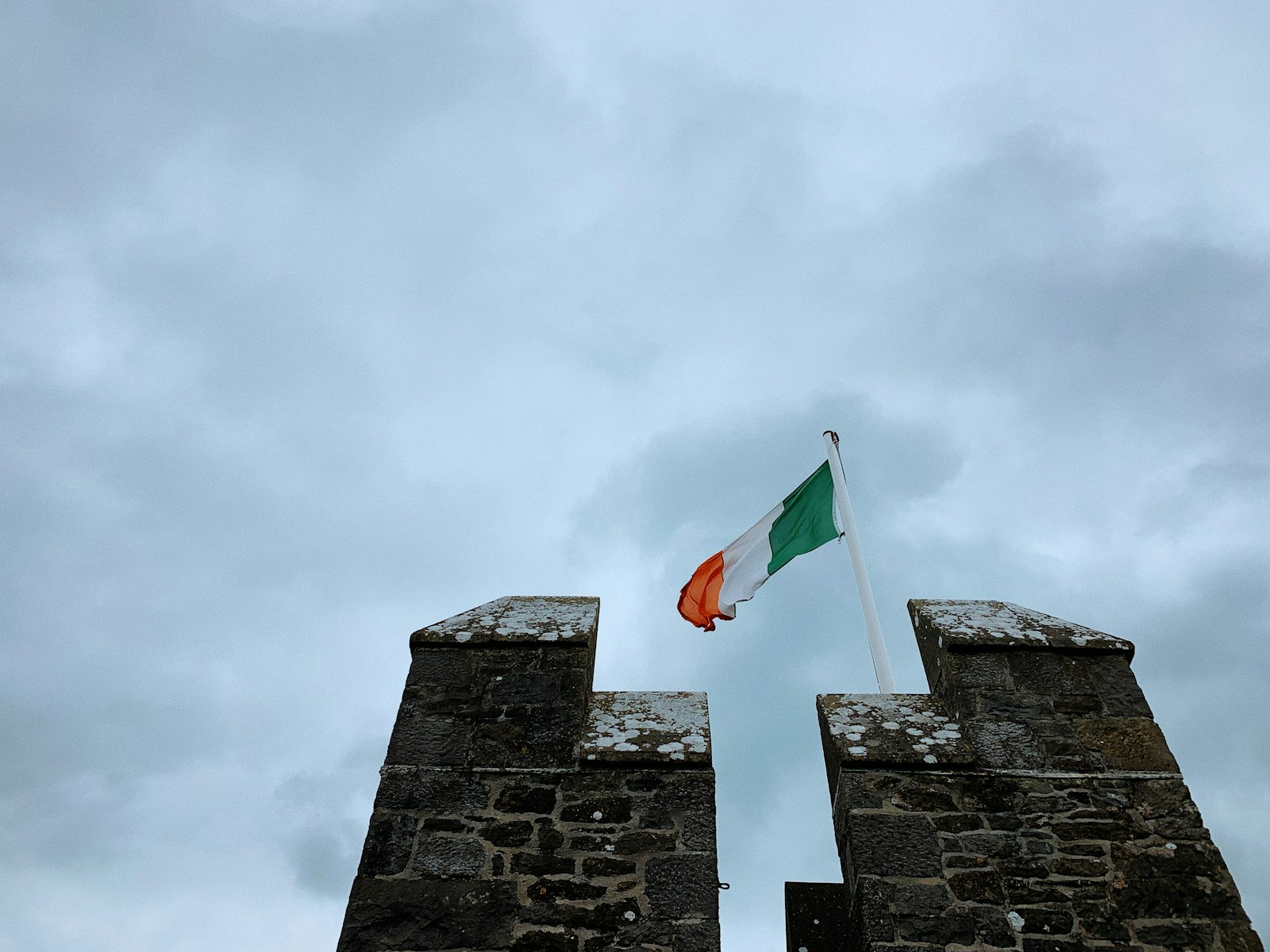
Photo by Tommy Bond on Unsplash
When Ireland gained independence from Britain in 1922, the new nation faced an existential question: Could a language driven to the brink of extinction be revived? Gaeilge—the Irish language—had been reduced from the everyday speech of millions to the isolated language of remote communities, battered by centuries of British colonialism that had deliberately suppressed Irish education and cultural institutions. Yet independent Ireland made a radical choice: to resurrect Gaeilge not merely as a historical curiosity but as a living, modern language spoken in schools, government, and increasingly, in contemporary Irish society.
More than a century later, that revival project remains one of the most ambitious linguistic experiments in modern history. For American visitors seeking to understand Ireland deeply, Gaeilge represents far more than quaint traditional speech. It’s a symbol of cultural resistance, national identity, and the ongoing tension between globalization and cultural preservation. Walking through Dublin or Galway, you’ll see Irish on street signs, hear it on radio stations, encounter young people speaking it by choice rather than requirement. The revival isn’t complete—many Irish people struggle with a language they studied for years—but its reality is undeniable.
The Historical Catastrophe: How Irish Nearly Died
To understand the modern revival, one must first grasp the scale of the disaster that preceded it. In 1600, virtually all Irish people spoke Irish as their primary language. English was the language of settlers and elite commerce, limited to cities and English-controlled areas. Even by 1750, Irish remained widely spoken across most of the island.
Then came the Great Famine of 1845-1852, a catastrophe so devastating that it killed approximately one million Irish people and forced another million and a half to emigrate, primarily to America. This wasn’t simply starvation—it was a turning point in linguistic history. The Famine killed Irish speakers disproportionately, as those in western areas where Irish was strongest suffered worst. Simultaneously, emigration removed Irish speakers from the island, replacing them with English-speaking immigrants from other parts of Ireland and Britain.
But the Famine alone doesn’t explain Irish’s near-death. Equally important was the Penal Code—British laws that made Irish education illegal, that forbade Catholic priests from teaching, that systematically criminalized Irish cultural practices. For centuries, speaking Irish was associated with poverty, with Catholicism, with rebellion against British rule. English was the language of advancement, of education, of participation in society. Irish parents, seeking better futures for their children, actively discouraged Irish language use at home.
By 1851, the first census to ask about language showed that Irish speakers had declined catastrophically. By 1900, fewer than 20% of Irish people spoke the language. In 1922, when Ireland gained independence, the language hung on by its fingernails in western coastal regions, most notably in the Gaeltacht—areas designated as Irish-speaking areas. Everywhere else, Irish was a dying language known by scholars and nationalists but rapidly disappearing from daily use.
The Revival Effort: Education, Government, and Imagination
When the Irish Free State took power in 1922, language revival became a founding principle of national identity. This wasn’t accidental; the independence movement had been intimately connected with Irish cultural nationalism, and recovering the Irish language was seen as essential to decolonization itself. You couldn’t truly be independent from Britain while speaking English as your primary language—or so the thinking went.
The new government made Irish the first official language of the Irish Free State (later the Republic), mandated Irish education in all schools, and created jobs requiring Irish language skills, particularly in government positions. Radio broadcasts in Irish began in 1926. The Abbey Theatre premiered plays in Irish. Official documents appeared in Irish alongside English. For the first time since medieval times, Irish language institutional support existed at the state level.
School became the primary vehicle for revival. Every Irish child had to learn Irish, and for many decades, the educational system was quite aggressive about it, with some teachers beating children who spoke English in class. This approach created a generation of Irish people who could technically speak Irish but who often associated it with punishment and boredom rather than cultural pride. Many Irish people over fifty today learned Irish through threat rather than inspiration.
However, the focus on institutional language also yielded genuine results. A small but dedicated group of scholars, writers, and teachers worked to modernize Irish, creating new vocabulary for contemporary concepts and encouraging literary production in the language. Authors like Máirtín Ó Cadhain produced acclaimed Irish-language novels. Radio and eventually television broadcasts in Irish created an audience for the language.
Modern Gaeilge: Vocabulary and Evolution
The Irish language spoken today differs significantly from the Irish of the pre-Famine era or even from the early twentieth-century revival period. It’s been deliberately modernized to accommodate contemporary life.
Computers and technology required entirely new vocabulary. The Irish word for computer, “ríomhaire,” combines “ríomh” (calculation) with “aire” (attention), creating a compound that means something like “the attention-to-calculation machine.” A mouse is “luch” (literally, mouse), while the internet is “an Idirlíon” (the between-net). Mobile phones are “guthán poicéid” (pocket-talk machine).
Modern business and commerce brought words like “oibrí” (worker) and “foinse” (source), adapted or created to fit Irish phonetic patterns. Television is “teilifís,” adopted and modified from English. Cars are “gluaisrothar” or “carr”—the former a constructed term meaning something like “motion machine,” the latter borrowed directly from English.
Cultural and sports terms show interesting adaptations. Football (American football) is “fútball Meiriceánach” (American football), while soccer is “sacar.” Rugby is “rugbaí.” Baseball is “fichromadóireacht” (a constructed term), and basketball is “cispheil.”
Modern Irish speakers, particularly younger ones, increasingly mix Irish and English in ways that horrify purists but which reflect contemporary reality. “Tá mé ag watsáil an telebhisean” (I’m watching the television) combines Irish grammar with the English word “watching,” transformed into Irish phonetic patterns. “Is awesome an film sin” (that film is awesome) integrates English adjectives into Irish sentence structures.
This code-switching—moving between languages—is natural to bilingual communities and represents not failure but adaptation. While language preservationists worry that Irish is being “contaminated” by English, younger speakers see themselves as simply using the linguistic tools available to them in a complex, bilingual environment.
The Gaeltacht: Last Stronghold and Living Laboratory
The Gaeltacht, legally defined areas where Irish is supposed to be the dominant community language, remains the heart of Irish language life. Located primarily in western Ireland—in County Galway, County Kerry, County Donegal, and smaller areas in other counties—the Gaeltacht is where Irish speakers can live almost entirely through Irish if they choose.
However, the Gaeltacht faces significant pressures. Young people often move away seeking economic opportunities. Tourism, while economically important, creates pressure to use English with visitors. Even within the Gaeltacht, English increasingly dominates as Irish and international companies locate there and more non-Irish speakers settle in these regions.
Yet the Gaeltacht remains crucial to the revival project. Irish Radio na Gaeltachta broadcasts from there. Hundreds of young people spend summer months in Gaeltacht schools learning Irish intensively. Many Irish-language summer camps (Coláistí Samhraidh) operate in Gaeltacht areas, giving young Irish people intensive immersion experiences. These camps have become major cultural institutions, where teenagers from across Ireland gather to speak Irish, often for the first time in genuinely social contexts where Irish is normal rather than required.
The economic potential of Gaeltacht identity has created some ironic situations. Tourism companies market the Gaeltacht as “authentic Irish experience,” and Gaeltacht communities have invested in cultural tourism. While this supports the local economy, it also creates pressure to perform Irishness for outsiders, potentially undermining the organic development of the language.
Who Speaks Gaeilge and How Well?
Modern census data reveals the complicated reality of Irish language revival. According to recent surveys, approximately 40% of Irish people claim to speak Irish to some degree. However, “speak” encompasses a wide range, from fluent daily speakers to people who can construct simple sentences in formal contexts.
Fluent daily speakers number perhaps 100,000 to 150,000 people—roughly 2-3% of the population. These include native speakers from the Gaeltacht and second-language learners who’ve become fully proficient. They use Irish at home, at work, and in social contexts comfortably and naturally.
Functional speakers might represent another 500,000 to 750,000 people—those who can conduct business in Irish, read Irish literature, and understand radio broadcasts. They might not speak Irish daily but can do so when necessary.
School learners comprise millions of Irish people who studied Irish for years but who cannot actually speak it conversationally. They learned grammar rules, memorized vocabulary, and passed exams, but they never developed conversational fluency. This group often finds the language frustrating—they know they should speak it but find themselves unable to do so naturally.
Non-speakers make up a large percentage of the population, including immigrants to Ireland and Irish people who simply never developed Irish language skills. With immigration increasing and globalization accelerating, the proportion of Irish residents who don’t speak Irish continues to grow.
This reality has created what linguists call a “diglossic” situation—Irish and English coexist, with Irish associated with formal, official, or cultural contexts while English dominates everyday communication. Many Irish people switch to English in social situations, even when everyone present could speak Irish, because English feels more natural and less pretentious.
Gaeilge in Contemporary Irish Society
Despite challenges, Irish language life exists and thrives in contemporary Ireland, particularly among younger people for whom Irish language capability has become a cultural marker of identity.
Irish-medium schools (Gaelscoileanna) have expanded dramatically over the past two decades, particularly in Dublin and other cities. Parents who want to raise Irish-speaking children can now choose Irish-medium education in many areas. These schools teach all subjects through Irish, creating generations of truly fluent speakers. For many middle-class Irish parents, sending children to Gaelscoileanna represents cultural pride and practical advantage—bilingual capability in today’s world is increasingly valuable.
Irish-language media continues to expand. TG4, the Irish-language television station, produces high-quality content in Irish, from documentaries to dramas to entertainment shows. Young people discover that Irish-language media can be genuinely entertaining, not just culturally mandatory. Radio na Gaeltachta and various community radio stations broadcast exclusively or primarily in Irish. Podcasts and online content in Irish have proliferated.
Irish-language cultural events thrive particularly in summer. The All-Ireland Fleadh Cheoil (All-Ireland Traditional Music Festival) draws tens of thousands and features extensive Irish-language programming. Smaller cultural gatherings happen throughout the year in cities and towns.
Irish-speaking social networks exist particularly among young people, creating spaces where Irish feels normal rather than obligatory. Online communities, social media groups, and even dating apps for Irish speakers exist. For young people raised in Irish-medium schools, Irish can feel like the natural language of their age cohort.
Place names and street signs in Irish appear everywhere in Ireland now, even in English-speaking areas. Dublin’s “Baile Átha Cliath” appears alongside “Dublin.” This normalization of Irish in everyday visual landscape helps maintain the language’s presence in consciousness even for non-speakers.
The Political and Cultural Debates
Irish language revival remains politically and culturally contested. Several tensions persist in contemporary Ireland.
The mandatory education question generates periodic debate. Should Irish be mandatory in schools, or should it be optional? Advocates argue that making Irish compulsory ensures every Irish person has the opportunity to learn their national language. Critics argue that mandatory Irish education frustrates many students and fails to create genuine speakers. The debate touches on questions of national identity—what does it mean to be Irish if you don’t speak Irish?
English dominance represents a persistent challenge. English is simply more useful globally, spoken by more people, and associated with economic advancement. Parents who want their children to succeed economically might prioritize English over Irish, potentially undermining revival efforts. The COVID-19 pandemic accelerated this trend as online education defaulted to English and work-from-home situations often required English.
Immigration and Irishness creates new tensions. As Ireland becomes more multicultural through immigration, the assumption that Irish citizens speak Irish becomes less tenable. Some argue that immigration strengthens Ireland by diversifying it; others worry that immigration dilutes Irish culture and language. These debates sometimes become xenophobic, with Irish language preservation weaponized to argue against immigration. Progressive Irish speakers generally argue that revival efforts should welcome immigrants while creating opportunities for those interested in learning Irish.
The practical usefulness question remains fundamental. Why should young Irish people invest time learning Irish when English offers greater economic benefits? The answer—cultural heritage, national identity, the intrinsic value of linguistic diversity—feels increasingly abstract as globalization progresses. Some argue this question is irresolvable: either Irish speakers must have material advantages (jobs that require Irish, financial benefits for Irish-medium education) or revival will depend on cultural motivation alone, which has proven insufficient to maintain Irish as a daily language for most speakers.
How Americans Relate to Irish Language
For American visitors, Gaeilge occupies an interesting position. Americans of Irish descent sometimes feel culturally compelled to learn Irish, seeing it as reconnecting with heritage. Simultaneously, most Irish Americans don’t speak Irish historically—their ancestors emigrated when Irish was associated with poverty and rural backwardness, and they assimilated into English-speaking American culture.
Modern Irish Americans encountering Gaeilge sometimes feel both pride and distance. The language is beautiful and culturally resonant, but learning it as an adult is difficult, particularly for English speakers whose brain structure has already settled around English phonetics. Irish has sounds English lacks, sentence structures English doesn’t employ, and verb conjugations that confound English speakers.
Yet Irish language tourism has expanded to serve American interest. Language learning centers throughout the Gaeltacht offer intensive Irish courses. American visitors often seek to learn basic Irish phrases, to understand Irish-language place names, and to appreciate the cultural significance of the revival project. This interest, while sometimes superficial, represents genuine respect for Irish cultural preservation efforts.
Learning Gaeilge: Practical Pathways
For those genuinely interested in learning Irish, multiple pathways exist. The Irish government offers online courses through TG4 and other platforms. The Rosetta Stone and Duolingo include Irish options. Traditional grammar-focused textbooks exist, though they often create the same frustration that Irish school education creates—learning about Irish without becoming conversationally fluent.
Immersion—spending time in the Gaeltacht or in Irish-language social contexts—remains the most effective learning method. Coláistí Samhraidh (summer colleges) in the Gaeltacht accept adult learners and offer intensive experience. Online communities of Irish learners connect people studying the language.
The reality remains that learning Irish as an adult English speaker is challenging. Many people begin with enthusiasm, encounter the difficulty of Irish grammar, and abandon the effort. Those who persist tend to discover that Irish opens new ways of thinking—different grammatical structures create different ways of categorizing experience. Verb-subject-object word order differs from English, changing how meaning unfolds. These differences make Irish intellectually stimulating to learn, even if practical utility remains limited for most learners.
The Future of Gaeilge
Predictions about Irish language’s future remain uncertain. Some linguists worry that despite over a century of revival efforts, Irish will never again be a majority community language. The forces of globalization, English’s dominance, and the practical advantages of English make achieving genuine bilingualism across a large population increasingly difficult.
Others point to hopeful signs. Irish-medium schools continue expanding. Young people increasingly see Irish as cool and culturally important. Technology is creating new spaces where Irish can flourish. The European Union’s support for minority languages provides institutional backing.
Most realistic assessments suggest Irish will continue as a minority language—vital, increasingly confident, and genuinely alive for tens of thousands of speakers—but never returning to pre-Famine dominance. The question for contemporary Ireland isn’t whether Irish will become the majority language but whether it will thrive as a valued minority language, maintained through deliberate effort and cultural commitment.
Conclusion: Revival as Ongoing Process
The Irish language revival represents one of history’s most ambitious attempts to resurrect a language from near-death. More than a century of effort has created a situation where Irish survives, where it’s taught in schools, where it’s spoken in media and official contexts, where young people can choose to speak it as a mark of cultural pride. This is remarkable achievement.
Yet the revival remains incomplete and perpetually contested. Irish will never be restored to pre-colonial dominance; that world is gone. Instead, the question is whether Irish can flourish as a valued second language, maintaining cultural continuity while accepting that English will remain the dominant language for practical purposes.
For American visitors, understanding Gaeilge’s story—of linguistic destruction, deliberate revival, and ongoing struggle—provides profound insight into Irish identity. The language itself, with its distinctive sounds and structures, carries centuries of Irish thought and culture. When you hear Irish spoken, you’re hearing not just words but the voice of a nation deliberately choosing to preserve its distinctive way of thinking and expressing itself against tremendous historical pressure. That’s worth appreciating, whether you understand the words or not.

Author: jonathan
Jonathan is the publisher of Irishtopia.net, Anglotopia.net, and Londontopia.net. He's passionate about travel and learning about other cultures. He's been to Ireland several times, and uses his travel expertise for Irishtopia!